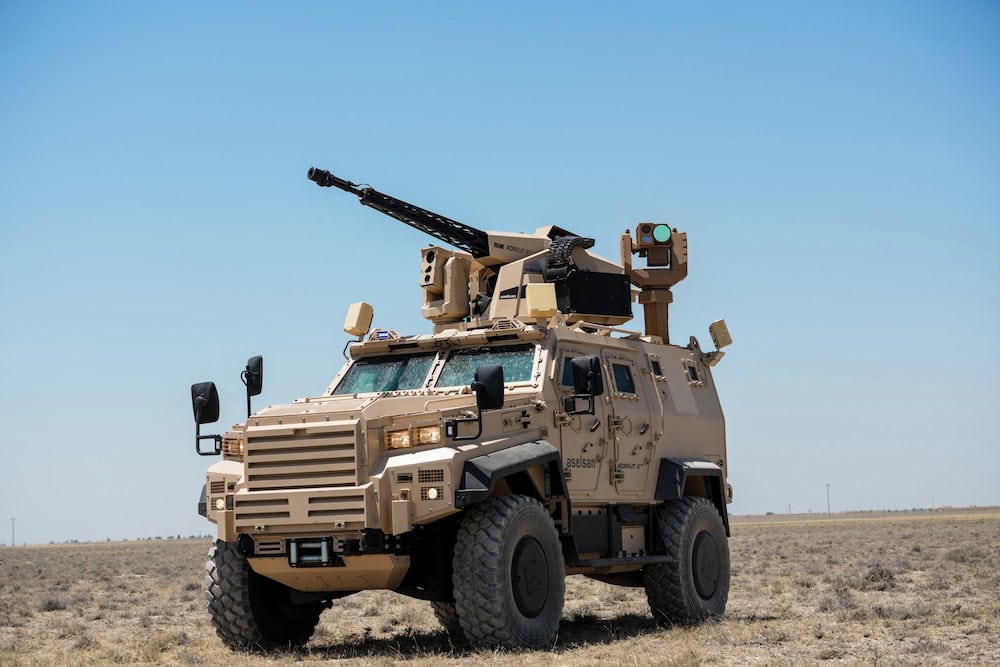
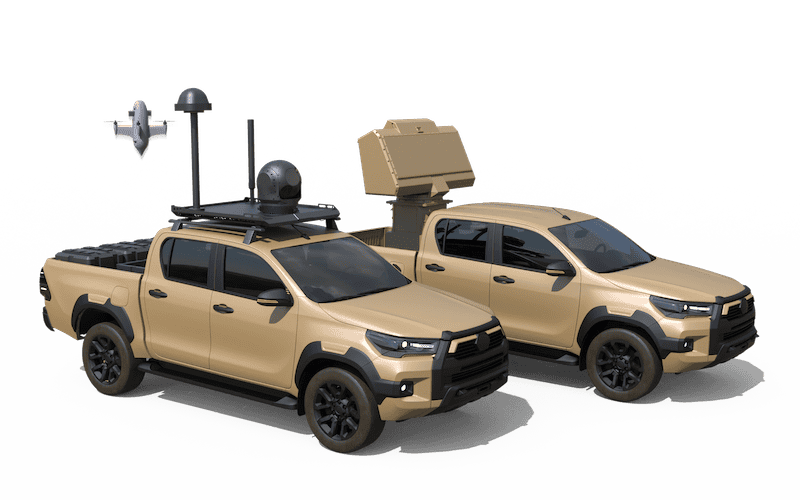
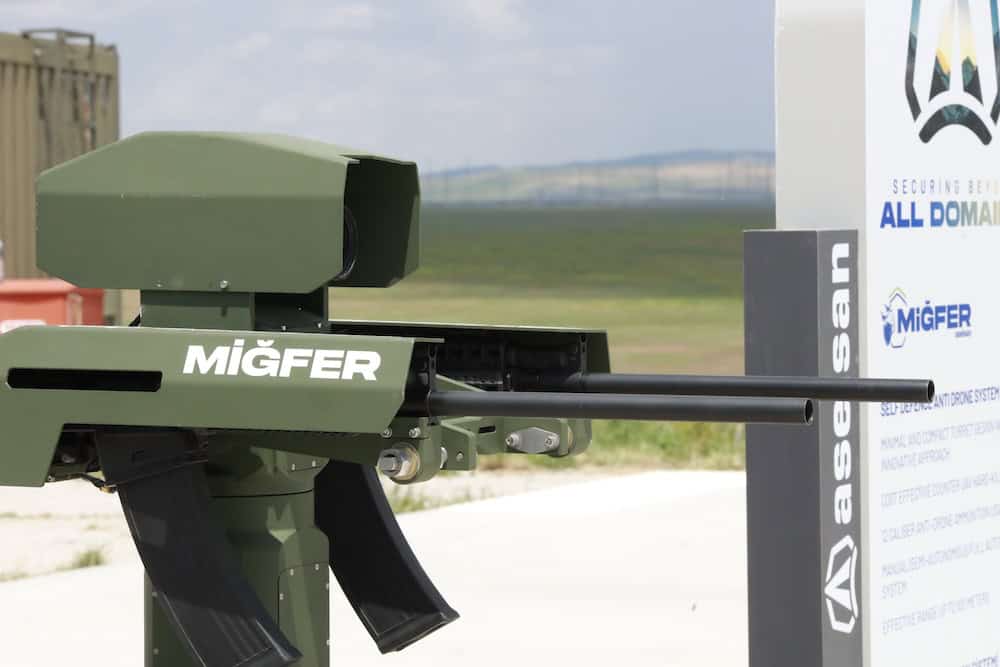
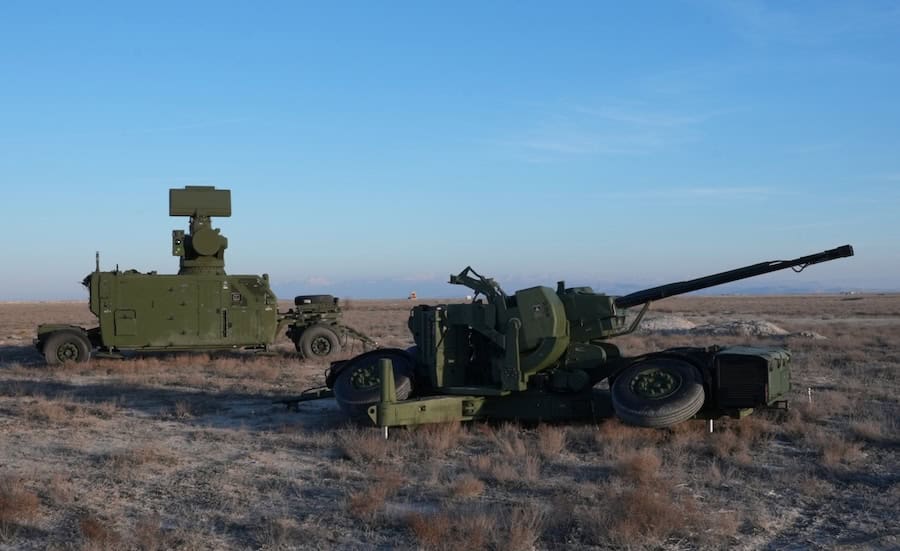
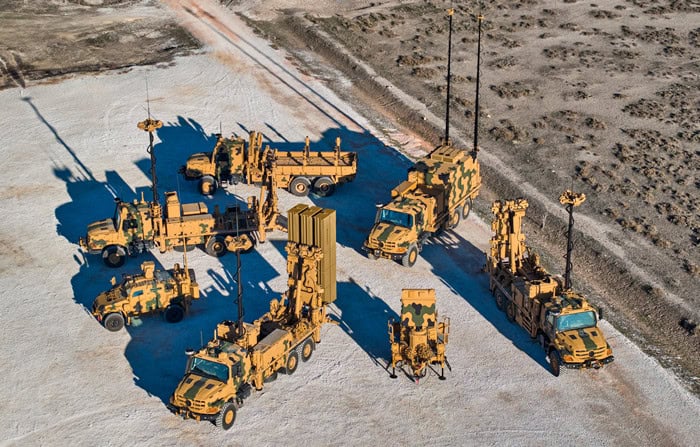
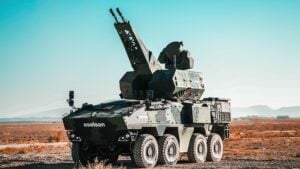
Kinetic drone defense systems use physical effectors to intercept, disable, capture, or destroy hostile unmanned aircraft as part of standalone or integrated counter-UAS architectures. These systems include gun-based weapons, guided missiles, collision and explosive interceptors, and net capture technologies.
This page features suppliers of kinetic anti-drone weapons for military base protection, forward operating positions, convoy defense, naval vessels, and critical infrastructure security.
If you design, build or supply Kinetic Drone Defense Systems, create a profile to showcase your capabilities and connect with visitors who have an active requirement for your solutions.
Net interception systems for effective counter-drone operations
Net interception systems for effective counter-drone operations
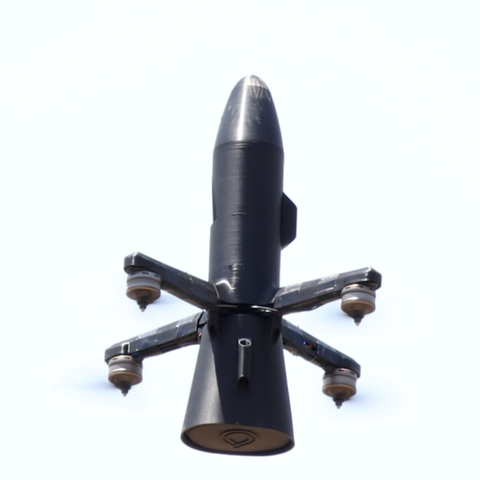
...r Interception Drone – A lightweight drone-mountedsystem designed for high-speed pursuit of... ......an be integrated with radar, RF and optical systems for rapid threat detection and...
The Technical Guide to Kinetic Drone Defense Systems
Overview by
William Mackenzie
Updated:
Introduction to Kinetic Drone Defense Systems
Kinetic drone defense systems use physical effectors to intercept, disable, capture, or destroy hostile unmanned aircraft. They combine weapons or interceptors with targeting equipment, fire control, and operator interfaces, either in a standalone installation or as part of a wider Counter-Unmanned Aircraft System (C-UAS). Sensors provide target position and movement data, which fire control uses to calculate aiming solutions or interceptor guidance commands.
Kinetic counter-UAS systems protect military personnel, installations, vehicles, vessels, and critical assets. Available technologies include guns, guided missiles, aerial interceptors, and net capture systems. Destructive effectors provide hard-kill capability, while capture systems physically disrupt flight and may support recovery. Selection depends on the threat, operating environment, and acceptable engagement hazards.
Types of Kinetic Anti-Drone Weapons
The following table compares the principal kinetic anti-drone weapons and capture technologies used within drone defense architectures. Categories can overlap, as aerial interceptors may use collision, explosive payloads, or nets.
System Type
Defeat Mechanism
Targeting Requirements
Deployment Configuration
Replenishment Needs
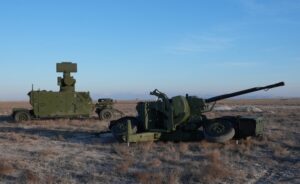
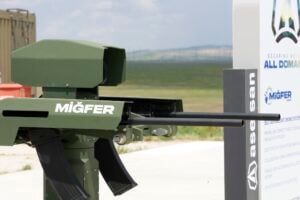
Gun Systems
Projectile impact, or fragments and subprojectiles from airburst ammunition
Optical sights or sensor-supported tracking and fire control
Portable, fixed, vehicle-mounted, or shipboard
Ammunition reloading and weapon servicing
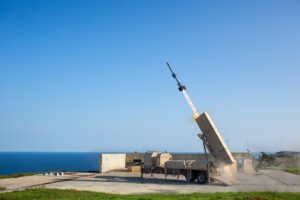
Missile and Rocket Systems
Direct impact or explosive effects
Compatible fire control, with seeker-based or external guidance as applicable
Fixed, relocatable, vehicle-mounted, or shipboard launchers
Replacement rounds and launcher replenishment
Collision Interceptors
Physical collision with the target
Target cueing and onboard or externally supported guidance
Ground-launched interceptor drones
Replacement, inspection, repair, or charging, depending on design and survivability
Explosive Interceptors
Blast or fragmentation at or near the target
Target tracking, guidance, and suitable fuzing
Ground-launched aerial interceptors
Replacement interceptors and explosive handling support
Net Capture Systems
Entanglement of rotors, propellers, or the airframe
Visual aiming or sensor-supported interception
Ground launchers or airborne carriers
Replacement nets, launch cartridges, and carrier servicing, as applicable
Military & Defense Operational Environments
Military Base and Airfield Protection
Military bases and airfields require protection for personnel, aircraft, fuel storage, and other exposed infrastructure. Fixed or relocatable kinetic C-UAS installations can receive targeting information from distributed sensors and centralized command systems. Airfield integration requires particular attention to friendly aircraft movements, weapon firing sectors, and falling debris within or around operational areas.
Forward Operating Position Defense
Forward operating positions need systems that can be transported, installed, and sustained with limited infrastructure. Portable weapons, compact launchers, and relocatable interceptor stations offer different balances of coverage and logistical demand. Local power availability, sensor placement, ammunition storage, and operator workload influence an installation’s ability to maintain readiness over extended periods.
Maneuver Force and Convoy Protection
Maneuver forces and convoys require drone defense equipment compatible with vehicle mobility and changing terrain. Vehicle-mounted guns or interceptor launchers may support engagements from stationary positions or during movement where specifically designed and qualified for that purpose. Stabilization, sensor coverage, deployment time, and integration with friendly vehicles influence performance as the protected force changes location.
Naval Vessel and Port Defense
Shipboard installations must accommodate vessel motion, saltwater exposure, restricted mounting space, and nearby equipment. Stabilized weapons and integrated tracking can support kinetic drone defeat, while safe firing sectors must account for the ship’s structure and surrounding traffic. Port defense adds shore infrastructure, cargo operations, and populated waterfront areas to the engagement assessment.
Ammunition Depot, Logistics Hub, and Critical Asset Protection
Ammunition depots, logistics hubs, and critical assets require protection that accounts for the consequences of both drone impact and defensive engagement. Effector placement and firing sectors must consider stored explosives, fuel, personnel, and adjacent infrastructure. Distributed sensors and coordinated weapons can support coverage across large sites, with replenishment arrangements helping sustain protection during repeated attacks.
Comparison with Other Drone Defeat Technologies
Kinetic drone defense can complement electronic warfare, cyber takeover, laser, and high-power microwave systems within layered architectures. Their different defeat mechanisms, target dependencies, and operating constraints influence which combinations suit the expected threats and deployment environment.
Radio frequency jamming: Disrupts compatible command, telemetry, or navigation signals. Kinetic effectors act physically on the aircraft and can address targets that do not depend on a vulnerable radio link, provided they can be tracked and intercepted.
Cyber takeover: Interacts with supported communications protocols or exploits system vulnerabilities to influence or assume control of a drone. Its effectiveness depends on target compatibility, while kinetic interception depends on the effector’s ability to reach and physically defeat the aircraft.
Laser systems: Direct concentrated optical energy onto a target to cause thermal damage. Performance depends on beam control, atmospheric transmission, and sufficient dwell time, while kinetic weapons face projectile or interceptor flight constraints. Both approaches can create falling debris.
High-power microwave systems: Use electromagnetic energy to disrupt or damage susceptible electronics. Effects depend on target susceptibility and delivered field strength, while kinetic systems cause physical damage or capture through contact, blast, fragmentation, or entanglement.
Layered architectures allow operators to select an available effector suited to the target and surrounding conditions.
Procurement Considerations for Kinetic Drone Defense Systems
Specifiers should assess how detection, tracking, fire control, and effectors work together under intended deployment conditions. Beyond nominal range, procurement decisions should account for demonstrated threat coverage, integration requirements, engagement hazards, and the resources needed to sustain repeated engagements.
Threat coverage: Match demonstrated performance to expected drone size, speed, maneuverability, construction, and attack profiles, including the ability to engage multiple concurrent targets.
Protection requirements: Define the defended area, deployment platform, required response time, and coverage gaps created by terrain or structures.
Integration compatibility: Assess sensor interfaces, track quality, command connectivity, engagement authorization, and compatibility with existing air defense equipment.
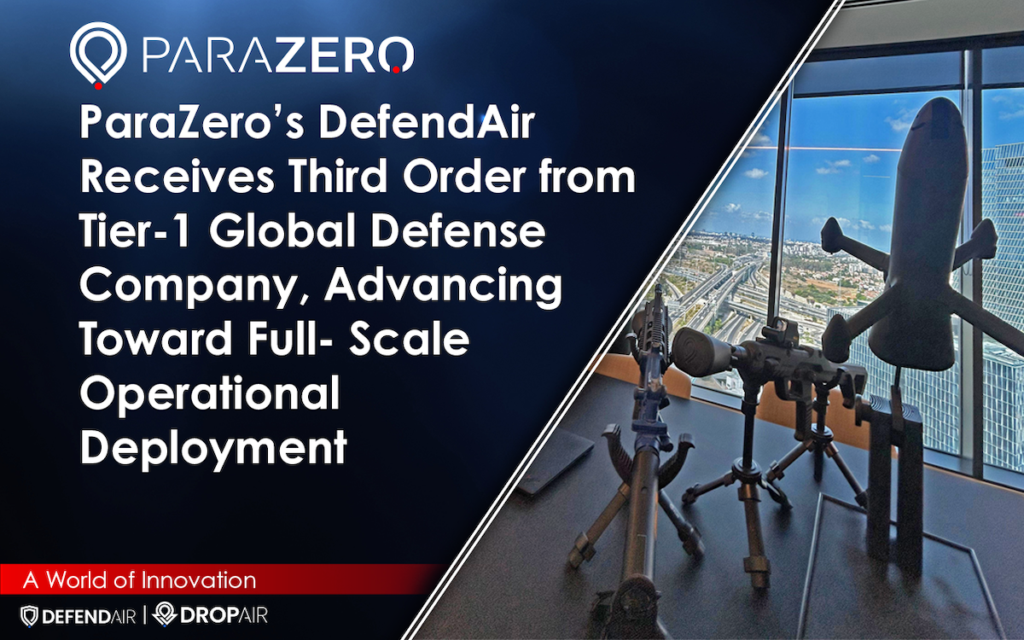
Following a successful evaluation phase, a Tier-1 global defense contractor has placed a third procurement order for ParaZero’s DefendAir Net Pods to advance technical integration toward full-scale operational system deployment
The latest defense technology news, straight to your inbox.
Get our weekly roundup of technology developments, new products and industry news.
THANK YOU FOR SIGNING UP
Thanks for joining us. Check your inbox.
We've sent you an email. Click the confirmation link to complete your subscription to the weekly eBrief. In the meantime, explore the latest news, suppliers and technologies on DA.
Advancing Defense Capability Through Strategic Collaboration
Defense Advancement works with major OEMs to foster collaboration and increase engagement with SMEs, to accelerate innovation and drive defense capabilities forward.