Showcase your capabilities
If you design, build or supply Inertial Data Loggers, create a profile to showcase your capabilities and connect with visitors who have an active requirement for your solutions.



Inertial data loggers are motion recording devices that capture and store acceleration, angular velocity, orientation, and other inertial measurements for analysis in military and defense applications. Available configurations include standalone accelerometer data loggers, gyroscope recorders, multi-axis IMU data loggers, and GNSS-integrated systems.
This page features suppliers of inertial data loggers, supporting aircraft and UAV flight testing, tactical vehicle dynamics evaluation, guidance system validation, shock and vibration monitoring, and trajectory reconstruction.
Read the Technology Overview
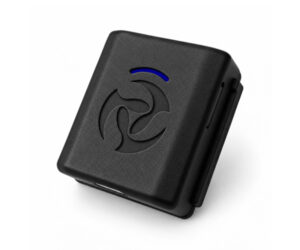
Precision Inertial Sensors, AHRS & GPS-Denied Tracking Solutions for Military & Defense Applications

| Overview | Products | Link | ||
|---|---|---|---|---|
| Yost Labs | United States of America | Precision Inertial Sensors, AHRS & GPS-Denied Tracking Solutions for Military & Defense Applications |
|
View Profile |
If you design, build or supply Inertial Data Loggers, create a profile to showcase your capabilities and connect with visitors who have an active requirement for your solutions.

Inertial data loggers are motion recording devices that capture and store acceleration, angular velocity, orientation, and other inertial measurements for subsequent analysis. In military and defense applications, these systems provide recorded motion data for evaluating aircraft, tactical vehicles, weapons systems, and navigation equipment under operational and test conditions.
Military inertial data loggers range from compact, self-contained recorders with integrated sensors to ruggedized data acquisition systems connected to an external Inertial Measurement Unit (IMU). Accelerometers and gyroscopes measure linear and rotational motion, while recording electronics acquire, timestamp, and store these measurements for later analysis. These systems support flight dynamics testing, high-G impact recording, vibration analysis, guidance system validation, and trajectory reconstruction, allowing engineers to examine platform behavior and verify system performance.
Inertial data loggers can be distinguished by the measurements they record, their integrated sensors, and their data acquisition architecture. Some configurations combine several recording capabilities, while others are designed for more specialized measurement tasks. Common types include:
These recording architectures can be incorporated into portable test equipment, embedded military electronics, or dedicated instrumentation installations.
Inertial data loggers record aircraft acceleration, rotational motion, and attitude changes during flight trials, supporting the evaluation of fixed-wing aircraft, helicopters, and UAVs. These measurements provide insight into maneuvering performance, flight stability, and dynamic behavior, and can be correlated with onboard telemetry and other flight instrumentation for more detailed analysis.
Military flight control and guidance systems rely on accurate motion information to maintain stability and execute commanded maneuvers. IMU data loggers capture measurements that can be compared with control system outputs and reference instrumentation, allowing engineers to evaluate autopilot algorithms, sensor fusion, and guidance performance under dynamic operating conditions.
Military ground vehicle testing uses acceleration and motion data to evaluate handling, suspension behavior, and mobility over uneven terrain. Inertial data loggers can capture vehicle pitch, roll, acceleration, and vibration during trials involving armored vehicles, tactical transport platforms, and UGVs. These measurements help characterize vehicle dynamics during braking, turning, obstacle traversal, and cross-country operations.
Specialized high-G acceleration data loggers support weapons development and testing by recording rapid acceleration, launch shock, and dynamic loading. Suitable shock-hardened recording systems can capture short-duration events involving guided munitions, projectiles, and launch equipment, providing measurements for evaluating mechanical response and launch conditions. Such applications require recording equipment with sufficient measurement range, sampling rate, and physical shock survivability, each of which represents a distinct performance requirement.
Inertial motion loggers support testing of stabilized weapon mounts, turrets, and electro-optical payload systems by recording angular motion and mechanical disturbances. The captured measurements allow engineers to evaluate stabilization behavior, tracking response, and the effects of vehicle movement or vibration on mounted equipment. Synchronized inertial data can also be compared with actuator commands and pointing feedback to assess system performance.
Accelerometer data recorders capture vibration and mechanical shock affecting military platforms and onboard equipment. These measurements support structural response analysis, equipment qualification, and investigation of dynamic loads generated by engines, vehicle movement, aircraft operations, or weapon firing. High-rate recording is particularly valuable for capturing transient events that may be missed by lower-frequency monitoring systems.
Inertial data logging supports the evaluation of navigation system accuracy, sensor performance, and position estimation algorithms. GNSS-inertial recording systems can preserve synchronized measurements for comparing navigation outputs with reference trajectories, including during GNSS degradation or simulated signal denial. Systems that retain suitable raw GNSS observations and inertial measurements can also support tightly coupled post-processing. Recorded data enables the development and testing of dead reckoning methods, although inertial measurements alone cannot provide drift-free positioning.
The measurements captured by inertial data loggers depend on their sensor configuration and processing capabilities. Recorded parameters may include:
By recording synchronized measurements, inertial data loggers allow engineers to correlate platform movements with control inputs, navigation outputs, and other test instrumentation.
Selecting an inertial data logger for military applications involves matching its recording capabilities to the platform, measurement environment, and intended testing activities. The following table outlines key technical considerations.
| Selection Consideration | Requirements for Defense Applications |
| Required Measurements and Sensor Compatibility | Acceleration, angular velocity, attitude estimates, or navigation data, with compatibility for integrated or externally connected sensors. |
| Sampling Rate and Dynamic Measurement Range | Sufficient acquisition frequency, sensor bandwidth, and measurement range for aircraft dynamics, vehicle vibration, high-G launches, or transient shock events. |
| Internal Storage Capacity and Recording Duration | Adequate nonvolatile storage, sustained write throughput, and recording endurance for flight trials, vehicle testing, or short-duration impact measurements. |
| Standalone Versus External Sensor Recording | Integrated sensing and recording for compact installations, or external IMU compatibility for modular test instrumentation and distributed measurement systems. |
| Timing Accuracy and Synchronization Requirements | Accurate timestamps, stable internal clocks, and suitable external synchronization inputs for correlating inertial measurements with GNSS, telemetry, video, or other instrumentation. |
| Data Interfaces and Export Formats | Compatible USB, serial, Ethernet, or other supported interfaces, with accessible data formats for engineering analysis and post-processing. |
| Environmental Ruggedization and Military Qualification | Appropriate shock, vibration, temperature, Electromagnetic Compatibility (EMC), and ingress protection characteristics, supported by relevant qualification testing where required. |
| Power Consumption and Physical Dimensions | Electrical supply compatibility, power consumption, mounting arrangement, and size and weight suitable for the intended military platform or test installation. |
For defense qualification and testing programs, particular attention should be given to sensor measurement limits, timestamp accuracy, and recording reliability. These characteristics help determine whether captured measurements can adequately represent the high-dynamic events and operating conditions encountered during military trials.


 Searching Companies & Products