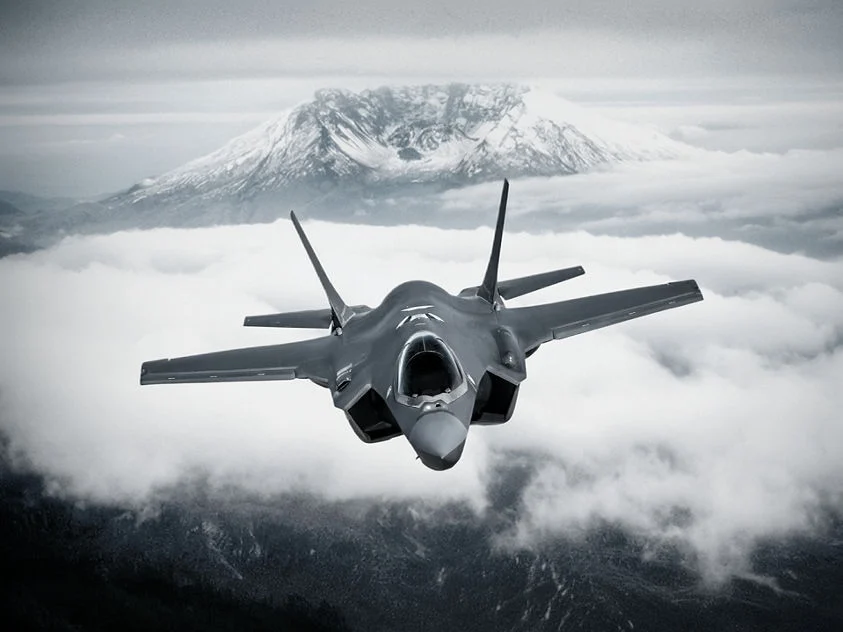
Honeywell Aerospace has initiated a series of sustainment, reliability, and production-capacity programs aimed at strengthening F-35 fleet readiness and supporting long-term mission effectiveness for military operators.
These investments target manufacturing capacity, supply-chain resilience, reliability enhancements, and thermal-management systems to ensure aircraft remain mission-capable as operational demands evolve across the platform. The ongoing initiatives are already yielding measurable results, including improved spare parts availability and strengthened sustainment operations across the global fleet.
“With the global F-35 fleet continuing to grow, sustaining readiness requires ongoing investment in both technology and support capacity,” said Rich DeGraff, president and CEO of Control Systems at Honeywell Aerospace. “Everything we are investing in, from reliability improvements and production capacity to next-generation thermal-management technologies, is aimed at helping operators maximize fleet performance today while preparing for future mission demands.”
Central to these support initiatives is Honeywell Aerospace’s integrated Power and Thermal Management System (PTMS), which manages critical flight functions and mission systems across the F-35 enterprise. Developed alongside Lockheed Martin and the Joint Program Office from the inception of the Joint Strike Fighter program, the PTMS has accumulated more than one million flight hours across 1,325 delivered units worldwide.
To accommodate further expansion of the fleet, Honeywell Aerospace is advancing a PTMS Derivative Architecture designed to maintain high commonality with currently fielded systems. This approach allows performance enhancements to be introduced in lower-risk, lower-cost increments that align with ongoing aircraft mission system upgrades.
Internally funded development efforts under this architecture include upgrades to heat exchangers, liquid cooling, and performance software, as well as turbomachine durability improvements. Together, these engineering initiatives are structured to increase cooling capacity, expand operational margins, improve maintainability, reduce lifecycle costs, and support future mission growth while leveraging existing production lines, qualified suppliers, and logistics infrastructure.