



Echodyne examines the challenge of distributing Counter-Uncrewed Aircraft Systems (C-UAS) defense at the scale, tempo, and cost required to address the threat posed by small drones, including the role of precision radar in supporting wider defensive coverage.
The challenge reflects the U.S. experience with improvised explosive devices in Iraq, where inexpensive, widely available threats imposed operational and economic costs far beyond their purchase price. Small UAS now present a related problem across a wider battlespace, threatening military personnel, logistics facilities, ships, airfields, and critical infrastructure. These systems can be assembled from commercial components, deployed in large numbers, and modified faster than traditional acquisition cycles can respond.
Operations in Ukraine have demonstrated the use of small drones for reconnaissance, fire adjustment, explosive delivery, and attacks against individual vehicles or personnel. Iran’s 2026 use of one-way attack drones against U.S. forces and regional targets further highlighted how even a small number of threats penetrating defenses can cause casualties, disrupt operations, and force defenders to expend scarce interceptors.
The challenge extends beyond the relative cost of drones and the weapons used to defeat them. It also involves the expense of maintaining persistent protection and the consequences of individual defensive failures.
Sophisticated militaries, irregular forces, and criminal organizations can all exploit accessible commercial drone technology. C-UAS protection must extend beyond major bases to maneuver forces, temporary positions, ports, airports, borders, and public venues.
In the United States, the SAFER SKIES Act broadened limited C-UAS authorities for qualified state, local, tribal, and territorial agencies operating under federal safeguards. However, extending defensive coverage requires sensors and effectors that can be deployed in sufficient numbers, integrated quickly, and sustained affordably.
Building an Integrated C-UAS Architecture
Britain’s Chain Home radar network demonstrated the importance of combining early warning with coordinated defensive action. The network integrated radar, communications, command-and-control, and fighter aircraft, allowing commanders during the Battle of Britain to concentrate limited forces where they were needed rather than disperse them everywhere.
Modern C-UAS defense requires a comparable distributed sensing and engagement architecture, with sensors capable of detecting, maintaining custody of, classifying, and handing off targets quickly enough for the selected effector to respond.
Electronic warfare can be effective against command-linked drones but may be constrained by spectrum policy, fratricide risks, or autonomous navigation. Guns and rockets require precise tracks and disciplined fire-control solutions, while interceptor drones provide additional reach and flexibility but depend on reliable target cueing.
High-energy lasers and high-power microwave systems offer different cost and magazine advantages, although their performance depends on range, weather, dwell time, and line of sight.
Precision Radar for Small UAS Detection & Tracking
Small drones present demanding radar detection challenges because they may be bird-sized, constructed from low-reflectivity materials, and operated close to terrain, buildings, or vegetation. Fixed-wing and multirotor aircraft exhibit different motion signatures, while individual drones may hover, land, resume flight, or change direction abruptly. The same platform can also carry different payloads or follow different flight profiles.
Effective C-UAS radar performance therefore requires more than detection range. Accurate angular and range data, low-latency measurements, persistent tracking through clutter, reliable classification cues, and interfaces that allow other defensive systems to use radar information are also necessary.
Update rate becomes particularly significant once a target enters an engagement zone. A mechanically rotating radar completing one revolution per second revisits a given azimuth approximately once per second, whereas a fixed electronically scanned panel can revisit its assigned sector many times during that interval.
Although multiple fixed panels are required for full 360-degree coverage, this architecture removes the mechanical revisit constraint and supports sustained attention on maneuvering targets. For fire-control systems, the more frequent radar measurements provide data for estimating target position, velocity, and acceleration, rejecting false tracks, and predicting an intercept point.
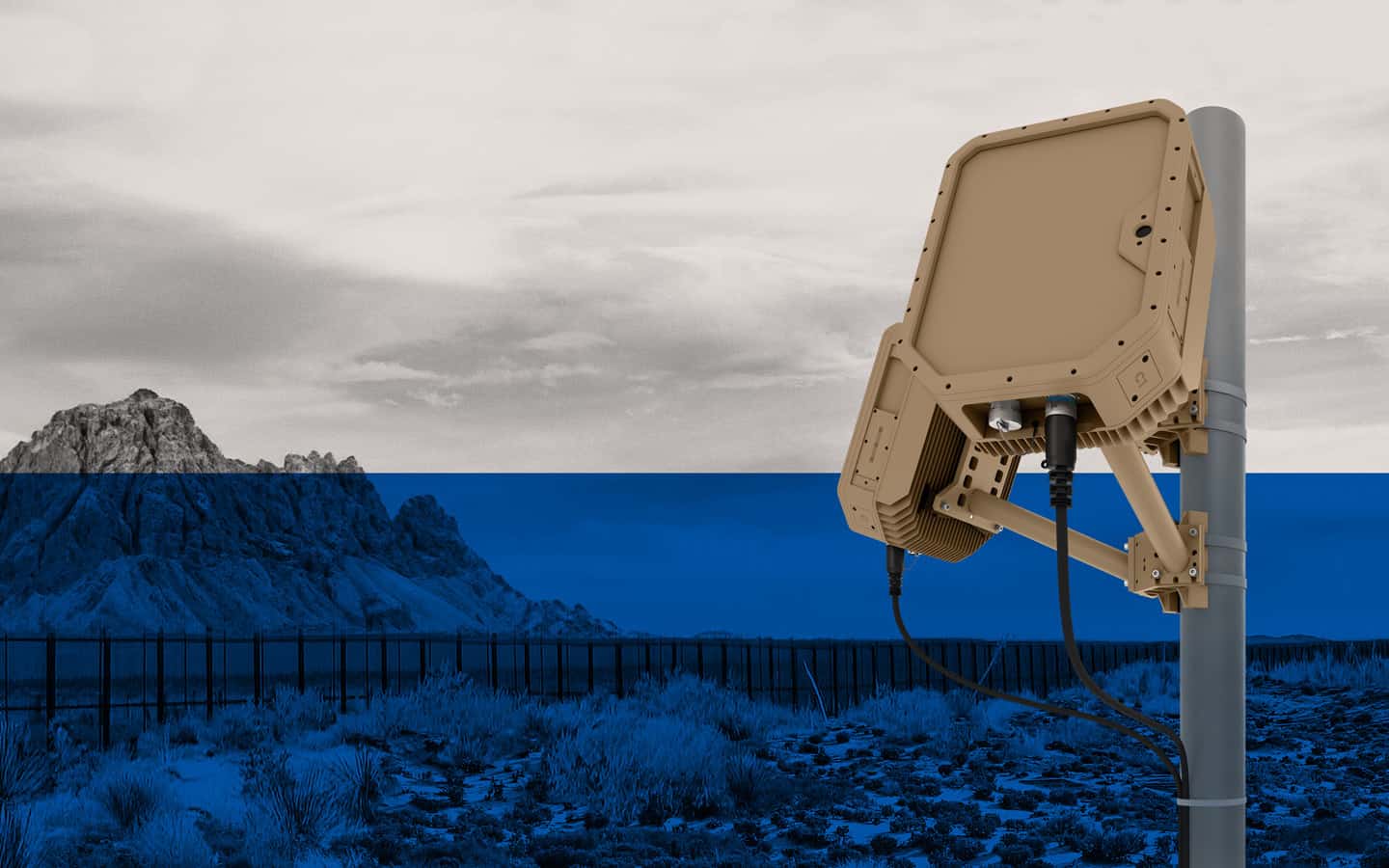
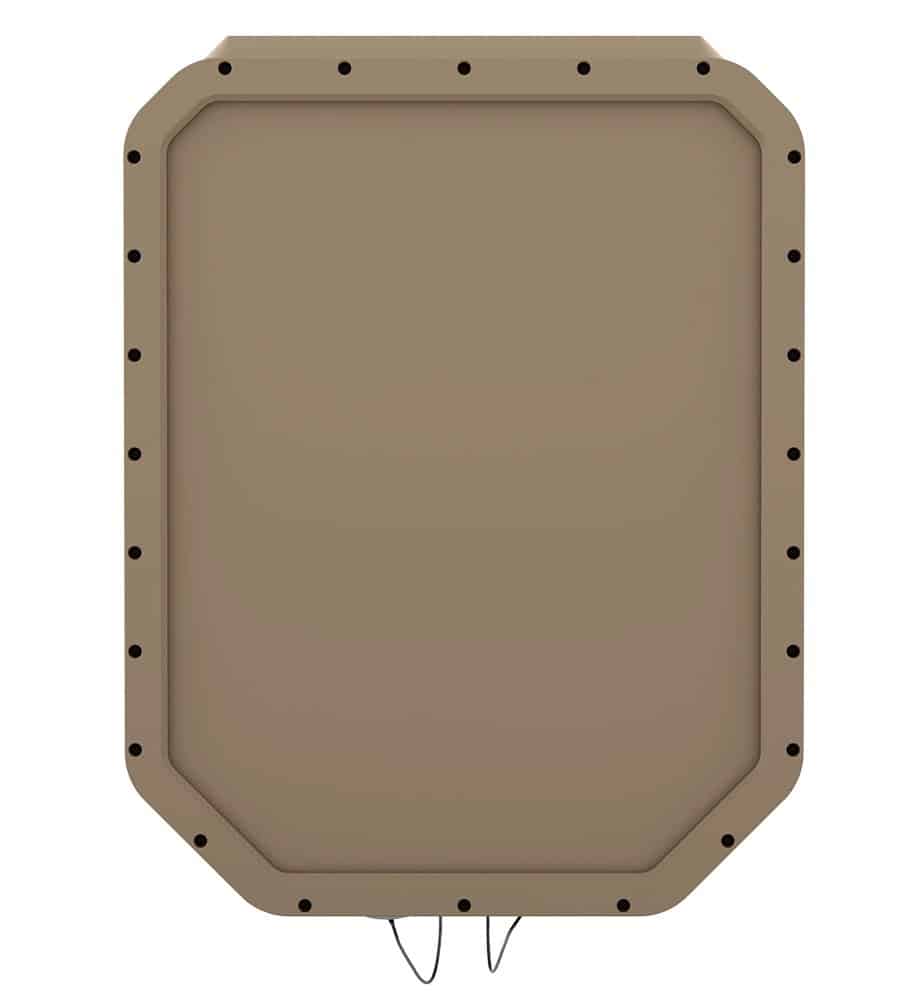
Conventional active Electronically Scanned Array (ESA) radars are large, costly, and relatively immobile, with immobility making them identifiable targets. The procurement argument instead favors compact, highly mobile radars with low Size, Weight, and Power (SWaP) requirements that can supply high-resolution data to remote weapon systems.
Affordability and attritability are also central to making high-fidelity radar practical at the tactical edge and economical enough to distribute across defended areas.
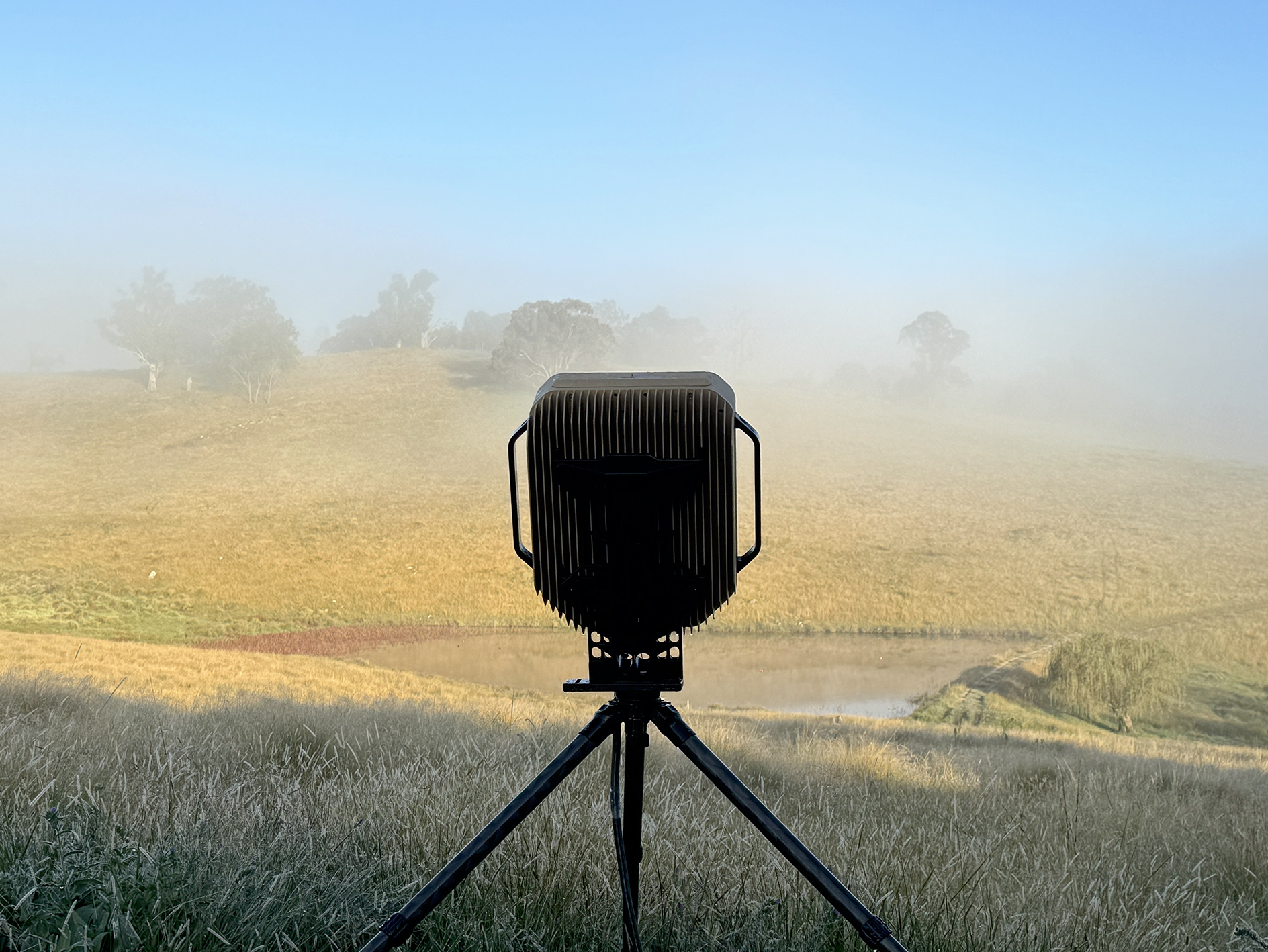
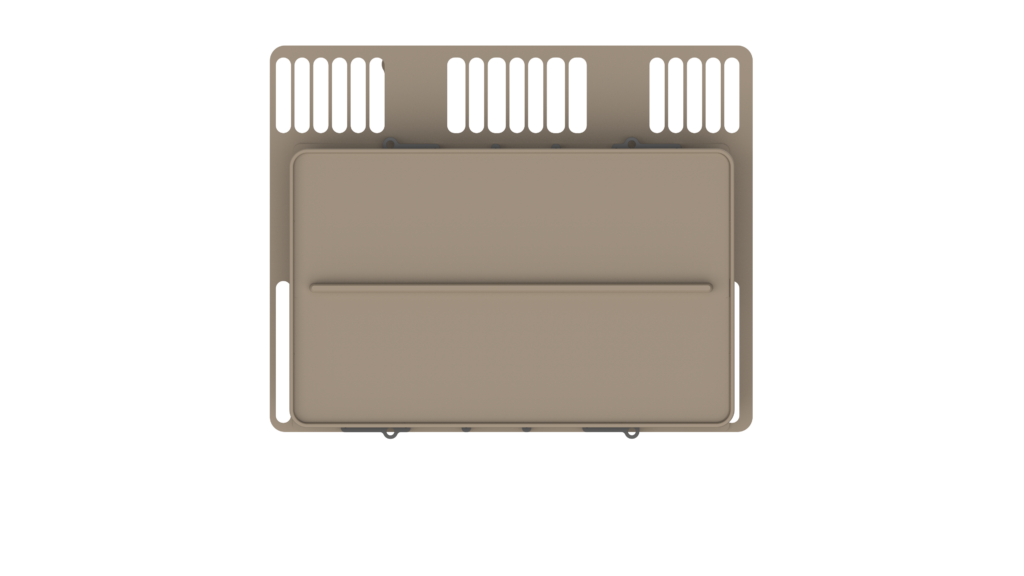
EchoShield Radar Tripod
Integrating Precision Radar with Existing Defensive Systems
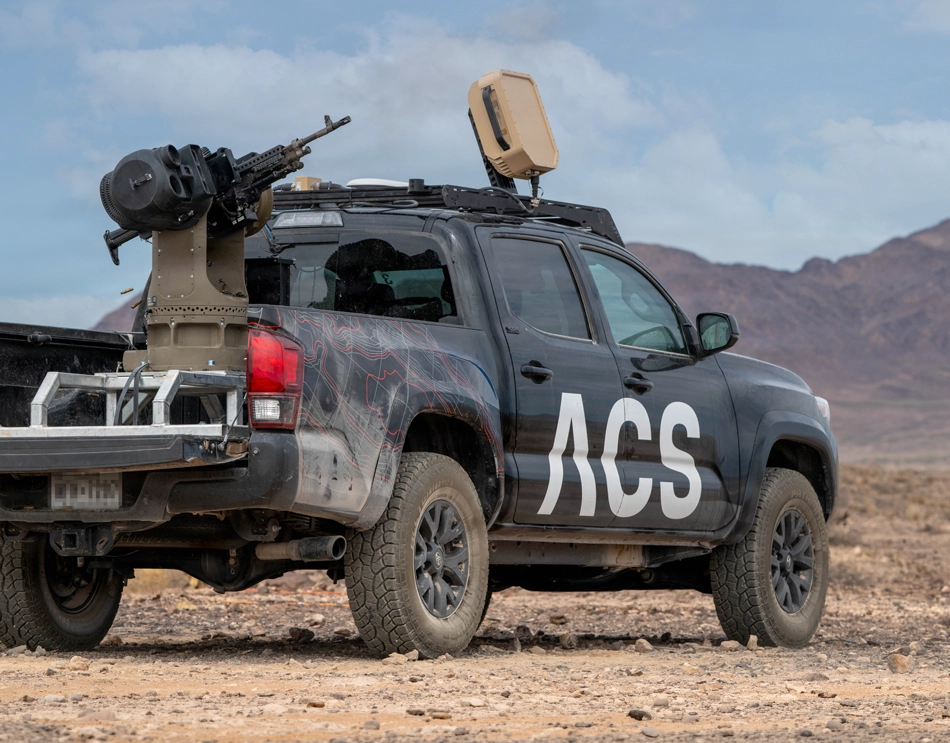
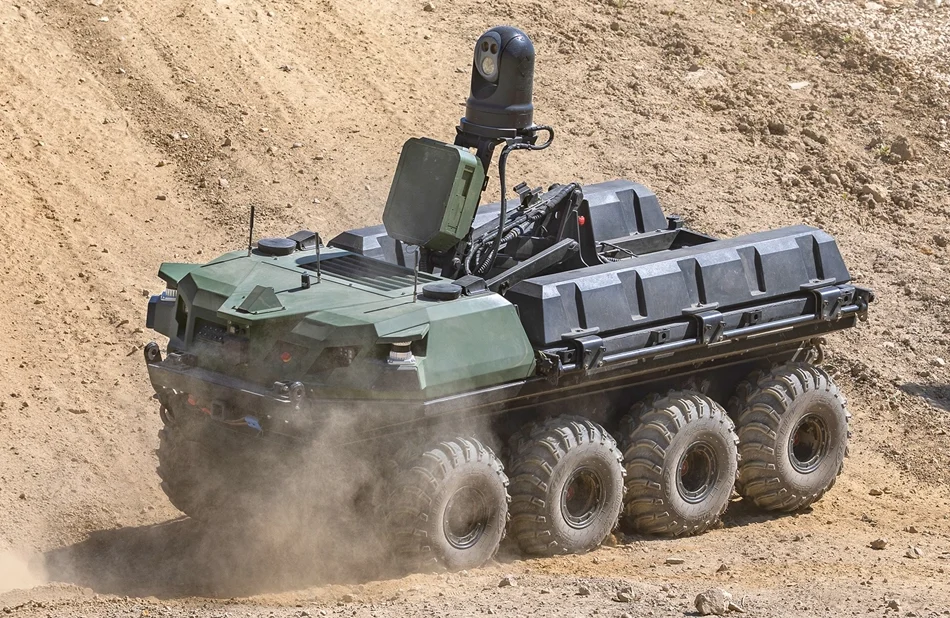
Improving the effectiveness of systems already deployed across military platforms offers a potential route to expanding C-UAS protection. Remote weapon stations, cannons, rocket launchers, electro-optical sensors, and command-and-control networks are already available on crewed and uncrewed platforms.
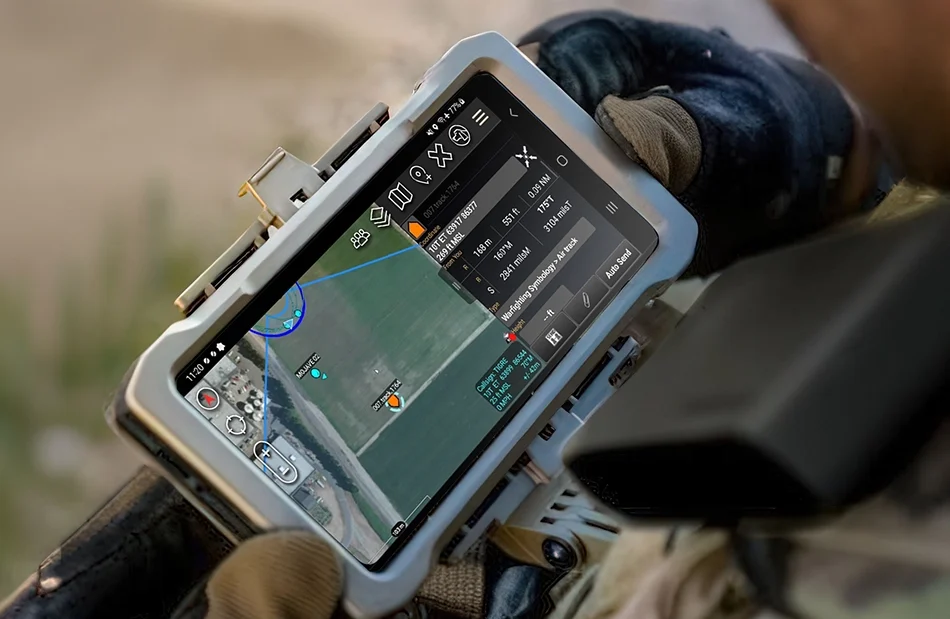
Precision radar can support these systems by detecting targets, cueing optical sensors, maintaining tracks, and providing measurements for fire-control calculations. This approach is particularly relevant to maneuver forces.
For gun systems, improved tracking can support aim-point prediction and reduce the search burden on operators and electro-optical sensors. However, whether a particular cannon can defeat a drone using standard ammunition depends on caliber, dispersion, fire-control performance, target behavior, engagement geometry, and testing.
Precision radar does not eliminate these limitations but provides higher-quality information for engagement calculations. Proximity-fused or programmable ammunition may still be necessary, depending on the weapon and engagement conditions.
The Advanced Precision Kill Weapon System (APKWS) presents another integration opportunity. APKWS uses semi-active laser guidance, and radar does not replace its laser seeker. Instead, radar can detect targets, cue electro-optical/infrared sensors and laser designators, maintain target custody, and provide shared track information to command-and-control systems.
Local integration can reduce dependence on distant offboard sensors and may improve responsiveness during time-sensitive engagements. Similar radar tracking and cueing benefits may apply to interceptor drones, electronic-warfare systems, and directed-energy weapons, although their requirements for track quality and handoff latency differ.
Prioritizing Coverage, Interoperability, & Adaptability
C-UAS procurement should consider overall defensive coverage and integration alongside individual sensor performance, rather than relying solely on maximum detection range or a single scripted intercept.
Evaluation criteria include probability of detection in representative clutter, angular and range accuracy, update rate, latency, track continuity during hovering, landing, and abrupt maneuvers, false-alarm behavior, classification performance, electronic protection, size, weight, and power (SWaP), environmental resilience, and software-update cadence.
Published interfaces and the speed of integration with multiple command-and-control systems and effectors are also important, particularly when avoiding proprietary lock-in.
Coverage density is a strategic consideration. A limited number of high-end systems can protect selected locations, but sustained protection across convoys, temporary command posts, logistics sites, ships, border sectors, and public venues requires a more widely distributed defensive architecture.
Networked sensors must be able to share tracks without making every node dependent on a central headquarters. Software-defined capabilities are also important for adapting to changing drone flight profiles, communications, and autonomy.
A layered, distributed approach combines high-end defensive systems with more compact sensors and lower-cost effectors to extend low-altitude defensive coverage.