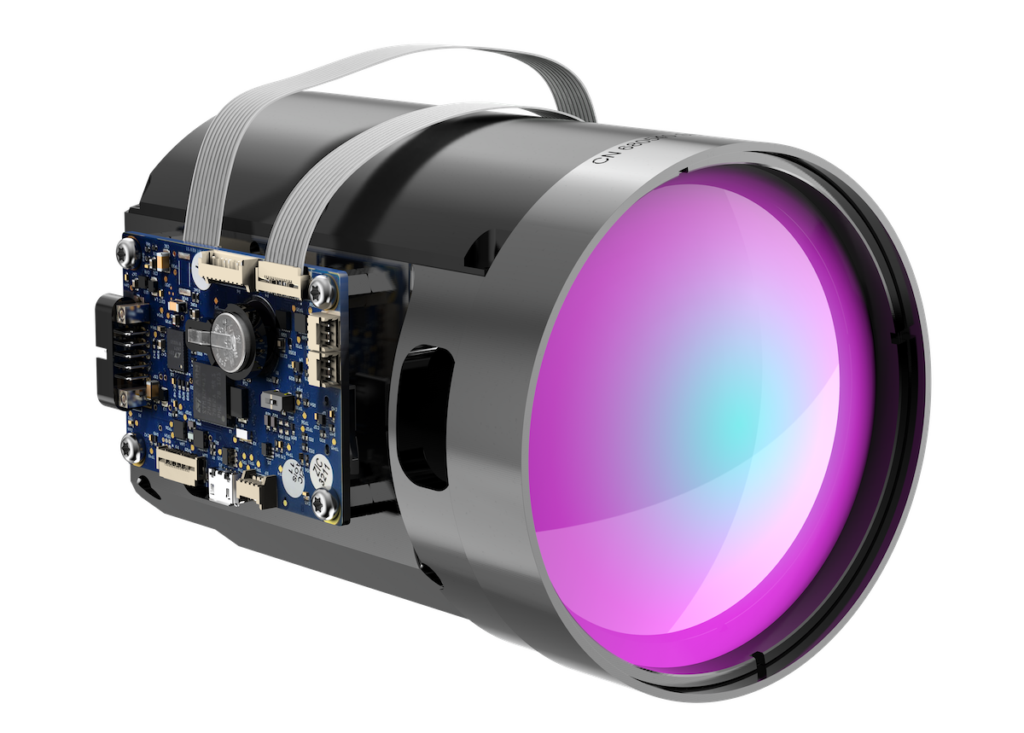
MKS Ophir provides high-performance Short-Wave Infrared (SWIR), Mid-Wave Infrared (MWIR), and Long-Wave Infrared (LWIR) imaging solutions for defense, homeland security, surveillance, and commercial applications.
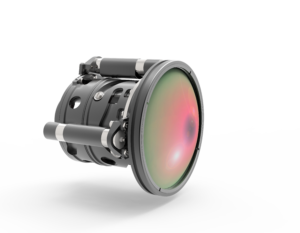
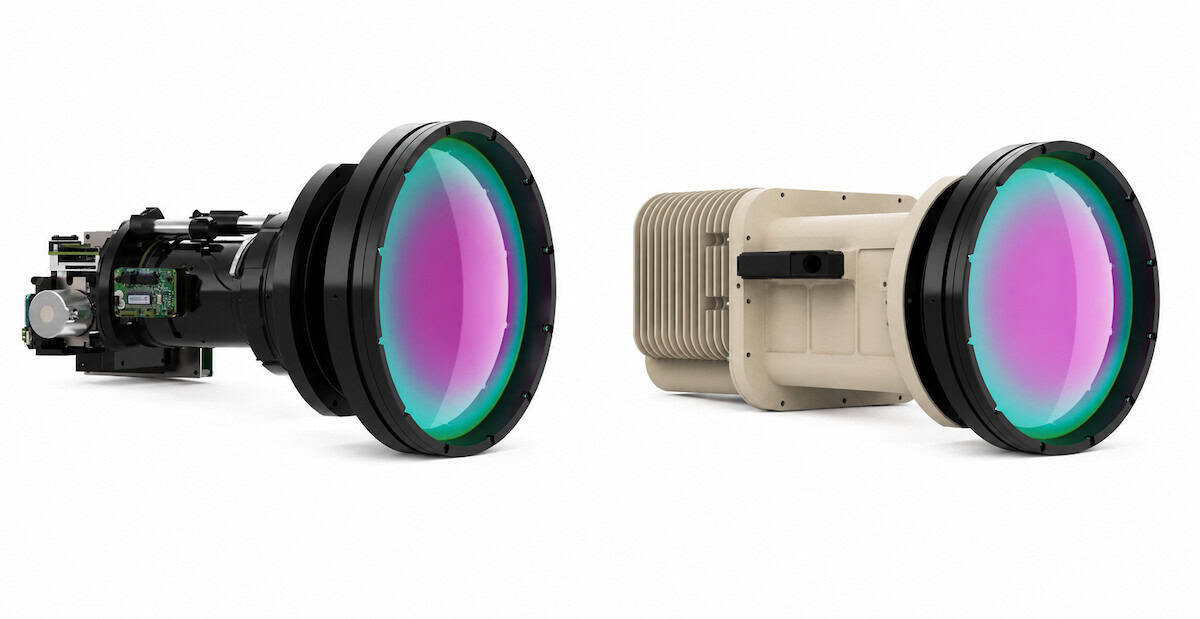
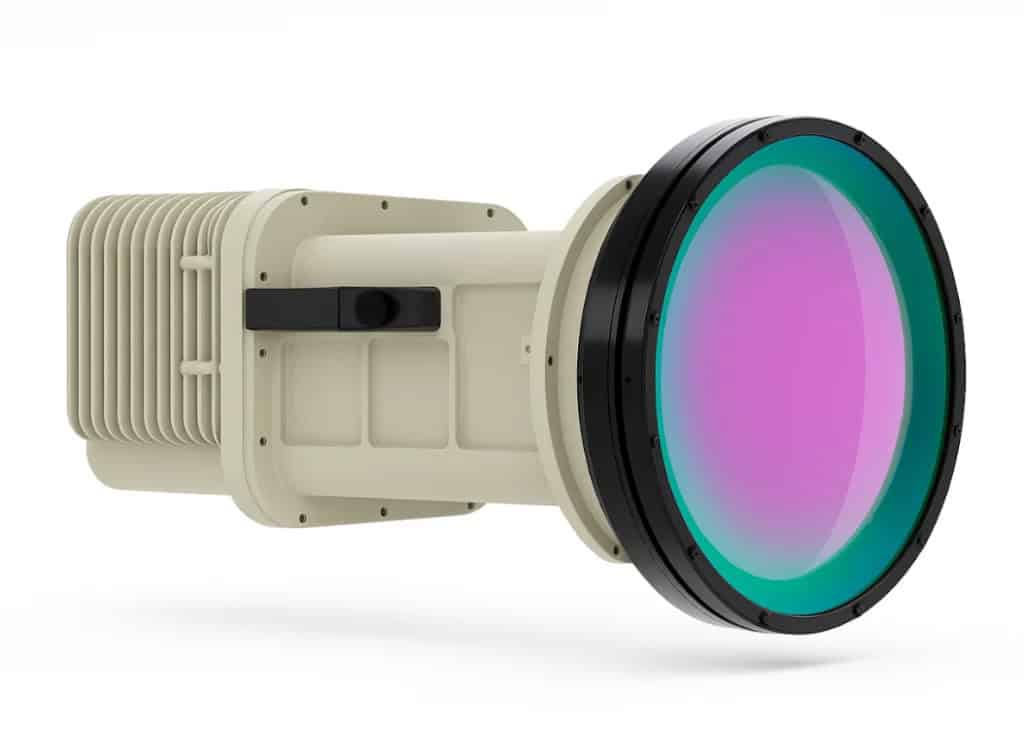
Ophir LightIR 15-75mm f/1.2 LWIR continuous zoom lens. Image credit: MKS Ophir.
In this exclusive Q&A, DA spoke with Doron Barness, Ph.D., Sr. Director of R&D/Engineering at Ophir Optics and Spectra-Physics Lasers, MKS Inc., to discuss the trends shaping defense electro-optics, the development of next-generation LWIR optics, and their performance, integration, and scalability across defense applications.
What are the key trends shaping the defense electro-optics sector today?
The defense electro-optics sector is evolving rapidly, driven by increasingly demanding operational requirements. Modern Intelligence, Surveillance and Reconnaissance (ISR), Counter-Unmanned Aircraft Systems (C-UAS), and airborne intelligence missions require longer detection ranges, higher image quality, faster deployment, focus and boresight retention
At the same time, there is a growing emphasis on designing systems that can scale efficiently across platforms and programs while supporting long operational lifecycles. These trends are pushing the industry toward more advanced optical architectures, with performance, manufacturability, and system-level efficiency engineered together from the outset.
What motivated MKS Ophir to develop its new LWIR optical solutions?
MKS Ophir has taken a forward-looking approach to optical design, focused on optimizing not only performance but also long-term program efficiency and scalability.
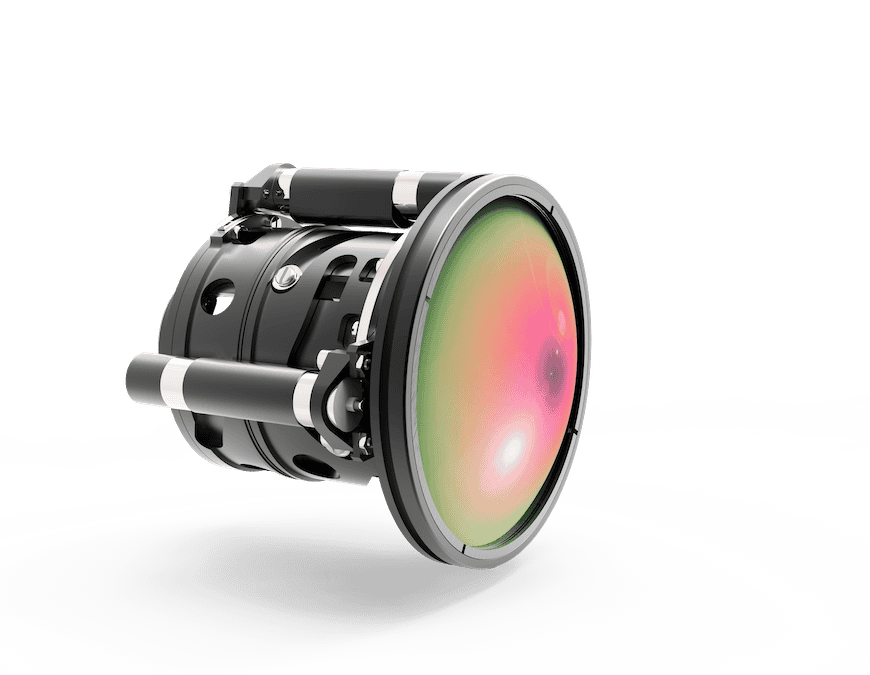
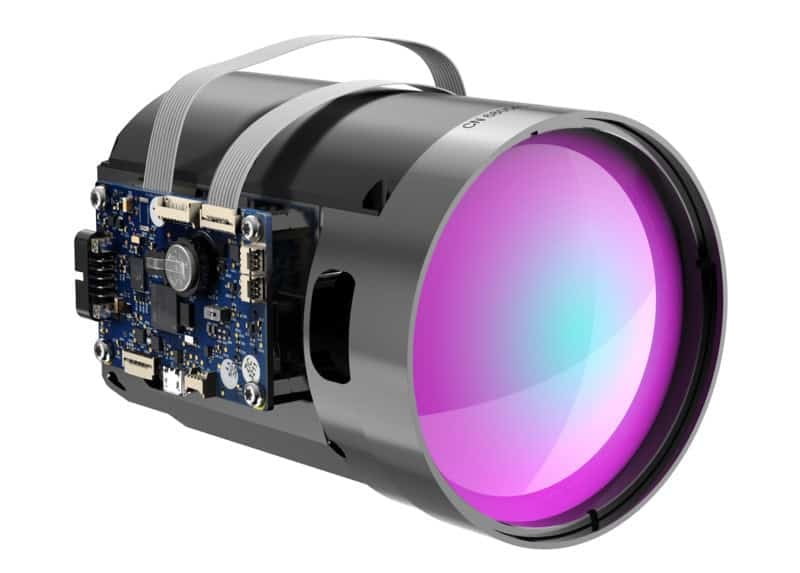
Rather than relying on conventional design approaches, the company re-examined the optical architecture to create solutions that better support modern defense requirements, including compact integration, high performance, and production readiness. This led to the development of MKS Ophir’s next-generation LWIR optics portfolio, including the Ophir® LightIR 15-75 mm f/1.2 continuous zoom lens, designed to combine performance with practical deployability.
Can you explain the engineering approach behind these redesigned optics?
The core innovation is a shift toward a performance-driven optical architecture. MKS Ophir developed a multi-material design approach, redistributing optical power across carefully selected infrared materials and optimizing the system using advanced modeling tools. This approach provides greater design flexibility, enhanced optical efficiency, and improved manufacturability at scale.
In addition, advanced coatings, including Diamond-Like Carbon (DLC), have been incorporated to enhance durability and environmental robustness in demanding operational conditions. The result is a fully re-engineered optical system, rather than an incremental improvement.

Precision assembly of an infrared optical component. Image credit: MKS Ophir.
How do you maintain high image quality and performance with this approach?
Performance was the starting point for the entire design process. The new optics provide high transmission of approximately 85-91% in the 8-12 µm band, fast apertures of f/1.0-f/1.2 for enhanced sensitivity, and consistent image quality across wide Field-Of-View (FOV) ranges.
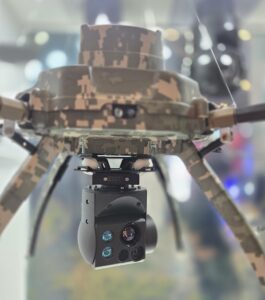
Ophir LWIR optics integrated into drone payload. Image credit: MKS Ophir.
By optimizing the optical system holistically, MKS Ophir aims to preserve image quality, detection range, and efficiency. In practice, this means users benefit from high-performance thermal imaging with enhanced system-level design flexibility.
What advantages do the new zoom and fixed-focus optics offer for mission-critical applications?
The portfolio is designed to support real-world operational workflows, from wide-area surveillance to detailed target identification.
The LightIR 15-75 mm f/1.2 continuous zoom lens provides a wide-to-narrow horizontal field of view of 29.9° to 5.8° for 12 µm pixel pitch detectors, enabling seamless transitions between search and identification modes. The lens combines a compact, lightweight 349 g design for airborne and unmanned platforms with motorized zoom and focus for dynamic operation and high durability for harsh environments.
Complementing this, the fixed-focus (1-FOV) portfolio offers full FOV coverage, from ultra-wide situational awareness to narrow-field identification. This enables platform scalability and mission adaptability across defense applications.
How do these optics support long-term programs and multi-platform deployments?
Long-term defense programs require consistency, repeatability, and scalability. MKS Ophir’s optical solutions are designed to support efficient production ramp-up and volume manufacturing, platform standardization across multiple systems, and stable performance over extended operational lifecycles. By combining zoom and fixed-FOV options within a unified design framework, the company aims to help customers streamline integration and maintain consistency across platforms.
How easy is it for OEMs to integrate these new optics into their systems?
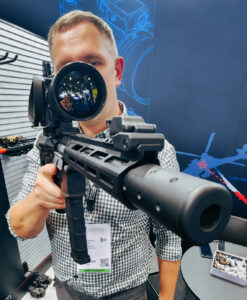
Ophir LWIR optics demonstrated in a handheld thermal imaging application. Image credit: MKS Ophir.
Ease of integration is a key priority. Specifically for the redesign of the 15-75mm lens, MKS Ophir provides adapter solutions that simplify the transition to updated optical architectures while minimizing impact on existing systems. For new platforms, the design flexibility of these optics enables more efficient system integration, helping to reduce development time and complexity.
Looking ahead, how do you see infrared optical design evolving?
Infrared optical design is moving toward more advanced, high-performance, flexible, and scalable architectures. Future systems are expected to incorporate performance-driven design methodologies, multi-material optimization, and compact, high-efficiency optical systems.
MKS Ophir is continuing to expand its portfolio in support of these trends, combining advanced optical engineering with global manufacturing capabilities to meet the evolving needs of defense and security customers. The company’s focus is on enabling next-generation infrared imaging systems that deliver both performance and long-term operational value.
Thank you for your time. It has been a pleasure speaking with MKS Ophir about the evolution of infrared optical design and the requirements shaping next-generation defense imaging systems.