NDAA-compliant batteries are defense power solutions sourced and produced in accordance with applicable National Defense Authorization Act battery procurement requirements. Compliance can involve final assembly, battery and cell manufacturers, Foreign Entity of Concern (FEOC) status, functional cell component sourcing, cost-based thresholds, and technology licensing.
This technical guide covers supply-chain traceability, DFARS implementation, domestic preference rules, restricted entities, material-origin requirements, and technical qualification.
If you design, build or supply NDAA-Compliant Batteries, create a profile to showcase your capabilities and connect with visitors who have an active requirement for your solutions.
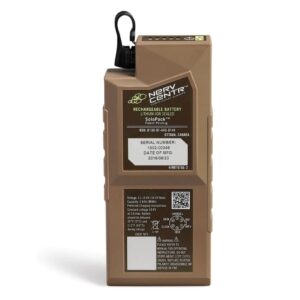
Rugged, rechargeable li-ion battery for charging and powering operational devices on the battlefield
Rugged, rechargeable li-ion battery for charging and powering operational devices on the battlefield
... as 64 AA NiCd batteries and offers 4 times the power density, guaranteeing best-in-class power... ......217;s slim design reduces weight burden and the number of disposable batteries carried by...
Battery procurement for U.S. military and defense systems is moving toward much deeper supply-chain scrutiny. Recent National Defense Authorization Acts address not only where a battery is assembled, but also the entities involved in production, the origin of functional cell components, ownership and control, and technology licensing used in the production of advanced batteries and cells.
NDAA battery compliance therefore depends on more than final manufacturing location. The applicable requirements vary according to the battery, acquisition program, contract or agreement, component supply chain, and entities involved. Other federal and DoD sourcing rules can apply alongside the battery-specific NDAA provisions, making traceability increasingly important throughout the defense battery supply chain.
NDAA Battery Procurement Requirements
Several successive NDAAs now shape defense battery acquisition. The FY2024 NDAA introduced restrictions on batteries produced by specified manufacturers, the FY2025 NDAA established requirements for a department-wide battery strategy, and the FY2026 NDAA created a broader statutory framework for advanced batteries and cells.
FY2024 NDAA Section 154
Beginning October 1, 2027, Section 154 prohibits DoD funds from being obligated or expended to procure batteries produced by CATL, BYD, Envision Energy, EVE Energy, Gotion High-Tech, Hithium Energy Storage Technology, or their successors. A battery is treated as produced by one of these entities if the entity assembles or manufactures the final product or creates or otherwise provides a majority of the components used in the battery. The Secretary of Defense may waive the restriction.
The provision therefore reaches further than the brand appearing on the finished battery. A different pack manufacturer does not necessarily remove Section 154 concerns where a listed entity assembles or manufactures the final product or provides a majority of the battery’s components.
FY2025 NDAA Battery Strategy
Section 883 of the FY2025 NDAA requires a DoD-wide battery strategy addressing supply-chain risk, diminishing manufacturing capability, material shortages, legacy batteries, standardization, testing and certification, and future requirements. It also calls for an accounting of advanced batteries used across current and future applications, including obsolete batteries in existing systems.
This provision is primarily concerned with defense battery strategy and industrial-base resilience rather than creating a separate sourcing prohibition or procurement percentage. It nevertheless reinforces the broader transition toward coordinated, traceable and resilient battery procurement.
FY2026 NDAA Section 842
Section 842 of the FY2026 NDAA added 10 U.S.C. § 4865. It requires the Secretary of Defense to procure advanced batteries and cells whose functional cell components and technology, whether acquired as end items or embedded within warfighting and support systems, are not owned, sourced, refined or produced from a foreign entity of concern.
The requirement is platform-agnostic. It can apply across defense systems and equipment wherever an in-scope advanced battery or cell is procured under a covered acquisition, rather than being limited to unmanned systems or any other particular technology sector.
NDAA Battery Compliance Timeline
The principal implementation dates apply to different statutory requirements. They should therefore be considered separately rather than treated as a single compliance deadline.
Effective date
Requirement
October 1, 2027
FY2024 NDAA Section 154 restriction on batteries produced by the six specified entities or their successors.
January 1, 2028
10 U.S.C. § 4865 applies to new acquisition programs.
January 1, 2029
10 U.S.C. § 4865 applies to standard batteries.
January 30, 2031
10 U.S.C. § 4865 applies to existing acquisition programs.
Section 842 applies only to contracts or other agreements entered into after December 18, 2025. New and existing acquisition programs are distinguished according to whether they had reached engineering and manufacturing development, Milestone B, or an equivalent decision point before enactment. A standard battery is defined as one used in more than one weapons system and not managed by one portfolio acquisition executive.
These phased dates provide different transition periods for new programs, common battery types and established acquisition programs.
Foreign Entities of Concern
Section 842 uses the foreign entity of concern, or FEOC, definition in 42 U.S.C. § 18741(a) and expressly includes the entities specified in FY2024 NDAA Section 154. The underlying definition extends beyond a list of battery manufacturers and can encompass foreign entities based on factors including ownership, control, covered-nation jurisdiction or direction, sanctions status and specified national-security determinations.
FEOC compliance therefore requires more than checking the name of the immediate battery supplier. Relevant relationships farther upstream in cell production, component sourcing and technology licensing can affect the compliance position.
Functional Cell Components & The 95 Percent Rule
Section 842 defines functional cell components to include cathode materials, anode materials, separators, anode foils and other functional materials contributing to the chemical processes needed for energy storage. The definition specifically includes solvents, additives, electrolyte salts and internal safety devices.
This definition places component-level sourcing at the center of the new framework rather than relying solely on the country in which the finished battery pack is assembled.
Cost-Based Compliance Threshold
The statute provides a sourcing and production compliance route where three conditions are met. Final assembly must be performed by an entity other than a FEOC, functional cell components representing more than 95 percent of the costs of all functional cell components must come from non-FEOC sources, and the battery or cell must be produced without technology licensed from a FEOC.
The 95 percent threshold is therefore explicitly based on cost. It is not calculated from battery mass, material weight, volume, mineral content or the percentage of individual parts that originate from compliant sources.
Domestic Recycling and Reprocessing
For the 95 percent calculation, Section 842 provides that material or a component from an entity that has been recycled and reprocessed domestically is considered to originate from that entity regardless of its original source.
Domestic recycling can therefore affect the statutory sourcing calculation, although the separate conditions concerning final assembly and FEOC-licensed technology still apply when relying on this sourcing and production compliance route.
Cell Manufacturing & Final Assembly
Section 842 does not impose a blanket requirement for every compliant cell to be manufactured in the United States. Its express sourcing and production compliance route focuses on non-FEOC final assembly, the more-than-95-percent functional component cost threshold, and production without FEOC-licensed technology.
A cell manufactured outside the United States is not automatically noncompliant solely because of its manufacturing location. Conversely, U.S. cell or pack assembly does not automatically establish compliance where prohibited component sourcing, FEOC involvement or technology licensing remains in the supply chain.
This distinction also allows qualifying allied and other non-FEOC supply chains to remain relevant, subject to any additional domestic preference or contract-specific requirements governing the acquisition.
Compliance Beyond the Battery Manufacturer
Manufacturer-level status alone is insufficient to establish all of the facts required by § 4865. The statutory framework reaches final assembly, functional cell components and battery technology, which can require visibility beyond the pack manufacturer and into the underlying cell supply chain.
A defensible compliance record may therefore include the following evidence:
Battery and cell provenance: Identification of pack assemblers, cell manufacturers and relevant manufacturing entities.
Functional component sourcing: Traceability for cathodes, anodes, separators, foils, electrolytes, salts, additives and internal safety devices.
Cost information: Records supporting the more-than-95-percent non-FEOC functional component cost calculation.
Entity screening: Verification of ownership, control, successor relationships and applicable FEOC status.
Technology documentation: Information covering production technology and relevant licensing arrangements.
Configuration control: Reassessment when cells, materials, suppliers, manufacturing locations, ownership or licensed technology change.
These controls provide substantially stronger evidence than a general manufacturer declaration alone.
Section 842 Exclusions & Waivers
Section 842 excludes batteries or cells acquired for cell phones, laptops, personal electronic devices and medical equipment intended for office, administrative, hospital or non-combat environments. It also excludes commercially available off-the-shelf batteries used only for equipment maintenance and batteries acquired for DoD research, development, testing and evaluation.
The Secretary of Defense may also grant a one-year waiver for a specific system or battery when satisfactory compliant products cannot be obtained in sufficient quantity, when needed, at reasonable cost. A separate waiver basis applies to certain embedded batteries that are not functional enablers of operational capability and present no security or sourcing risk. The Secretary may delegate this waiver authority only to the Under Secretary of Defense for Acquisition and Sustainment.
These are defined statutory exclusions and waiver mechanisms rather than general exemptions from supply-chain verification.
Additional Defense Procurement Restrictions
NDAA battery compliance operates alongside other federal and DoD acquisition requirements. Satisfying Section 154 or § 4865 does not establish compliance with every restriction that may apply to the battery, its components or the larger defense system.
Section 805 and Section 1260H
FY2024 NDAA Section 805 creates separate restrictions associated with entities designated under Section 1260H and entities subject to their control. The direct contracting prohibition took effect June 30, 2026. A broader goods and services prohibition takes effect June 30, 2027 for contracts that include goods or services produced or developed by covered entities, including through indirect procurement. The statute includes important exceptions, including for components as defined in federal procurement law, so the 2027 provision should not be treated as an unrestricted ban on every upstream component in a defense supply chain.
Buy American and Qualifying-Country Rules
DoD Buy American requirements apply a separate domestic end-product test. For relevant manufactured end products, the current DFARS generally requires U.S. manufacture together with the applicable U.S. and qualifying-country component cost threshold, which is 65 percent for deliveries from 2024 through 2028 and 75 percent from 2029, subject to applicable exceptions and contract provisions.
These percentages are independent of the Section 842 more-than-95-percent non-FEOC functional cell component cost test.
Specialty Metals and Covered Materials
10 U.S.C. § 4863 restricts specified specialty metals in certain defense end items and components, while § 4872 covers materials including certain permanent magnets, tungsten, tantalum and molybdenum. Depending on the battery construction and the wider end item, these provisions can introduce separate material-origin requirements.
Forced-Labor and Import Controls
Federal import controls can restrict the entry of goods where supply chains involve prohibited forced-labor practices or entities subject to applicable import restrictions. Battery minerals, materials, and components may therefore face separate import eligibility requirements independently of their NDAA status.
Technical Qualification Remains Separate from NDAA Compliance
NDAA compliance concerns sourcing eligibility. It does not establish electrical performance, safety, environmental suitability, interoperability or qualification for a military system.
Defense batteries may separately require qualification for temperature, shock, vibration, altitude, immersion, electromagnetic compatibility, transport safety, thermal behavior, charging, storage life and other mission conditions. Replacing a restricted cell can also affect Battery Management System (BMS) calibration, voltage behavior, packaging, thermal management, software and safety certification.
A compliant replacement battery therefore still requires the engineering and qualification work appropriate to the affected military system.
Preparing for the 2027 to 2031 Compliance Transition
The phased statutory dates provide time for supply-chain investigation and source transition, but redesigning or replacing military batteries can require significant engineering work. Existing programs may depend on cells that cannot be substituted without changes to power characteristics, charging, thermal design, mechanical integration or qualification.
New programs face § 4865 requirements from January 2028, followed by standard batteries in 2029 and existing acquisition programs in 2031. Programs can use this transition period to map cell and component sources, identify FEOC dependencies, establish functional component cost data, qualify alternatives and manage legacy inventory.
Compliance also requires continuing oversight. Ownership changes, new component sources, manufacturing transfers, licensing arrangements or changes in restricted-entity status can alter the compliance position even when a battery retains the same commercial part number.
DFARS Implementation
Section 842 directed the Secretary of Defense to revise the DFARS within 180 days of enactment to incorporate § 4865. That statutory implementation deadline was June 16, 2026. The statute itself establishes the phased sourcing requirements and applies only to contracts or other agreements entered into after December 18, 2025.
DFARS Case 2024-D011 now addresses implementation of both FY2024 NDAA Section 154 and FY2026 NDAA Section 842. The current 2026 Unified Agenda continues to list the case at the proposed-rule stage, while October 1, 2027 remains the statutory effective date of the Section 154 prohibition.
Defense contractors and acquisition teams therefore need to consider both the enacted statutory requirements and the DFARS clauses, representations, flowdowns and procedures applicable to the individual solicitation or contract as implementation develops.
NDAA-Compliant Battery Procurement
Defense battery compliance is shifting from a finished-product assessment toward traceability across the battery supply chain. Section 154 restricts batteries produced by specified entities, while Section 842 and 10 U.S.C. § 4865 extend the analysis to functional cell components, FEOC involvement, final assembly, component costs and licensed technology.
A U.S.-assembled battery is not automatically compliant, and an overseas-manufactured cell is not automatically prohibited. The specific sourcing, entity and technology requirements must be satisfied, supported by evidence appropriate to the acquisition.
At the same time, NDAA compliance remains only one part of military battery procurement. Domestic preference rules, restricted-entity provisions, specialty materials, forced-labor controls, import requirements and technical qualification can all affect whether a battery is eligible and suitable for a particular U.S. defense program.
Advancing Defense Capability Through Strategic Collaboration
Defense Advancement works with major OEMs to foster collaboration and increase engagement with SMEs, to accelerate innovation and drive defense capabilities forward.