Showcase your capabilities
If you design, build or supply Satellite Phones, create a profile to showcase your capabilities and connect with visitors who have an active requirement for your solutions.



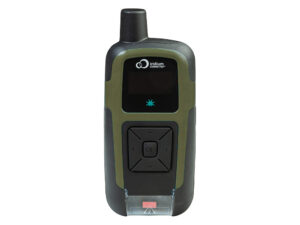
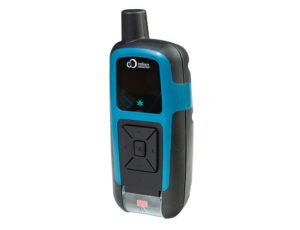
Military satellite phones are portable SATCOM devices that provide beyond-line-of-sight voice, messaging, and data connectivity where terrestrial or tactical networks are unavailable. These systems include handheld rugged satellite phones, secure and encrypted devices, satellite push-to-talk equipment, tracking terminals, and portable voice and data solutions.
This page showcases leading military satellite phone manufacturers with solutions for defense, government, maritime, vehicle, and dismounted operations.
Read the Technology Overview
Reliable, Resilient and Secure Satellite Communications & Assured PNT Solutions for Mission-Critical Applications

If you design, build or supply Satellite Phones, create a profile to showcase your capabilities and connect with visitors who have an active requirement for your solutions.

Military satellite phones provide beyond-line-of-sight voice and data connectivity where terrestrial cellular networks, local infrastructure, or conventional line-of-sight radio links are unavailable. These handheld devices may support deployed personnel, command elements, vehicle crews, maritime teams, or emergency responders operating across remote or infrastructure-denied environments.
Unlike a standard commercial mobile phone, a military-grade satellite phone is typically selected for a combination of satellite coverage, environmental durability, power endurance, interoperability, and security requirements. The appropriate device depends on the mission, satellite constellation, and network architecture. Rugged construction alone does not make a satellite phone suitable for classified communications, which require an approved security solution and appropriate cryptographic controls.
A rugged satellite phone combines portable SATCOM connectivity with housings, controls, batteries, connectors, and antennas designed for field use. These handheld satellite phone systems may be evaluated for resistance to temperature extremes, moisture, dust, shock, and vibration according to the anticipated operating environment.
Secure satellite phones add communications security to the underlying satellite link. An encrypted satellite phone may protect voice, messaging, or data through encryption technologies appropriate to the application, but procurement teams must distinguish between commercial encryption, government-approved architectures, and solutions authorized for classified information. Security therefore has to be assessed across the complete communications system.
Satellite push-to-talk equipment provides group-oriented voice communications over satellite networks, allowing geographically dispersed users to communicate in a radio-like manner. For tactical teams, this can offer a useful bridge between traditional two-way radio procedures and wide-area SATCOM, particularly where units are separated beyond terrestrial radio coverage.
Compact satellite messaging devices prioritize short data transmissions rather than continuous voice connectivity. A GPS satellite phone or dedicated satellite tracker can combine Global Navigation Satellite System (GNSS) location information with messaging and position reporting, helping command elements maintain awareness of personnel, vehicles, or teams operating beyond conventional network coverage.
Some portable terminals allow smartphones or rugged end-user devices to access satellite services through a separate SATCOM interface. In parallel, 3GPP specifications continue to develop 5G Non-Terrestrial Network (NTN) satellite access for user equipment. As a result, the term 5G satellite phone increasingly overlaps with direct-to-device and NTN technologies, although defense security, coverage, and availability requirements remain separate considerations.
Larger portable terminals can provide greater data capability, external antenna options, or interfaces for multiple users. They complement handheld sat phones where operations require more than basic voice or low-rate messaging, while remaining significantly more deployable than fixed satellite infrastructure.
Dismounted personnel may use a military sat phone when terrain, distance, or lack of infrastructure makes other communications paths impractical. A military tactical satellite phone can provide an additional beyond-line-of-sight channel for dispersed teams, especially when integrated into a broader communications plan rather than treated as the sole link. Terrain masking, buildings, foliage, interference, jamming risk, and transmission signature should also be considered.
Military satellite phones can support Command, Control, Communications, Computers, Intelligence, Surveillance, and Reconnaissance (C3ISR) activities by carrying voice, status messages, coordinates, and other mission data. Tracking functions can also provide position updates from remote users, subject to operational security, emission control, network capacity, and data protection requirements.
Remote sites may employ mobile satellite phones as backup or supplementary communications when fiber, cellular, microwave, or tactical networks are unavailable. A government satellite phone can also support administrative or operational coordination at temporary facilities where installing permanent communications infrastructure would be impractical.
Vehicle crews can connect compatible sat phones to external antennas to improve usability while moving or operating inside enclosed platforms. A maritime satellite phone or marine satellite phone may support surface operations away from coastal networks, while an aircraft satellite phone requires an installation, antenna, service architecture, and applicable platform approval appropriate to the aircraft and operating environment.
Search and rescue teams, disaster-response units, and government agencies can use satellite phones when storms, earthquakes, conflict, or infrastructure failures disrupt terrestrial communications. Their value in these scenarios comes from an independent communications path, provided satellite visibility, available network capacity, charged batteries, service access, and airtime provisioning are maintained.
Military satellite phones are particularly useful within Primary, Alternate, Contingency, and Emergency (PACE) communications planning. PACE establishes multiple methods of maintaining communications rather than relying on a single network or device.
The specific position of satellite communications within a PACE plan depends on the mission, available networks, threat environment, and required information assurance. PACE paths should also avoid common network or power dependencies.
No single standard defines every military satellite telephone requirement. Relevant standards and security requirements are selected according to the platform, procurement program, operating environment, and communications architecture.
Qualification should be tied to an explicit operational requirement rather than assuming that any product marketed as a government satellite phone satisfies the same standards.
Selection should balance communications performance with the practical realities of deployment, sustainment, security, and network access.
The most suitable military satellite phones are therefore those matched to the mission architecture, not simply the most rugged handsets. Coverage, security, interoperability, environmental qualification, network resilience, and sustainment should be evaluated together when selecting equipment for defense and government users.


 Searching Companies & Products


 Subscribe to the Weekly eBrief
The latest engineering and technical developments straight to your inbox - join thousands of engineers who receive it.
Subscribe to the Weekly eBrief
The latest engineering and technical developments straight to your inbox - join thousands of engineers who receive it.