Showcase your capabilities
If you design, build or supply Media Converters, create a profile to showcase your capabilities and connect with visitors who have an active requirement for your solutions.




Select military-spec media converters from qualified suppliers and manufacturers to support secure, high-reliability Ethernet and fiber optic connectivity across defense networks. These media converters bridge copper and fiber interfaces in fixed, mobile, and deployable military communication systems and tactical networks, where secure data transmission, performance, environmental tolerance, and long-term availability are critical procurement considerations.
Read the Technology Overview
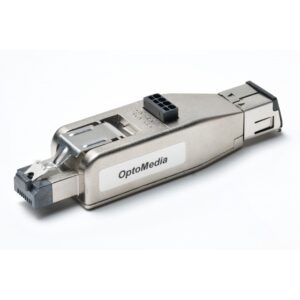
Compact, Lightweight, Rugged Fiber-Optic Modules for Defense Communications

If you design, build or supply Media Converters, create a profile to showcase your capabilities and connect with visitors who have an active requirement for your solutions.

Media converters enable interoperability between copper Ethernet and fiber optic links within defense communication networks, supporting Ethernet over fiber without altering higher-layer protocols. This capability allows military systems to achieve extended reach, higher bandwidth, and improved resistance to electromagnetic interference while maintaining compatibility with existing network architectures.
Across fixed installations, mobile platforms, and deployable environments, defense media converters extend networks, connect distributed sensors, and support backbone communications. These devices typically feature rugged enclosures, hardened printed circuit boards, and support for wide operating conditions, making them suitable for mission-critical applications where reliability, determinism, and survivability are essential.
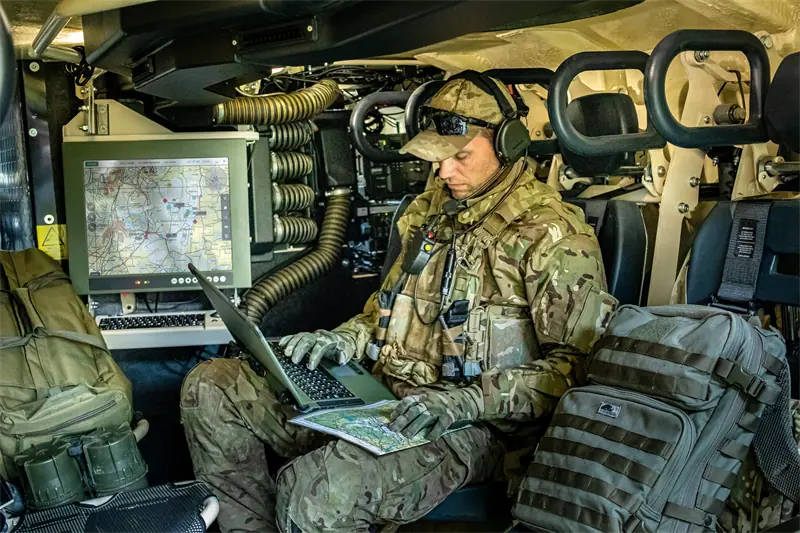
Media converters are widely used in defense and military applications that require secure, resilient networking. Tactical networks benefit from rugged media converters that support rapid deployment and redeployment while maintaining consistent data interfaces. In forward-operating environments, fiber-optic media converters enable network extensions between shelters, vehicles, and sensor systems.
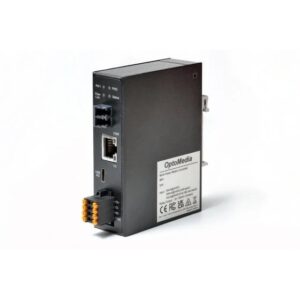
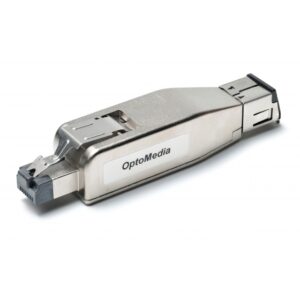
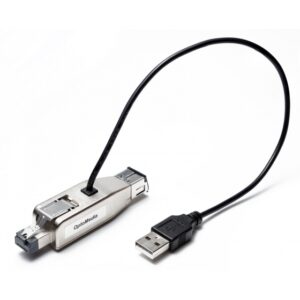
Network Media Converter by OptoMedia Technology
Ethernet to fiber converters supporting high-speed data exchange between mission systems and onboard processing units
Defense networks utilize a wide range of media converter types depending on mission requirements and environmental conditions:
Single-mode ethernet media converters are used in defense networks to support long-distance fiber-optic links that require extended reach and low signal attenuation. Multimode media converters are used in short-range environments such as facilities, vehicles, and localized platform networks where fiber runs are limited, and space constraints are a consideration.
Gigabit Ethernet media converters support high-bandwidth data transmission for applications such as video distribution, sensor fusion, and command system connectivity. Fast Ethernet media converters remain in use in legacy defense systems and deterministic control networks, where lower bandwidth requirements are standard but reliability and timing consistency remain critical.
PoE media converters and power-over-Ethernet media converters deliver both data and electrical power over a single Ethernet connection, reducing cabling complexity in distributed defense systems. These converters are commonly used to support remote devices, including sensors, cameras, and access control equipment, in secure, infrastructure-constrained environments.
Managed media converters provide monitoring and diagnostic capabilities, including link status visibility, optical power measurement, and fault reporting, supporting centralized network management. Unmanaged media converters offer simplified deployment with minimal configuration, making them suitable for fixed installations or isolated defense systems where remote management is not required.
Media converters designed for defense environments incorporate robust hardware architectures to ensure long-term reliability. The printed circuit board layout is optimized for signal integrity, thermal performance, and vibration resistance. High-quality network chipsets support consistent data throughput while minimizing latency.
Power supply design is a critical consideration. Media converters may support internal power supplies or external power supply options, depending on installation requirements. Power connectors are often selected for secure locking and shock- and vibration-resistance.
Thermal management is addressed through integrated heat sinks and advanced cooling systems. Passive cooling is commonly used to reduce mechanical failure points, while metal enclosures help dissipate heat and provide electromagnetic shielding.
Status LEDs and LED indicators provide visual confirmation of link activity, power state, and fault conditions. In defense deployments, these indicators may be designed for low-light or blackout conditions to support operational security.
Fiber-optic media converters use optical transceivers to transmit and receive data over fiber. SFP modules are commonly used to provide flexibility in wavelength, distance, and fiber type. Both single-mode and multimode optical transceivers are supported, depending on network requirements.
The use of removable SFP modules allows defense organizations to standardize media converter platforms while adapting to different mission scenarios. Optical transceivers are selected based on factors such as link budget, environmental tolerance, and compatibility with existing fiber optic communications infrastructure.
Fiber transceivers used in defense applications are often specified for extended temperature ranges and enhanced reliability. These components are critical to maintaining secure data transmission across fiber optic networks.
Rugged media converters are engineered to withstand harsh environmental conditions common in defense operations. Enclosures are typically constructed from metal to provide mechanical protection and electromagnetic shielding. Rugged enclosures are designed to resist dust, moisture, and corrosive atmospheres.
Shock and vibration resistance is essential for mobile and vehicular installations. Media converters may be mounted using secure brackets or integrated into larger systems to ensure stability during transport and operation.
Environmental sealing and conformal coating of printed circuit boards enhance durability and protect against humidity and contaminants. These design features support long-term deployment in challenging environments.
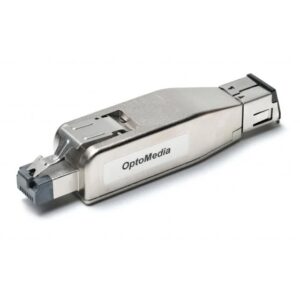
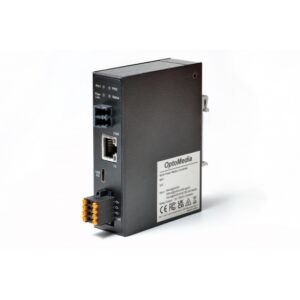
Media-Converter with Ethernet Port by OptoMedia Technology
Media converters are often compared with switches and routers when extending networks. Unlike switches, media converters operate at the physical layer and do not introduce additional network complexity. This simplicity reduces configuration requirements and potential points of failure.
Compared with wireless links, fiber-optic media converters offer deterministic performance, higher bandwidth, and improved security. Fiber-optic communications are difficult to intercept and immune to jamming, making them well-suited for secure defense applications.
Network converters and Ethernet optical converters provide a cost-effective way to extend existing Ethernet infrastructure without extensive redesign. This approach is particularly valuable when upgrading legacy systems to support modern fiber networks.
Defense media converters are typically designed to support standard Ethernet protocols and fiber optic specifications. Compliance with IEEE Ethernet standards ensures interoperability across diverse systems and vendors.
In defense contexts, equipment may also comply with military standards (MIL-STD) for environmental performance, electromagnetic compatibility, and reliability. While specific standards vary by program, adherence to established requirements supports integration into military communication systems.
Interoperability with existing industrial networking equipment is often required, particularly in joint operations and coalition environments. Media converters that support common data interfaces and fiber optic standards facilitate seamless integration.
Media converters are integrated across defense network infrastructure, from backbone to edge deployments. They support network extensions across facilities, vehicles, and field installations while maintaining consistent data transmission characteristics.
In complex defense architectures, media converters enable modular system design. Ethernet over fiber links enable physical distribution of subsystems without compromising performance or security.
By supporting fiber-optic communications, media converters enhance the resilience and scalability of military communication systems. Their role in enabling secure, high-performance data exchange makes them a foundational component in modern defense advancement.


 Searching Companies & Products