Showcase your capabilities
If you design, build or supply Cross Domain Solutions, create a profile to showcase your capabilities and connect with visitors who have an active requirement for your solutions.




A Cross-Domain Solution (CDS) is a critical security interface that functions as an electronic security guard, enabling the absolutely secure and policy-controlled exchange of data between two networks or systems operating at different classification levels (e.g., classified to unclassified, or national to coalition)
Read the Technology Overview

A Cross-Domain Solution (CDS) is far more than just a security device; it’s the controlled interface that makes modern military collaboration possible. A CDS enables the secure exchange of information between networks or systems operating at different classification levels or security domains. In the defense sector, this crucial function frequently means safely moving data between highly classified and unclassified networks—or linking coalition with national systems—all without risking the compromise of sensitive information. Unlike simple firewalls or basic encryption gateways, a CDS doesn’t just block traffic; it enforces both policy and deep content-level security, meticulously inspecting and sanitizing every single transaction to ensure that only authorized, validated data is released.
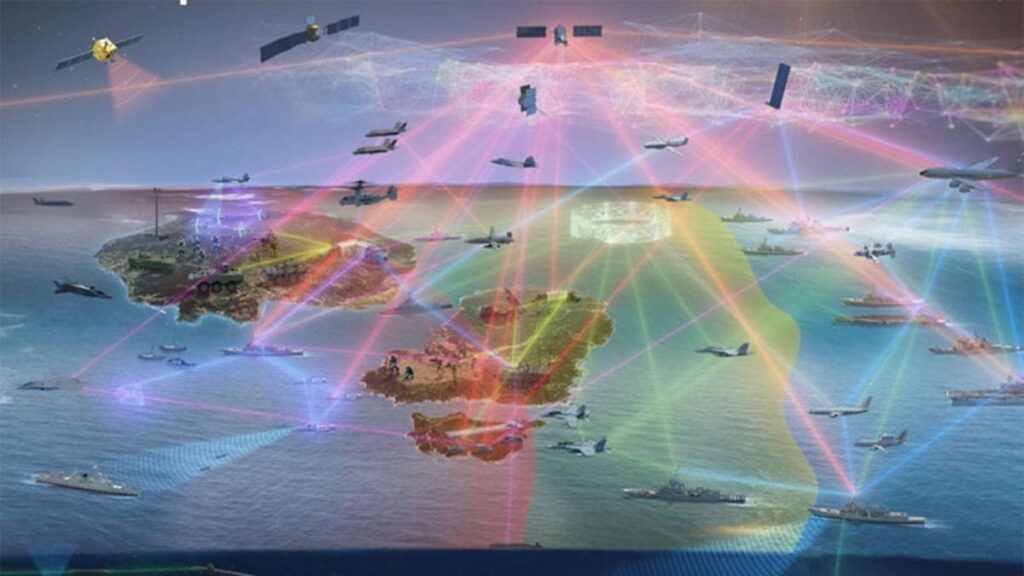
Mission systems today are completely reliant on the ability to access, process, and share data from multiple domains in real time. Without a CDS, classified networks would remain isolated silos, creating dangerous operational blind spots. CDS technology resolves this core dilemma, allowing vital information to flow securely between domains while upholding rigorous classification and information assurance policies. This is the goal of all cross domain information sharing solutions.
The impact of CDS technology is felt across every operational domain. Whether in Army command vehicles, Navy combat information centers, Air Force ISR platforms, or joint DoD networks, CDS hardware and software form a trusted boundary that allows collaboration without compromise.
Within the U.S. Department of Defense (DoD), cross domain solutions are regulated under frameworks developed by the National Security Agency (NSA) and the DoD Cross Domain Solutions Management Office (CDSMO). Products undergo evaluation and accreditation through the NSA “Raise the Bar” (RTB) initiative, which defines military-grade security controls and performance requirements. Only NSA approved cross domain solutions or DoD approved cross domain solutions are authorized for use on operational defense networks.
By enforcing data release policies, CDS systems protect mission networks from intrusion and leakage. This capability sits at the heart of today’s networked, data-driven defense environment, enabling secure cross domain solutions across national and allied forces.
At the heart of every cross-domain solution is a simple, critical principle: information separation—maintaining boundaries while allowing only specific, policy-approved exchanges. Cross domain data transfer solutions handle transfers in two directions: high-to-low (downgraded classified information) and low-to-high (validated unclassified data). These rules are rigorously enforced through policy engines, data filters, and validation layers.
A typical CDS architecture is a layered system combining several specialized components:
A compliant cross-domain data transfer process must guarantee that information maintains its integrity, confidentiality, and traceability. These measures provide both technical assurance and crucial operational accountability when information is being shared across coalition or tactical networks.
CDS systems employ either hardware-based or software-based isolation methods. Hardware-enforced isolation (using FPGAs, diodes) provides deterministic, verifiable separation, preferred in high-assurance or tactical deployments. Software-enforced isolation relies on high-assurance software like secure separation kernels (a key technology in MILS architectures) for separating workloads. Hybrid architectures deliver the best of both worlds.
The NSA Raise the Bar (RTB) initiative is the security baseline for cross-domain solutions. It mandates a layered defense architecture aimed at resisting advanced persistent threats. RTB-compliant CDS architectures are the benchmark for all NSA-approved cross domain solutions across the U.S. military.
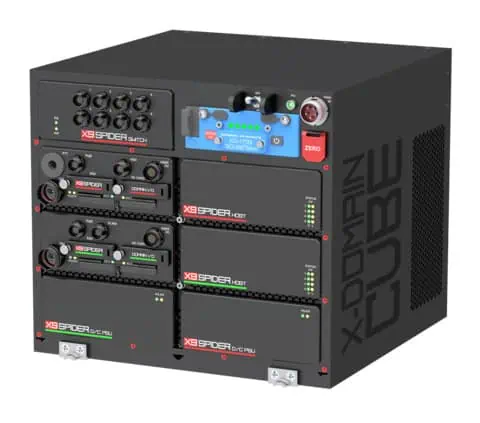
Tactical Cross-Domain Solutions (TACDS) take high-assurance security into the deployed battlespace. These ruggedized units are designed to survive vibration and shock, providing tactical solutions for cross domain communication between mission networks installed on vehicles, aircraft, and ships. TACDS devices are the cornerstone of tactical cross domain solution implementation.
Cross-domain solutions are now embedded within C4ISR and cross domain battle management systems. This allows coordination between tactical networks operating at different security levels, giving decision-makers a unified operational picture.
In the Army domain, cross domain solutions are deployed throughout armored vehicles, command posts, and mobile ISR platforms. These systems manage secure message routing and updates. The rugged design allows for guaranteed operation in high-vibration, high-dust environments for effective army cross domain solutions.
The Navy uses cross domain solutions extensively for shipboard combat systems and maritime ISR operations. CDS modules are used in UUVs and autonomous surface vessels to protect command and telemetry links. Navy cross domain solutions emphasize corrosion resistance and electromagnetic compatibility.
Within the Air Force, cross domain solutions are fundamental to airborne command, control, and ISR platforms. Air Force cross domain solutions provide the assurance boundary for distributing sensor data to ground stations at varying classification levels. Airworthiness and certification are paramount.
As unmanned systems become integral to the modern battlespace, cross-domain drone security has emerged as a key focus area. The CDS acts as a trusted guard within the aircraft, maintaining information assurance and enabling an encrypted secure battlefield drone network for real-time sensor exploitation.
CDS technology underpins all secure battlefield communications software and cross domain network solutions, linking radios, tactical routers, and mission systems. The result is assured cross domain data security that allows commanders to make decisions based on the most complete data available.
Any cross-domain solution intended for operational use must be formally approved under the DoD and NSA accreditation frameworks. The NSA Cross Domain Solutions Program Management Office governs this process. Only systems listed as DoD-approved cross domain solutions are authorized for deployment. This stringent process ensures that government cross domain solutions meet the highest bar for security.
Beyond NSA approval, systems often seek certification through international assurance frameworks like NIAP and Common Criteria. Complementing this, the NIST Risk Management Framework (RMF) provides the overarching process for assessing and authorizing cross domain solutions for government.
Approved CDS products must integrate seamlessly with existing DoD networks (SIPRNet, NIPRNet, JWICS) and coalition systems under the Mission Partner Environment (MPE). Compliance ensures the CDS enforces consistent data labeling (e.g., using security tags like SE-Linux), which is crucial for cross domain data solutions.
For international or coalition deployments, export control (ITAR/EAR) and emission security (TEMPEST) regulations introduce critical compliance layers, ensuring secure information handling across multinational operations.
At the hardware level, cross-domain solutions rely on tightly controlled, verifiable designs. Common architectures incorporate FPGA-based data guards and filtering modules that inspect data at wire speed. This cross domain solution hardware is often tamper-resistant and built with conductive alloys for shielding.
The software stack provides the policy logic and intelligence, typically running on secure, partitioned operating systems. Mandatory access controls (MAC) and information flow policies ensure data cannot bypass enforcement points—a core requirement for CDS cross domain solution compliance.
Encryption underpins data security, handled by hardware-accelerated cryptographic modules. For systems supporting Multi-Level Security (MLS), the CDS applies data labeling and security tagging to every object.
Cross-domain solutions are frequently deployed as a trusted gateway within integrated computing architectures that include mission computers, routers, and tactical communication systems. This integration maintains information assurance without impeding operational tempo.
The cross domain solution vendors market is led by a mix of large defense primes, cybersecurity integrators, and specialist vendors focused exclusively on information assurance. This industry is shaped entirely by strict certification regimes—particularly NSA’s Raise-the-Bar (RTB) and DoD approval frameworks—which limit authorization to a small number of verified suppliers.
If you design, build or supply Cross Domain Solutions, create a profile to showcase your capabilities and connect with visitors who have an active requirement for your solutions.


 Searching Companies & Products