
Showcase your capabilities
If you design, build or supply Video Streaming, create a profile to showcase your capabilities and connect with visitors who have an active requirement for your solutions.




Tactical video streaming systems transmit live or near-real-time sensor imagery across defense networks to operators, command centers, and exploitation systems. These solutions support video from EO/IR payloads, UAVs, tactical vehicles, maritime platforms, fixed surveillance assets, and dismounted systems.
This page features tactical suppliers of military video streaming solutions including encoders, rugged gateways, edge processors, servers, and receiving devices.
Read the Technology Overview
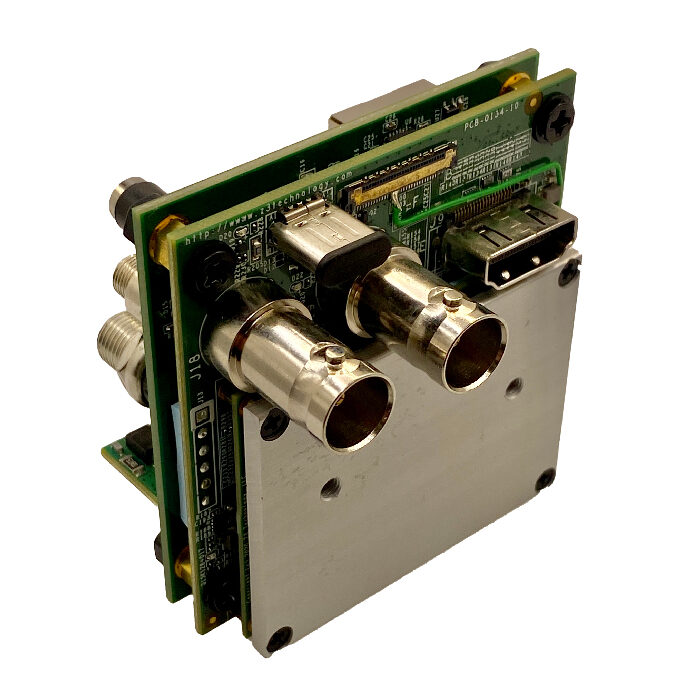
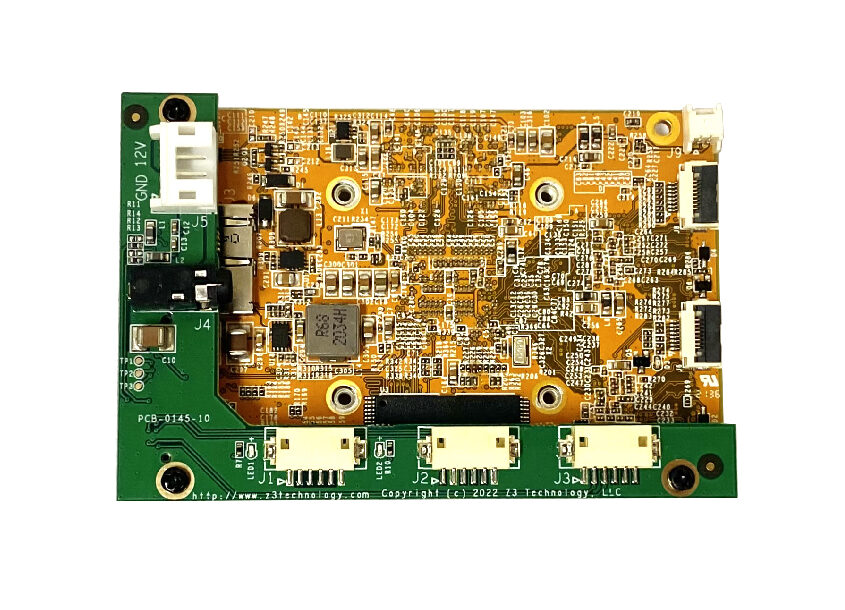
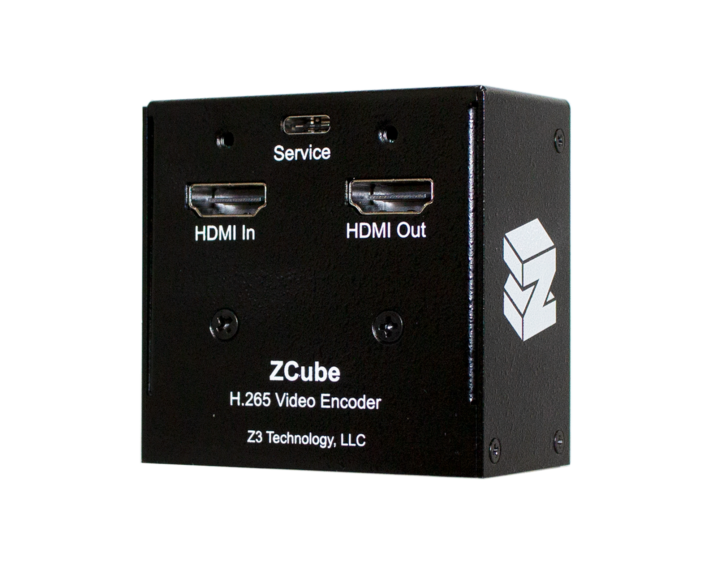
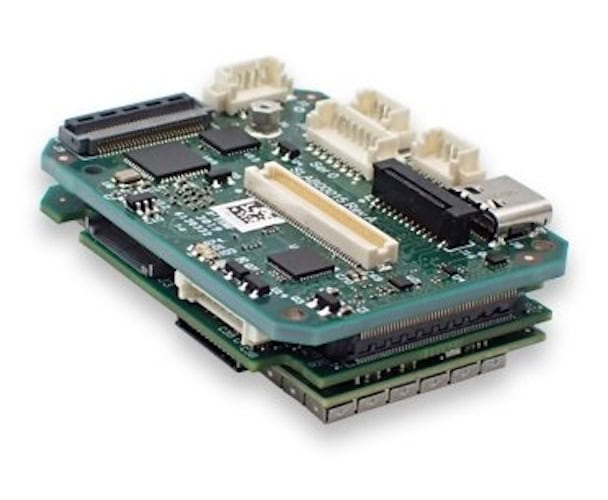
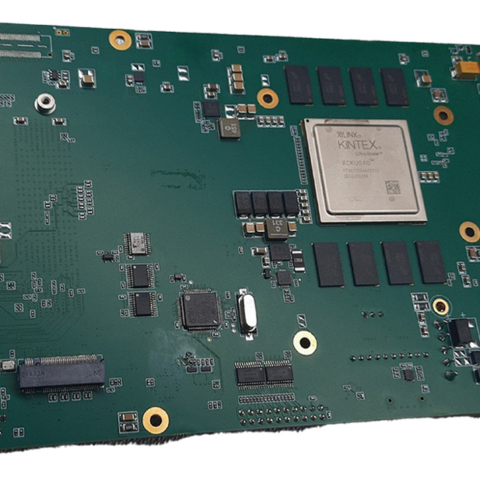
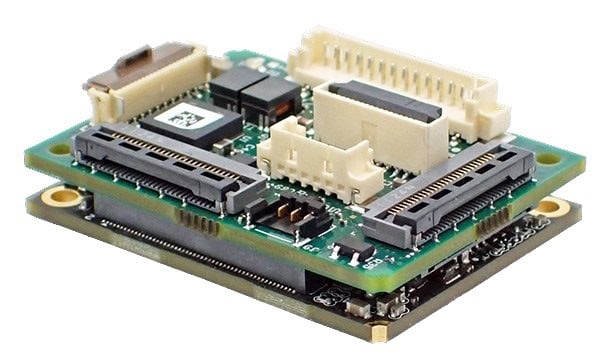
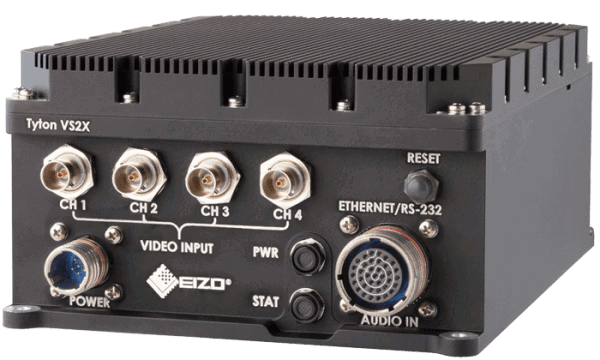
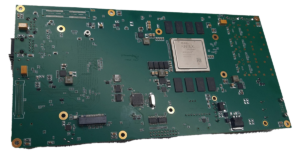
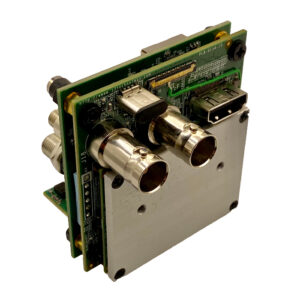
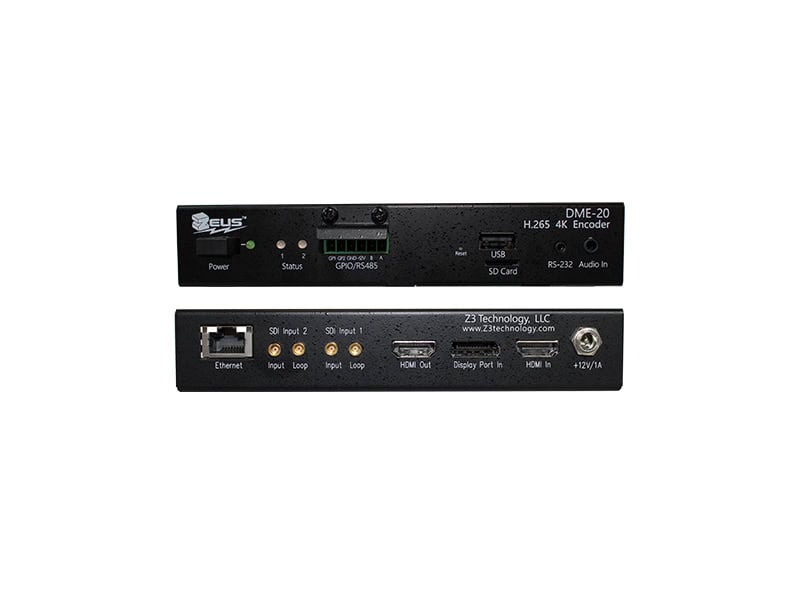
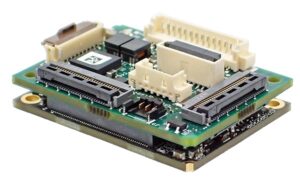
Rugged Image Processing & Mission-Critical Electronics for Defense Systems


Mission-Critical Video Streaming for ISR, UAVs & Tactical Communications

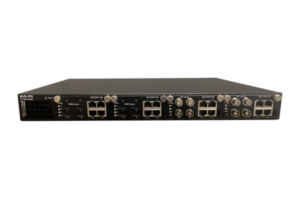
NDAA & TAA Compliant Video Encoding & IP Camera Solutions for Mission-Critical Applications

High-Performance Video Graphics, GPGPU, AI/ML Processing & Display Solutions for Mission Critical Environments

If you design, build or supply Video Streaming, create a profile to showcase your capabilities and connect with visitors who have an active requirement for your solutions.

Tactical video streaming systems move live or near-real-time imagery from sensors and platforms to operators, command centers, and exploitation systems. They can carry full-motion video from electro-optical/infrared (EO/IR) payloads, vehicle cameras, unmanned platforms, or fixed surveillance assets while preserving essential timing and metadata.
Unlike enterprise video, defense video streaming often crosses links with variable capacity, intermittent connectivity, high latency, packet loss, jitter, or limited spectrum. System design therefore balances image quality, real-time video transmission, security, resilience, latency, and bandwidth efficiency. Low-bandwidth and adaptive video streaming can help preserve useful imagery as conditions change, while encryption, authentication, and access controls protect feeds and metadata.
Encoders compress sensor video for transmission, while decoders reconstruct streams for display, analysis, or recording. Codec selection, including H.264/AVC and H.265/HEVC where applicable, affects bitrate, latency, processing load, image quality, and interoperability, so it must match both network limits and mission requirements.
Rugged video gateways bridge sensors, legacy interfaces, Internet Protocol (IP) networks, and receiving systems. They can convert formats, route streams, combine imagery with synchronized metadata, and provide platform-ready interfaces for deployed equipment.

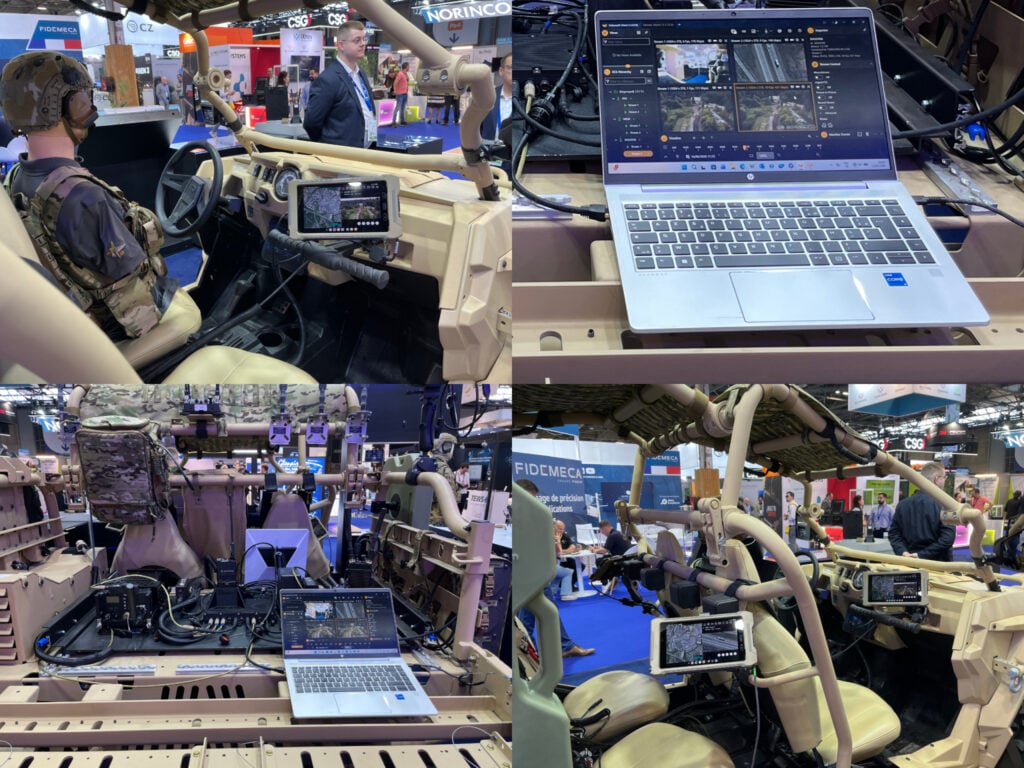
Tactical video streaming, FireLight, from Videosoft.
Edge processors transform or analyze video close to the sensor. Functions can include resizing, transcoding, bitrate management, regions of interest, and analytics, reducing backhaul demand on constrained networks while retaining mission-relevant detail.
Video servers receive, organize, record, and redistribute multiple feeds. They can route selected streams to authorized users while managing stream counts, bandwidth, storage, and redundancy.
Receiving equipment ranges from rugged handheld terminals to vehicle displays and command-post workstations. Decoder latency, processing capability, network interfaces, security controls, and compatibility with incoming video and metadata are as important as display resolution.
Video streaming software supports stream discovery, control, routing, recording, playback, and sometimes transcoding or analytics. Software-defined functions can simplify reconfiguration, provided they remain compatible with required codecs, transport methods, metadata, and cybersecurity controls.
Different network bearers impose different constraints, so tactical video architectures are selected around range, mobility, capacity, latency, and resilience.
| Network technology | Strength | Main constraint | Typical role |
| Line-of-sight data links | Direct platform connectivity | Link geometry | Sensor downlinks |
| MANET and mesh networks | Mobile multi-node networking | Variable shared capacity | Teams, vehicles, robotic systems |
| Tactical radio networks | Field-network integration | Limited video bandwidth | Lower-bitrate situational video |
| Private LTE and 5G | High-capacity IP connectivity | Requires local coverage infrastructure | Bases and local tactical networks |
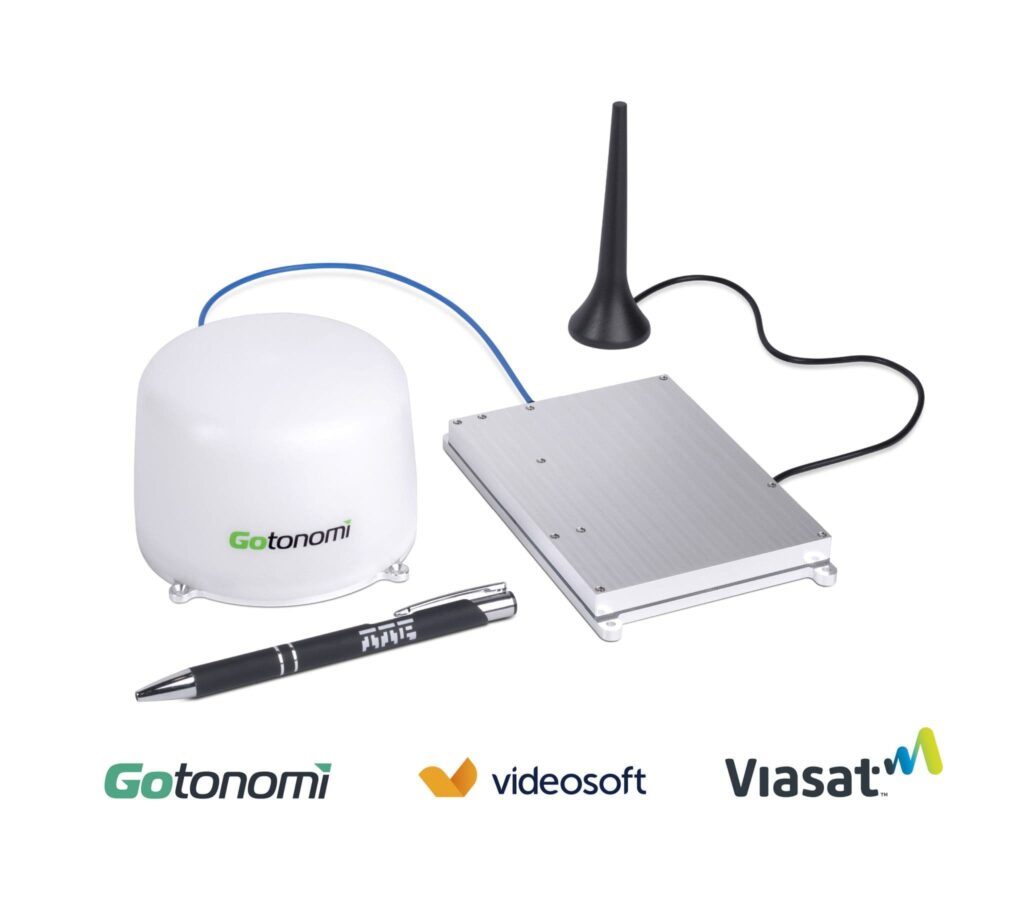
| SATCOM and BLOS links | Extended reach | Latency and capacity constraints | Remote ISR and reach-back |
| Ethernet and fiber | High throughput | Limited mobility | Command posts and fixed facilities |
Multiple bearers can also be combined to provide alternate paths, prioritize traffic, or provide failover as operating conditions change.
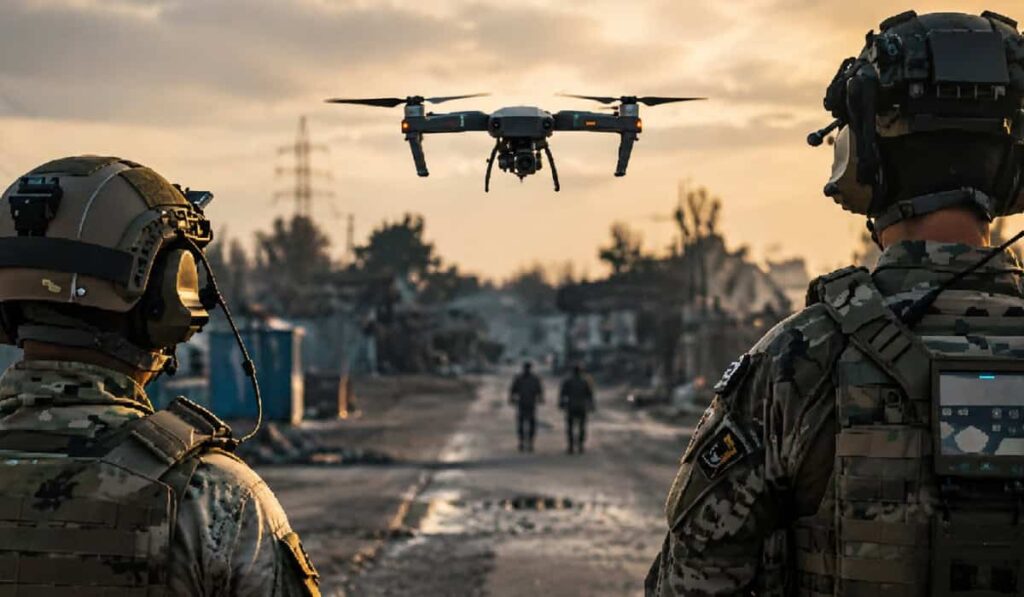
Airborne platforms and Unmanned Aircraft Systems (UAS) stream full-motion video from Electro-Optical/Infrared (EO/IR) and other imaging payloads to operators and intelligence users. Feeds can support surveillance, target observation, route monitoring, or battle damage assessment, with synchronized metadata adding platform position, sensor orientation, timing, and mission context.
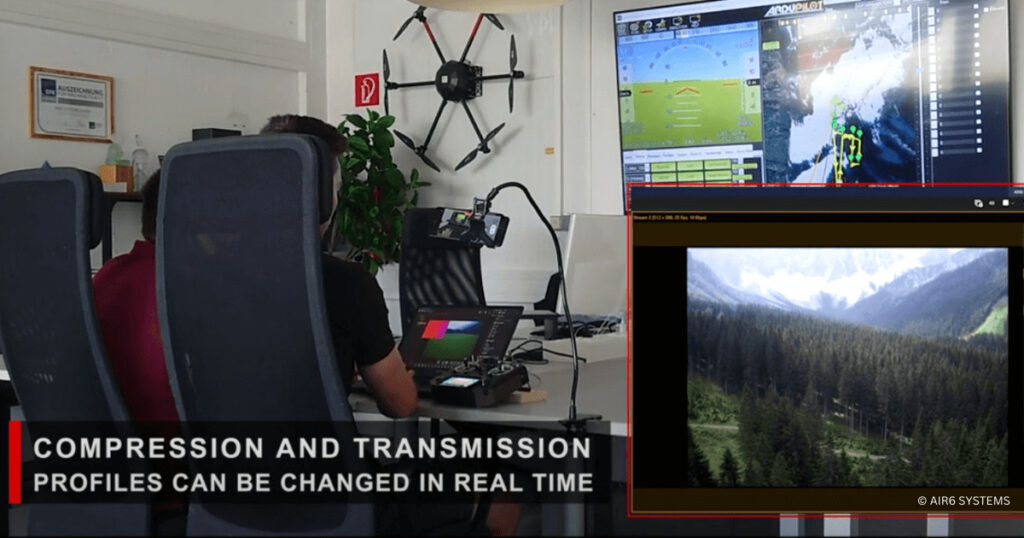
Air-to-ground links connect airborne sensors with remote terminals, vehicles, or command nodes. Onboard processing can compress, stabilize, annotate, or analyze imagery before transmission, helping preserve useful information when the downlink cannot sustain native video rates.
Vehicles and Unmanned Ground Vehicles (UGVs) may stream video from situational awareness cameras, driver aids, mission payloads, or remote weapon stations. Low latency is particularly important when imagery contributes to navigation, remote control, or time-sensitive operator decisions.
Dismounted users can receive or contribute video for local situational awareness, while command posts aggregate feeds from multiple sensors and units. Fixed and mobile surveillance systems can also distribute imagery for perimeter security and force protection.
Surface vessels and unmanned maritime systems use networked video for surveillance, navigation support, remote operation, and payload monitoring. Architectures must accommodate changing connectivity between sea and shore nodes.
Shipboard EO/IR systems provide visual context for surveillance and identification. Video can be distributed onboard or sent ashore, with bandwidth management controlling how multiple feeds share external links.
Edge processing can reduce the imagery sent across constrained networks and turn raw video into information that is easier to exploit.
These functions can complement the underlying video feed when operators still require visual confirmation and context.
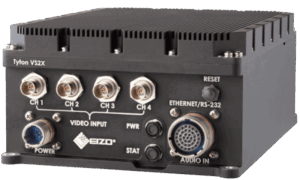
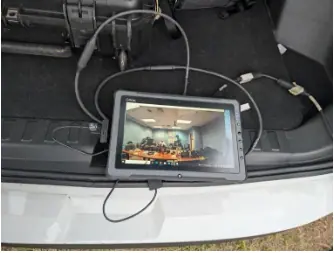
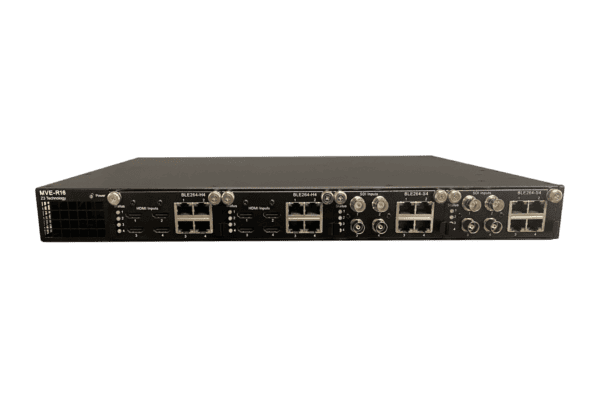
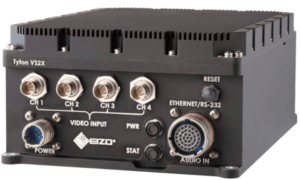
Tactical video streaming from Eizo Rugged Solutions, the Tyton VS2X Rugged Video Encoder.
Defense video streaming can involve several classes of standards, from motion imagery interoperability to environmental and electromagnetic requirements.
The applicable combination depends on platform, procurement, network, security, interoperability, and mission requirements.
Several developments are shaping how tactical video is processed and distributed at the edge.
Together, these approaches support tactical video streaming systems designed to deliver useful imagery and derived information despite changing bandwidth, platform, and mission constraints.


 Searching Companies & Products