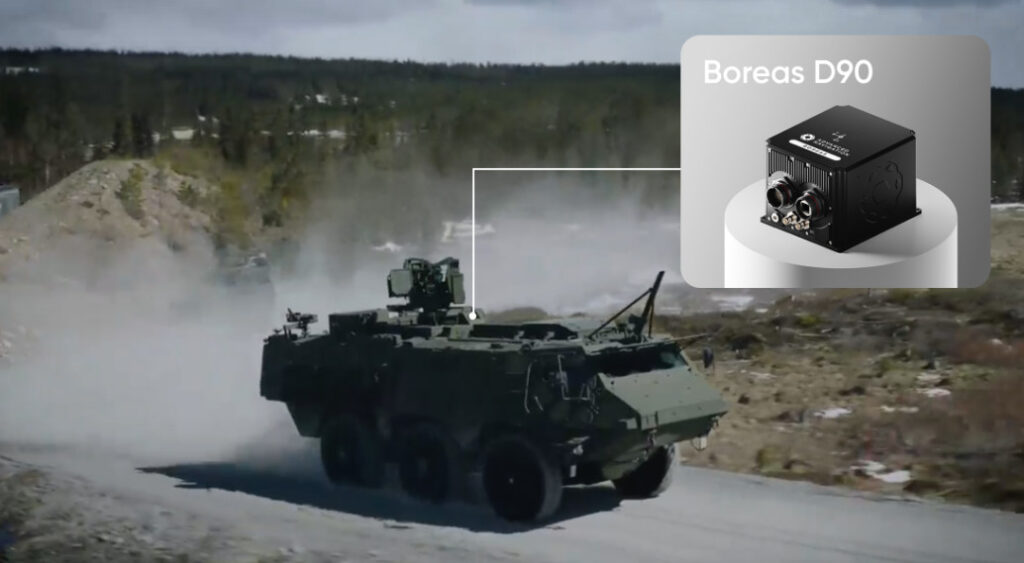


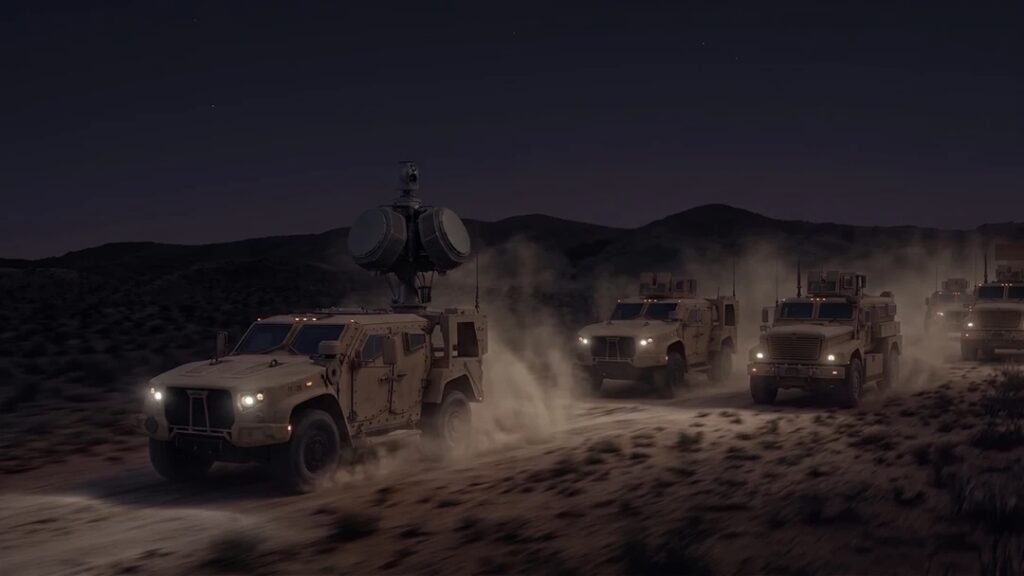
As counter drone platforms increasingly shift toward low-cost kinetic interceptors, maintaining targeting precision on mobile systems has become a major technical challenge. Advanced Navigation addresses this requirement through inertial navigation systems designed to provide the low-latency, high-frequency motion data required for stabilizing optical tracking payloads and kinetic effectors operating on moving platforms in rugged and GNSS-challenged environments. Read more >>
The rapid proliferation of inexpensive unmanned aerial threats has changed the economics of modern air defense, making it impractical to rely exclusively on traditional missile-based interceptors for every engagement. In response, defense forces are adopting more cost-effective counter drone technologies capable of scaling to meet high-volume threats.
However, these systems still require precise navigation and stabilization to accurately track and engage maneuvering drones while operating across uneven terrain and dynamic environments.
Advanced Navigation’s inertial navigation technologies provide the motion and positioning data required to support optical target tracking and targeting stability under these conditions. By enabling accurate stabilization without the size, weight, power, and cost burdens commonly associated with traditional FOG-based systems, the company’s solutions help make widespread deployment economically viable.
As defense programs continue prioritizing affordable interception capabilities, navigation and stabilization performance remain critical factors in supporting engagement accuracy in dynamic operating environments.
Mobile Counter Drone Platforms and Stabilization Requirements
Counter drone systems are increasingly required to operate while moving in order to remain aligned with the assets they protect and to improve survivability in contested environments.
However, platform mobility introduces significant stabilization and navigation challenges.
As a C-UAS platform travels across rough terrain, it experiences continuous pitch, roll, and high-frequency vibration. For kinetic effectors engaging small maneuvering drones, even minor inaccuracies in pointing direction can result in substantial targeting error. Multipath GNSS interference in urban or complex operating environments can further reduce positioning reliability.
To maintain engagement accuracy while on the move, the platform requires reliable navigation and stabilization capable of compensating for vehicle motion in real time. For defense integrators, achieving this level of stabilization without driving platform costs beyond operational viability remains a central challenge.
Why Tracking and Targeting Performance Degrades
One of the primary limitations in many mobile C-UAS platforms is the delay between motion detection and stabilization response.
Optical tracking payloads must remain fixed on target regardless of vehicle movement, while kinetic effectors require stabilization data that allows targeting calculations to compensate for platform vibration and terrain-induced motion. If the stabilization system depends on conventional GNSS or lower-grade sensors, update rates may be insufficient to counteract rapid movement and vibration.
Under these conditions, optical feeds can become unstable, tracking algorithms may lose lock, and targeting precision can degrade. While legacy defense-grade sensors may provide the required stabilization performance, they can also significantly increase system size, power consumption, and cost, limiting scalability for widespread deployment.
Inertial Navigation as the Core Reference System
High-performance inertial sensing provides the foundation for maintaining stabilization and targeting accuracy in dynamic environments. Within a mobile counter drone platform, the inertial navigation system functions as the central reference system, continuously supplying acceleration and rotational data.
This high-frequency, low-latency data allows gimbal systems to compensate for vehicle movement in real time, helping optical payloads remain stable and enabling kinetic effectors to maintain accurate alignment. By reducing the influence of terrain-induced motion, the inertial navigation system effectively isolates the targeting system from the movement of the host vehicle.
As counter drone programs scale to address evolving swarm threats, maintaining this level of precision while controlling overall system cost becomes increasingly important.
Scalable Navigation Performance for Counter Drone Systems
Historically, achieving the stabilization performance required for mobile counter drone applications often depended on Fiber Optic Gyroscope-based navigation systems. While capable of high accuracy, these systems have traditionally introduced increased size, weight, power requirements, and cost that can undermine the economic model of scalable counter drone defense.
Advanced Navigation applies sensor fusion technologies to provide inertial navigation performance suitable for precision stabilization while supporting lower SWaP requirements and broader deployment scalability.
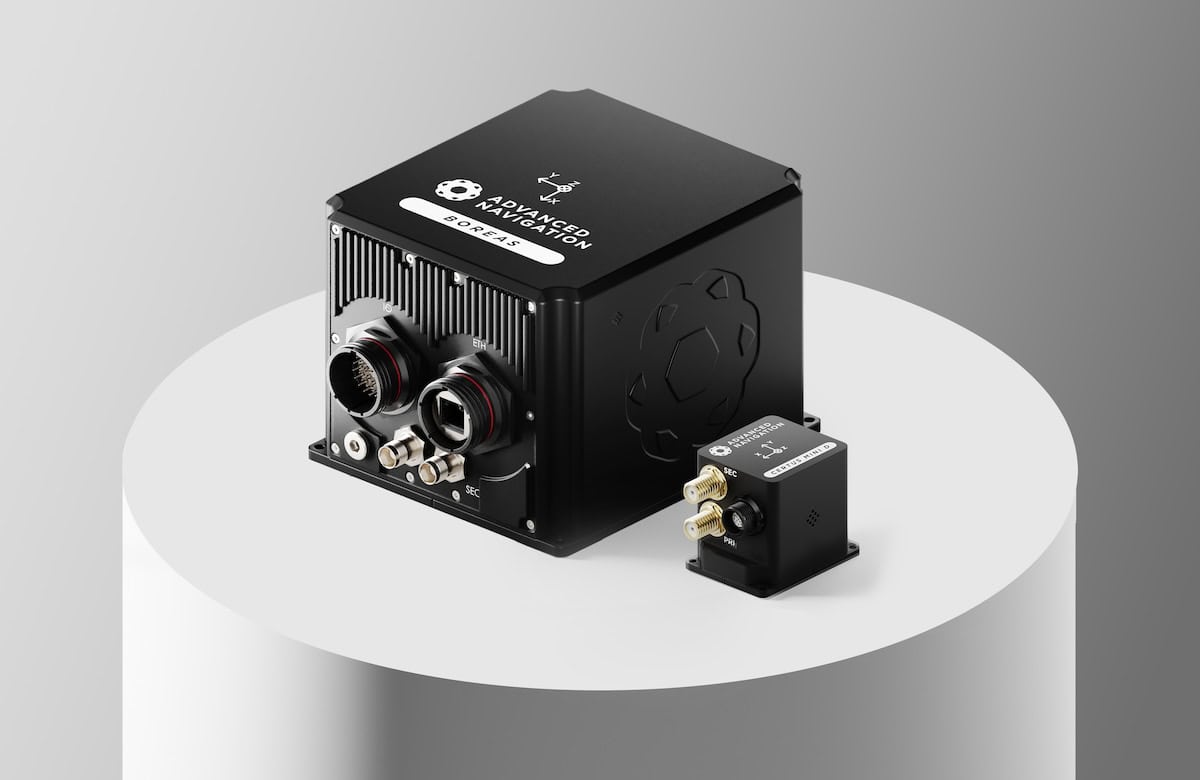
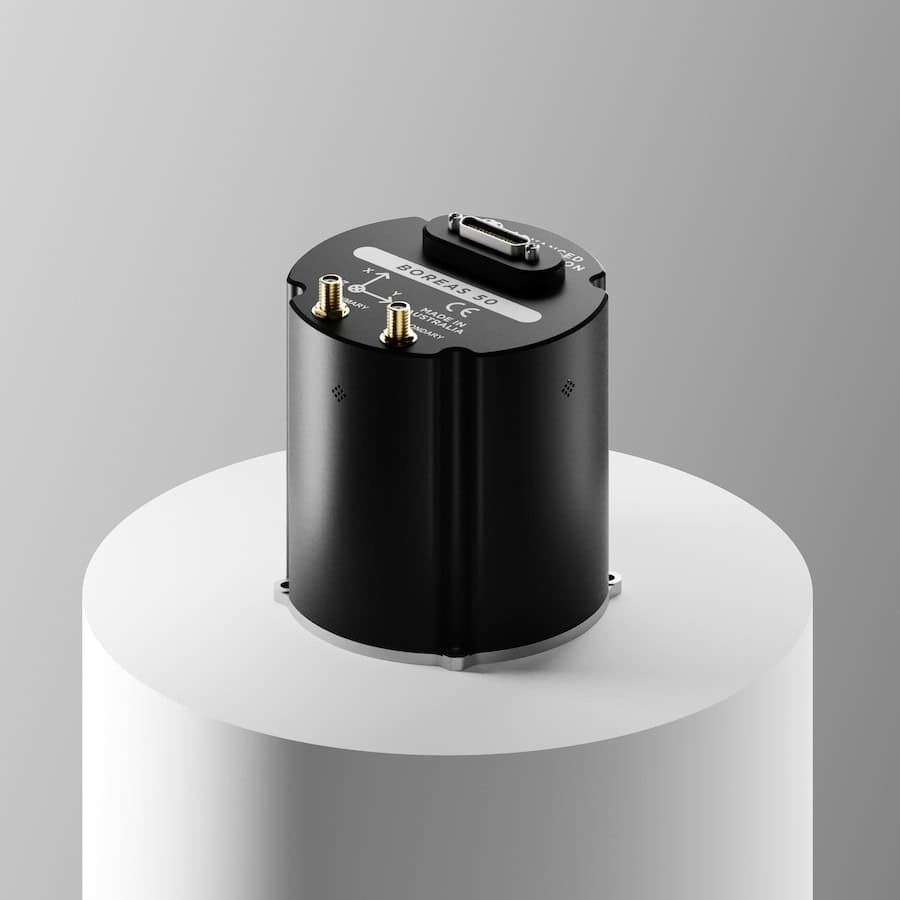
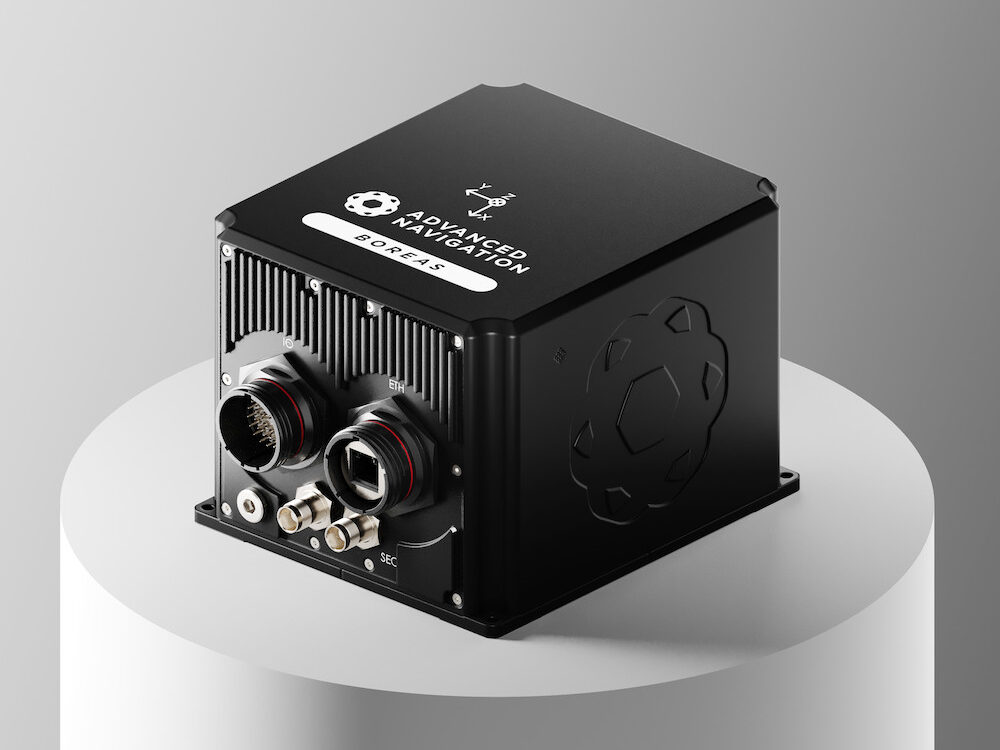
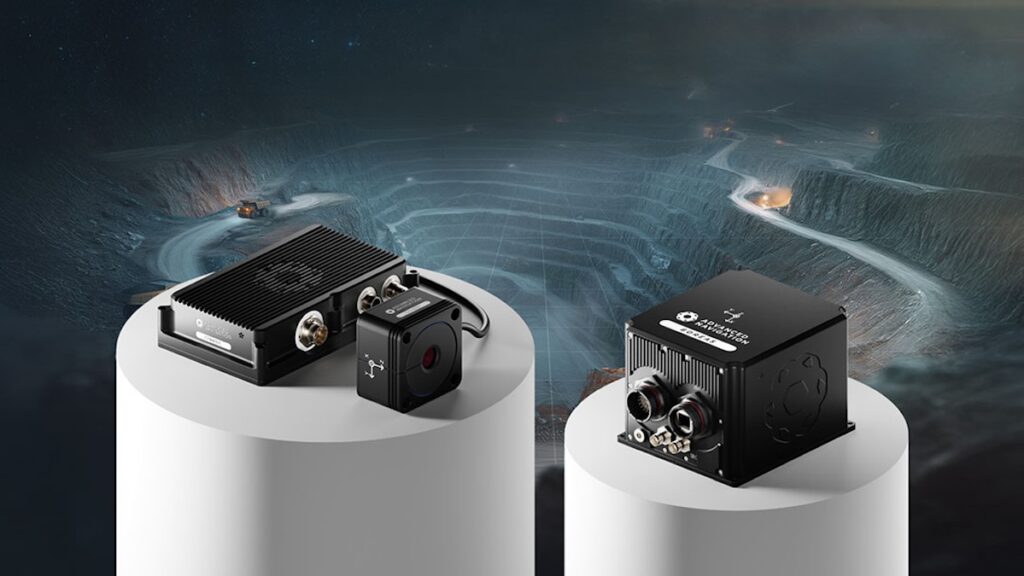
The Boreas D50 inertial navigation system is designed to support heading accuracy in GNSS-denied environments where precise positioning remains critical for targeting applications. Certus Evo combines GNSS and inertial navigation capabilities in a compact form factor optimized for size, weight, and power efficiency, while delivering the high-frequency motion data required for stabilizing optical payloads on agile mobile platforms.
Supporting Rapid Deployment Requirements
In current operational environments, deployment timelines are increasingly important alongside technical capability. Counter drone requirements often demand systems that can be sourced and integrated rapidly to address immediate operational needs.
Advanced Navigation supports these requirements through a secure supply chain and in-house integration approach intended to reduce dependency on fragmented external component sourcing. The company applies evaluation processes for supplier partnerships to support hardware integrity while maintaining production responsiveness for defense programs requiring accelerated deployment schedules.
Navigation Precision for Modern Counter Drone Defense
Counter drone systems must balance engagement accuracy with affordability in order to remain viable against large-scale low-cost aerial threats.
By integrating inertial navigation systems such as Boreas D50 and Certus Evo, defense integrators can improve stabilization performance for optical tracking systems and kinetic effectors operating in demanding environments. As mobile counter drone technologies continue to evolve, stabilization and navigation performance remain central factors in determining targeting effectiveness and operational reliability.