Showcase your capabilities
If you design, build or supply Spill Containment Berms, create a profile to showcase your capabilities and connect with visitors who have an active requirement for your solutions.




Spill containment berms are secondary containment systems used to control fuels, oils, chemicals, contaminated water, and other liquids during military and defense operations. Portable spill containment berms can support deployed fueling, vehicle maintenance, generator operation, equipment washdown, decontamination, and emergency response where permanent infrastructure is unavailable.
This page features leading suppliers of military spill containment berms, including drive-through, collapsible, foam-wall, snap-up, and frame-supported designs.
Read the Technology Overview
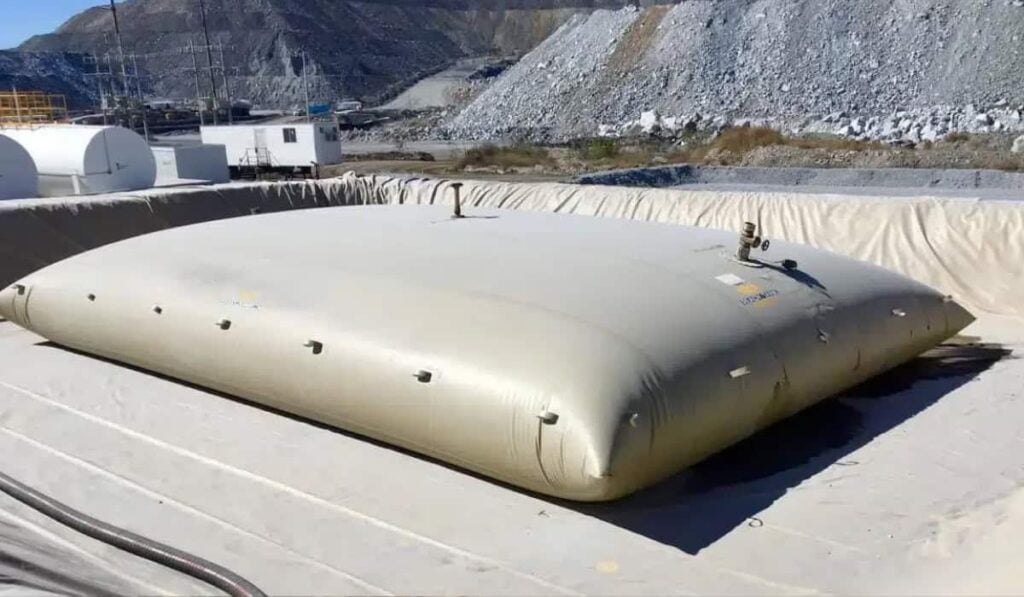
Expeditionary Fuel, Water Storage & Spill Containment Solutions for Defense Operations

If you design, build or supply Spill Containment Berms, create a profile to showcase your capabilities and connect with visitors who have an active requirement for your solutions.

Military spill containment berms provide temporary or semi-permanent secondary containment for fuels, oils, chemicals, contaminated water, and other liquids used during defense operations. They create a controlled area beneath equipment and liquid-handling systems, helping prevent releases from reaching soil, drainage systems, or operational areas.
For deployed forces, maintenance teams, fuel handlers, and environmental personnel, the appropriate spill containment system depends on more than capacity alone. Material compatibility, usable volume, vehicle access, packed size, deployment speed, ground conditions, abrasion resistance, temperature range, and liquid recovery can all influence performance. Portable spill containment berms are useful where infrastructure is limited or equipment frequently relocates. Ground preparation and inspection are also important because damage or rainwater can reduce effective containment.

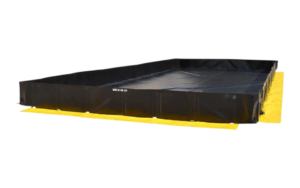
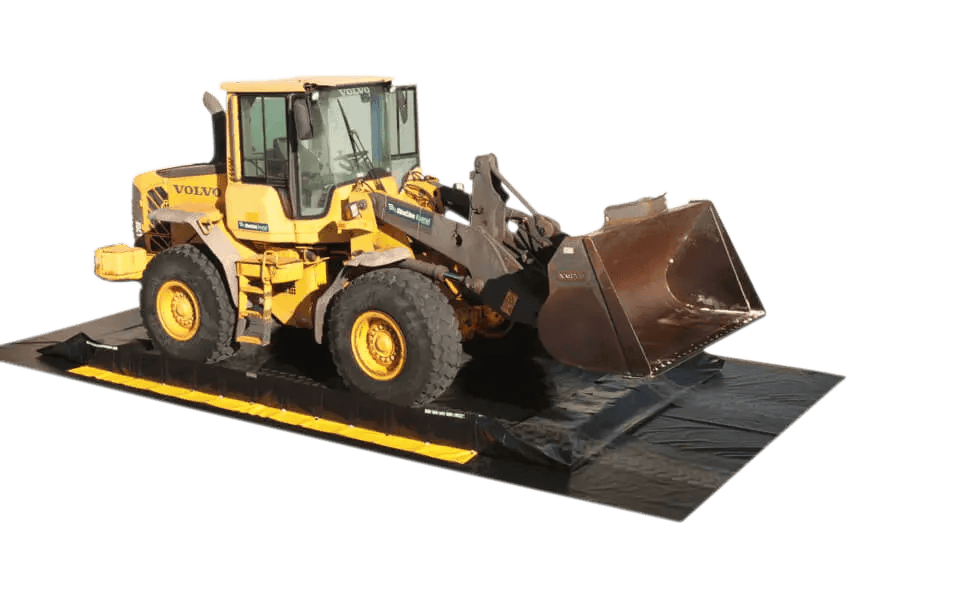
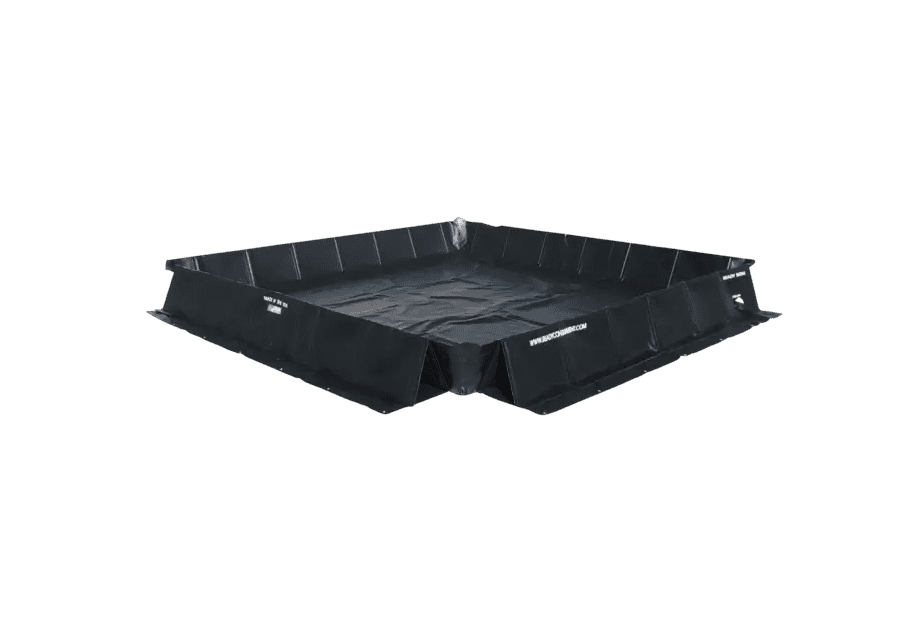
Drive Through Ready Spill Containment Berms by Ready Containment
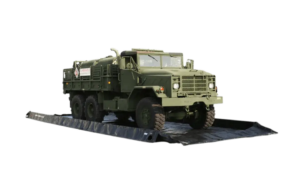
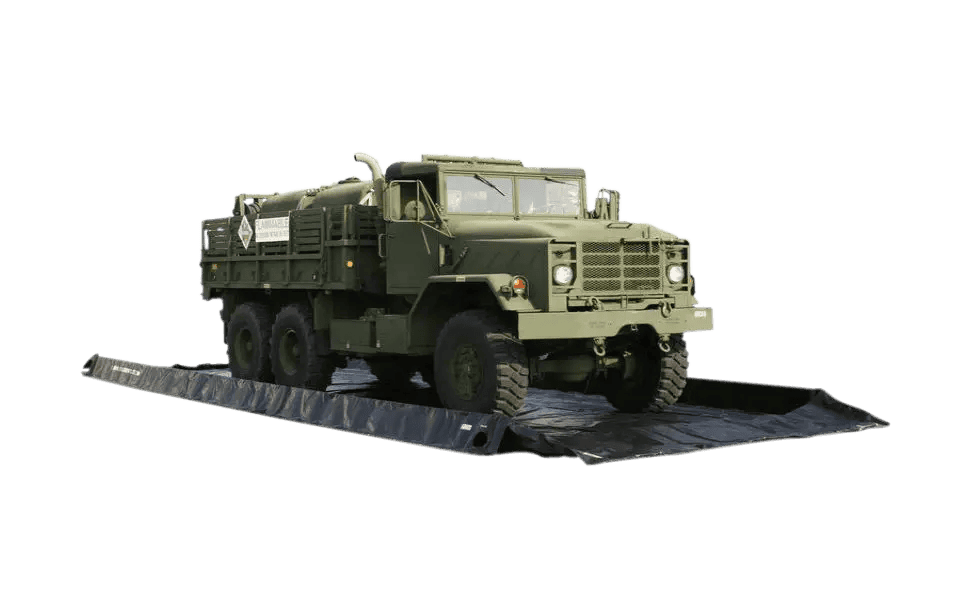
Drive-through spill containment berms allow wheeled equipment to enter and leave without dismantling the perimeter. Flexible or supported sidewalls lower or compress at access points, making these systems useful for truck spill containment, maintenance, refueling, and vehicle washdown. A drive over containment berm must withstand repeated tire loading and abrasion, so reinforced access zones or wear mats may be needed.
Collapsible spill berms are designed for compact transport and rapid field deployment. Flexible sidewalls and liners fold compactly, allowing the containment berm to travel with mobile fuel, maintenance, or response equipment. Collapsible spill containment is useful at changing locations, although liners should be protected from sharp debris and rough ground.
Snap-up berms use integrated supports, stays, or tensioned wall elements to form the containment perimeter without a separate rigid frame. Their setup suits portable spill containment where personnel need a defined area quickly. Wall mechanisms should be evaluated for durability during repeated deployment.

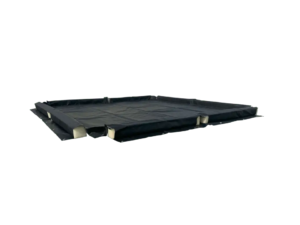
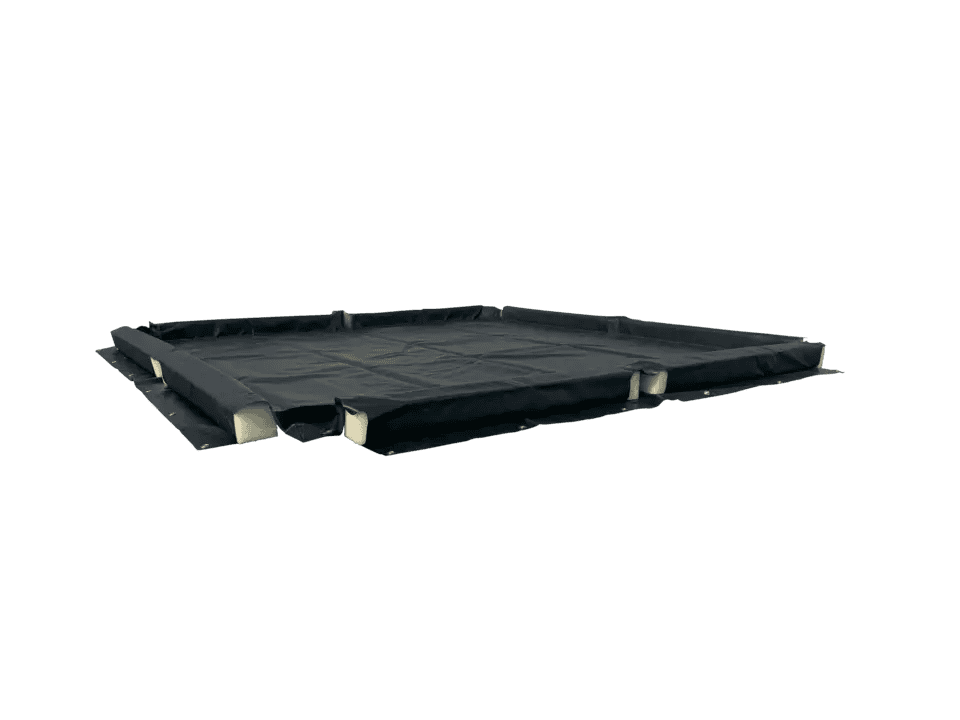
Foam Wall Berms by Ready Containment
Foam-wall spill berms use compressible perimeter sections that deform when vehicles pass over them and then recover their shape. This provides access without removable wall sections. Such designs can support drive over spill containment applications, although repeated heavy traffic may require additional wear protection.
Frame-supported containment berms use rigid or semi-rigid members to maintain wall height and shape. They can provide defined containment around tanks, generators, maintenance equipment, or bulk liquid-handling installations. They may take longer to assemble than collapsible berms but can provide greater wall stability for longer deployments.
Decontamination berms capture wash water and runoff produced during cleaning or contamination-control activities. They can be placed beneath water storage equipment or wash stations to prevent uncontrolled discharge. A water containment berm must be compatible with anticipated contaminants and cleaning agents and allow wastewater to be recovered for appropriate handling.
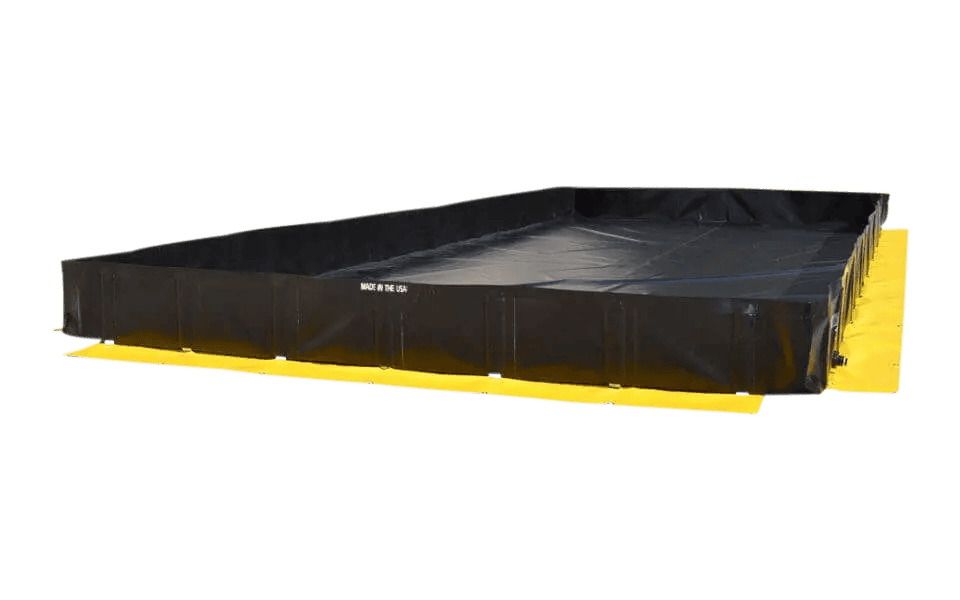
Large spill containment berms can accommodate trucks, tactical vehicles, generators, fuel tanks, support equipment, or multiple assets within one protected footprint. These spill containment systems may use modular walls or reinforced liners. Capacity should consider credible release volume, equipment displacement, and rainfall or other water that can reduce available volume.
Spill containment berm materials affect chemical resistance, packed weight, abrasion, flexibility, temperature performance, and service life. Coated technical fabrics combine liquid impermeability with the flexibility needed for portable systems. Performance depends on reinforcement, coating formulation, seam construction, temperature, UV exposure, and contact time.
Common material considerations include:e
| Material Type | Fuel & Chemical Compatibility | Durability & Deployment |
| PVC-coated fabric | Often suitable for common fuels, oils, and selected chemicals, depending on formulation. | Moderate to good abrasion resistance and commonly used for portable spill containment berms. |
| Polyurethane-coated fabric | Can provide broad fuel and chemical compatibility, depending on coating formulation. | Good abrasion resistance, relatively lightweight, and well suited to frequent deployment. |
| Reinforced geomembrane | Compatibility depends on the polymer and coating but options are available for fuels, oils, and chemicals. | Good durability when properly protected and suitable for larger or longer-duration containment. |
| Elastomeric or rubberized material | Can be suitable for oils, selected fuels, and chemicals, depending on formulation. | Good toughness and flexibility, although packed weight may be higher than coated fabrics. |
Material compatibility should be checked against the specific fuel, oil, chemical, wastewater, or cleaning solution, including concentration, temperature, and exposure duration. A spill containment liner suitable for water may not tolerate prolonged exposure to hydrocarbons or aggressive chemicals.
Fuel containment berms can provide secondary containment beneath storage tanks, flexible fuel systems, transfer points, pumps, hoses, and dispensing equipment. An oil containment berm may also be positioned beneath lubrication or hydraulic maintenance activities. For fuel tank containment, berm capacity and material compatibility should reflect the stored liquid, equipment footprint, and credible release scenario. Where applicable, capacity should also account for precipitation and displaced volume.
Vehicles and powered equipment can release oil, hydraulic fluid, coolant, fuel, and other liquids during maintenance or failure. Spill berms for containment can be placed beneath tactical vehicles, ground support equipment, mobile machinery, and generators. Generator spill containment systems are useful where power units operate for extended periods on temporary sites. Vehicle traffic, sharp edges, and tools should not damage the liner.
Temporary spill containment can capture contaminated water from vehicle washing, equipment cleaning, and decontamination. Portable containment berms provide a defined collection area from which wastewater can be pumped or otherwise recovered for appropriate handling. Chemical spill containment berms may also support response activities when the liner is compatible with the substance involved.
Portable spill berms suit expeditionary operations because they can be deployed, recovered, and reused as units relocate. They may support temporary fuel points, forward maintenance areas, generator sites, logistics hubs, and mobile response teams. Packed dimensions, setup requirements, terrain tolerance, field repairability, drainage control, and inspection are important where transport capacity is limited.
Developments in materials, monitoring, and modular design are expanding options for portable secondary containment berms. Current areas of development include:
These developments may improve portable spill containment without changing core requirements for compatibility, durability, usable capacity, and field deployment.


 Searching Companies & Products