Showcase your capabilities
If you design, build or supply Fuel Bladders, create a profile to showcase your capabilities and connect with visitors who have an active requirement for your solutions.




Military fuel bladders are flexible fuel storage systems designed for deployable, mobile, and platform-integrated applications where rigid tanks may be impractical. Fuel bladder tanks can support bulk ground storage, tactical refueling, aircraft and UAV fuel systems, vehicle installations, maritime operations, and emergency logistics.
This category features leading military fuel bladder manufacturers, providing configurations including pillow tanks, vehicle-mounted bladders, marine solutions, and expeditionary fuel blivets.
Read the Technology Overview
Expeditionary Fuel, Water Storage & Spill Containment Solutions for Defense Operations

If you design, build or supply Fuel Bladders, create a profile to showcase your capabilities and connect with visitors who have an active requirement for your solutions.

Military fuel bladders provide flexible storage and fuel-handling capability for operations where rigid tanks may be impractical, difficult to transport, or too slow to deploy. Similar flexible storage systems, including water bladders, are used for other liquid storage requirements in military and expeditionary operations. Depending on their design, these systems can support bulk ground storage, tactical refueling, aviation operations, vehicle installations, maritime platforms, and other expeditionary requirements.
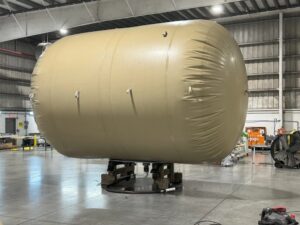
A military fuel bladder is typically manufactured from reinforced flexible materials selected for the intended fuel, environmental conditions, and operating configuration. When emptied, many designs collapse into a substantially smaller transport volume, supporting mobile logistics and distributed fuel supply. A fuel blivet is a related type of flexible, collapsible fuel tank commonly used for fuel storage and transport in military field and expeditionary operations.

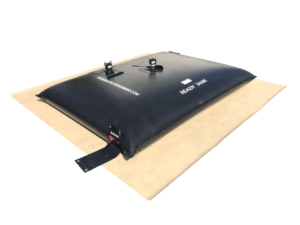
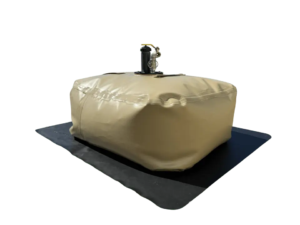
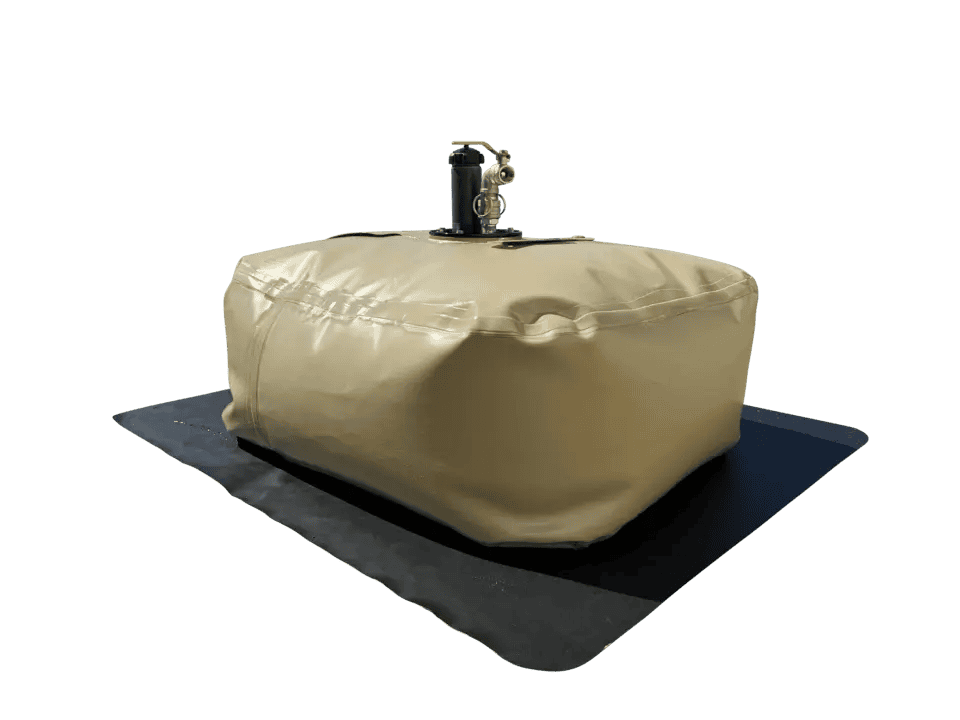
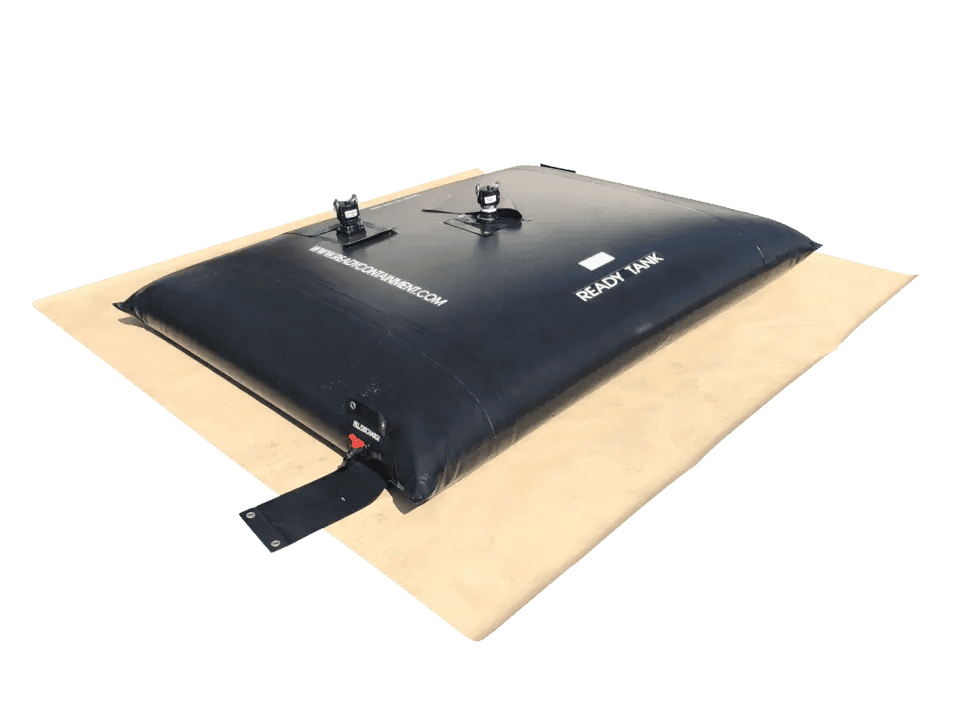
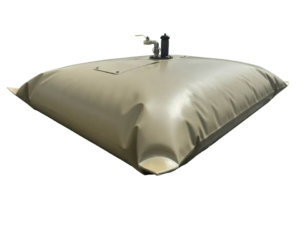
Fuel bladder tank from Ready Containment.
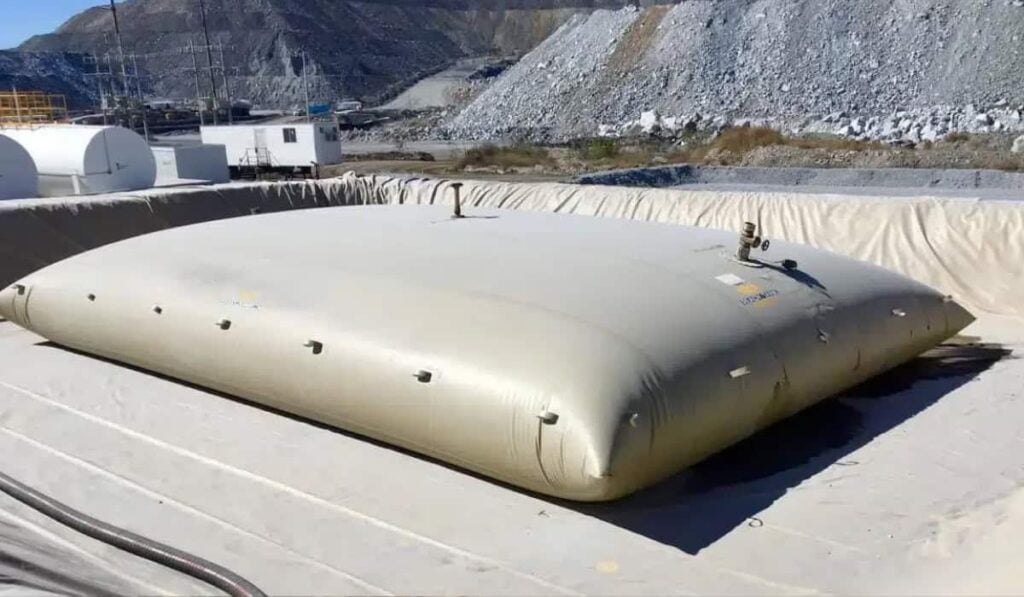
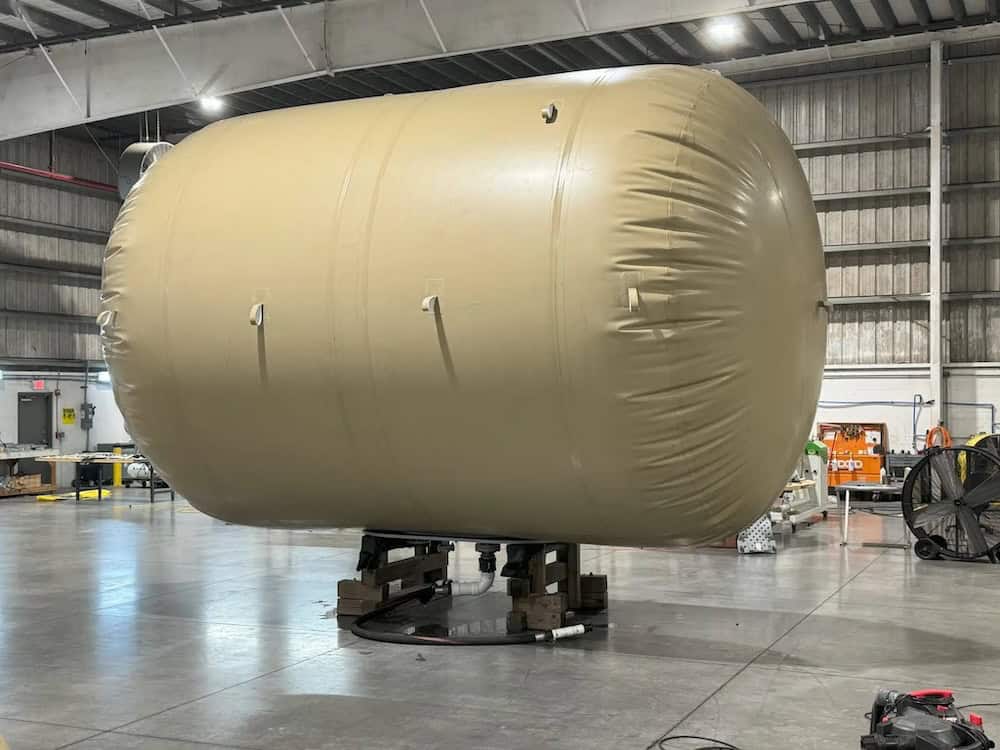
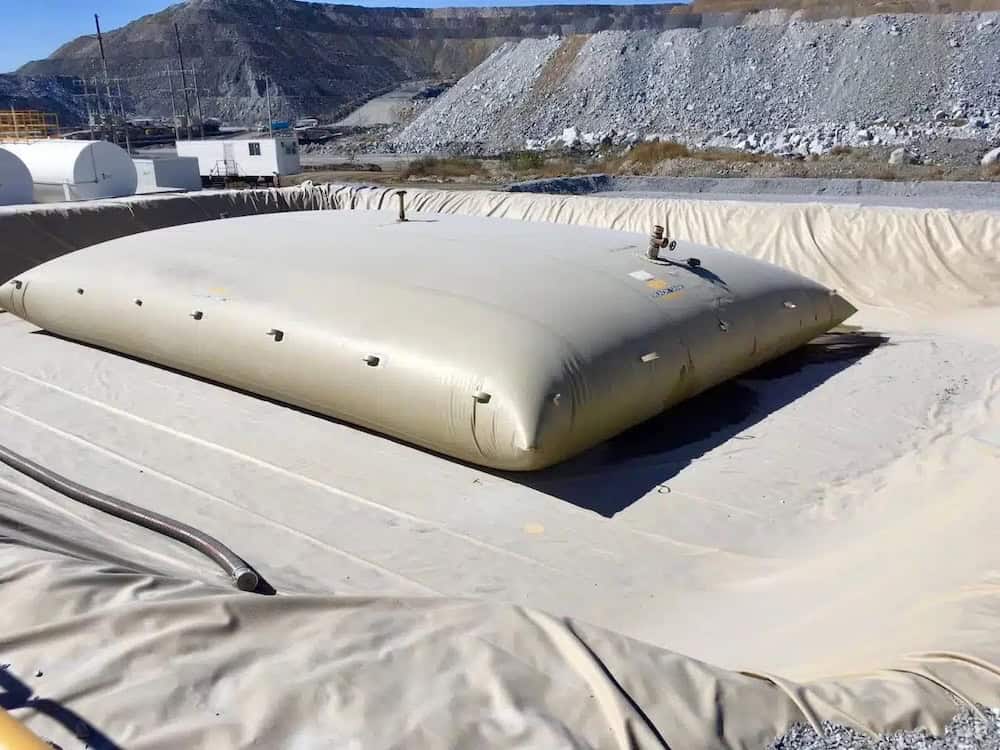
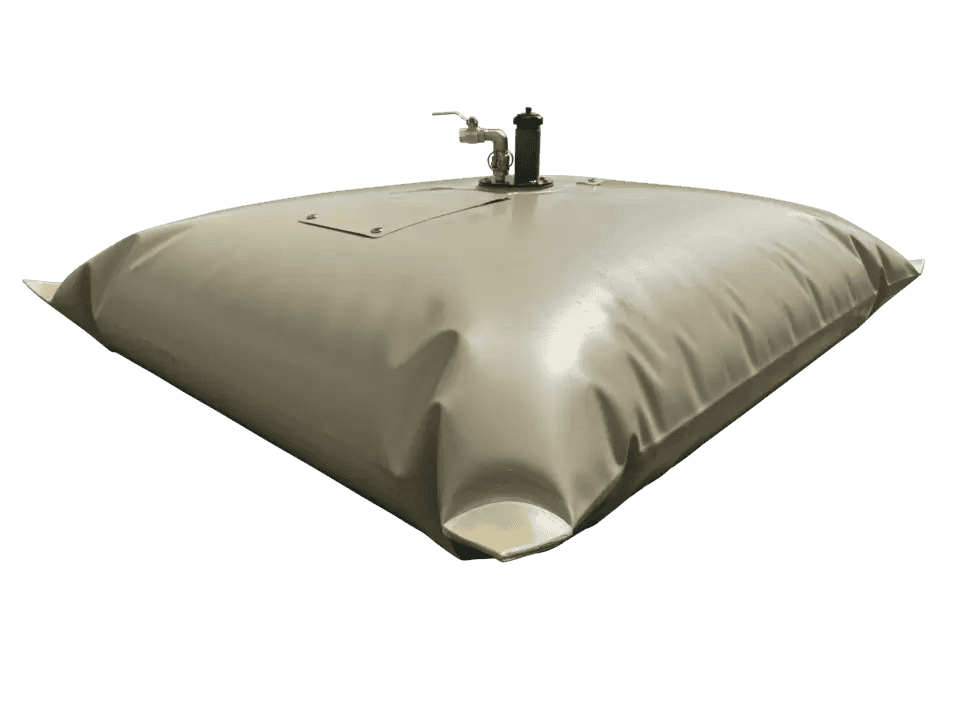
Pillow tanks are flexible fuel bladder tanks designed to rest on a prepared ground surface and expand as they are filled. They can provide temporary or semi-mobile bulk storage at depots, camps, refueling sites, and logistics nodes. Military collapsible tanks may incorporate multiple hose connections and dedicated venting provisions to support controlled filling and dispensing.
Vehicle-mounted fuel bladders are configured for installation within a supporting structure, compartment, trailer, or other transport system. Unlike a free-standing collapsible fuel tank, the bladder may depend on surrounding structure for restraint and protection. Installation requirements can therefore include careful consideration of movement, abrasion, fittings, vent routing, and fuel transfer connections. The bladder must also be suitable for the intended mobile application.
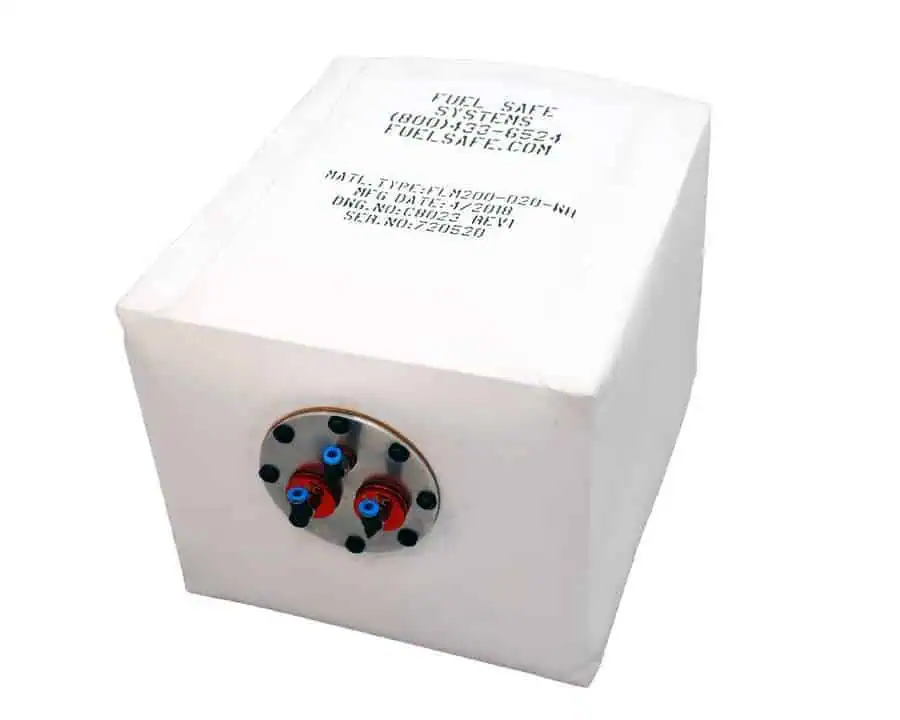
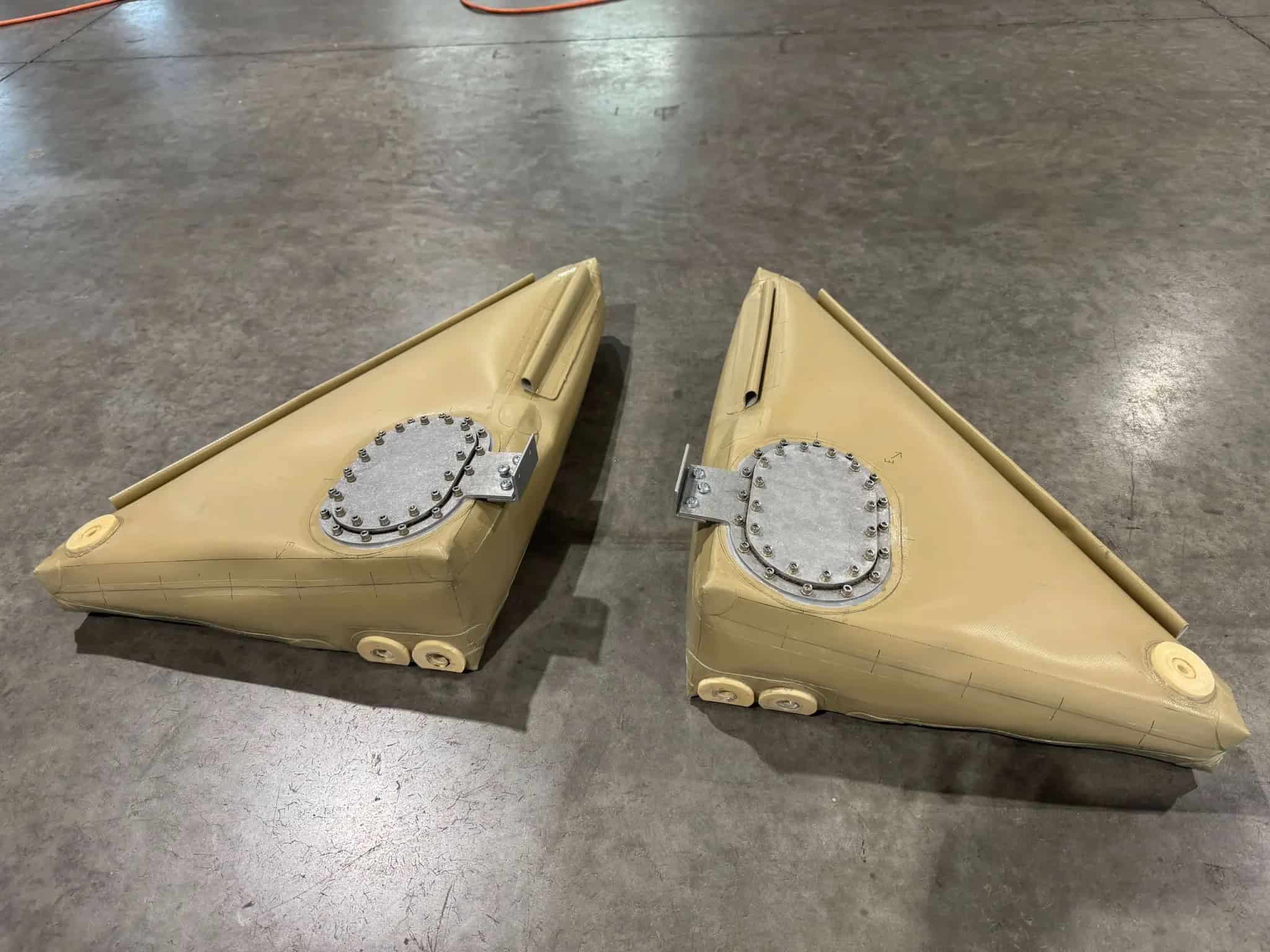
An aircraft fuel bladder is a flexible fuel cell installed within a designated aircraft structure or used as part of a specialized auxiliary fuel system. Flexible aircraft tanks require secure retention, appropriate fuel-system connections, venting, and access for inspection and maintenance. Bladder tanks are used within aviation fuel-system architectures, and military systems may employ fuel cells in rotary-wing aircraft, fixed-wing platforms, or unmanned aircraft requiring a UAV fuel bladder.
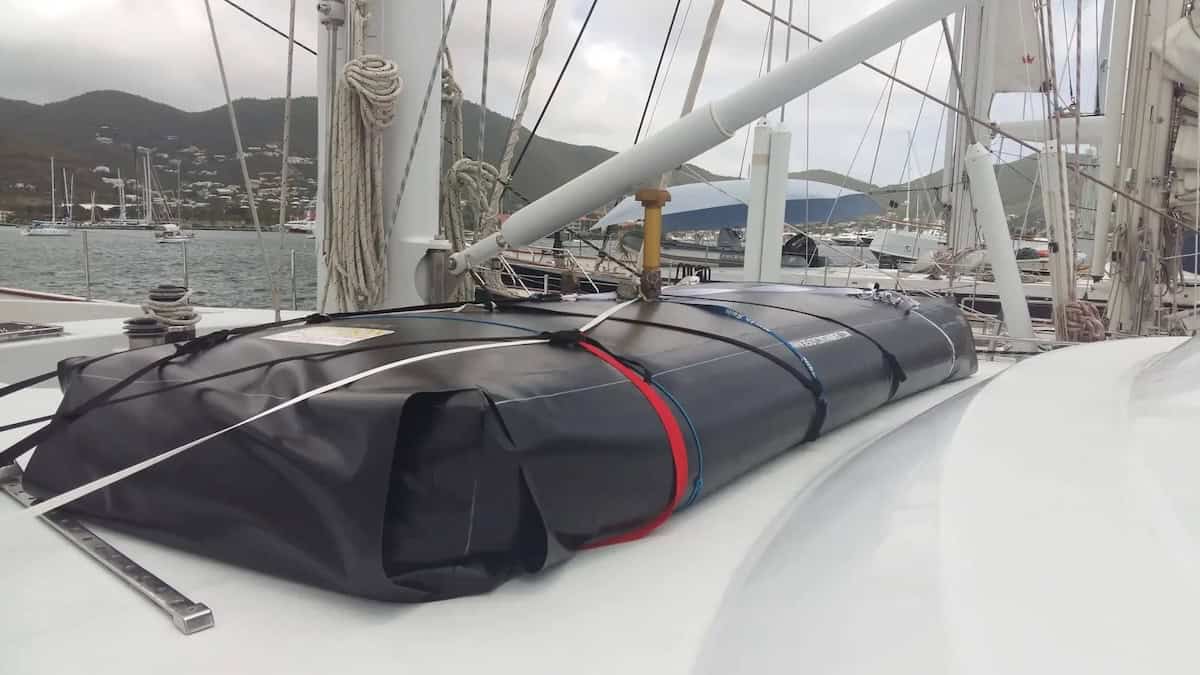
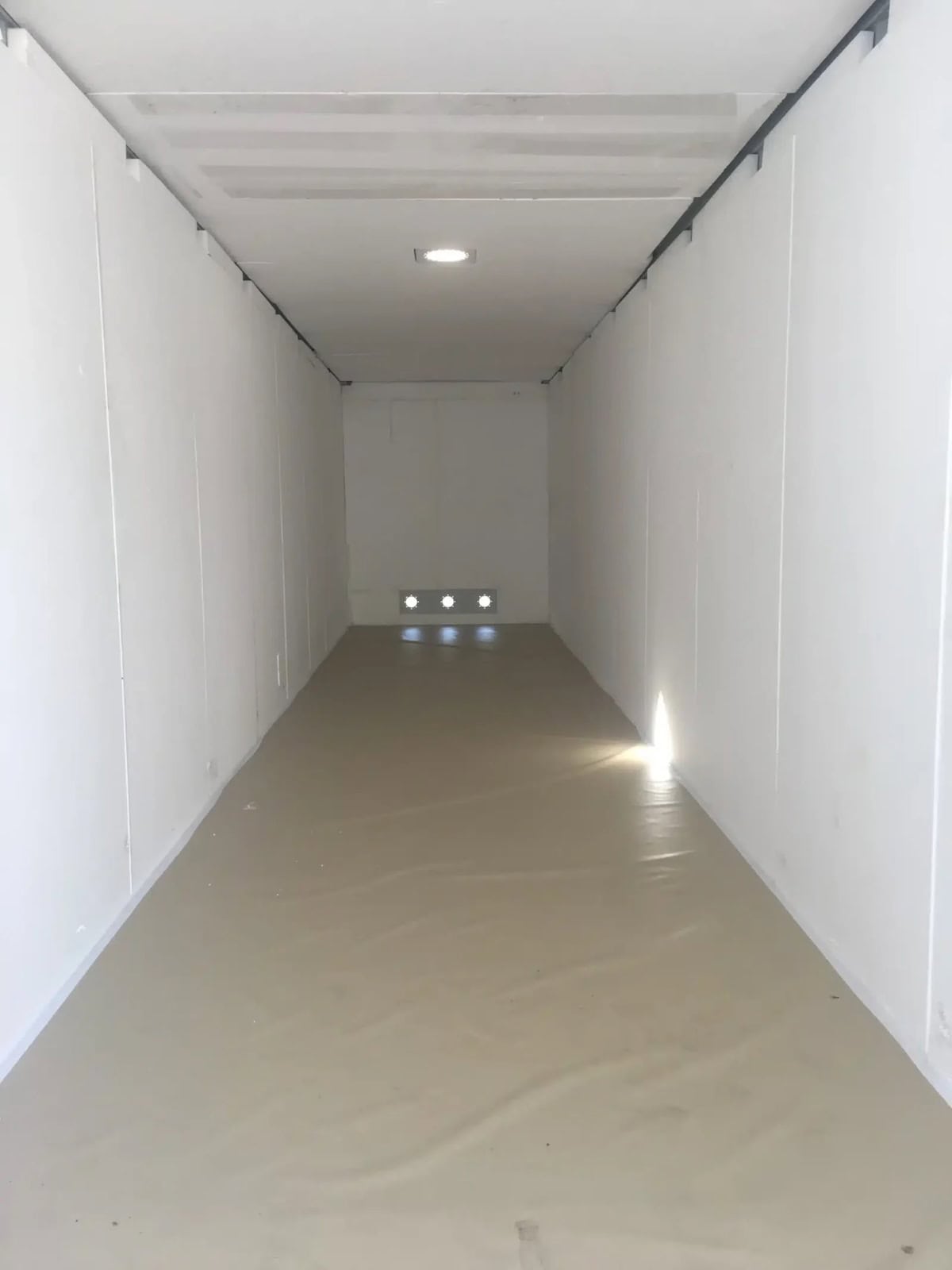
A marine fuel bladder can provide flexible storage aboard or in support of boats, amphibious craft, and maritime logistics systems. Depending on the installation, a boat fuel bladder may function as an auxiliary tank or as part of a deployable fuel-transfer arrangement. Marine bladders must be selected with particular attention to movement, moisture, saltwater exposure, restraint, connections, ventilation, and the fuel being carried.
Auxiliary fuel bladders increase available fuel capacity without necessarily requiring a permanently installed rigid tank. Applications can include aircraft, vehicles, boats, and specialized mission equipment. A flexible fuel tank used for extended range must still be integrated with appropriate transfer, venting, isolation, and structural provisions rather than treated simply as an additional portable fuel container.
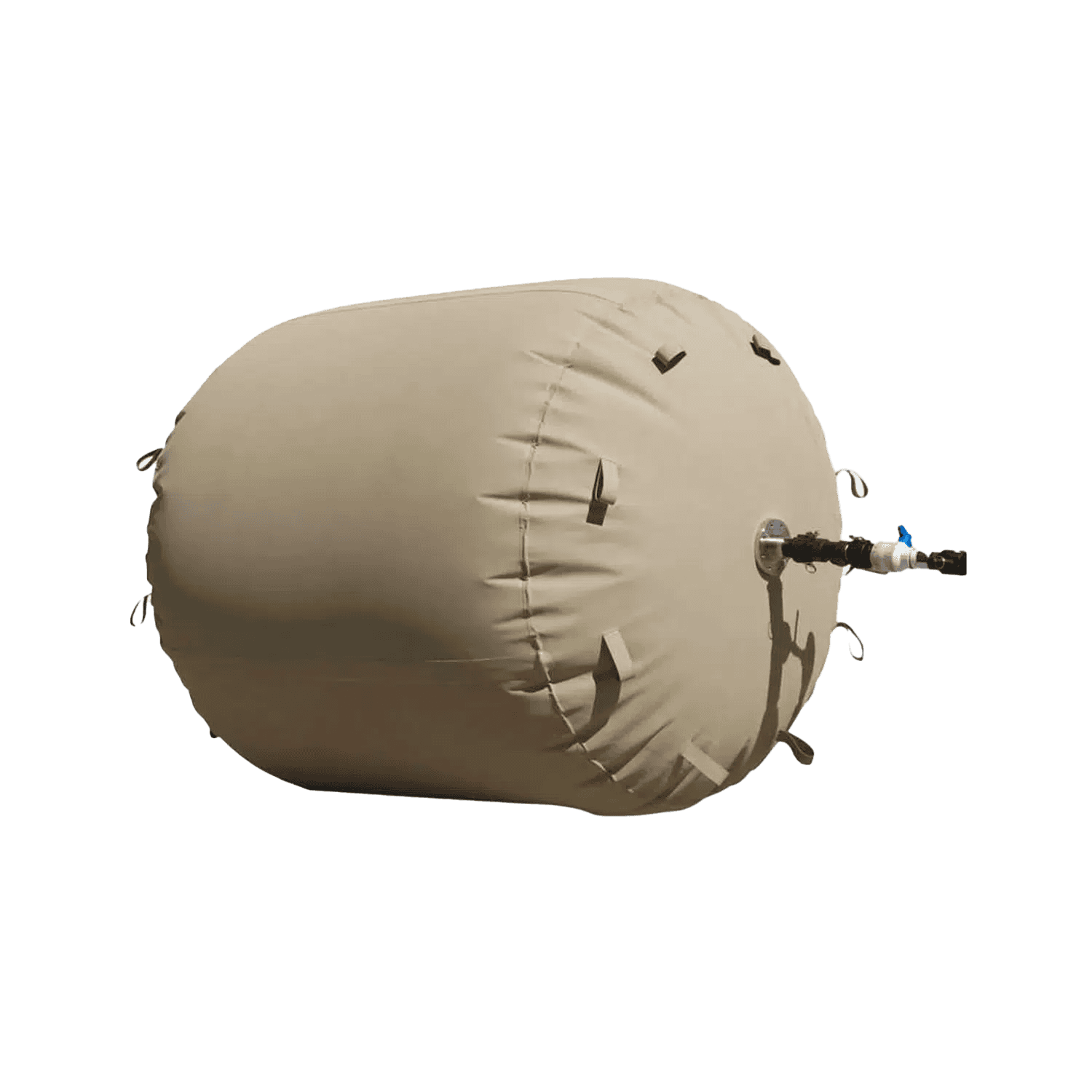
Expeditionary fuel blivets and collapsible storage systems are designed to help establish fuel capacity rapidly in austere locations. Once positioned, they can be connected with pumps, hoses, filters, valves, meters, and dispensing equipment to create a field fuel point. Their collapsible design supports deployment, recovery, and relocation within wider tactical fuel-distribution systems.
Fuel bladder construction combines flexible barrier materials with reinforcement selected for mechanical durability and chemical compatibility. Procurement teams comparing a standard or custom fuel bladder should evaluate the complete material system, not simply the outer fabric.
The following construction elements influence the performance of fuel tank bladders and other flexible fuel bladders.
| Construction element | Primary function | Key considerations |
|---|---|---|
| Elastomer-coated fabrics | Provide flexible fuel containment | Fuel resistance, flexibility, temperature range, aging |
| Thermoplastic-coated fabrics | Combine containment with weldable construction | Chemical compatibility, seam processing, abrasion resistance |
| Reinforcement layers and structural textiles | Carry tensile loads and control expansion | Tear strength, dimensional stability, flex fatigue |
| Seams, welds, and bonded joints | Join panels into a sealed bladder | Joint strength, repeatability, leak resistance |
| Fuel-resistant liners and barrier layers | Limit permeation and protect structural layers | Fuel chemistry, additives, temperature, long-term exposure |
| Protective covers and abrasion-resistant surfaces | Reduce external mechanical damage | Ground contact, handling, vibration, installation environment |
Material selection is application-specific. Aircraft, ground, vehicle, and marine fuel bladder tanks can require substantially different combinations of flexibility, reinforcement, permeation resistance, environmental durability, and repairability.
Fuel compatibility must be established for the bladder material, seams, coatings, fittings, valves, hoses, seals, and other wetted components. Fuel specifications and additive packages can vary, making confirmation against the required fuel specification and platform documentation important during selection and qualification.
Correct fluid management helps protect both the fuel and the bladder system throughout storage, transfer, and dispensing.
Military fuel bladders can establish distributed fuel storage at forward operating bases, temporary camps, remote installations, and other sites without permanent tank infrastructure. Their collapsible form can simplify outbound transportation after the fuel has been consumed, while multiple tanks can be incorporated into a wider storage and distribution layout.

Marine fuel bladders from Ready Containment.
At tactical refueling locations, an army fuel bladder or fuel blivet can serve as the storage element within a system of pumps, hoses, filters, valves, meters, and dispensing equipment. Site planning must account for safe separation, spill containment, access, fuel quality, and the transfer rates required by supported vehicles or equipment.
Flexible fuel storage can support aviation operations where aircraft must be refueled away from established infrastructure. Forward configurations can reduce dependence on fixed fuel installations and support temporary forward refueling points and other austere sites. Pump performance, filtration, hose configuration, and achievable fuel flow are also important when supporting operational aircraft.
Fuel bladder tanks can support vehicle range extension, fuel transport, or mission-specific fuel supply when appropriately integrated with the host platform. Vehicle systems must manage restraint, fuel movement, puncture hazards, heat sources, fittings, and transfer arrangements so the bladder fuel tank remains protected during movement and operation.
Marine fuel bladder tanks are typically suitable for boats, temporary maritime fuel storage, amphibious logistics, and fuel transfer between shore and operational assets. A fuel bladder for boats must be matched to the craft, installation method, expected motion, surrounding structure, and marine environment as well as the required fuel.
Portable fuel bladder systems can also support disaster response and emergency logistics where conventional infrastructure is damaged or unavailable. Flexible storage enables fuel to be positioned for generators, vehicles, aircraft, pumps, and other critical equipment, while collapsible construction can reduce the volume of equipment that must be recovered after operations.
Military fuel bladder requirements vary according to the type of tank, platform, fuel, and operating environment. There is no single specification that applies to every flexible fuel bladder, so the relevant requirements must be confirmed for the intended application.
Compliance with a particular military specification should not be assumed simply because a product is described as a military fuel bladder. Procurement and engineering teams should confirm the applicable specification, qualification requirements, fuel compatibility, capacity, and platform requirements for each installation.
Development is increasingly focused on improving durability, monitoring, logistics efficiency, and compatibility without sacrificing the deployability that makes flexible storage valuable.
These developments are extending the role of the collapsible fuel bladder from simple containment toward more integrated, observable, and adaptable military fuel-storage systems.


 Searching Companies & Products