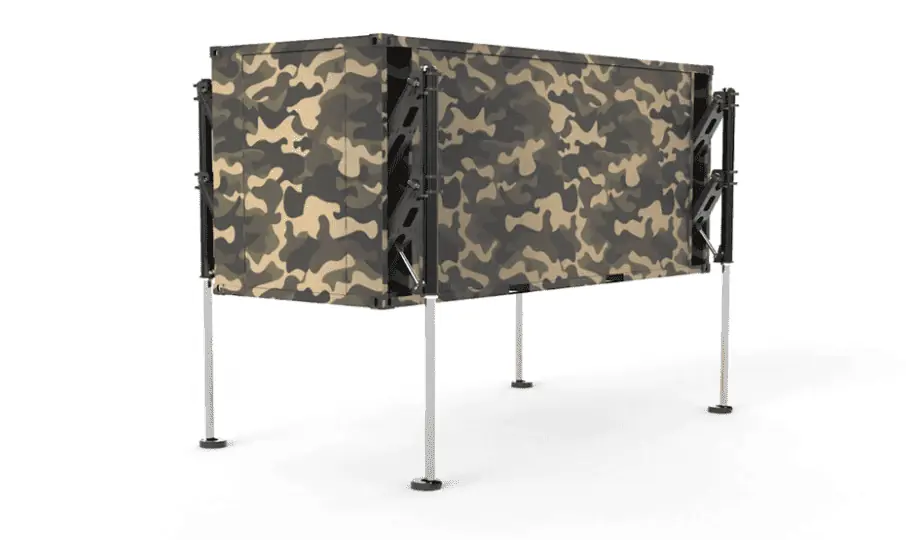
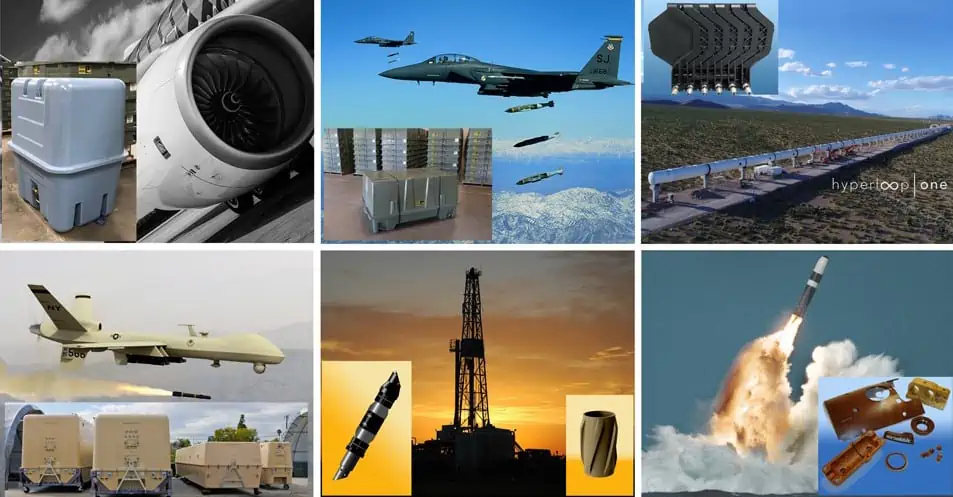
Showcase your capabilities
If you design, build or supply Military Cases, create a profile to showcase your capabilities and connect with visitors who have an active requirement for your solutions.




Military equipment cases are rugged transport and storage solutions designed to safeguard defense electronics, weapons, communications gear, optical instruments, and mission-critical assets during transit and tactical deployment. Available options include heavy-duty hard cases, shock-mounted rack containers, lightweight composite enclosures, and custom foam-lined transit cases.
This page features manufacturers of military-grade and tactical equipment cases designed to protect sensitive equipment against impact, vibration, dust, moisture, and extreme operational environments.
Read the Technology Overview
Composite Manufacturing for Mission-Critical Military & Defense Projects

If you design, build or supply Military Cases, create a profile to showcase your capabilities and connect with visitors who have an active requirement for your solutions.

Military equipment cases are rugged protective enclosures designed for the secure storage, handling, and transportation of sensitive defense equipment. Built for demanding operational environments, these cases protect military electronics, weapons, communications systems, optical instruments, and other mission-critical assets against impact, vibration, moisture, dust, and environmental exposure.
This category features manufacturers of military cases, rugged transit cases, and tactical equipment cases for land, maritime, and airborne defense operations. Available solutions include military hard cases, lightweight composite enclosures, shock-mounted transport systems, and custom cases for military equipment requiring specialized protection.
Rugged protective cases combine rigid outer shells, internal cushioning or mounting systems, and environmental sealing to protect military equipment during transportation, deployment, and storage.
The level of protection required depends on equipment sensitivity, handling conditions, transportation methods, and the intended operational environment.
Military hard cases provide secure storage and transportation for firearms, weapon components, optics, and associated accessories. Custom foam inserts, restraints, and compartmentalized interiors limit movement during transport, while reinforced shells and lockable closures support controlled handling and access.
Ruggedized equipment cases protect tactical radios, antennas, satellite communications terminals, networking equipment, and associated electronics during transport and deployment. Portable configurations support rapid field setup, while rackmount cases can accommodate larger communications assemblies, power systems, and supporting hardware.
Military transit cases protect radar components, Electronic Warfare (EW) modules, signal processing equipment, and associated electronics against mechanical loads and environmental exposure. Shock-absorbing structures, internal restraints, and custom mounting systems help preserve mechanical alignment and reduce stress on sensitive assemblies during transportation.
Protective equipment cases accommodate thermal imaging systems, night vision devices, laser rangefinders, and electro-optical sensors, where optical alignment and component cleanliness may be particularly important. Precision-cut inserts and secure mounting arrangements reduce movement while protecting sensitive optics from impact, vibration, dust, and other contaminants during storage and field deployment.
Tactical transport cases provide organized storage for Unmanned Aerial Vehicles (UAVs), ground robots, controllers, sensors, batteries, and supporting equipment. Custom military equipment cases can incorporate removable trays, dedicated compartments, restraints, and accessory storage to simplify transportation, field assembly, maintenance, and deployment.
Military rugged cases protect portable computers, servers, data processing modules, displays, and other battlefield electronic systems. Some configurations incorporate shock-mounted equipment racks, cooling systems, external connectors, and power interfaces so electronics can remain protected while being operated directly from the enclosure.
Tactical carrying cases and military storage cases protect portable diagnostic equipment, medical instruments, emergency response supplies, and other field support equipment. Organized interiors help secure individual components while allowing rapid access to essential equipment during deployment.
Military-grade equipment cases protect oscilloscopes, spectrum analyzers, calibration instruments, and other precision test equipment that can be vulnerable to mechanical shock and vibration. Custom cushioning, internal restraints, and shock-isolated mounting arrangements reduce mechanical stresses that could damage instruments or affect calibration.
Heavy-duty equipment cases accommodate batteries, portable power supplies, chargers, and electrical distribution equipment used in field operations. Specialized designs may incorporate electrical insulation, ventilation, thermal management, internal restraints, and other features appropriate to the battery technology and applicable transport requirements.
Military equipment cases are produced using different molding, fabrication, reinforcement, and panel-construction methods. Material and construction choices influence weight, structural rigidity, impact resistance, corrosion protection, environmental sealing, and suitability for repeated transport and deployment.
| Case Construction | Characteristics | Typical Military Applications |
| Injection-Molded Polymer Cases | Rigid polymer shells with molded reinforcement features, consistent dimensions, and integrated sealing surfaces. | Portable electronics, optical instruments, tactical equipment, and communications devices. |
| Rotationally Molded Cases | Hollow polymer structures with relatively thick walls and good impact resistance, often used for larger enclosures. | Heavy military equipment, field communications systems, and large transport containers. |
| Thermoformed Plastic Cases | Shaped thermoplastic shells offering relatively lightweight construction and customizable dimensions and equipment compartments. | Portable tools, electronic accessories, and medium-duty military storage applications. |
| Fiber-Reinforced Composite Cases | Composite structures combining reinforcing fibers with polymer matrices to provide high strength and stiffness relative to weight, depending on the material and construction. | Weight-sensitive military transport systems, aerospace equipment, and specialized defense electronics. |
| Aluminum Equipment Cases | Metal enclosures offering structural rigidity, corrosion resistance with suitable finishes, and options for electromagnetic shielding. | Electronic instruments, communications equipment, and rugged rackmount systems. |
| Metal-Reinforced and Hybrid Construction | Polymer, composite, or panel-based cases incorporating metal frames, reinforced edges, corners, and protective hardware. | Heavy-duty equipment transportation, military logistics, and reusable transit containers. |
Military transport cases incorporate protective, handling, and organizational features designed to improve equipment security, transportation efficiency, and operational accessibility. Common features include:
Custom case designs combine these features according to equipment dimensions, weight, fragility, security requirements, transportation conditions, and intended deployment environment.
Military equipment cases may be designed and tested against defense, packaging, environmental, and transport standards, with applicable requirements depending on the protected equipment, intended transportation methods, environmental exposure, and procurement specifications.
Compliance and qualification should be assessed against the applicable standard, specified revision, individual test methods, and documented operating conditions rather than inferred from the use of terms such as military-grade or ruggedized.
Developments in protective materials, electronics integration, sensing, and manufacturing are expanding the capabilities of military equipment storage and transportation systems, particularly where cases must combine physical protection with deployable functionality.
These developments are supporting increasingly specialized military cases designed for defense logistics, equipment protection, rapid deployment, and field operation across demanding land, maritime, and airborne environments.


 Searching Companies & Products