Integrated drone defense systems combine detection, tracking, identification, and mitigation technologies to support coordinated threat assessment and engagement. These systems integrate radar, RF sensors, EO/IR cameras, command and control software, and electronic or kinetic countermeasures.
This page features suppliers of integrated counter-drone solutions for the protection of military forces, installations, vehicles, and critical infrastructure against hostile UAS threats.
If you design, build or supply Integrated Drone Defense Systems, create a profile to showcase your capabilities and connect with visitors who have an active requirement for your solutions.
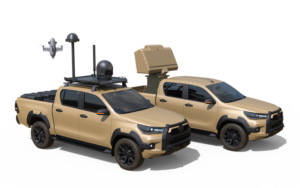
Mobile counter-UAS platform with autonomous multi-sensor drone detection, tracking & defeat
Mobile counter-UAS platform with autonomous multi-sensor drone detection, tracking & defeat
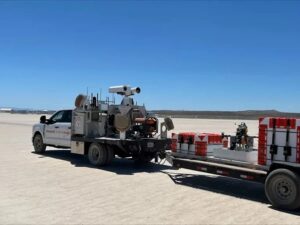
...tor Protection System – Counter Terror (TIPS-C) is a mobile Counter-Unmanned Aircraft System... ..., RF detection systems, optical AI/ML analytics, and EO/IR sensors is fused into a single...
The Specifier's Guide to Integrated Drone Defense Systems
Overview by
William Mackenzie
Updated:
Introduction to Integrated Drone Defense Systems
Integrated drone defense systems combine multiple detection, tracking, identification, and mitigation technologies to protect military personnel, installations, vehicles, and critical infrastructure against hostile Unmanned Aircraft Systems (UAS). These integrated counter-drone solutions coordinate sensors, effectors, and command and control capabilities to support layered responses to aerial threats.
Integrated anti-drone defense systems can incorporate radar, Radio Frequency (RF) sensors, Electro-Optical/Infrared (EO/IR) cameras, electronic warfare equipment, and kinetic interceptors. Centralized Counter-Unmanned Aircraft Systems (C-UAS) command and control software enables operators to assess threats, coordinate engagements, and maintain situational awareness across defended areas.
Core Capabilities of Integrated Drone Defense Systems
Integrated drone defense systems combine surveillance, threat assessment, and engagement coordination within a common operational framework. Their core capabilities include:
Early Warning and Drone Detection: Radar, passive RF receivers, EO/IR cameras, and other sensors detect potential aerial threats within their respective coverage areas. Detection performance depends on target characteristics, environmental conditions, and sensor capabilities.
Continuous Target Tracking and Localization: Tracking systems correlate successive detections to estimate drone position and movement, supporting continued surveillance, sensor cueing, and engagement planning.
Drone Classification and Identification: Sensor data and classification algorithms help differentiate suspected drones from birds, friendly aircraft, and other objects, although classification alone does not necessarily establish hostile intent.
Multi-Sensor Data Fusion: Data from radar, RF, EO/IR, and acoustic sensors can be correlated into shared tracks, reducing duplicate alerts and providing a more coherent operational picture.
Threat Assessment and Prioritization: Command software presents factors such as target trajectory, proximity, classification, and potential risk to protected assets, supporting operator assessment and prioritization.
Effector Selection and Engagement Coordination: Integrated control systems coordinate compatible electronic, directed energy, and kinetic countermeasures according to system capabilities, rules of engagement, and authorization procedures.
Post-Engagement Assessment and Incident Recording: Tracking data, sensor recordings, and engagement logs support assessment of countermeasure outcomes, incident documentation, and subsequent operational analysis.
These capabilities enable military operators to coordinate multiple defensive technologies rather than relying on independent detection and mitigation equipment.
Types of Integrated Drone Defense Systems
Integrated counter-UAS system architectures differ according to their sensors, effectors, control software, and deployment requirements. Some focus on multi-sensor drone detection, while others provide coordinated mitigation or complete detect-to-defeat capabilities.
System Type
Architecture and Capabilities
Multi-Sensor Drone Detection and Tracking Systems
Combine radar, RF, EO/IR, or acoustic sensors to detect, classify, and track drones, often using centralized sensor fusion software to correlate information from different sources.
Multi-Effector Drone Defense Systems
Integrate multiple mitigation technologies, such as electronic warfare systems, interceptors, and directed energy weapons, to provide different engagement options according to threat characteristics and operational requirements.
Fully Integrated Detect-to-Defeat C-UAS Systems
Connect detection, identification, tracking, threat assessment, command decisions, and countermeasure coordination within a unified operational architecture.
Modular and Distributed Counter-Drone Systems
Use networked sensors, effectors, and processing nodes that can be deployed across multiple locations, reconfigured, or expanded according to operational requirements.
C-UAS Command and Control Systems
Provide command and control functions, including track fusion, tactical visualization, threat management, engagement authorization, and system monitoring. These systems can serve as the control layer of broader counter-drone architectures rather than a separate defensive layer.
Multi-Layer Drone Defense Architectures
Multi-layer drone defense combines different detection ranges, surveillance technologies, and countermeasures to protect against threats approaching from multiple directions. An integrated anti-drone system may incorporate several defensive layers and supporting capabilities:
Long-Range Surveillance and Early Warning: Surveillance radars and other detection systems provide advance warning of approaching UAS, subject to sensor performance, terrain, and target characteristics.
Medium-Range Tracking and Threat Identification: Radar tracking, RF analysis, and EO/IR observation support target localization, classification, and assessment before potential engagement.
Short-Range and Point Defense: Close-range sensors and effectors provide localized protection for specific assets against drones entering the immediate defended area.
Layered Soft-Kill and Hard-Kill Countermeasures: Electronic warfare systems can disrupt susceptible drone communications or satellite navigation, while kinetic and directed energy weapons provide alternative engagement methods, including against drones without vulnerable radio links.
Overlapping Sensor and Effector Coverage: Multiple detection and engagement systems can reduce coverage gaps and provide additional defensive options where their effective operating envelopes overlap.
Defense Against Simultaneous and Saturation Attacks: Multi-target tracking, coordinated effector allocation, and automated decision support help operators manage multiple incoming threats, subject to available tracking and engagement capacity.
Engagement Zones and Deconfliction: Defined engagement areas, airspace coordination procedures, and authorization controls help manage risks to friendly aircraft, personnel, and surrounding infrastructure.
Effective layered defense depends on coordinating sensor coverage, available countermeasures, and command decisions within the time available to respond to an approaching threat.
Military Applications of Integrated Drone Defense Systems
Military Base and Forward Operating Base Protection
Fixed-site integrated drone defense systems provide protection for military installations, command facilities, ammunition storage areas, and forward operating bases. Distributed surveillance sensors can monitor approaches to a defended perimeter, while centrally coordinated countermeasures support responses to unauthorized or hostile drones.
Deployed Force and Tactical Unit Protection
Deployable C-UAS systems support infantry units, command posts, and other military formations operating in contested environments. Compact radar, RF detection equipment, and mobile countermeasures provide localized protection, while networking capabilities enable coordination between defensive positions.
Armored Vehicle and Military Convoy Defense
Vehicle-mounted integrated counter-drone solutions provide protection for armored formations and logistics convoys against aerial reconnaissance and attack drones. Systems may combine mobile sensors, electronic warfare equipment, and kinetic interceptors, with integration requirements influenced by vehicle power, payload capacity, line of sight, and the need to operate while moving.
Airfield and Aviation Asset Protection
Military airfields require drone defense systems capable of monitoring approach corridors, flight lines, aircraft shelters, and other sensitive areas. Integrated detection and engagement coordination must account for friendly aircraft movements, operational safety, and restrictions on countermeasure employment.
Naval Vessel and Maritime Force Protection
Shipboard drone defense systems integrate surveillance radars, EO/IR sensors, electronic warfare equipment, and compatible defensive weapons. Counter-UAS capabilities may operate alongside existing naval combat systems to support protection against low-flying drones, including threats approaching over the sea surface.
Border Surveillance and Security Operations
Integrated counter-drone systems support military border security operations by detecting and monitoring unauthorized UAS activity near controlled areas. Networked sensors can provide coverage across multiple observation positions, while centralized command systems coordinate responses according to applicable operational authorities.
Critical Military Infrastructure Protection
Military communications facilities, fuel depots, radar installations, and logistics centers may require persistent protection against drone reconnaissance and attacks. Fixed and distributed systems combine continuous surveillance with coordinated countermeasure capabilities to protect critical assets and support operational readiness.
Integration with Military Air Defense Networks
Integrated drone defense systems can form part of wider military air defense architectures, providing specialized capabilities against small, low-altitude unmanned threats. Important integration requirements include:
Integration with Integrated Air and Missile Defense (IAMD): Compatible C-UAS systems can contribute drone detection and tracking information to wider air defense command networks, supporting coordinated situational awareness and threat assessment.
Short-Range Air Defense (SHORAD) and Very Short-Range Air Defense (VSHORAD): Counter-drone sensors and effectors can complement existing short-range defensive capabilities, particularly against small UAS that present challenging detection and engagement characteristics.
Coordination with Air Surveillance Radar Networks: Data exchange between dedicated counter-drone sensors and conventional air surveillance radars can improve the availability of target information across different coverage areas.
Tactical Data Sharing and Interoperability: Compatible interfaces and secure communications enable sensor tracks, threat alerts, and engagement information to be exchanged between authorized military systems.
Friendly Aircraft and UAS Deconfliction: Integration with airspace management procedures and available identification information helps operators assess potential conflicts involving friendly aircraft and military UAS.
Integration with Electronic Warfare Systems: Counter-drone command and control software can coordinate compatible electronic warfare equipment alongside other defensive systems, subject to spectrum management requirements and operational authorization.
Interoperability enables specialized C-UAS capabilities to contribute to a coordinated military air defense response without requiring every defensive element to operate through a single platform or control system.
Key Developments in Integrated Drone Defense Technology
Integrated drone defense technology is evolving to address increasingly diverse UAS threats, including autonomous aircraft, coordinated attacks, and inexpensive one-way attack drones. Important development areas include:
Autonomous Interceptor Drones: Interceptor UAS using onboard target tracking and automated guidance have undergone operational testing and deployment in some settings. Wider integration with counter-drone command networks depends on compatible system interfaces, engagement controls, and authorization procedures.
Directed Energy Integration: High-Energy Laser (HEL) and High-Power Microwave (HPM) systems are undergoing operational use, trials, and integration into layered C-UAS architectures. Their effectiveness depends on factors including line of sight, environmental conditions, electrical power availability, and target susceptibility.
Lower-Cost Countermeasures: Development and procurement efforts include lower-cost interceptors, reusable defensive platforms, and alternative effectors intended to improve the cost balance when countering large numbers of inexpensive drones.
Open and Modular Architectures: Modular software and interoperable data interfaces are being assessed and adopted to connect counter-drone sensors, command nodes, and effectors across different platforms and military networks.
These developments support more adaptable integrated drone defense systems, particularly where military forces must respond to changing threats while maintaining interoperability with existing air defense equipment.
The latest defense technology news, straight to your inbox.
Get our weekly roundup of technology developments, new products and industry news.
THANK YOU FOR SIGNING UP
Thanks for joining us. Check your inbox.
We've sent you an email. Click the confirmation link to complete your subscription to the weekly eBrief. In the meantime, explore the latest news, suppliers and technologies on DA.
Advancing Defense Capability Through Strategic Collaboration
Defense Advancement works with major OEMs to foster collaboration and increase engagement with SMEs, to accelerate innovation and drive defense capabilities forward.