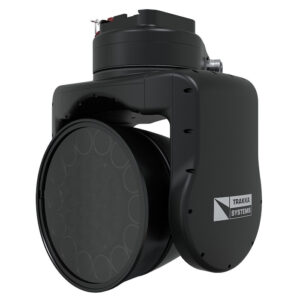
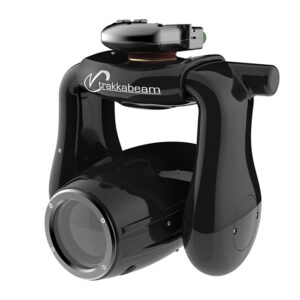
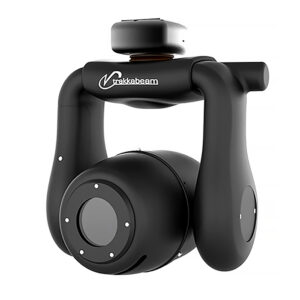
Showcase your capabilities
If you design, build or supply Helicopter Searchlights, create a profile to showcase your capabilities and connect with visitors who have an active requirement for your solutions.



Helicopter searchlights are high-intensity airborne illumination systems used for military surveillance, search and rescue, law enforcement, and nighttime operations. Available as LED, xenon, halogen, and combined visible/infrared systems, these aircraft-mounted lights provide directional illumination for personnel identification, maritime interdiction, border security, and landing zone assessment.
This category showcases suppliers of military helicopter searchlights, including systems with motorized pan and tilt, adjustable beam focus, stabilization, and EO/IR sensor integration for coordinated observation.
Read the Technology Overview
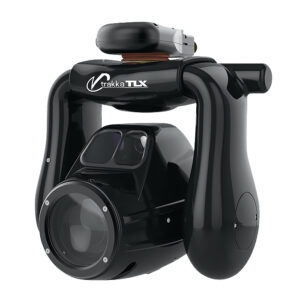
Integrated Vision, Imaging & Illumination Technologies for Airborne, Land & Maritime Missions

If you design, build or supply Helicopter Searchlights, create a profile to showcase your capabilities and connect with visitors who have an active requirement for your solutions.
No products available No products available from suppliers based in . View products from all territories

Helicopter searchlights are high-intensity airborne illumination systems used for surveillance, search and rescue, law enforcement, and military operations. Mounted externally on the aircraft, these systems provide concentrated, directional lighting to support the identification of personnel, vehicles, vessels, and terrain during nighttime or low-light missions. Configurations include fixed, motorized, and stabilized helicopter spotlights, with illumination performance determined by the light source, optical design, and beam control mechanisms.
An aircraft searchlight may incorporate remote control, motorized pan and tilt, adjustable beam focus, and integration with Electro-Optical/Infrared (EO/IR) sensors. Light-Emitting Diode (LED), xenon, and halogen systems offer different combinations of optical intensity, power consumption, and maintenance requirements. Advanced aerial searchlight assemblies may also support infrared illumination and camera-cued positioning, allowing operators to coordinate lighting with onboard surveillance equipment.
Police helicopter searchlights support nighttime patrols, suspect searches, ground-unit coordination, and incident monitoring. A police helicopter spotlight provides concentrated illumination of selected ground areas, helping crews observe activity and assist personnel operating below. Stabilized systems can compensate for aircraft movement to maintain the commanded beam direction, while camera-linked configurations allow searchlight positioning to be coordinated with compatible EO/IR surveillance sensors.
Helicopter searchlights support Search and Rescue (SAR) and Combat Search and Rescue (CSAR) operations by illuminating personnel, difficult terrain, landing areas, and rescue locations. High-intensity illumination assists crews during nighttime searches, while adjustable beam widths provide concentrated lighting for distant observation or broader coverage during close-range rescue activities. Searchlights also support disaster response operations where ground lighting is damaged, unavailable, or insufficient.
Border patrol helicopter spotlights provide illumination for airborne surveillance of remote terrain, coastal approaches, and suspected unauthorized crossings. In maritime interdiction operations, aircraft-mounted searchlights support vessel identification, observation of deck activity, and coordination with patrol craft. Motorized and stabilized gimbal searchlight configurations allow operators to direct illumination toward moving vessels or ground targets while the helicopter maintains its flight path.
Helicopter searchlights assist crews in assessing and illuminating Landing Zones (LZs), including unprepared surfaces, remote operating areas, and emergency landing sites. Directional lighting can reveal terrain features, obstacles, and ground activity during approach and landing. Beam positioning, reflected glare, and cockpit visibility must be considered to prevent illumination from interfering with pilot observation or compatible night vision equipment.
High-intensity helicopter spotlights can provide visible illumination during law enforcement, perimeter security, and airborne observation missions. Concentrated lighting may help ground personnel identify an aircraft’s area of attention or make individuals and vehicles more visible to responding units. The effectiveness of visual warning depends on beam placement, ambient conditions, and coordination with approved signaling or communication procedures.
Military helicopter searchlights support airborne observation around military installations, forward operating locations, and ground force movements. During perimeter patrols, illumination assists crews in identifying activity near access routes, defensive positions, and restricted areas. In convoy escort operations, directional lighting can support observation of vehicles, roadside terrain, and potential obstructions, subject to tactical lighting restrictions and aircraft operating procedures.
Helicopter searchlights use different illumination technologies, each with distinct optical, electrical, and maintenance characteristics.
The choice of light source affects electrical loading, heat dissipation, optical performance, and servicing requirements throughout the searchlight’s operational life.
Helicopter searchlights must meet the applicable environmental, electrical, electromagnetic, and airworthiness requirements of their intended aircraft installation. Relevant standards and certification frameworks may include:
Suppliers should provide qualification reports, installation documentation, and evidence of compliance with the requirements specified by the aircraft operator and approving authority.
Selecting a helicopter searchlight requires evaluating optical performance, aircraft compatibility, mounting constraints, and operational requirements. The following criteria support the comparison of searchlight systems for military and specialist aviation platforms.
| Selection Criteria | Key Considerations |
| Illumination Performance | Peak beam intensity in candela, beam divergence, target illuminance, effective range, and adjustable focus. |
| Positioning and Stabilization | Pan and tilt coverage, slew rate, pointing accuracy, vibration compensation, and stabilization performance. |
| Aircraft Electrical Compatibility | Input voltage, continuous power demand, startup current, electrical protection, and power quality requirements. |
| Sensor and Mission System Integration | Remote control interfaces, camera cueing, EO/IR sensor compatibility, and coordinated searchlight positioning. |
| Mounting and Installation | Assembly weight, dimensions, mounting geometry, aerodynamic loads, ground clearance, and aircraft structural constraints. |
| Environmental Qualification and Airworthiness | Environmental test evidence, electromagnetic compatibility, aircraft-specific qualification, and installation approvals. |
Procurement specifications should distinguish required illumination performance from optional capabilities such as infrared output, inertial stabilization, and automated sensor cueing. Aircraft-specific integration evidence is essential when evaluating helicopter LED searchlights, xenon systems, and externally mounted gimbal searchlight assemblies.


 Searching Companies & Products