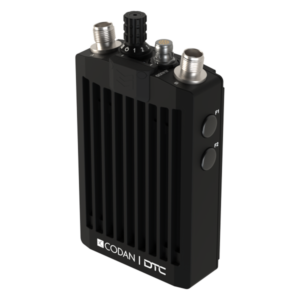
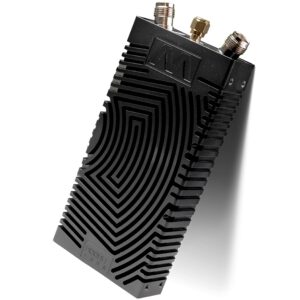
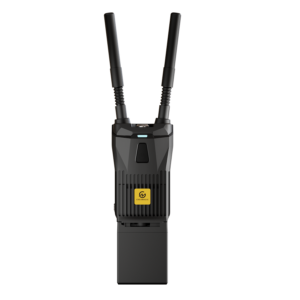
Handheld tactical radios are portable military communication systems that provide secure voice and data connectivity for dismounted personnel, infantry units, and SOF. Available as ruggedized combat net radios, multiband devices, and SDRs, these systems support squad coordination, tactical messaging, position reporting, and battlefield situational awareness.
This page features suppliers of handheld military radios with encryption, frequency hopping, and MANET capabilities to support communications in contested environments.
If you design, build or supply Handheld Tactical Radios, create a profile to showcase your capabilities and connect with visitors who have an active requirement for your solutions.
The Technical Guide to Handheld Tactical Radios for Defense & Military Operations
Overview by
William Mackenzie
Updated:
Introduction to Handheld Tactical Radios
Handheld tactical radios are portable military communication devices designed to provide reliable voice and data connectivity for dismounted personnel operating in battlefield and defense environments. These radios enable soldiers to coordinate movements, exchange tactical information, and maintain communications across squads, platoons, and wider command networks. Available as compact, ruggedized systems, handheld military radios support both conventional line-of-sight communications and more advanced networked operations.
Modern handheld tactical radio systems combine radio transceivers, antennas, digital signal processing, encryption, and battery-powered electronics to transmit and receive tactical communications. Configurations range from conventional combat net radios to multiband, multichannel devices capable of simultaneous voice and data transmission. Advanced soldier radios may also incorporate software-defined architectures and mobile ad hoc networking, allowing personnel to communicate and exchange information across interconnected radio nodes without relying on fixed communications infrastructure.
Core Capabilities of Handheld Military Radios
Handheld military radios provide essential communications capabilities for soldiers operating in dynamic and potentially contested environments. Depending on the radio architecture, these capabilities include:
Secure Tactical Voice Communications: Encryption protects sensitive military communications from unauthorized access, while compatible radio waveforms support coordinated voice exchanges between deployed personnel. Supported cryptographic systems and key management arrangements determine security capabilities and interoperability.
Simultaneous Voice and Data Transmission: Dual-channel or suitably configured networking radios can support voice communications alongside digital data transfer, allowing personnel to maintain contact while exchanging mission information.
Tactical Messaging and Data Exchange: Digital handheld tactical radios enable the transmission of text messages, operational updates, and other tactical information between compatible communication systems.
Position Reporting and Situational Awareness: Radios equipped with GNSS receivers can transmit location information across compatible tactical networks, supporting friendly-force tracking and improved battlefield awareness.
Multi-Channel Operation and Crossband Communications: Radios with independent communication channels can maintain separate links simultaneously, while supported crossband relay capabilities allow information to pass between compatible networks operating on different frequency bands or waveforms.
Together, these capabilities allow a secure tactical radio to function as both a voice communication device and a connected component of wider battlefield information systems.
Military Applications of Handheld Soldier Radios
Dismounted Infantry and Company-Level Coordination
Handheld tactical radios enable infantry personnel to maintain communications during patrols, reconnaissance missions, and combat operations. A military squad radio supports coordination between individual soldiers and squad leaders, while platoon radio networks connect subordinate units with higher command elements. These systems allow personnel to exchange orders, report enemy activity, coordinate movements, and maintain situational awareness across dispersed formations. Compact infantry radio designs also help reduce the equipment burden on dismounted personnel.
Soldier-Worn System and End-User Device (EUD) Integration
Modern soldier radio systems can integrate with tactical headsets, push-to-talk controls, and EUDs to support voice and digital communications through a connected soldier-worn architecture. Compatible interfaces allow personnel to exchange location data, tactical messages, and mission information with battlefield management applications. A small military radio may be mounted on body armor or load-bearing equipment, providing accessible communications while allowing soldiers to operate other mission equipment.
Special Operations Forces (SOF) and Combat Search and Rescue (CSAR)
SOF use portable tactical radios to maintain secure communications during reconnaissance, direct action, and other missions requiring mobility and operational discretion. Multiband configurations can support interoperability between ground personnel, aircraft, and supporting units where compatible frequencies and waveforms are available. During CSAR operations, handheld military field radios facilitate communication between isolated personnel, recovery teams, and coordinating aircraft, supporting location reporting and extraction activities.
Joint Terminal Attack Control (JTAC), Forward Air Control, and Fire Support
Handheld tactical radios support coordination between ground forces and supporting aircraft during JTAC and forward air control operations. Suitable multiband military combat radios provide access to compatible ground-to-air communication networks, enabling the exchange of targeting information, operational instructions, and mission updates. Forward observers may also use battlefield radio systems to communicate with artillery coordination elements, supporting target reporting, fire adjustment, and the coordination of indirect fire missions.
Military Base Perimeter Security and Tactical Logistics Operations
Handheld tactical radios provide communication links for military personnel conducting installation security, perimeter patrols, and access control operations. Portable military radio systems allow security teams to report incidents, coordinate responses, and maintain contact with command posts. In tactical logistics operations, handheld devices support convoy coordination, equipment distribution, and communication between supply personnel operating across dispersed facilities or forward positions. Ruggedized designs help maintain reliable operation in challenging field conditions.
Frequency Bands & Operating Modes
Handheld tactical radios operate across different frequency bands and communication modes to accommodate military networking requirements. Common configurations include:
Very High Frequency (VHF) Tactical Radios: VHF radios support combat net communications, particularly for ground force coordination and tactical voice networks.
Ultra High Frequency (UHF) Tactical Radios: UHF radios support military ground-to-air communications and other tactical links, with compatible configurations also providing access to designated satellite communication services.
Multiband Operation: Multiband handheld tactical radios provide access to multiple frequency ranges within a single device, reducing the need for personnel to carry separate radios for different communication networks. Simultaneous operation depends on the number and configuration of available radio channels.
Frequency Hopping: Compatible radios rapidly change operating frequencies according to synchronized hopping patterns, improving resistance to certain forms of interference and jamming while making unauthorized interception more difficult.
Simplex and Repeater-Assisted Communications: Simplex operation supports direct radio-to-radio communication, while compatible repeaters and relay systems can extend coverage beyond the practical range of a single direct link. Multi-hop networks and supported satellite links offer additional options for extending communication coverage.
Frequency coverage, waveform compatibility, antenna configuration, and operating mode influence how effectively a handheld radio connects with existing military communication infrastructure.
Emerging Developments in Military Personal Radio Technology
Advances in digital radio technology are expanding the networking capabilities, operational flexibility, and power efficiency of handheld military communication systems. Key developments include:
Advanced Software-Defined Radios: Software-Defined Radio (SDR) architectures increasingly support multiple waveforms and communication functions within a single handheld platform. Advances in software-based configuration, waveform integration, and modular capabilities are improving adaptability across military communication networks.
Enhanced Mobile Ad Hoc Network (MANET) Integration: Modern MANET capabilities enable compatible radios to form decentralized, multi-hop networks that dynamically adapt as personnel move. Improvements in routing, network scalability, and waveform interoperability are extending their effectiveness across dispersed military formations.
Improved Spectrum Resilience: Adaptive waveform processing, interference mitigation, and advanced frequency management techniques are improving the ability of tactical radio systems to maintain communication links in congested or contested electromagnetic environments.
Reduced Size, Weight, and Power: Improvements in radio frequency electronics, processing efficiency, and power management are supporting smaller, lighter handheld tactical radios with reduced energy demands, improving portability and battery endurance for dismounted personnel.
These developments are strengthening the role of handheld tactical radios within connected soldier systems, enabling personnel to maintain communications and exchange operational information across increasingly distributed military networks.
The latest defense technology news, straight to your inbox.
Get our weekly roundup of technology developments, new products and industry news.
THANK YOU FOR SIGNING UP
Thanks for joining us. Check your inbox.
We've sent you an email. Click the confirmation link to complete your subscription to the weekly eBrief. In the meantime, explore the latest news, suppliers and technologies on DA.
Advancing Defense Capability Through Strategic Collaboration
Defense Advancement works with major OEMs to foster collaboration and increase engagement with SMEs, to accelerate innovation and drive defense capabilities forward.