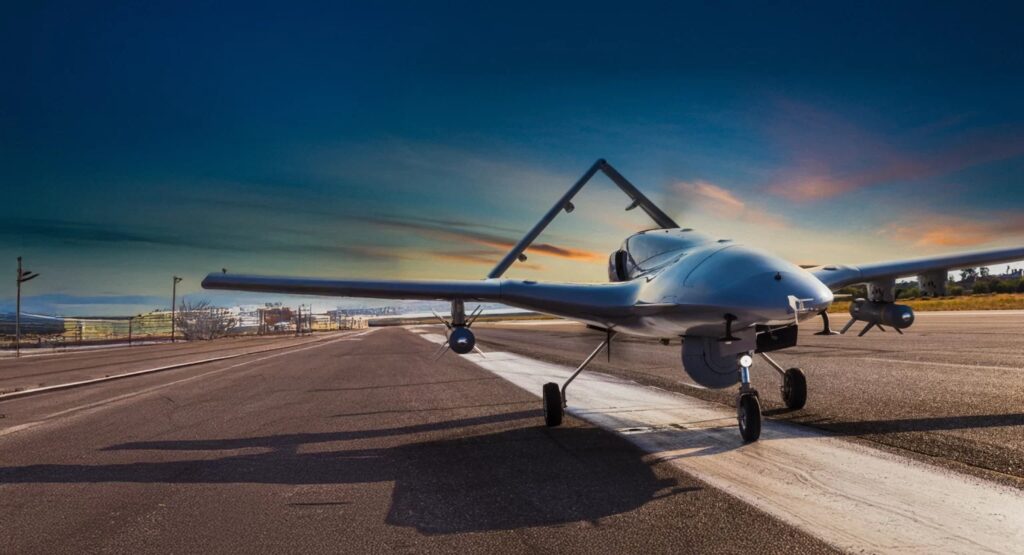
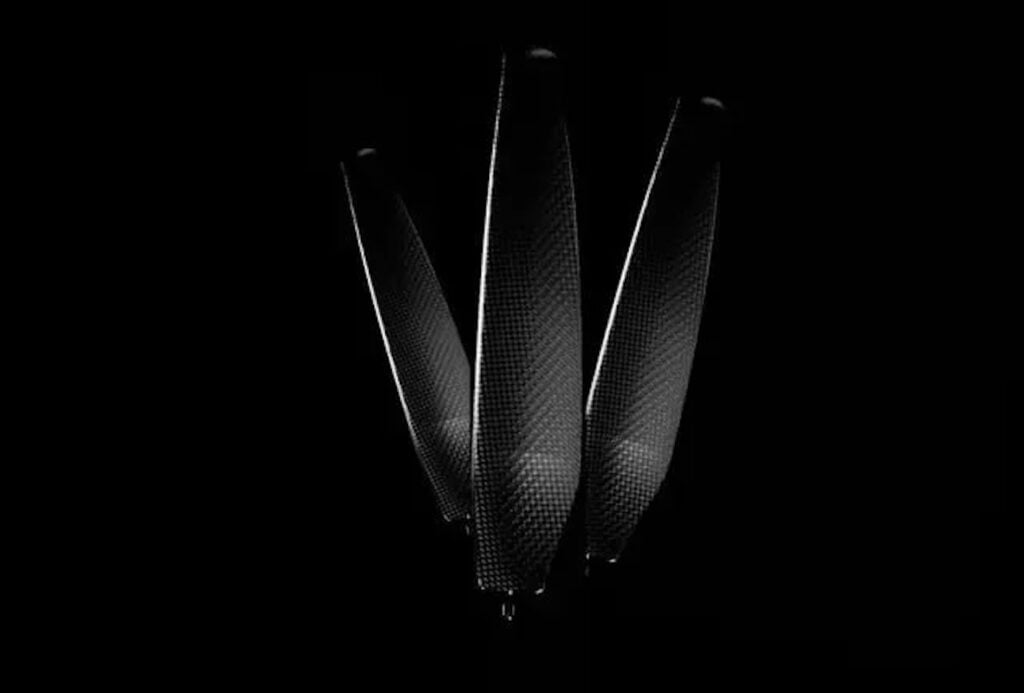
Military-grade carbon fiber drone propellers are high-stiffness propulsion components engineered for military UAV platforms requiring dimensional stability at sustained high RPM. Manufactured from Carbon Fiber Reinforced Polymer (CFRP), these propellers maintain airfoil geometry under load, improving thrust consistency, efficiency, and vibration control.
This page features leading carbon fiber drone propeller manufacturers delivering solutions for fixed-wing, rotary, hybrid, and heavy-lift systems, supporting ISR, strike, and logistics missions.
If you design, build or supply Carbon Fiber Drone Propellers, create a profile to showcase your capabilities and connect with visitors who have an active requirement for your solutions.
Carbon fiber drone propellers are the preferred propulsion component for modern military UAV platforms due to their high stiffness-to-weight ratio, dimensional stability under load, and predictable aerodynamic performance. In defense applications, propulsion components must maintain consistent geometry at high rotational speeds and under sustained loading.
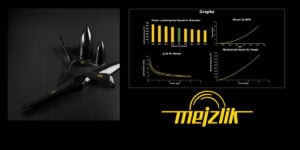
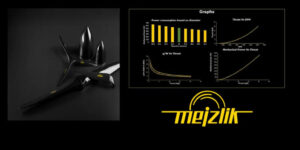
Military-grade COTS & custom carbon fiber propellers for UAVs from UAV Propulsion Tech
Carbon Fiber Reinforced Polymer (CFRP) construction provides greater rigidity than injection-molded plastics and lower mass than metallic alternatives. This combination allows for tighter aerodynamic tolerances, reduced propeller blade deformation, and improved propulsion efficiency. For ISR, strike, and logistics UAVs, these characteristics directly influence endurance, thrust consistency, vibration levels, and acoustic output. As a result, carbon fiber drone propellers are widely specified across fixed-wing, rotary, and hybrid UAV systems where reliability is required.
Key Design Features of Carbon Fiber Drone Propellers
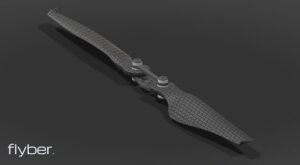
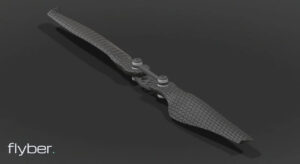
Military-grade custom drone rotors and propeller blades manufactured from carbon fiber composites by Flyber
Carbon fiber drone propellers are manufactured from CFRP, a composite material consisting of carbon filaments embedded within a thermoset resin matrix, typically epoxy. The carbon fibers provide tensile strength and bending stiffness, while the resin binds the fibers and transfers shear loads. CFRP’s low strain under load ensures that blade pitch and airfoil shape remain stable during high-RPM operation.
Fiber Orientation and Layup Strategies
Propeller performance is influenced by the laminate stacking sequence. Unidirectional fibers aligned along the blade span resist centrifugal forces, while off-axis plies provide the torsional stiffness needed to prevent unwanted blade twist. Reinforcement is typically concentrated near the blade root where bending moments are highest.
Resin Systems and High-Temperature Performance
The resin system determines thermal capability. High glass-transition-temperature (Tg) epoxy systems are often used in military propellers to prevent softening under heat from high-output motors or engines. This is vital in hybrid or combustion-powered UAVs where propellers experience prolonged exposure to heated airflow, reducing the risk of microcracking or creep.
Hybrid Composites and Custom Designs
Hybrid designs, such as carbon-glass or carbon-aramid blends, are sometimes used to improve impact resistance. Carbon-aramid hybrids increase damage tolerance, which is useful for tactical systems operating in rugged environments. Custom propeller geometries, including tailored thickness profiles and reinforced roots, allow a carbon fiber drone propeller to match specific motor torque curves.
Manufacturing Methods
Prepreg layup with autoclave curing is the benchmark for high-performance props, providing controlled fiber volume and low void content. Compression molding is used for higher production volumes, though strict process controls are required to ensure the dimensional repeatability necessary for balancing.
Applications of Carbon Fiber Propellers Across Military UAVs
The diverse requirements of modern unmanned aviation mean that propeller specifications must be precisely matched to the specific flight profile and airframe type of the platform:
Fixed-Wing UAVs: Optimized for sustained cruise efficiency and minimal geometric distortion during long missions.
Tactical Multirotors: Low blade mass reduces rotational inertia, which improves throttle response and flight stability for onboard sensors.
Loitering Munitions: Structural rigidity ensures stable performance during high-speed terminal maneuvers and rapid acceleration.
Heavy-Lift Platforms:Heavy-lift propellers made from carbon fiber maintain stiffness and resist fatigue under high thrust levels and repeated load cycles.
Aerodynamic Design & Performance Engineering
Airfoil Profiles and Blade Optimization
Airfoil selection is based on Reynolds numbers and target airspeeds. ISR platforms use airfoils optimized for loitering efficiency, while high-speed UAVs favor thinner sections to reduce drag. Blade twist is incorporated to maintain an optimal angle of attack along the span, compensating for the increase in tangential velocity toward the tip.
Configuration and Tip Geometry
The mechanical arrangement and physical termination of the blade are critical factors in balancing raw thrust against the operational constraints of the airframe.
Two-Blade vs. Multi-Blade: Two-blade setups offer mechanical simplicity and efficiency, while multi-blade designs allow for a reduced diameter in compact airframes.
Vortex Management: Tapered or swept tip geometries help manage induced drag and acoustic signatures.
Computational Fluid Dynamics (CFD): CFD is used to model pressure distribution and unsteady behavior, ensuring that deflection under load does not compromise the aerodynamic envelope.
Noise Signature Reduction
Carbon fiber stealth propellers contribute to lower acoustic output through structural stiffness. Reduced blade flex minimizes flutter-induced noise, while precise manufacturing reduces vibration transmission. Blade geometry and RPM limits are optimized to control tonal and broadband noise components.
Performance & Durability Characteristics of Carbon Fiber Propellers
Carbon fiber drone props offer significant thrust-to-weight optimization. Lower blade mass reduces required motor torque, contributing to overall propulsion efficiency. Properly designed CFRP propellers also exhibit strong resistance to cyclic loading, though fatigue life depends on laminate quality.
While composite propeller blades are susceptible to edge damage from debris, surface coatings can improve tolerance to foreign object damage. Precision manufacturing and dynamic balancing further mitigate harmonic vibrations, improving motor longevity.
CFRP maintains mechanical performance across broad temperature ranges in desert, arctic, and tropical conditions. UV-resistant coatings are applied to prevent matrix degradation during prolonged exposure. Unlike metallic alternatives, carbon fiber drone propellers are inherently resistant to corrosion, making them suitable for maritime and salt-laden environments.
Emerging Innovations in Carbon Fiber Drone Propellers
Next-generation propulsion systems are moving toward intelligent materials and advanced fabrication techniques that further push the boundaries of UAV mission envelopes:
Additive Manufacturing: Advanced tooling methods accelerate development by enabling rapid iteration of mold geometries.
Health Monitoring: Embedded strain sensors are being evaluated for real-time structural monitoring and condition-based maintenance.
Adaptive Concepts: Research into variable stiffness laminates aims to improve efficiency across broader flight envelopes.
AI Optimization: Machine learning is used to evaluate design parameters, accelerating the identification of optimized blade geometries for specific mission profiles.
Flyber CEO and co-founder Rowan Carstensen shares insights into the company’s carbon-fiber UAV propellers, its scalable engineering process, and the wide range of mission applications supported across defense, commercial, and urban air mobility sectors
UAV Propulsion Tech supplies advanced propulsion, control, and mission hardware from leading global manufacturers, providing proven Commercial Off-The-Shelf and custom UAV solutions for defense and aerospace applications
The latest defense technology news, straight to your inbox.
Get our weekly roundup of technology developments, new products and industry news.
THANK YOU FOR SIGNING UP
Thanks for joining us. Check your inbox.
We've sent you an email. Click the confirmation link to complete your subscription to the weekly eBrief. In the meantime, explore the latest news, suppliers and technologies on DA.
Advancing Defense Capability Through Strategic Collaboration
Defense Advancement works with major OEMs to foster collaboration and increase engagement with SMEs, to accelerate innovation and drive defense capabilities forward.