
Showcase your capabilities
If you design, build or supply Drone Blades, create a profile to showcase your capabilities and connect with visitors who have an active requirement for your solutions.




Drone propeller blades are engineered aerodynamic components that convert rotational energy into thrust for unmanned aerial systems. These blades are optimized for efficiency, acoustic performance, and durability across fixed-wing, multirotor, and hybrid VTOL platforms.
This page showcases suppliers of drone blades for military UAV systems, including advanced materials such as carbon fiber for enhanced stiffness and fatigue resistance.
Read the Technology Overview
COTS & Custom Drone Propellers and Electric Motors for Military UAVs

If you design, build or supply Drone Blades, create a profile to showcase your capabilities and connect with visitors who have an active requirement for your solutions.

Propeller blades are the fundamental thrust-generating elements within any drone propulsive system. They are directly responsible for converting rotational energy into useful aerodynamic force. In defense applications, the role of the propeller blade is critical due to demanding operational environments and specific mission profiles.
Unlike commercial equipment, military platforms operate across wide speed envelopes and harsh conditions under strict performance constraints. The blade is a highly engineered structure that governs efficiency, acoustic signature, and survivability. Whether deployed on tactical UAVs or hybrid propulsion systems, this component dictates how effectively energy translates into controlled motion.
The classification of a drone propeller blade often depends on its mechanical interface and the operating speed regime of the mission. These variants are engineered to balance mechanical complexity against aerodynamic gain.
Fixed geometry blades are designed with a static pitch and optimized for a specific operating condition. These offer simplicity and reduced mechanical weight, making them the standard for smaller unmanned systems where the maintenance burden must be minimized. In contrast, variable geometry blades allow for the adjustment of blade pitch to maintain an optimal angle of attack across varying speeds and loads. While the pitch control mechanism is located in the hub, the blade itself must be structurally compatible with these changes to handle varying load conditions and fatigue.
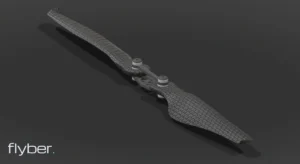
Custom drone propeller blades by Flyber.
Operational regimes further dictate the physical profile of the blade:
In modern defense scenarios, acoustic and radar signatures are as important as raw performance. Blade profiles are optimized to reduce tip vortex strength and minimize pressure fluctuations, which are primary contributors to noise.
Low-observable designs may incorporate swept tips, non-uniform spacing, and tailored airfoil sections to reduce detectability. These silent drone blades are essential for maintaining stealth during covert operations. Additionally, folding drone blades are increasingly used in space-constrained platforms such as ship-launched UAVs or missile-deployed drones. These stealth propeller systems must maintain structural integrity after deployment, requiring precise hinge mechanisms and robust locking systems integrated into the blade root.
The performance of a drone propeller blade is defined by its geometric distribution. Every parameter, from the root to the tip, is calculated to ensure the rotor operates within its peak efficiency envelope.
Airfoil selection remains a critical design decision where sections near the root prioritize structural strength, while those near the tip are optimized for aerodynamic efficiency. Specialized airfoils are often selected for low-Reynolds-number operation in small UAVs. Furthermore, blade tips are key contributors to efficiency and noise. Swept and scimitar tips delay shock formation at high speeds. Winglet-style tips reduce vortex strength, while rounded tips offer a balance of simplicity and robustness.
The design and selection of a propeller blade are dictated by the airframe’s flight physics. Military unmanned systems generally fall into three categories of propulsive requirements.
These platforms utilize blades designed primarily for forward thrust. Because fixed-wing aircraft rely on their wings for lift, the propeller blades are optimized for cruise efficiency and long-endurance loitering. These blades are often larger in diameter and rotate at lower RPMs compared to multirotor equivalents to maximize range per unit of energy.
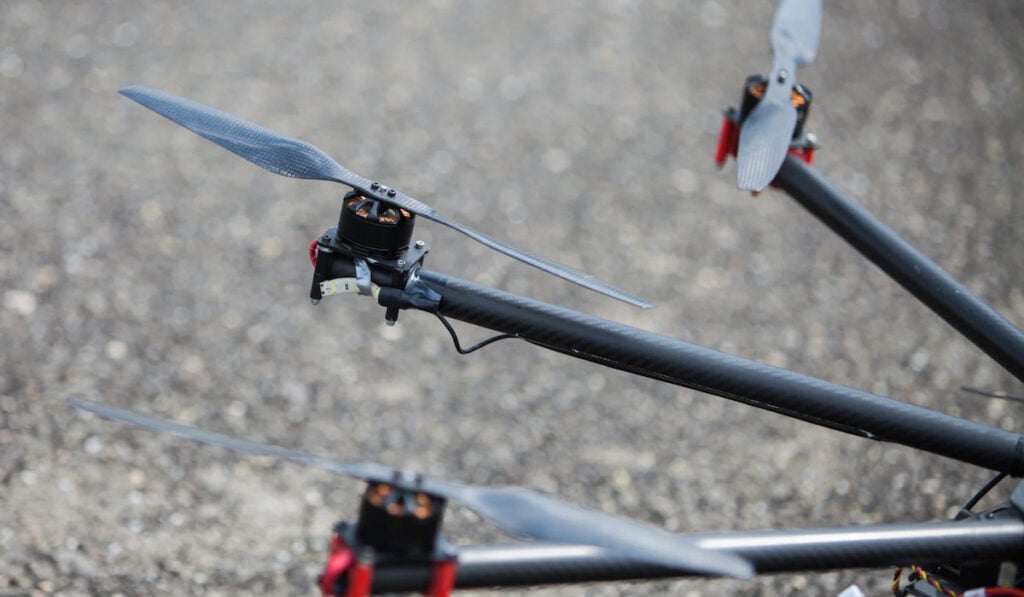
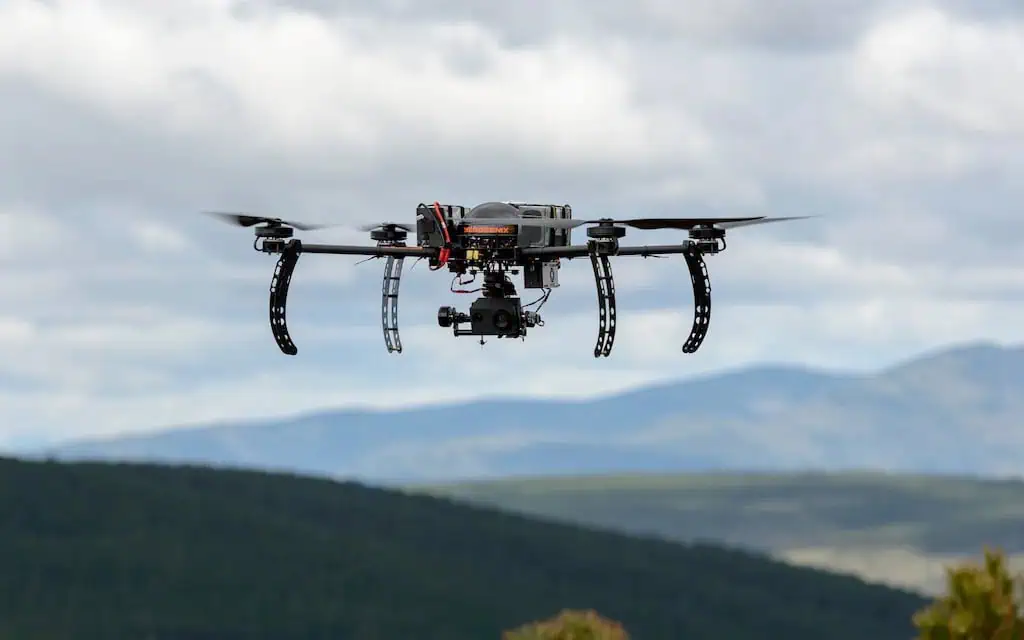
In Vertical Takeoff and Landing (VTOL) multirotors, the blades act as the sole source of both lift and directional control. These drone rotor blades, such as quadcopter blades, must be highly responsive to rapid changes in motor RPM to maintain stability. They are generally shorter and stiffer than fixed-wing blades to minimize aeroelastic deformation during aggressive maneuvering or station-keeping in high winds.
These complex systems require dual-mission blades. During takeoff, the blades provide vertical lift similar to a quadcopter. Once transitioned to forward flight, they must function efficiently as cruise propellers. This often necessitates variable-pitch drone propeller blades that can mechanically adjust their angle of attack to remain efficient in both flight modes.
The number of blades integrated into a rotor system significantly impacts the flight characteristics, disk loading, and acoustic frequency of the platform.
Material selection for a drone propeller blade is a balancing act between mechanical performance, environmental resistance, and weight. Defense applications often prioritize fatigue resistance and damage tolerance over initial cost.
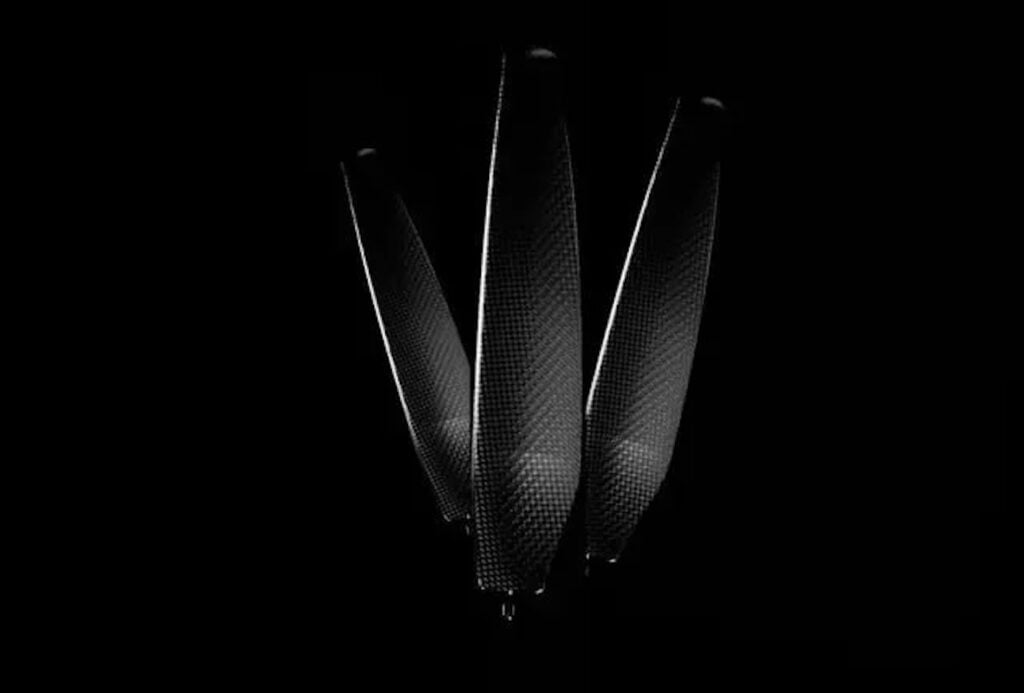
Propellers with carbon fiber drone blades have become the industry standard for high-performance defense blades. Carbon-fiber-reinforced-polymers provide exceptional stiffness and low weight. A fiber blade for UAV applications may also utilize glass-fiber for improved impact resistance or hybrid laminates to balance mechanical properties. While composites dominate, metallic materials like aluminum alloys offer cost-effective, lightweight solutions, and titanium provides superior strength to weight ratios and corrosion resistance for specialized maritime or high-stress environments.
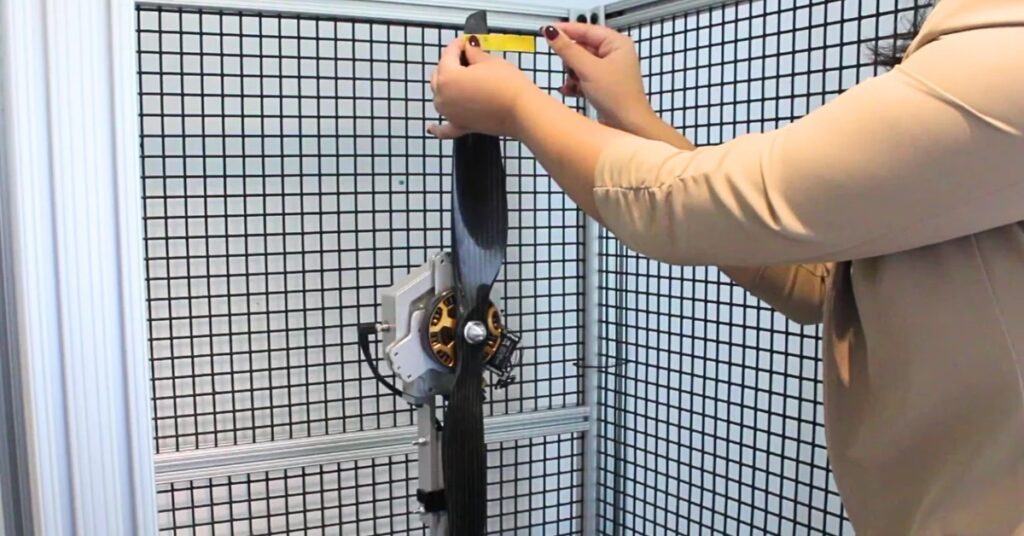
The manufacturing of these components requires high precision to ensure consistency across the entire rotor set:
Drone rotor blades are subjected to extreme centrifugal forces combined with bending loads from aerodynamic forces and torsional stresses. Maintaining performance requires addressing several mechanical and environmental factors. Repeated loading cycles can lead to fatigue failure, meaning designers must ensure sufficient fatigue life through precise material selection and geometry optimization.
Blades must also withstand impacts from debris, ice, or bird strikes. Composite blades are often tailored for damage tolerance to prevent catastrophic fracture. Beyond mechanical impact, environmental degradation is a constant factor. Exposure to saltwater, sand, and particulate matter can degrade blade surfaces. Protective coatings are critical to maintaining performance over time, especially in desert or maritime environments where particulate erosion can significantly reduce the operational lifespan of a drone rotor blade.
The defense sector is moving toward smarter, more adaptive propulsion components. These innovations focus on extending the operational life and mission flexibility of the drone propeller through integrated technologies.
When selecting a custom propeller configuration or replacement drone blades, procurement decisions must prioritize manufacturers with proven aerospace or naval certifications. Ensuring compliance with MIL-STD and NATO qualification standards is central to the reliability and lifecycle assurance of the unmanned platform.


 Searching Companies & Products