


UAV Propulsion Tech has outlined six factors to consider when sourcing fuel cell systems for Unmanned Aerial Vehicle (UAV) applications. Read more >>
These include power output, specific power, hydrogen storage architecture, hydrogen purity requirements, startup and thermal behavior, and system integration support and manufacturer track record. These considerations can affect how effectively a fuel cell system fits within the weight, volume, power, and operational requirements of a specific UAV platform.
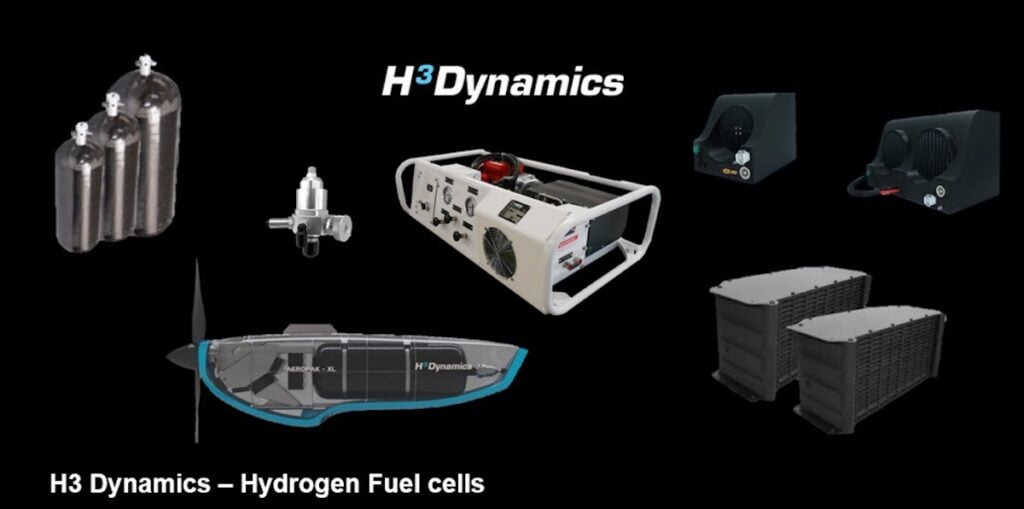
UAV Propulsion Tech works with H3 Dynamics, its partner for fuel cell systems, whose AEROSTAK range spans from 300 W to 2,000 W nominal output. The systems combine fuel cell stacks with Lithium Polymer (LiPo) hybrid architectures, allowing the battery to support transient peak loads. The article also examines hydrogen storage and field logistics, including pressurized gas cylinders, liquid hydrogen tanks, and H3 Dynamics’ H2FIELD-1 mobile refilling station, which produces hydrogen at greater than 99.999% purity directly from water.
The article further addresses hydrogen purity, startup times, operating temperatures, system monitoring, and integration support. AEROSTAK systems specify a hydrogen purity requirement of 99.998%, reach operational startup in under 20 seconds, and provide Recommended Standard 232 (RS-232) data communication for real-time monitoring of voltage, current, power, and temperature.