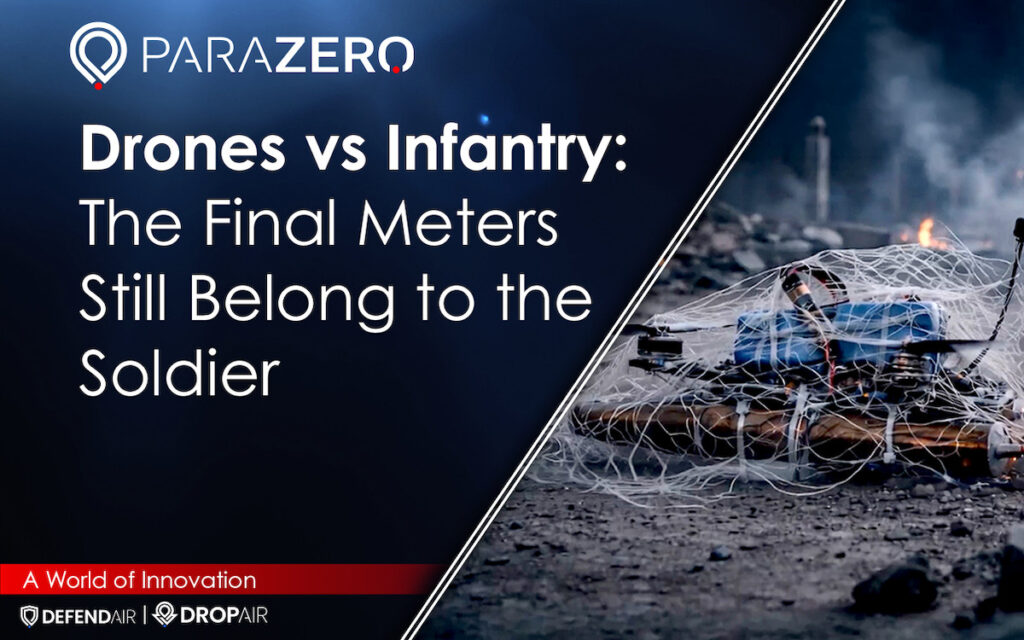
ParaZero Technologies has developed the DefendAir Personal Net Launcher to provide individual personnel with a close-range counter-unmanned aerial system (C-UAS) capability. Designed for the innermost layer of a wider counter-drone architecture, the handheld system deploys a 4m x 4m net to intercept approaching drones without using an explosive mechanism. Read more >>
This type of individual protection is becoming increasingly relevant as low-cost drones and first-person-view (FPV) strike aircraft expand the aerial threat faced by dismounted troops, forward command posts, vehicles, and logistics assets. Counter-drone responsibilities that were previously concentrated within dedicated air defense and electronic warfare units are increasingly extending to conventional formations.
The U.S. Army’s 1st Cavalry Division, for example, has established a C-UAS qualification at Fort Hood that trains infantry personnel to detect, follow, and engage unmanned aircraft using weapons already carried by the soldiers. The program reflects a broader requirement for conventional units to provide their own protection when specialist counter-UAS capabilities are unavailable, positioned elsewhere, or unable to address every simultaneous threat.
Addressing the close-range threat
 Counter-UAS protection typically combines multiple capabilities, including radar, radio-frequency detection, electronic jamming, and physical interceptors. Each technology addresses a particular portion of the threat environment, but individual layers have operational limitations.
The challenge becomes particularly acute within approximately the final 100 meters. FPV aircraft can approach at low altitude and at different speeds, leaving personnel only seconds to detect, identify, and respond to an incoming threat. At this distance, other elements of the defensive architecture may already have been bypassed or may be unsuitable for the engagement.
Electronic countermeasures, for instance, offer limited utility against a fiber-optic-controlled drone. Missile-based interception can also be inappropriate when an unmanned aircraft is already operating only tens of meters from friendly personnel.
The remaining defensive layer is therefore the individual on the ground. Personnel may hear an approaching aircraft before establishing visual contact, allowing them to orient toward the sound, identify its position, and potentially engage before impact.
A system intended for this final stage of defense consequently has a distinct set of requirements. It must be portable enough for individual operators, immediately available without an extended setup procedure, suitable for deployment close to friendly personnel, and capable of intercepting a small target traveling at speed.
DefendAir Personal Net Launcher
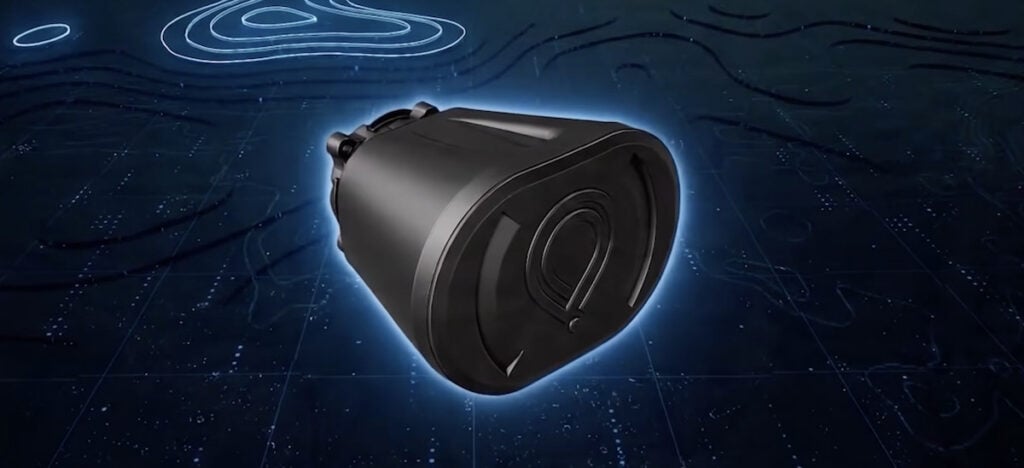
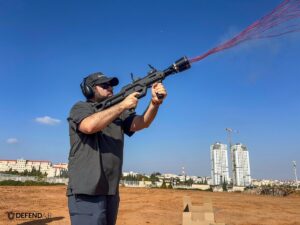
ParaZero designed the DefendAir Personal Net Launcher for this close-range role. Rather than depending on small projectiles making direct contact with an incoming aircraft, the handheld device launches a 4m x 4m net.
Its non-explosive mechanism allows the launcher to be employed in environments such as urban streets and in proximity to friendly personnel. This provides an interception option for situations in which electronic jamming is ineffective or an explosive interceptor would be unsuitable.
During a trial conducted with Israel’s defense sector, the handheld system intercepted every drone used against it. The targets included fast multirotor aircraft approaching at speeds of 120 km/h.
Net interception can also provide an additional benefit after an engagement. Provided the intercepted aircraft does not detonate, the drone can reach the ground intact. Its hardware may therefore remain available for subsequent forensic examination and intelligence exploitation rather than being destroyed during interception.
Extending Net-Based Protection
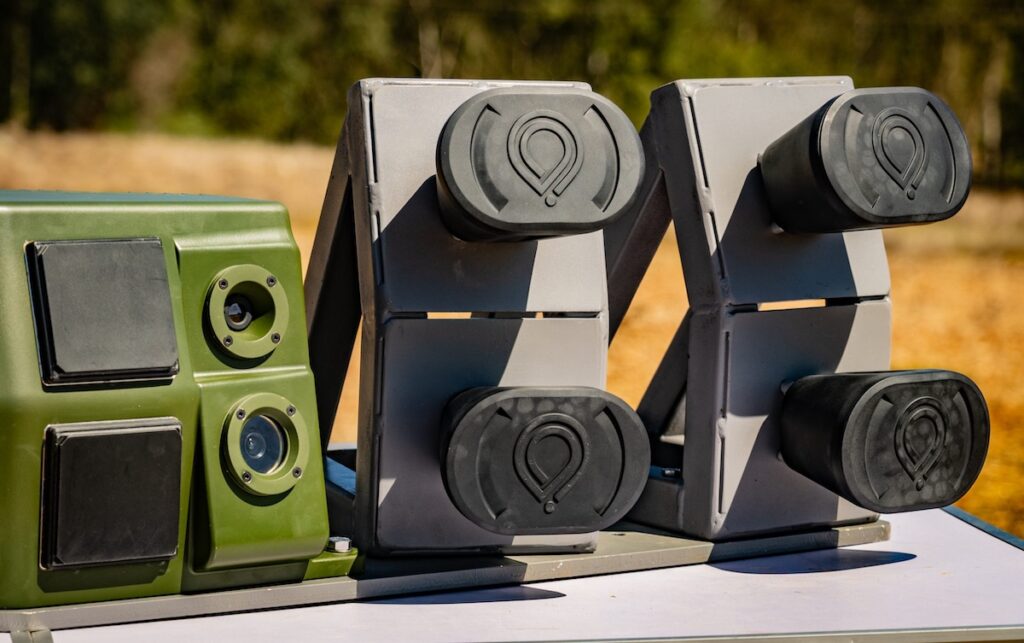
The handheld launcher forms one element of ParaZero’s broader net-based interception approach. The same method is also incorporated into fixed turret systems providing 360-degree coverage and into interceptor-drone configurations.
These different configurations allow net-based interception to be deployed at multiple points within a defensive arrangement, from perimeter protection through to the individual operator. The Personal Net Launcher occupies the closest layer, placing the interception capability directly with personnel exposed to an approaching drone.
Training is an important component of this developing individual C-UAS role. The 1st Cavalry Division qualification uses five engagements that increase progressively in difficulty, beginning with stationary targets and advancing to high-speed attack profiles. Training is conducted in conditions including rain and mud to evaluate personnel and equipment together in circumstances intended to represent operational environments.
ParaZero is similarly supplying training alongside recent DefendAir deliveries. These packages include Personal Net Launchers, net pods, live training exercises, and simulation, providing units with the equipment and instruction required to establish operational readiness.
As unmanned aircraft become increasingly prevalent at low altitude around maneuvering formations, counter-UAS protection is extending closer to individual personnel. Layered defenses remain necessary for detecting, disrupting, and intercepting threats at greater distances, but drones that penetrate those measures create a final close-range engagement requirement.
For dismounted forces, that requirement places greater emphasis on equipment that can be carried and operated directly by the individual, providing a physical interception capability during the final meters of an incoming drone attack.
Read Drones vs. Infantry: The Final Meters Still Belong to the Soldier.