
Suppliers: Radio Over IP (ROIP)

LS Electronics

Radio Over IP Communications for Defense, Security & Unmanned Systems

Showcase your capabilities

If you design, build or supply Radio Over IP (ROIP), create a profile to showcase your capabilities and connect with visitors who have an active requirement for your solutions.


Create Supplier Profile

Products

4 Cutting-edge Solutions
Add your solutions
Mimer SoftRadio Service

Cloud-hosted radio middleware for tactical & remote systems

Cloud-hosted radio middleware for tactical & remote systems
...anced operator solutions across defense environments. Purpose-engineered for developers,... ...gh-reliability RoIP (Radio-over-IP) performance in fixed or mobile deployments—including UAVs,...
Mimer SoftLine

Audio over IP solution for defense communications

Audio over IP solution for defense communications
... system allows defense and security forces to unify disparate communication assets into one... ...o transmit all communications as stable, scalable IP data, it empowers operators to extend and...
Mimer SoftRadio

Radio over IP solution for mission-critical communications

Radio over IP solution for mission-critical communications
...ssion-critical defense environments, this RoIP platform enables full two-way radio management via... ......nable fast deployment across diverse defense, civil aviation, and emergency response...
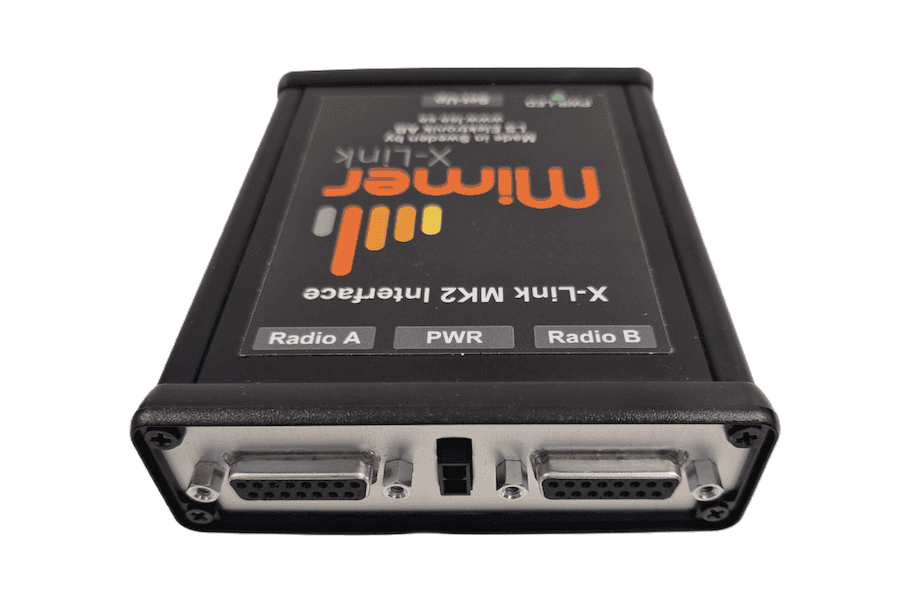
Mimer VoiceLog

Network-based audio recording solution for tactical & remote operations

Network-based audio recording solution for tactical & remote operations
...ight, allowing defense organizations to maintain total communication awareness across vast... ...io logging for defense, security, and unmanned systems operations. Purpose-built for control centers...

RoIP Solutions for Defense and Government Communications

Summer James

Updated:

As global defense and emergency agencies confront increasingly complex communication challenges, Radio over IP (RoIP) emerges as a strategic enabler of unified, real-time voice and data connectivity. By converging tactical radios, dispatch systems, SATCOM terminals, and software-defined platforms onto a common IP backbone, RoIP ensures operational coherence across military branches, civilian responders, and allied forces. Whether deployed in theater, during disaster recovery, or as part of long-term infrastructure modernization, RoIP technologies offer unmatched flexibility, resilience, and interoperability.

Connecting Forces: Why RoIP Matters

In complex defense and government operations, rapid, secure, and interoperable communication isn’t just advantageous, it’s vital. RoIP delivers:

  • RoIP for Critical Communication by LS Electronics

    Mimer SoftRadio by LS Electronics.

    Tactical communications: Connects frontline troops, command posts, aircraft, vessels, and field engineers via a unified network.

  • Interoperability: Bridges MIL‑STD radios, commercial PTT systems, SATCOM terminals, and C4ISR networks, ensuring police, special forces, coast guard, and fire services can communicate seamlessly.
  • Secure communications: Implements encryption devices over IP links, maintaining confidentiality and compliance with NATO and STANAG interoperability.
  • Flexible network deployment: RoIP supports mesh networking and manpack radios for BVLOS missions, airborne communications, and backbone extension on harsh or GPS‑denied terrain.
  • Resilience in crises: In disaster response, natural disasters, or pipeline emergencies, RoIP enables rapid dispatch, radio relay to supplement analogue or satcom links, and plug‑and‑play network‑centric integration.

In essence, RoIP turns isolated radios into integrated radio networks that can be centrally monitored, controlled, and reconfigured on the fly, crucial for coordinated, multi‑agency, and multi‑domain operations.

Key Applications in Defence and Government

Military and defense operations

RoIP transforms battlefield communications:

  • Battlefield communications: Links manpack radios, network nodes, and software‑defined radios into a single command‑and‑control system.
  • Beyond visual line of sight (BVLOS): Extends reach through satcom, mesh, and multi-hop radio bridging, vital for unmanned systems, reconnaissance platforms, and special forces infiltration.
  • Interoperability solutions: Enables secure radio interoperability across allied MIL‑STD and STANAG radios.
  • C4ISR systems: Injects IP‑based voice/data into broader battle management systems, feeding real‑time data flows, GPS‑denied navigation, and situational awareness dashboards.
  • Airborne communications: Facilitates linkups between airborne ISR assets and ground units.

Law enforcement, public safety & emergency services

RoIP delivers:

  • Public safety communications: Integrates handheld radios, conventional dispatch systems, and PTT devices, especially for multi‑agency responses spanning police, fire, coast guard, and emergency services.
  • Push‑to‑talk interoperability: Supports cross‑agency PTT across IP, ensuring unified command and control in critical events.
  • Radio dispatch and network interface: Centralizes control via IP‑based consoles, allowing remote dispatch of units anywhere on the network.
  • Disaster response & natural disasters: Rapid deployable RoIP gateways provide resilience, bridging satellite, mesh, and mobile command posts when infrastructure is compromised.

Maritime, aviation & border operations

Naval and border forces use RoIP to:

  • Coast guard and maritime rescue: Connect ships, SAR assets, drones, command centres, and satellite via encrypted IP links.
  • Airborne, satcom & border surveillance: Tie together airborne ISR platforms, SATCOM terminal interfaces, and ground-based sensors into unified IP‑centric networks.
  • Pipeline and infrastructure monitoring: Leverage RoIP for rapid incident reporting and voice‑data relay across vast, remote industrial corridors.

Associated Technologies

RoIP gateways & radio bridging

RoIP gateways convert RF traffic from analogue or digital radios (VHF/UHF, MIL‑STD, commercial) into IP streams. These devices typically offer an Ethernet interface or Wi‑Fi backhaul. Companies supply hardened, encrypted units built for vehicle electronics and rapid field deployment.

Software-defined radios (SDR)

SDRs with RoIP support allow dynamic bandwidth allocation, modulation switching, and tunable network interfaces—ideal for spectrum‑congested or contested environments.

Mesh networking

Mesh nodes can carry RoIP voice streams across denied or degraded environments, enabling multi‑hop communications between handheld units, vehicles, drones, and command hubs.

SATCOM and satellite connections

Integrating SATCOM over IP supports BVLOS-linked voice/data continuity in remote or maritime theaters. RoIP bridging ensures seamless handover between terrestrial and satellite links.

Encryption & cybersecurity

Military-grade encryption devices protect voice, ensuring confidentiality. RoIP deployments follow cybersecurity best practices, segmented networks, hardened gateways, secure radio system provisioning, and C4ISR system integration.

RoIP can tie into existing tactical data links and battlefield management systems (BMS) to augment situational awareness, delivering embedded voice and data payload alongside mapping feeds.

Standards Compliance and Interoperability

MIL‑STD & battlefield readiness

RoIP systems often comply with MIL‑STD‑810 (environmental ruggedness), MIL‑STD‑461 (EMC/EMI immunity), and MIL‑STD‑188 (telecom interoperability). Compliance ensures operational reliability in harsh conditions and electromagnetic environments.

STANAG & NATO interoperability

Using STANAG standards (e.g., 4591 for IP waveforms), RoIP platforms maintain interoperability with NATO allies. Voice and data streams can be securely shared across coalition forces without translation loss.

Public safety and commercial standards

For national police, coast guard, and fire services, RoIP supports standards like P25 (Project 25) and DMR. These are essential for integrating commercial handheld radios into government dispatch networks.

Selecting RoIP Solutions

Capacity & scale

Choose platforms capable of handling large numbers of simultaneous channels (e.g., manpack radios plus network nodes) with QoS and dynamic priority for tactical communications.

Security & encryption

Select devices with embedded encryption or compatibility with legacy devices, supporting secure communications over insecure mediums.

Interoperability

Opt for solutions offering gateways for analogue, digital (P25/DMR), MIL‑STD, SATCOM, and SDR, ensuring cohesive command-and-control across agencies.

Ruggedisation & deployment

Field-ready RoIP hardware must conform to MIL‑STD environmental ratings and integrate with vehicular or airborne electronics.

Network‑centric integration

High-end RoIP platforms integrate into C4ISR and battle‑management systems, ingesting geo‑tagged voice/data streams for situational awareness and command oversight.

From Theory to Mission: Real‑World Scenarios

Joint military exercises

During coalition exercises, RoIP bridges NATO-standard radios with allied systems. Field units on handheld radios communicate seamlessly with air assets and coalition command posts via RoIP gateways and SATCOM links.

Border patrol and surveillance

A mesh network with embedded RoIP nodes connects surveillance sensors, UAVs, and command personnel across rugged terrain, without existing infrastructure.

Maritime rescue operations

Coast guard vessels deploy RoIP gateways to connect onboard radios to shore-based dispatch via SATCOM, enabling centralized coordination across helicopters, SAR boats, and coastal command.

Disaster‑area response

Mobile RoIP gateways integrate P25 radios, satellite, and field dispatch into a single operations centre, facilitating real-time responder coordination when a major earthquake disrupts cell and landlines.

Critical infrastructure protection

RoIP platforms link pipeline monitoring stations, field engineers, and central control using encrypted voice and telemetry over IP, offering rapid detection and response to threats.

  • IP radio software development enables agile upgrades—new codecs, encryption, and interface support can be added post‑deployment.
  • Mesh-enhanced radio networks facilitate self‑healing tactical networks using distributed RoIP nodes.
  • Network nodes in GPS‑denied zones combine inertial/GNSS systems with RoIP links to maintain robust communications.
  • Cloud‑managed RoIP clusters enable remote provisioning, monitoring, and analytics of voice networks.
  • AI‑driven interoperability promises dynamic frequency and spectrum optimization, alleviating congestion and enhancing command and control.

RoIP in Integrated Command and Control

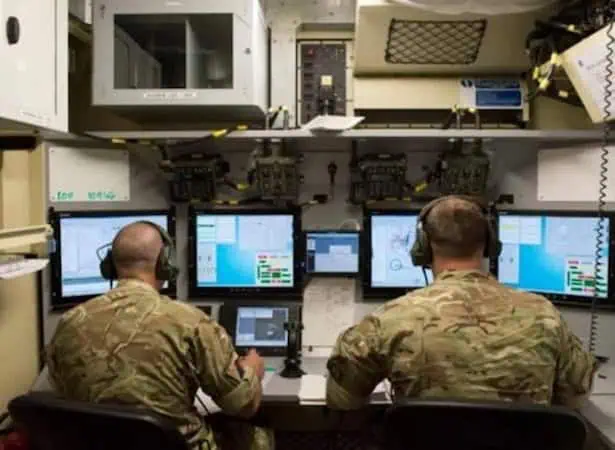
A modern tactical command centre relies on RoIP to consolidate voice and data feeds across domains, land, sea, air, and digital. Encrypted RoIP traffic ties into C4ISR platforms, where commanders:

  • Monitor live communications tagged with metadata (unit ID, geo-coordinates, channel context).
  • Dynamically allocate channels and bandwidth based on mission priority.
  • Create cross-agency interoperability across the military, Coast Guard, police, and fire services.
  • Leverage command-and-control systems (C2 systems) to trigger real-time alerts or tactical adjustments.

RoIP enables resilient communication backbones for both routine operations and surge events. The IP-centric architecture ensures scalability and QoS control, whether spanning a vehicle’s electronics suite or connecting a nationwide command centre.

Adopting RoIP: Best Practices

  • Audit existing assets – assess your radio platforms (analogue, MIL‑STD, P25, SDR, SATCOM) and determine connectivity gaps.
  • Define performance needs – identify channel counts, encryption levels, latency requirements, and environmental ratings.
  • Ensure standards compliance – specify MIL‑STD, STANAG, and public safety certifications.
  • Plan network architecture – adopt a secure IP backbone with QoS, redundancy, and remote manageability.
  • Pilot across mission types – test across environments (urban, maritime, GPS denied) before full deployment.
  • Train personnel – offer scenario-based exercises for dispatch to frontline handsets in coalition settings.
  • Maintain and upgrade – monitor network health, perform firmware updates, and expand capacity as required.

Unleashing RoIP for Defence and Government Communications

Radio over IP is a mission multiplier. By turning disparate radio systems into secure, encrypted, interoperable networks, RoIP enables defense, law enforcement, coast guard, fire, and emergency responders to speak on a trustworthy, coordinated, flexible backbone.

RoIP is integral to modern tactical communications. Effective deployment demands integration of gateways, mesh, SATCOM, encryption, SDR, interoperability gateways, and standards compliance under a cohesive architecture. With correctly deployed RoIP platforms that meet MIL‑STD and STANAG requirements, organizations can achieve unified command-and-control, multi‑agency collaboration, and continuous, secure communications, no matter the mission or domain.


Related Articles

LS Electronics Supports Communication Upgrades for Maritime and Border Operations

Designed to link analog, digital, and IP radios through one interface, LS Electronics’ Mimer SoftRadio supports modernization for maritime and border organizations managing growing mission demands and outdated communication infrastructures

Nov 25, 2025
Curtiss-Wright Unveils New Tactical Radio Gateways for Modular Radio Center

Curtiss-Wright's new PacStar 466 & 467 modules enhance radio-over-IP functionality and unified communications for tactical missions

Oct 28, 2025
LS Electronics Provides Voice-to-Text for Mission-Critical Communications

LS Electronics integrates Transcription into Mimer VoiceLog, delivering real-time, searchable text conversion of communications to support UAV missions, emergency response, and command operations in demanding environments

Sep 19, 2025
LS Electronics on Voice Logging Solutions for Critical UAV & USV Operations

LS Electronics discusses its Mimer VoiceLog system, providing secure, channel-specific communication recording with encryption and transcription to support compliance, mission success, and operational accountability

Aug 13, 2025