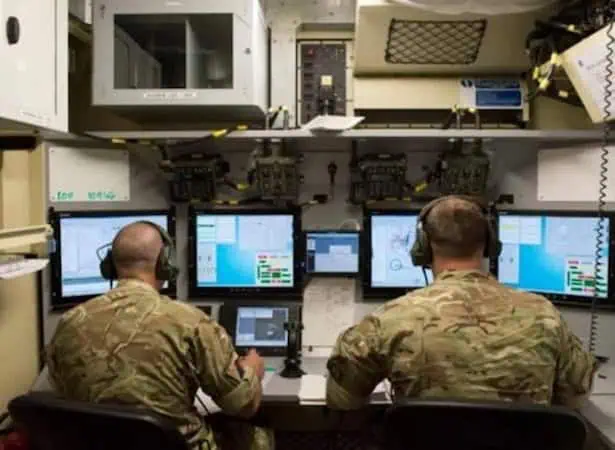

Showcase your capabilities
If you design, build or supply Radio Over IP (ROIP), create a profile to showcase your capabilities and connect with visitors who have an active requirement for your solutions.




Radio Over IP (RoIP) solutions connect radio voice and data traffic to IP networks, enabling tactical radios, dispatch consoles, SATCOM links, and software-defined platforms to operate across a shared communications backbone. RoIP gateways and software help bridge analogue, digital, MIL-STD, P25/DMR, and allied radio systems for command-and-control, emergency response, ISR support, and multi-agency coordination.
This page showcases leading manufacturers of radio over IP solutions for defense, public safety, maritime, aerospace, and border security users.
Read the Technology Overview



If you design, build or supply Radio Over IP (ROIP), create a profile to showcase your capabilities and connect with visitors who have an active requirement for your solutions.

As global defense and emergency agencies confront increasingly complex communication challenges, Radio over IP (RoIP) emerges as a strategic enabler of unified, real-time voice and data connectivity. By converging tactical radios, dispatch systems, SATCOM terminals, and software-defined platforms onto a common IP backbone, RoIP ensures operational coherence across military branches, civilian responders, and allied forces. Whether deployed in theater, during disaster recovery, or as part of long-term infrastructure modernization, tactical RoIP technologies offer unmatched flexibility, resilience, and interoperability.
In complex defense and government operations, rapid, secure, and interoperable communication isn’t just advantageous, it’s vital. RoIP delivers:

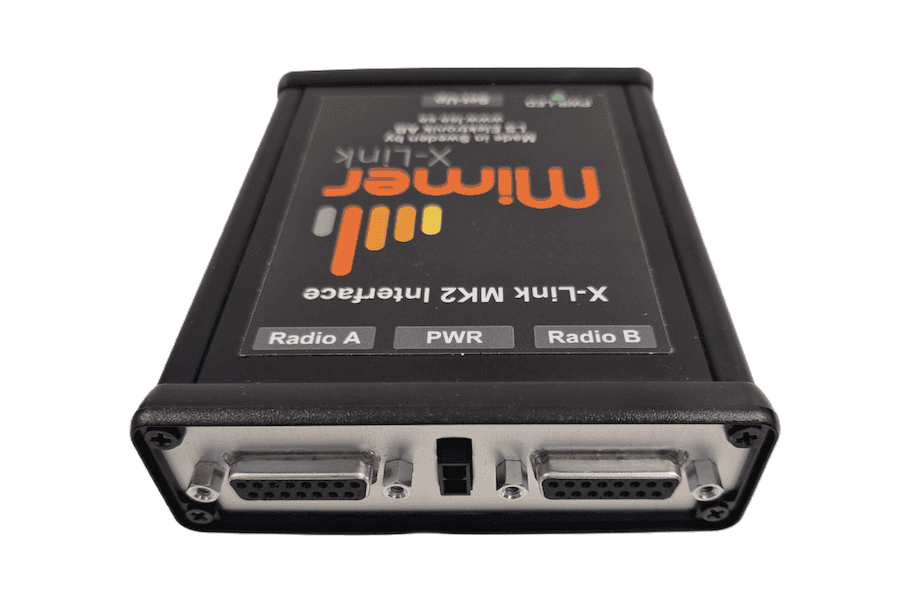
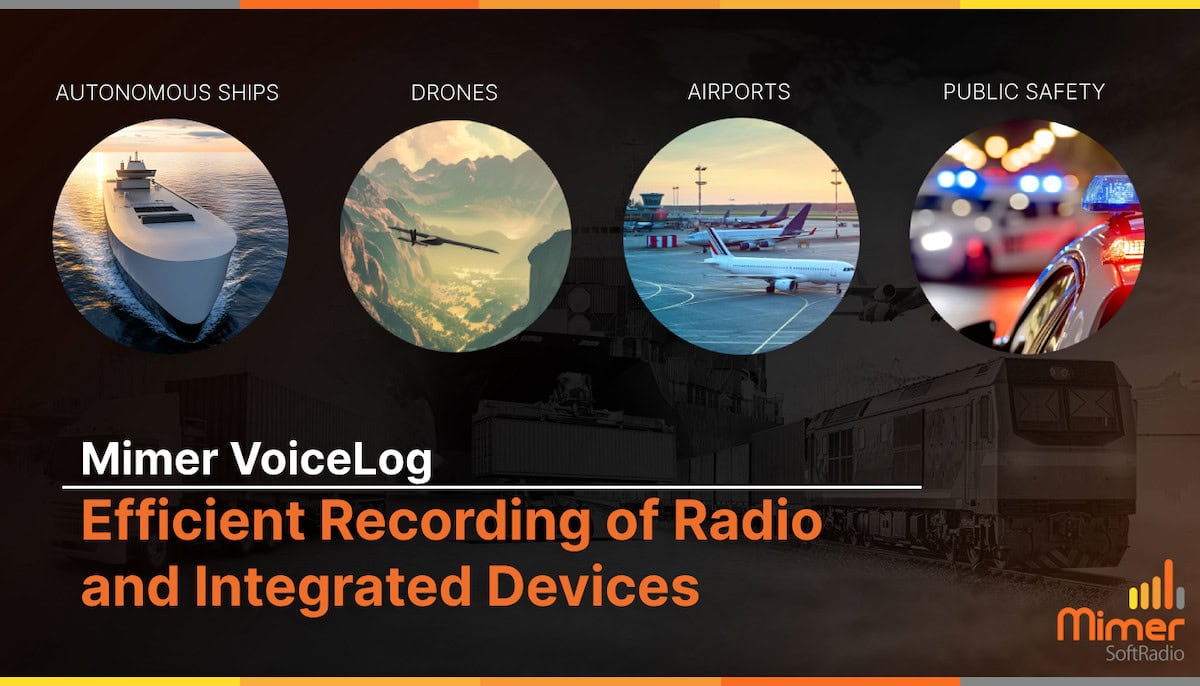
Mimer SoftRadio by LS Electronics.
Tactical communications: Connects frontline troops, command posts, aircraft, vessels, and field engineers via a unified network.
In essence, RoIP turns isolated radios into integrated radio networks that can be centrally monitored, controlled, and reconfigured on the fly, crucial for coordinated, multi‑agency, and multi‑domain operations.
RoIP transforms battlefield communications:
Tactical RoIP systems deliver:
Naval and border forces use RoIP products to:
RoIP gateways convert RF traffic from analogue or digital radios (VHF/UHF, MIL‑STD, commercial) into IP streams. These devices typically offer an Ethernet interface or Wi‑Fi backhaul. Companies supply hardened, encrypted units built for vehicle electronics and rapid field deployment.
SDRs with RoIP support allow dynamic bandwidth allocation, modulation switching, and tunable network interfaces—ideal for spectrum‑congested or contested environments.
Mesh nodes can carry RoIP voice streams across denied or degraded environments, enabling multi‑hop communications between handheld units, vehicles, drones, and command hubs.
Integrating SATCOM over IP supports BVLOS-linked voice/data continuity in remote or maritime theaters. RoIP bridging ensures seamless handover between terrestrial and satellite links.
Military-grade encryption devices protect voice, ensuring confidentiality. RoIP deployments follow cybersecurity best practices, segmented networks, hardened gateways, secure radio system provisioning, and C4ISR system integration.
RoIP can tie into existing tactical data links and battlefield management systems (BMS) to augment situational awareness, delivering embedded voice and data payload alongside mapping feeds.
RoIP systems often comply with MIL‑STD‑810 (environmental ruggedness), MIL‑STD‑461 (EMC/EMI immunity), and MIL‑STD‑188 (telecom interoperability). Compliance ensures operational reliability in harsh conditions and electromagnetic environments.
Using STANAG standards (e.g., 4591 for IP waveforms), RoIP platforms maintain interoperability with NATO allies. Voice and data streams can be securely shared across coalition forces without translation loss.
For national police, coast guard, and fire services, RoIP supports standards like P25 (Project 25) and DMR. These are essential for integrating commercial handheld radios into government dispatch networks.
Choose platforms capable of handling large numbers of simultaneous channels (e.g., manpack radios plus network nodes) with QoS and dynamic priority for tactical communications.
Select devices with embedded encryption or compatibility with legacy devices, supporting secure communications over insecure mediums.
Opt for solutions offering gateways for analogue, digital (P25/DMR), MIL‑STD, SATCOM, and SDR, ensuring cohesive command-and-control across agencies.
Field-ready RoIP hardware must conform to MIL‑STD environmental ratings and integrate with vehicular or airborne electronics.
High-end RoIP platforms integrate into C4ISR and battle‑management systems, ingesting geo‑tagged voice/data streams for situational awareness and command oversight.
During coalition exercises, RoIP bridges NATO-standard radios with allied systems. Field units on handheld radios communicate seamlessly with air assets and coalition command posts via RoIP gateways and SATCOM links.
A mesh network with embedded RoIP nodes connects surveillance sensors, UAVs, and command personnel across rugged terrain, without existing infrastructure.
Coast guard vessels deploy RoIP gateways to connect onboard radios to shore-based dispatch via SATCOM, enabling centralized coordination across helicopters, SAR boats, and coastal command.
Mobile tactical RoIP gateways integrate P25 radios, satellite, and field dispatch into a single operations centre, facilitating real-time responder coordination when a major earthquake disrupts cell and landlines.
RoIP platforms link pipeline monitoring stations, field engineers, and central control using encrypted telemetry and voice over IP radio, offering rapid detection and response to threats.
A modern tactical command centre relies on RoIP to consolidate voice and data feeds across domains, land, sea, air, and digital. Encrypted RoIP traffic ties into C4ISR platforms, where commanders:
RoIP enables resilient communication backbones for both routine operations and surge events. The IP-centric architecture ensures scalability and QoS control, whether spanning a vehicle’s electronics suite or connecting a nationwide command centre.
Radio over internet protocol is a mission multiplier. By turning disparate radio systems into secure, encrypted, interoperable networks, RoIP enables defense, law enforcement, coast guard, fire, and emergency responders to speak on a trustworthy, coordinated, flexible backbone.
RoIP is integral to modern tactical communications. Effective deployment demands integration of gateways, mesh, SATCOM, encryption, SDR, interoperability gateways, and standards compliance under a cohesive architecture. With correctly deployed RoIP platforms that meet MIL‑STD and STANAG requirements, organizations can achieve unified command-and-control, multi‑agency collaboration, and continuous, secure communications, no matter the mission or domain.


 Searching Companies & Products