Mission Planning Software Platforms for Military and Drone Operations
Mission planning software is a specialized digital toolset for designing, coordinating, and executing military and aviation operations. These platforms combine geospatial mapping systems, ISR data, and route planning systems within a unified graphical user interface. Modern mission management software enables commanders to conduct contingency planning, allocate resources, and synchronize assets across multi-domain operations, while integrating with C2 systems and drone flight control.
If you design, build or supply Mission Planning Software, create a profile to showcase your capabilities and connect with visitors who have an active requirement for your solutions.
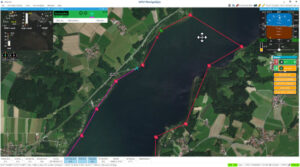
Ground control software suite for the C100 tactical quadcopter
Ground control software suite for the C100 tactical quadcopter
...ground control software ecosystem purpose-built to elevate the performance of the C100 multi-mission... ...’s intuitive operation streamlines complex mission workflows, while embedded tools such as PDW...
Mission Planning Software Platforms for Military and Drone Operations
Overview by
Eleanor Widdows
Updated:
Mission planning software and mission management software enable seamless coordination, synchronization, and execution of complex operations across multi-domain environments. These platforms function as decision support systems, allowing operators to analyze operational data, manage assets, and execute time-sensitive actions using integrated mission planning tools.
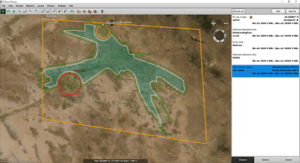
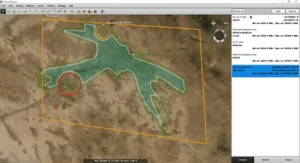
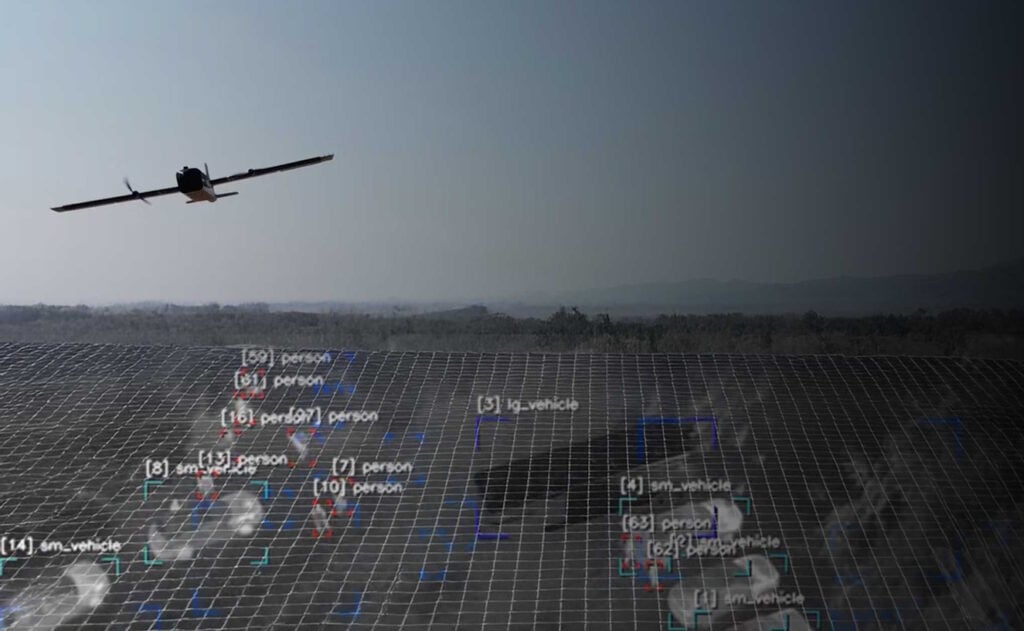
ISR Mission Planner mission planning software by Kutta Technologies.
These software packages may be engineered to support both strategic command decisions and tactical-level actions, planning, and coordinating operations such as airstrikes, maritime operations, unmanned missions, and joint-force ground maneuvers. High-fidelity simulation, secure data sharing, and real-time mission updates enable warfighters to maintain an advantage in multidomain battlespaces.
Core Capabilities and Features
Mission planning software platforms are designed to streamline the full mission lifecycle, from initial concept through to execution and post-mission analysis. They may incorporate a wide range of integrated and often modular features, such as:
Integrated Mission Modeling
Advanced software platforms allow planners to model real-world operational scenarios using geospatial mapping systems, ISR software feeds, terrain analysis, and environmental overlays. Integrated route planning systems and scenario builder tools enable both high-level and granular mission planning, allowing users to simulate unit-level movement, asset performance, and engagement timelines within a unified mission planning system.
Multi-Domain Asset Synchronization
Modern mission management software supports multi-domain operations across air, land, maritime, space, and cyber environments. These mission planning systems integrate with command-and-control systems to enable tasking and deconfliction for manned and unmanned assets. Interoperability systems ensure seamless coordination across platforms, supporting synchronized effects in complex operational environments.
Real-Time Threat Assessment
Mission planning tools incorporate live and predictive threat intelligence, including adversary movement, radar coverage, and electronic order of battle. These features empower planners to reroute missions dynamically, adapt to changes in threat posture, and exploit windows of opportunity for engagement or evasion.
AI-Driven Decision Support
Artificial intelligence and machine learning are increasingly embedded in mission management software to function as a decision support system. AI modules serve as an optimization engine, enabling rapid course-of-action generation, automated contingency planning, and real-time adjustments to mission planning based on operational data.
Interoperability with C4ISR Systems
Seamless integration with C4ISR systems is a core requirement for mission planning software. These platforms interface with command-and-control systems, data fusion systems, and ISR software to ingest, process, and disseminate operational data. C4ISR integration and interoperability systems ensure alignment with coalition networks, secure data link systems, and standardized communication interfaces.
Cybersecurity and Information Assurance
Mission planning software is developed with advanced cybersecurity systems and information assurance frameworks to protect mission-critical data. Features typically include role-based access control, access control systems, and dedicated encryption modules. These capabilities ensure secure operation across distributed networks and compliance with defense cybersecurity standards.
User Interface and Tactical Usability
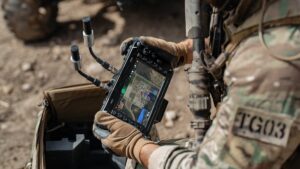
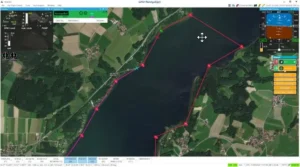
Visionair UAV GCS software for mission planning by UAV Navigation-Grupo Oesía.
Mission planning software platforms rely on advanced graphical user interfaces and intuitive user interfaces to support rapid decision-making in operational environments. Tactical displays provide real-time mission visualization, data overlays, and situational awareness tools. These interfaces are optimized for usability in both fixed command centers and mobile deployments, ensuring effective interaction under high-pressure conditions.
Mission Planning Software Architecture
Mission planning software platforms are typically built on scalable cloud infrastructure or deployed across edge computing systems to support both centralized and distributed operations. These systems often incorporate API integrations and workflow engines to enable seamless connectivity with C4ISR and asset management systems, as well as external data sources.
Modular architectures allow operators to integrate decision support systems, simulation engines, and mission rehearsal tools within a unified mission management platform. Interoperability layers ensure compatibility across communication interfaces, data link systems, and coalition networks, supporting real-time data exchange and synchronized multi-domain operations.
Military & Defense Applications
Mission management software and mission management systems are used across military, aviation, and unmanned operations to support a wide range of mission types and operational roles. These platforms function as operational planning software, enabling mission planning, coordination, and execution across multi-domain operations, from ISR and strike missions to disaster relief coordination and logistics support.
Air Operations and Air Tasking Orders
Air forces and joint air commands rely on aviation mission planning software to generate and manage air tasking orders, including strike coordination, ISR sorties, aerial refueling, and electronic warfare operations. These mission planning systems incorporate route planning, airspace management tools, and platform performance modeling to ensure the safe and efficient execution of air operations. Integration with command-and-control systems enables real-time updates and coordination across complex air environments.
Unmanned Systems Coordination
Mission planning software plays a critical role in drone mission planning and UAV mission planning across land, maritime, and air domains. Drone mission planning software and drone flight planning software enable operators to task unmanned systems for surveillance, targeting, inspection, and logistics. These platforms account for autonomy levels, communication links, and payload constraints while supporting multi-vehicle coordination. Commercial drone software and military mission planning tools often share core capabilities, including mission planning system interfaces and automated route optimization.
Special Operations Planning
Mission planning tools support special operations by enabling advanced contingency planning and detailed route modeling. These platforms enable planners to design stealth ingress and egress routes, coordinate multi-unit deployments, and adapt missions in real time using decision support systems. Contingency planning tools and simulation engines allow operators to assess risk and refine execution strategies before deployment.
Naval and Amphibious Operations
Mission management systems are widely used in naval and amphibious operations to support fleet coordination, maritime ISR, and logistics planning. These operational planning tools enable commanders to manage asset positioning, sensor coverage, and mission timing across distributed forces. Integration with geospatial mapping systems and communication interfaces ensures accurate situational awareness in complex maritime environments.
Cyber and Electronic Warfare
Mission planning software is increasingly used for cyber and electronic warfare mission planning. These platforms enable modeling of electromagnetic spectrum usage, signal propagation, and adversary systems. Planners can simulate cyber operations, RF jamming, and spoofing scenarios while ensuring coordination with friendly systems and compliance with operational constraints.
Humanitarian Assistance and Disaster Relief
Mission planning software also supports disaster relief coordination and humanitarian operations by enabling efficient allocation of personnel, equipment, and resources. These mission management systems enable operators to plan and execute search-and-rescue, medical response, and logistics distribution across challenging environments using real-time data and adaptive mission planning tools.
UK robotics autonomy startup Mutable Tactics secures $2.1M pre-seed funding to develop AI software enabling coordinated teams of unmanned systems to operate in contested environments with degraded communications
Thales has been awarded a Royal Navy contract to develop and deliver portable autonomous command centres, strengthening command and control for future mine countermeasures and autonomous maritime operations
Defense Advancement showcases Kutta Technologies hardware and software technologies, including mission computers and ground stations, for enhanced Command and Control
Anduril launches EagleEye, an AI-powered, helmet-integrated system unifying mission command, situational awareness, and enhanced survivability, creating lightweight, connected warfighters with HUD-driven perception, mission planning, and unmanned-asset control
U.S. Defense Advanced Research Projects Agency (DARPA) has awarded BAE Systems a Phase 2 contract to develop semi-autonomous, multi-domain mission planning software under the Adapting Cross-Domain Kill-Webs (ACK) program
The C2Core Air new web-based client sharing capability will unlock the full power of cloud computing for combat operations to enhance the operator’s quick reaction capabilities and significantly reduce mission planning timelines
The latest defense technology news, straight to your inbox.
Get our weekly roundup of technology developments, new products and industry news.
THANK YOU FOR SIGNING UP
Thanks for joining us. Check your inbox.
We've sent you an email. Click the confirmation link to complete your subscription to the weekly eBrief. In the meantime, explore the latest news, suppliers and technologies on DA.
Advancing Defense Capability Through Strategic Collaboration
Defense Advancement works with major OEMs to foster collaboration and increase engagement with SMEs, to accelerate innovation and drive defense capabilities forward.