Showcase your capabilities
If you design, build or supply Air Conditioner, create a profile to showcase your capabilities and connect with visitors who have an active requirement for your solutions.




Military air conditioning systems play a key part in maintaining operational effectiveness in extreme environments. Advanced military air conditioners are designed to deliver reliable climate control for military shelters, tents, and vehicles, ensuring that personnel and sensitive equipment operate efficiently, even under the harshest conditions.
Read the Technology Overview

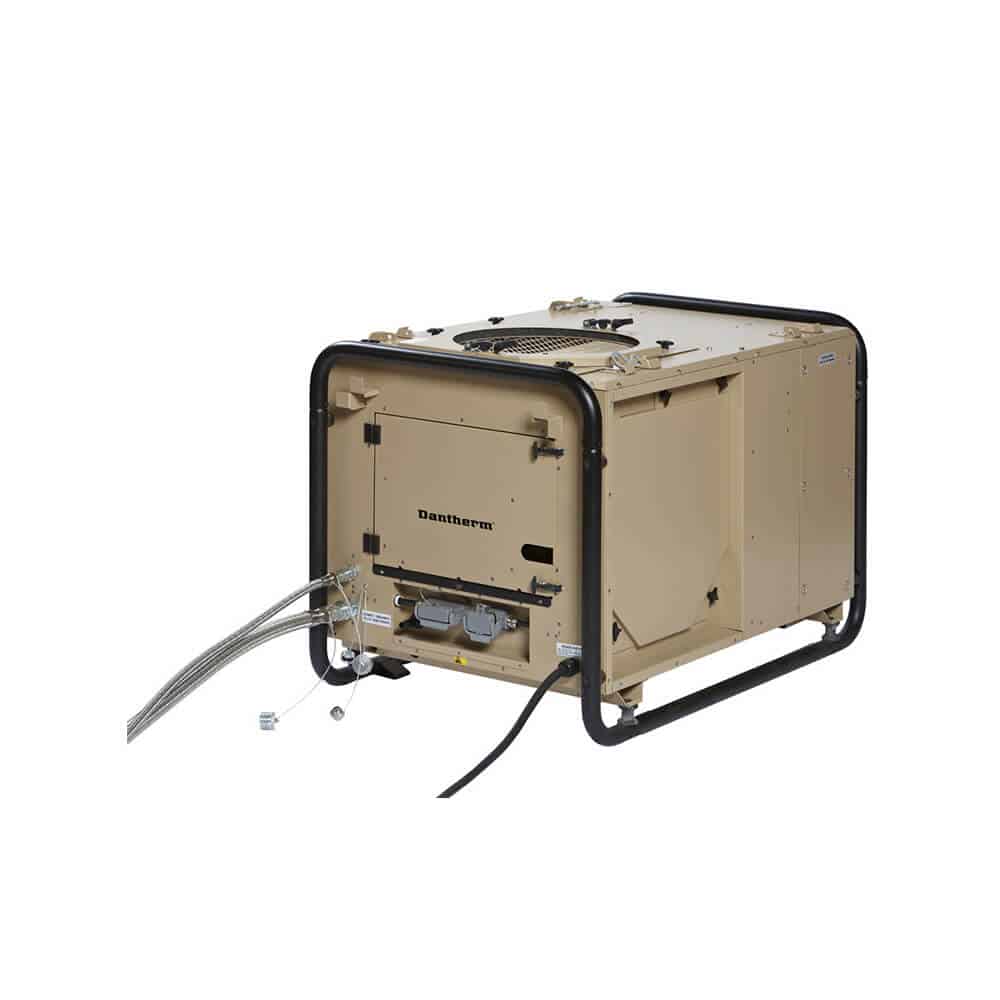
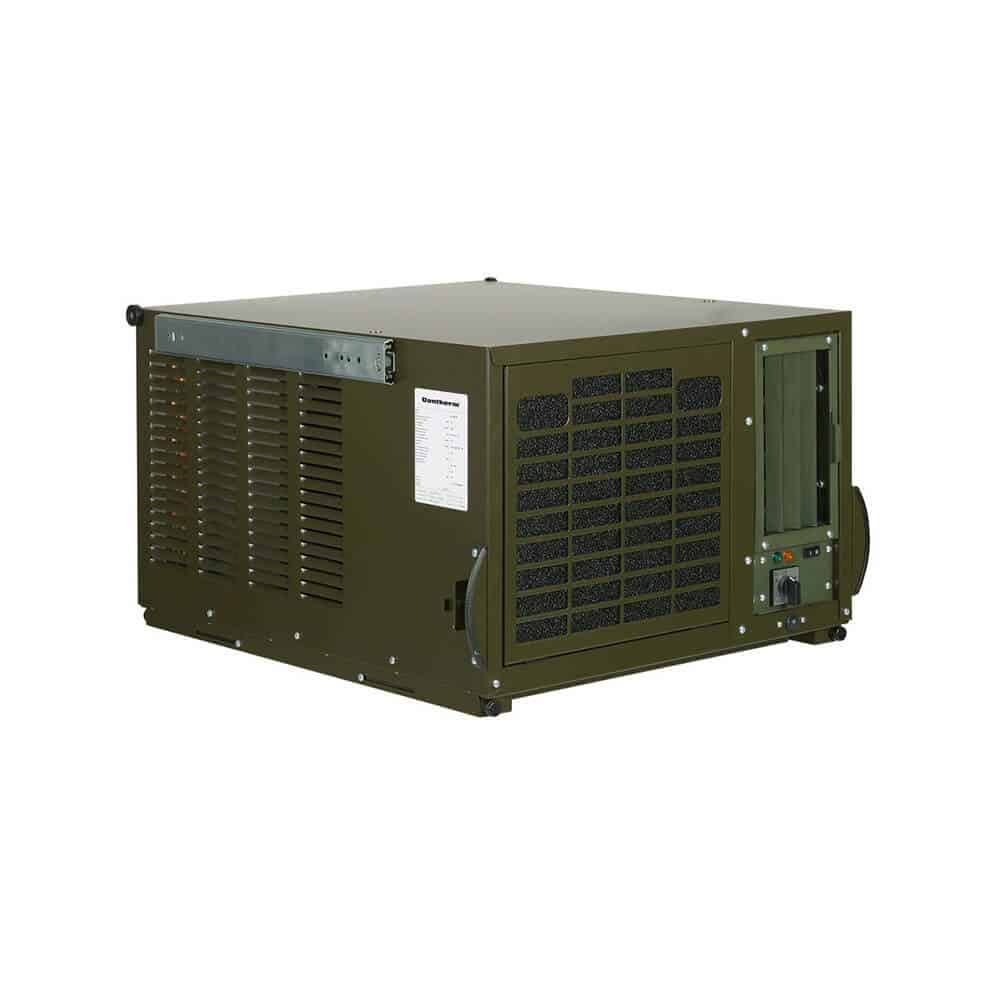
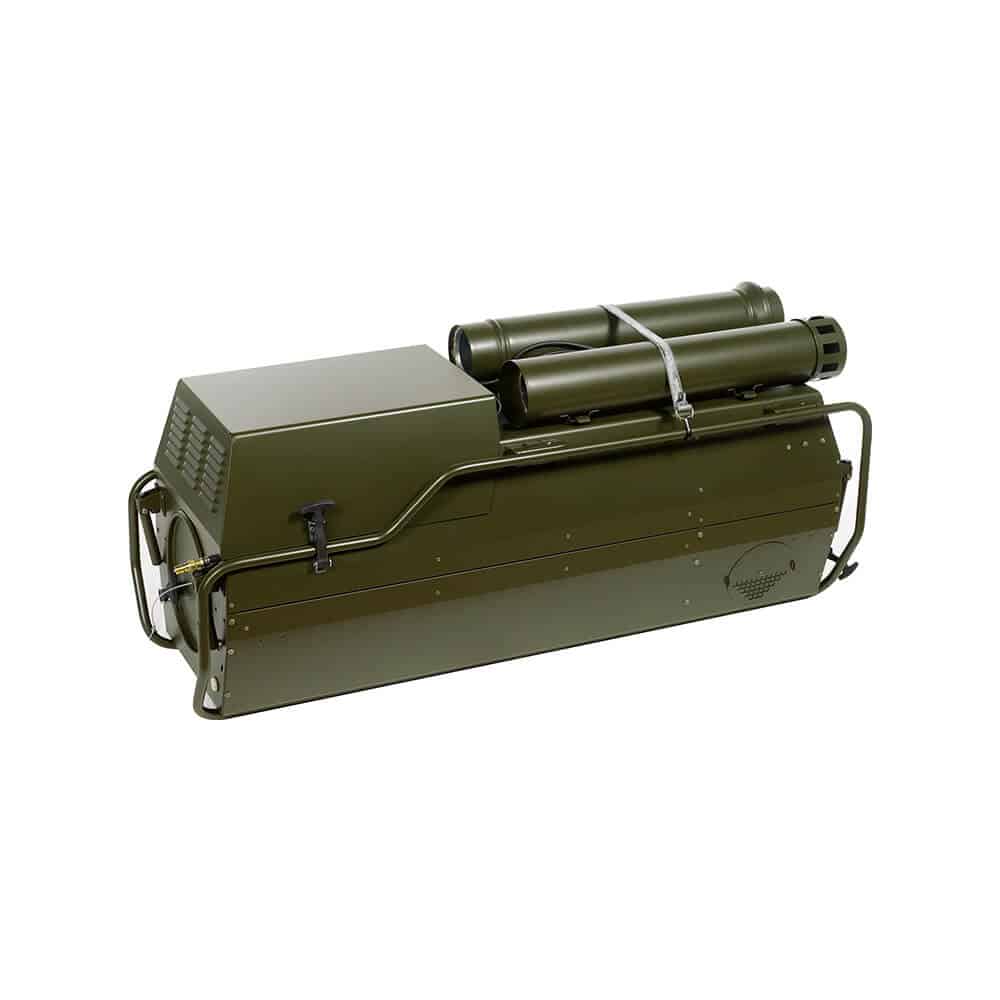
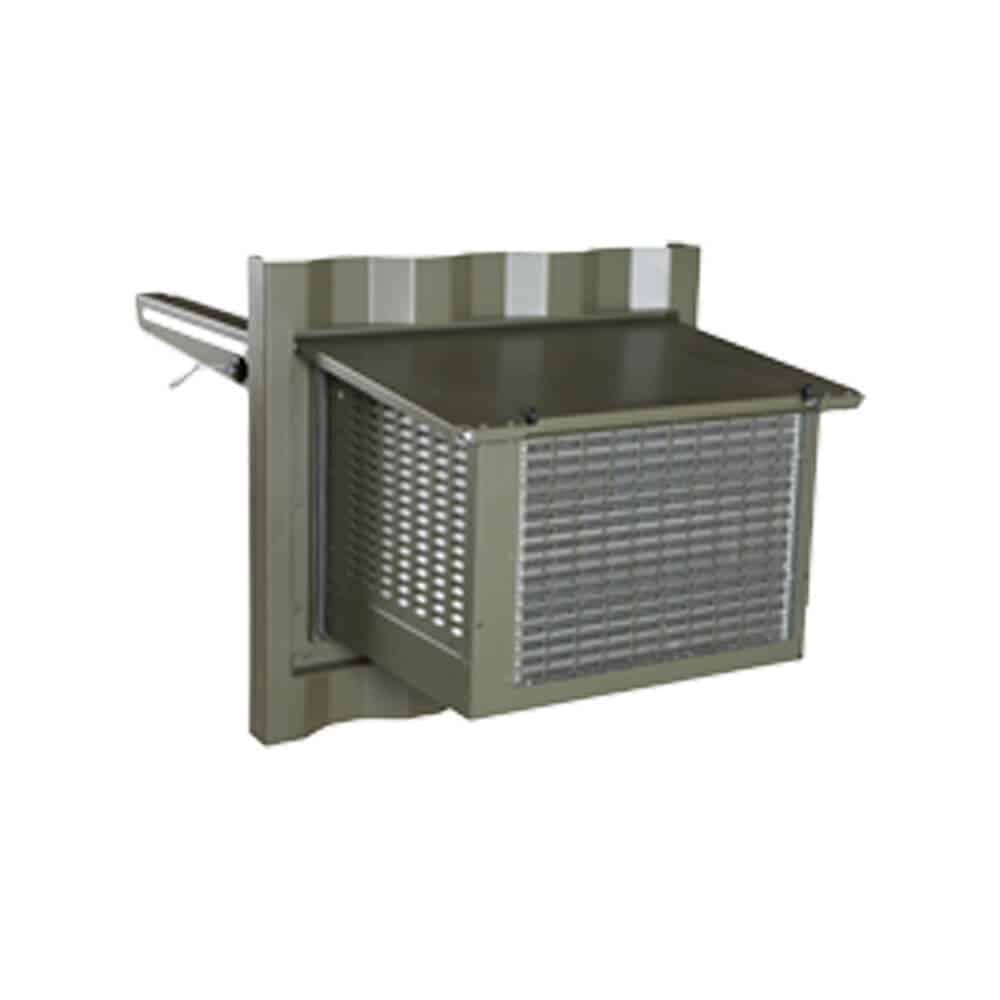
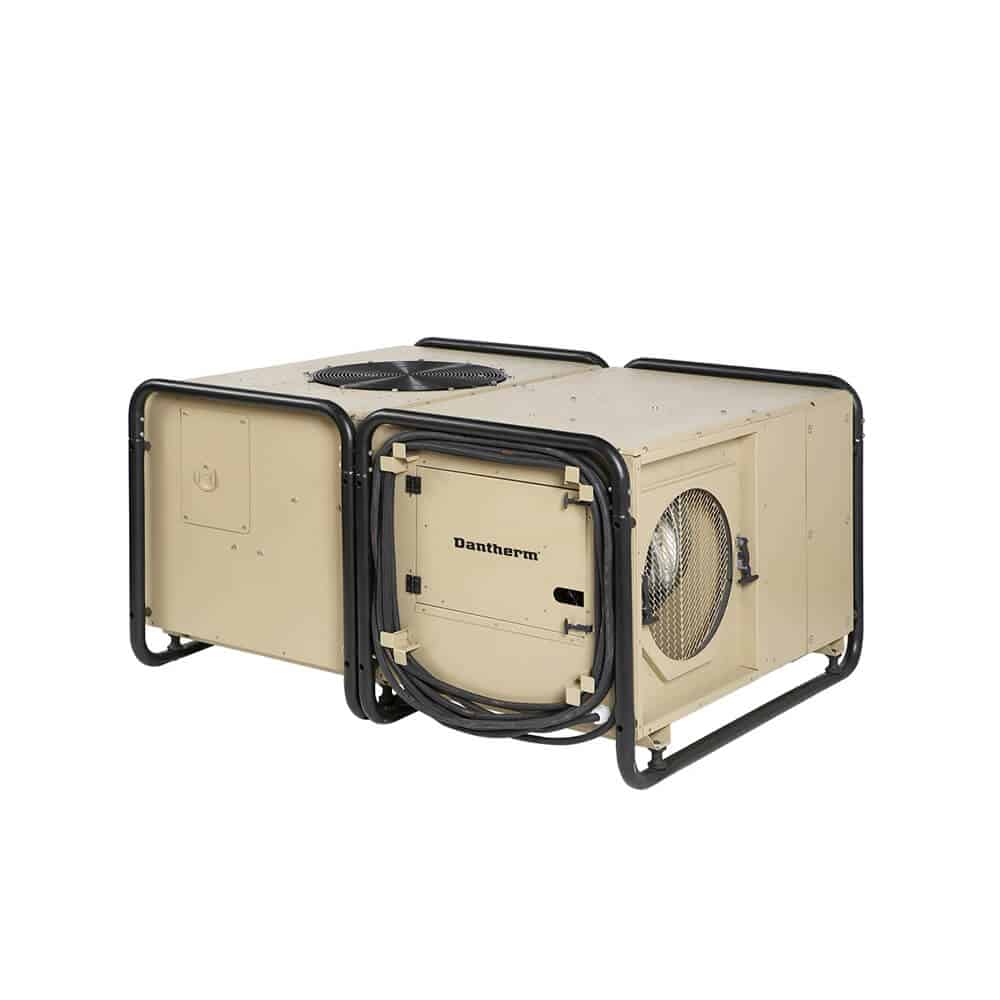
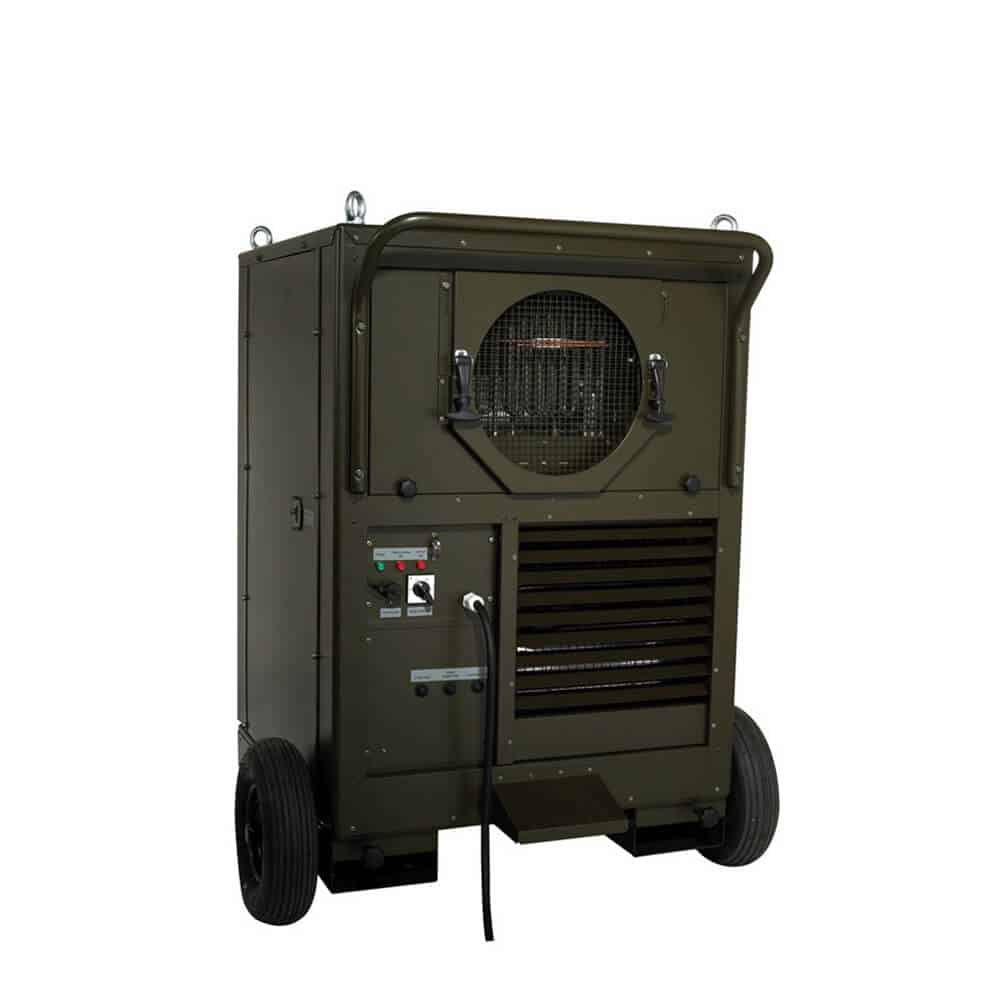
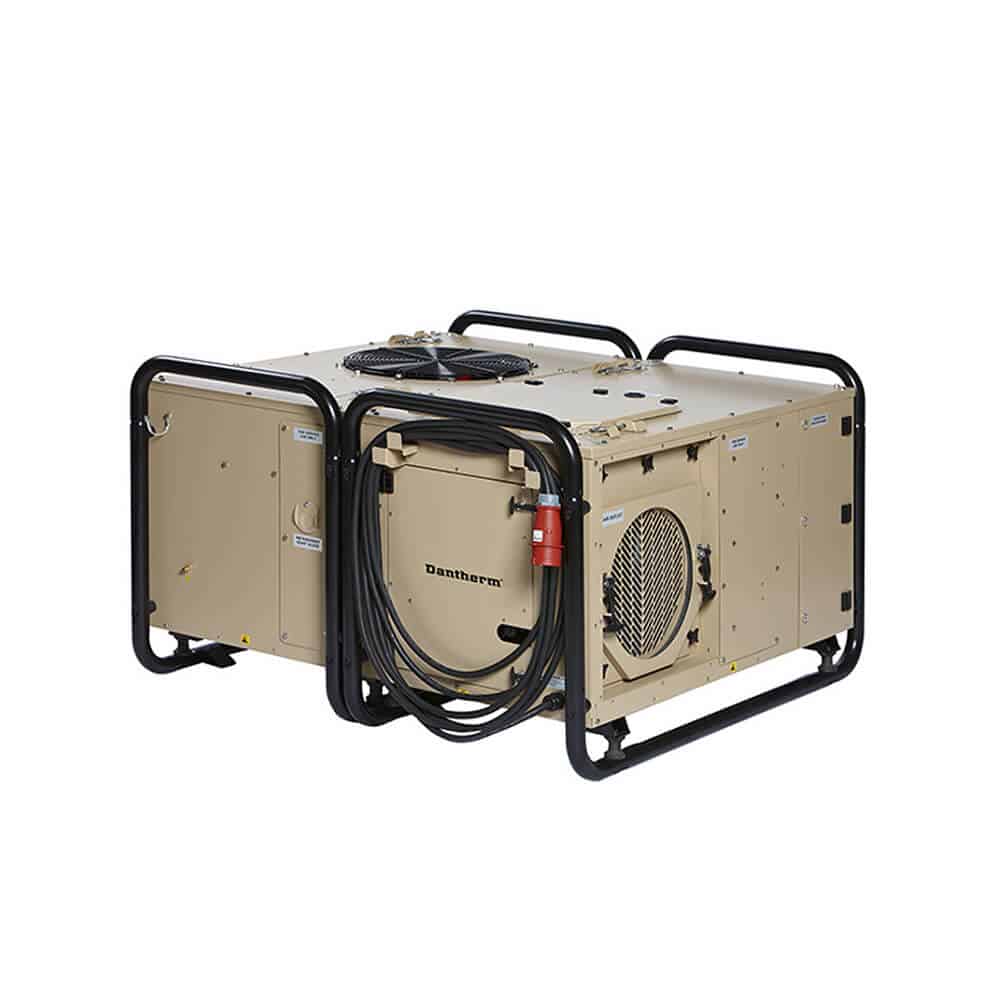
Military Air Conditioners, HVAC & Environmental Control Units for Tents, Containers and Temporary Buildings

If you design, build or supply Air Conditioner, create a profile to showcase your capabilities and connect with visitors who have an active requirement for your solutions.

Military air conditioner solutions are ruggedized climate control systems specifically designed to ensure workable operational temperatures in extreme defense and battlefield environments.
Unlike standard COTS cooling systems, these specialized air conditioning units may need to meet stringent defense standards to ensure reliable performance under harsh conditions such as high temperatures, dust, humidity, and vibration.
Effective climate control is essential for sustaining mission readiness in these challenging environments. Excessive heat and humidity can impair human performance, reduce equipment reliability, and disrupt critical defense operations. Military air conditioners ensure that personnel remain focused, equipment operates at peak performance, and operational downtime is minimized.
For defense forces operating in regions with extreme temperatures, reliable military HVAC systems can be indispensable for safeguarding sensitive electronics, weapons systems, and logistical operations. By preventing overheating and environmental damage, military HVAC units can enhance operational continuity, personnel safety, and mission success.
Military air conditioning systems are designed to accommodate the unique demands of various defense environments. A variety of different types of military cooling systems, typically specialized for specific use cases, are available. These include:
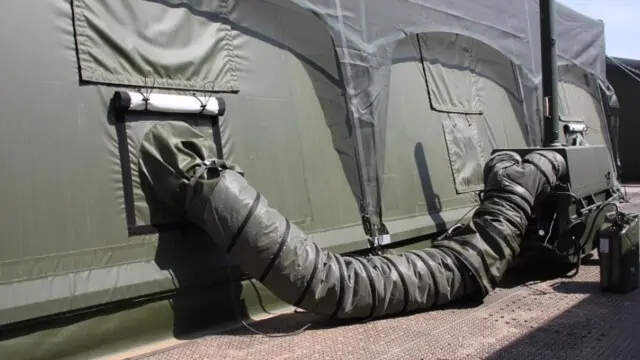
Designed for portable and temporary shelters, these compact military HVAC systems deliver efficient climate control with minimal setup. They are often lightweight, rugged, and modular, ensuring quick deployment in mobile field hospitals, command posts, and communication hubs.
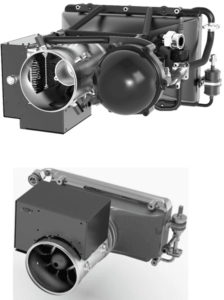
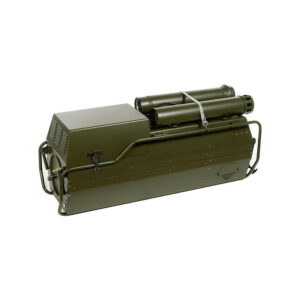
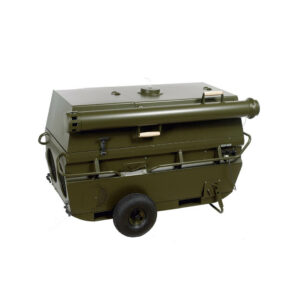
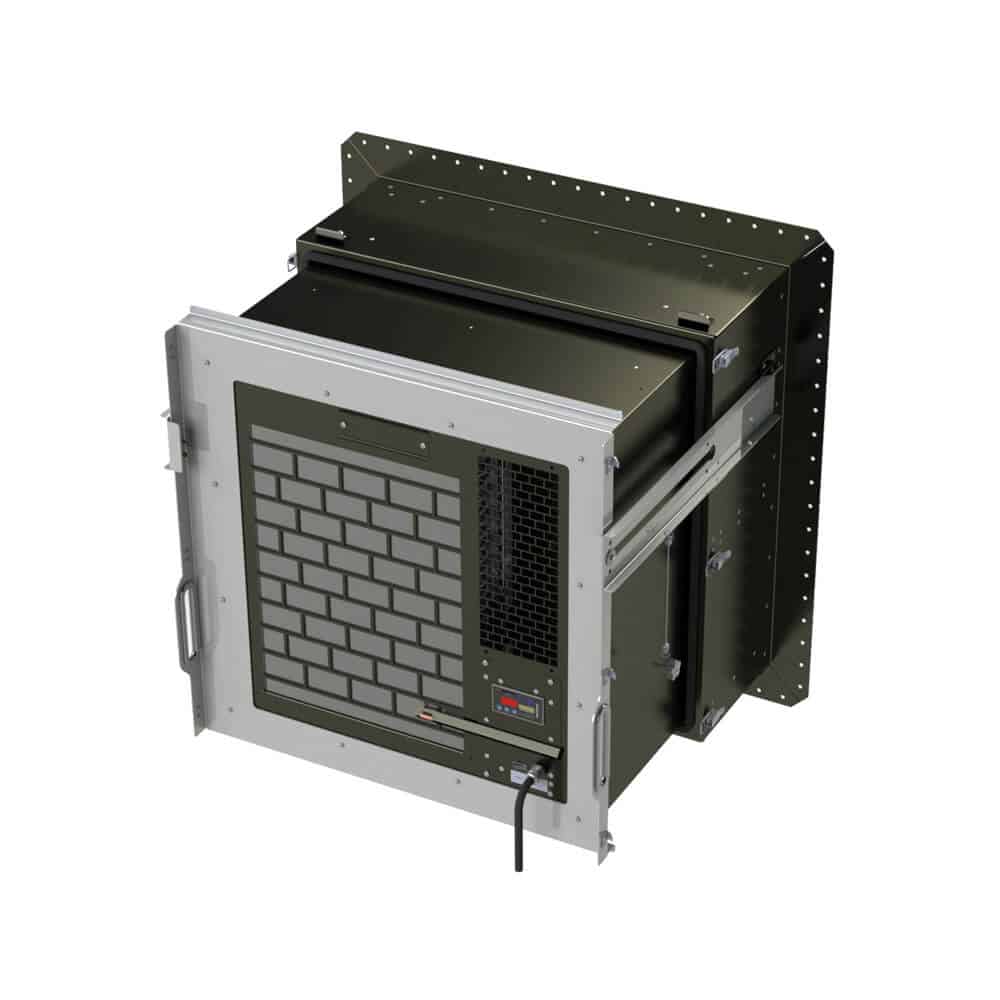
MicroVCS Military Cooling System by Honeywell Aerospace
These systems are integrated into armored and unarmored military vehicles, including personnel carriers, command trucks, and tactical transport units. Vehicle-mounted air conditioning protects both personnel and onboard electronics from overheating during long missions in extreme temperatures.
For semi-permanent or fixed installations such as military bases, high-capacity military air conditioner solutions can regulate the temperature of large spaces, including ammunition storage, maintenance workshops, and barracks. Portable air conditioning units can provide additional flexibility for temporary deployments.
Advanced cooling systems designed for radar units, communication towers, and electronic warfare equipment focus on precise temperature management to prevent overheating. These systems often include EMI shielding to ensure uninterrupted operation in critical conditions.
Engineered for use on ships, submarines, and naval outposts, these units feature corrosion-resistant components to withstand saltwater environments while ensuring effective climate control.
Military environments demand specialized HVAC systems that exceed the capabilities of commercial-grade air conditioners. Key features of military grade air conditioner units that set them apart from regular COTS systems include:
Military air conditioners may be built to endure extreme conditions, including high-impact shock, vibration, dust, and moisture. Units will typically comply with MIL-STD-810 standards for environmental durability, ensuring long-term performance in desert, arctic, and tropical conditions.
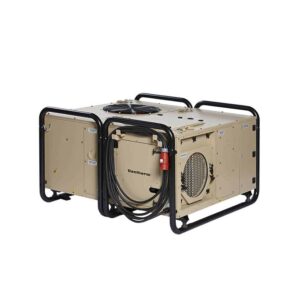
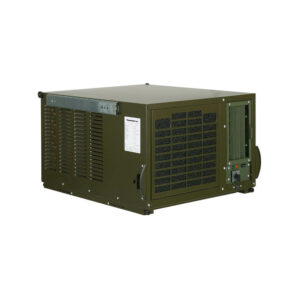
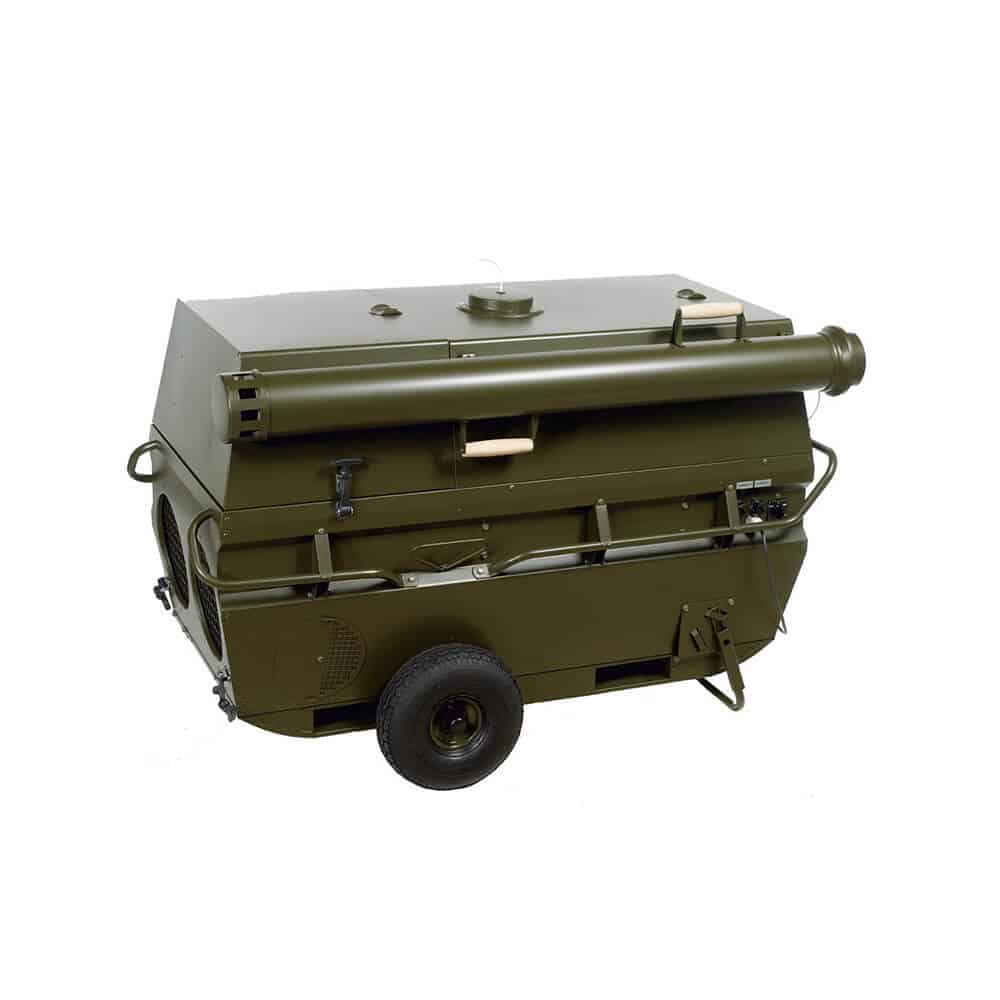
AC-M11 Military Air Conditioning Unit by Dantherm Group
Advanced military HVAC systems may be designed to prioritize energy efficiency, often using high-efficiency compressors and eco-friendly refrigerants. This reduces fuel consumption and operational costs, making them ideal for remote deployments with limited power availability. Units may need to be compatible with a wide range of power sources, including diesel generators, solar power systems, and hybrid energy systems.
Portability is often essential for defense operations that require rapid deployment and low logistical footprints. Many military air conditioning units feature modular and lightweight designs, enabling easy transport and setup in tactical environments.
Military air conditioners deliver precise climate control, maintaining temperature and humidity levels that are optimal for personnel safety and the performance of sensitive equipment. Integrated thermal management technology prevents overheating, even in extreme conditions.
Silent operation is vital for maintaining stealth in combat zones. Noise-dampening features and EMI (Electromagnetic Interference) shielding ensure compatibility with critical defense systems without disrupting communication or surveillance operations.
Military cooling systems may incorporate corrosion-resistant materials and rugged components that reduce wear and tear, ensuring longevity and minimal maintenance requirements in the field.
Installing a military AC unit can enhance a range of defense operations. Military cooling systems may be found in a variety of facilities, vehicles, and platforms. Common applications include:
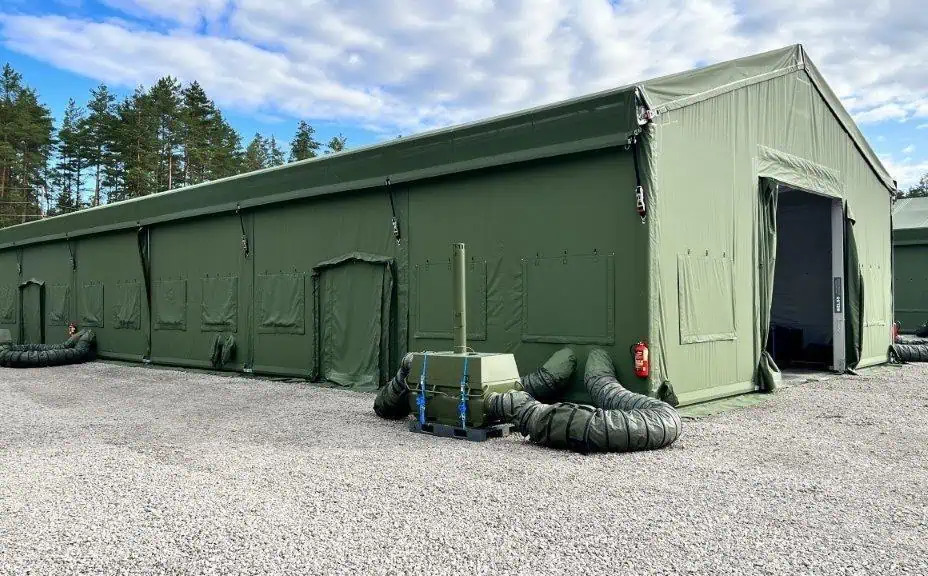
Rapid-deployment shelters and mobile command centers rely on efficient military HVAC systems to stabilize internal temperatures and protect both personnel and equipment. Military shelter cooling ensures field hospitals, barracks, and command posts maintain safe operating conditions under extreme heat or humidity. Military tent air conditioner units are typically deployed here.
Combat vehicles, including armored personnel carriers (APCs) and command trucks, depend on integrated air conditioning systems to protect crew members and prevent critical electronics from overheating. Vehicle-mounted systems are designed to withstand high levels of shock and vibration and intense maneuvers.
Sensitive electronics, such as radar systems, surveillance equipment, and communication hubs, generate substantial heat during operation. Dedicated cooling systems prevent overheating, ensuring uninterrupted functionality in the field.
In remote defense installations with limited infrastructure, military grade portable air conditioner units deliver high-capacity climate control to support personnel and safeguard mission-critical assets. Military portable air conditioner units and fixed-base systems regulate temperatures in barracks, ammunition depots, and equipment storage facilities.
Military HVAC systems designed for naval environments must withstand saltwater exposure, vibration, and high humidity. These rugged air conditioners ensure optimal conditions aboard ships, submarines, ports and coastal outposts.


 Searching Companies & Products