Showcase your capabilities
If you design, build or supply LCD Monitors & Displays, create a profile to showcase your capabilities and connect with visitors who have an active requirement for your solutions.




Military LCD displays provide rugged visual interfaces for mission systems, sensors, navigation equipment, vehicle electronics, and command-and-control applications. Available as complete monitors, embedded modules, or custom assemblies, these displays may support sunlight readability, night-vision compatibility, touchscreen control, and wide operating temperature ranges.
This page features suppliers of military LCD monitors and displays used across ground vehicles, aircraft, naval platforms, command centers, and portable field equipment.
Read the Technology Overview


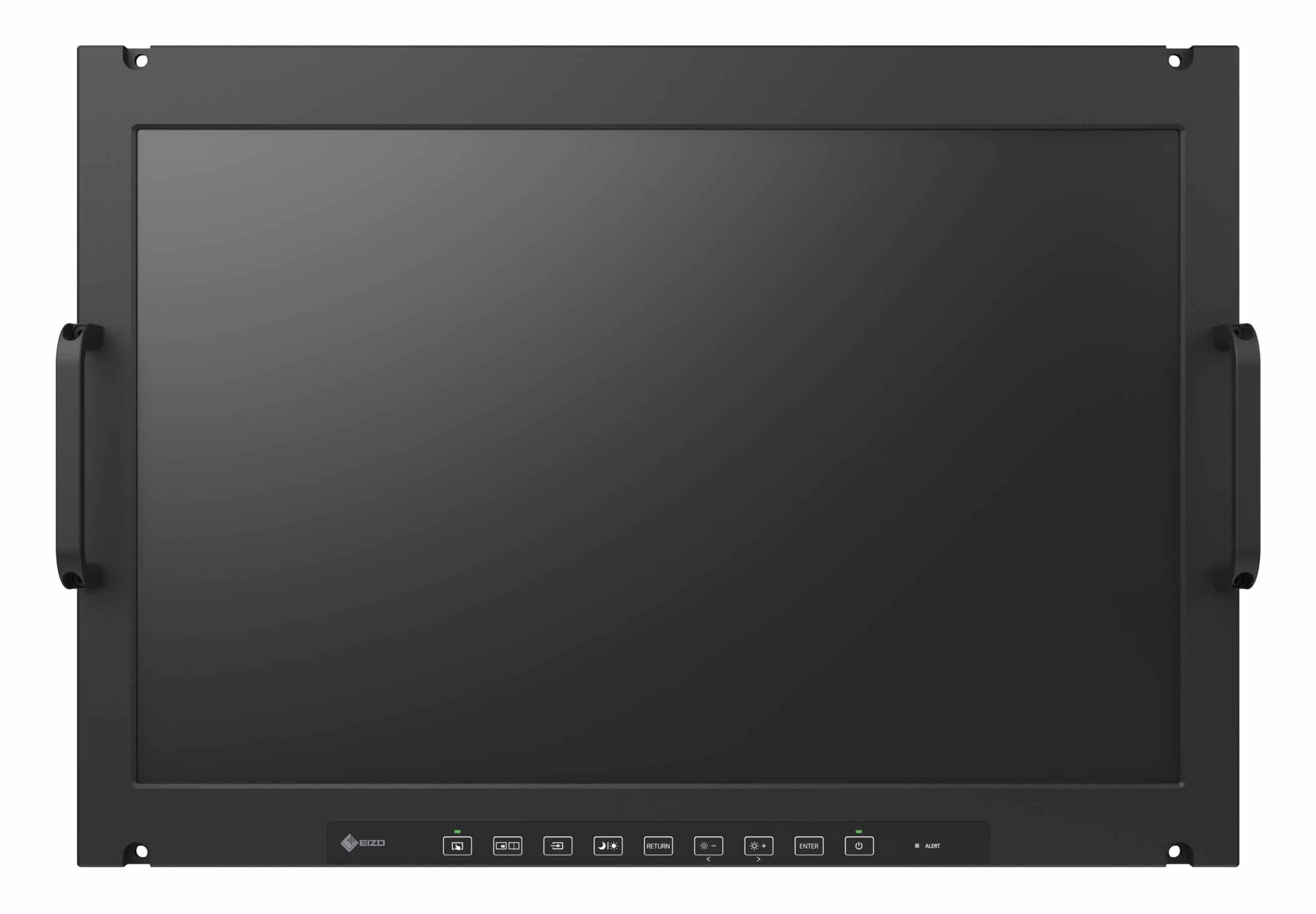
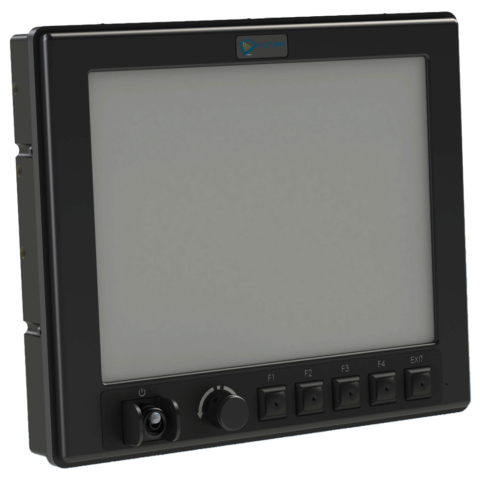
Rugged Image Processing & Mission-Critical Electronics for Defense Systems


WE ARMOR IT. MilSpec Electronics & Rugged IT Equipment for Military, Government & Critical Infrastructure

Mission-Critical Rugged Displays, Embedded Computing & Electronics for Defence Systems

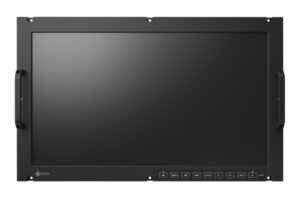
High-Performance Video Graphics, GPGPU, AI/ML Processing & Display Solutions for Mission Critical Environments

If you design, build or supply LCD Monitors & Displays, create a profile to showcase your capabilities and connect with visitors who have an active requirement for your solutions.

Military Liquid Crystal Displays (LCDs) provide visual interfaces for mission systems, sensors, navigation equipment, vehicle electronics, command-and-control systems, and other defense applications. They are typically designed to operate reliably under demanding environmental, mechanical, electrical, and optical conditions.
Rugged military LCD displays may be supplied as complete display systems, rugged monitors, embedded modules, or custom assemblies, with features such as high brightness, sunlight readability, night-vision compatibility, wide operating temperatures, and resistance to shock and vibration.
LCD technologies differ in their liquid-crystal alignment, illumination method, optical characteristics, and suitability for specific military operating environments, although the categories can overlap. In-Plane Switching (IPS), Twisted Nematic (TN), and Vertical Alignment (VA), for example, describe liquid-crystal operating modes that are commonly implemented within Thin-Film Transistor (TFT) active-matrix panels, while transmissive, reflective, and transflective describe how light is provided to or used by the display.
| LCD Technology/Configuration | Operating Principle | Key Characteristics | Typical Defense Uses |
| Thin-Film Transistor (TFT) | Thin-film transistors individually control pixels within an active matrix. | Supports high-resolution displays, rapid pixel control, and a wide range of panel configurations. | Mission displays, vehicle displays, control consoles, and embedded systems. |
| IPS LCD | Liquid crystals rotate largely within the plane of the panel. | Provides wide viewing angles and consistent color reproduction. | Multi-user consoles, operator stations, and aircraft or vehicle displays. |
| TN LCD | Twisted liquid crystals change orientation to control light transmission. | Provides fast response and relatively simple construction. | Embedded equipment and applications where response time is prioritized. |
| VA LCD | Liquid crystals align predominantly perpendicular to the substrate when unpowered and change orientation when driven. | Provides strong contrast and good black levels. | Monitoring systems and control displays. |
| Monochrome LCD | Pixels modulate light to present single-color or grayscale information. | Suitable for simple graphics and instrumentation, with potentially low power consumption. | Status panels, instrumentation, and control interfaces. |
| Transmissive LCD | A backlight passes through the LCD panel to produce the visible image. | Provides consistent illumination where sufficient backlight output is available. | Cockpit, vehicle, console, and indoor displays. |
| Transflective LCD | Combines transmitted backlight with reflected ambient light. | Improves visibility across changing lighting conditions. | Portable systems and outdoor vehicle displays. |
| Reflective LCD | Uses reflected ambient light rather than relying on a conventional backlight. | Offers low power consumption and good daylight visibility where sufficient ambient light is available. | Battery-powered and specialized field equipment. |
| Sunlight-Readable and High-Brightness LCD Displays | Combines increased backlight output with optical treatments or panel enhancements to improve outdoor visibility. | Improves contrast and readability under strong ambient light. | Vehicle, shipboard, airborne, and outdoor control systems. |
| Night-Vision-Compatible LCD Displays | Controls display luminance and spectral output for use alongside compatible night-vision imaging systems. | Reduces unwanted light that could interfere with night-vision equipment. | Aircraft cockpits and other low-light military environments. |
| Touchscreen LCD Displays | Combines an LCD with a resistive, capacitive, or other touch-sensing interface. | Allows direct user input through the display surface. | Mission computers, vehicle control stations, and operator consoles. |
Military vehicles use rugged LCD displays for driver information, navigation, battle management, sensor visualization, diagnostics, and remote system control, often integrating several functions within the same crew interface. Displays fitted to armored and tactical vehicles may need to withstand continuous vibration, mechanical shock, dust, temperature extremes, and fluctuations in vehicle power, while a rugged military LCD monitor can also be integrated with camera systems, situational awareness sensors, and remote weapon stations to provide crews with real-time imagery and system status information.
Aircraft LCD displays are used for flight information, navigation, mission management, sensor data, payload control, and other crew interfaces, placing demanding requirements on readability, integration, and environmental performance. Military aircraft installations often emphasize clear visibility across changing cockpit illumination levels, low weight, controlled thermal output, and compatibility with avionics architectures, while systems used alongside night-vision equipment may incorporate filtered backlighting and carefully controlled luminance to support low-light operations without creating excessive optical interference.
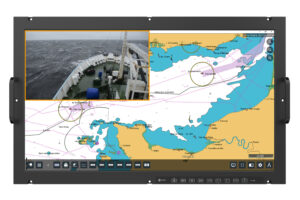
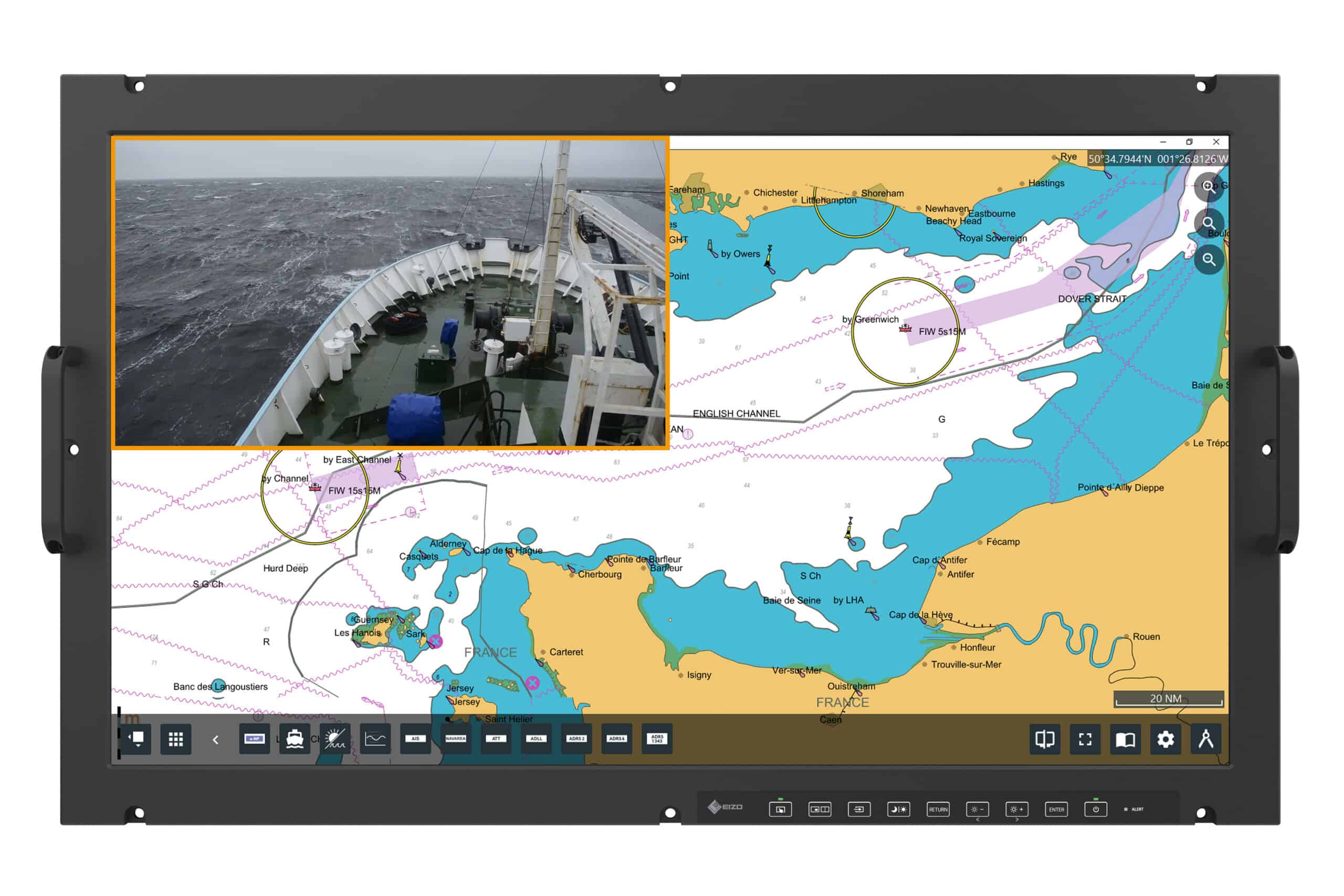
Naval platforms use ruggedized LCD monitors across bridge, combat management, surveillance, radar, sonar, engineering, and machinery-control systems, often in environments where displays operate continuously for extended periods. Marine installations can expose equipment to vibration, humidity, salt-laden air, and temperature changes, so rugged construction, sealed front panels, corrosion-resistant materials, optical bonding, and suitable thermal management may all contribute to maintaining display readability and reliability in shipboard environments.
Command centers, tactical operations rooms, sensor workstations, and surveillance systems rely on military LCD monitors to present maps, video, radar tracks, intelligence data, and system status information from multiple sources. These environments may use individual displays, multi-monitor workstations, or larger arrays of military display systems, making resolution, viewing angle, contrast, interface compatibility, and image consistency particularly important where operators must interpret complex information over extended periods.
Portable command terminals, deployable control stations, field computers, and man-portable equipment can use rugged portable LCD monitors where conventional commercial displays would be unsuitable for the operating environment. These systems typically place greater emphasis on compact dimensions, low weight, efficient power consumption, sunlight readability, and resistance to impact and environmental exposure, while touch interfaces may also need to support gloved operation or wet-surface use where field users cannot rely on conventional desktop input devices.
Military rugged LCD display systems may be designed and tested against standards covering environmental exposure, electromagnetic compatibility, and visual-system integration, with the applicable requirements determined by the platform, installation environment, and intended operating conditions.
Qualification requirements are therefore normally established at the platform or system level rather than being determined by the LCD panel alone, since the complete display assembly includes electronics, housings, interfaces, optical layers, and other components that also influence environmental and electromagnetic performance.
Military display technology continues to develop as defense platforms require operators to process greater quantities of visual information while placing tighter constraints on space, weight, power consumption, and environmental performance.
Together, these developments allow rugged LCD monitors and embedded military LCD displays to support increasingly dense and sophisticated mission interfaces while maintaining the mechanical, optical, electrical, and environmental characteristics required for defense applications.


 Searching Companies & Products