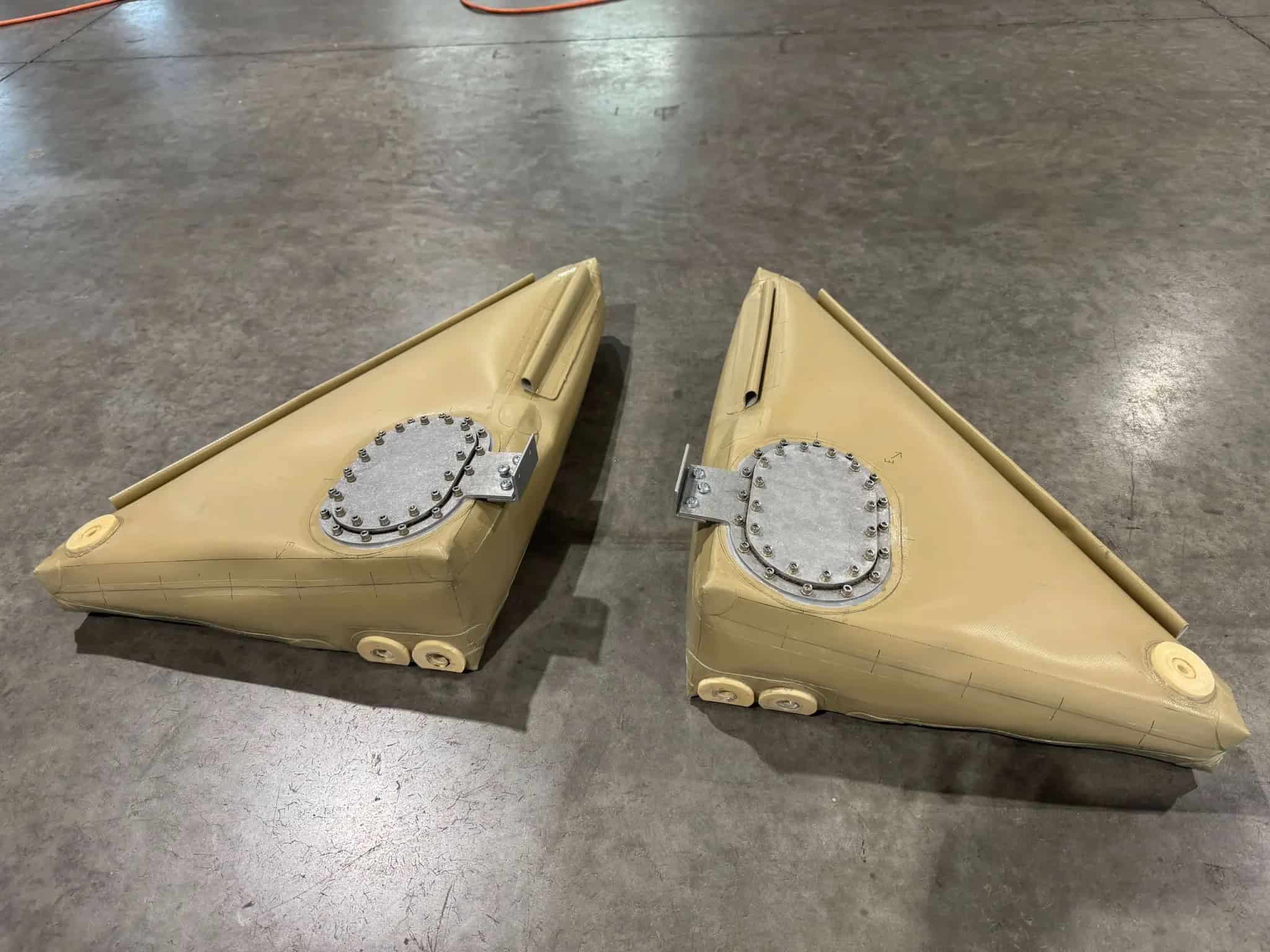
Deployable liquid storage systems provide temporary, transportable storage for fuel, water, chemicals, and other liquids in defense operations where fixed infrastructure is unavailable or unsuitable. Configurations include water and fuel bladders, chemical and marine bladders, onion tanks, rigid fuel tanks, and spill containment systems.
This page features leading suppliers of deployable liquid storage solutions, supporting forward bases, distributed logistics, aviation ground operations, land forces, and maritime missions.
If you design, build or supply Deployable Liquid Storage Systems, create a profile to showcase your capabilities and connect with visitors who have an active requirement for your solutions.
The Complete Guide to Deployable Liquid Storage Systems for Military Operations
Overview by
William Mackenzie
Updated:
Introduction to Deployable Liquid Storage Systems
Deployable liquid storage systems provide temporary, transportable capacity for water, fuel, chemicals, and other liquids where fixed infrastructure is unavailable or unsuitable. They support defense logistics by establishing storage quickly with less transport volume and construction than permanent tanks.
Systems range from collapsible bladders and self-supporting open tanks to rigid fuel tanks and secondary containment equipment. Selection depends on the liquid, capacity, environment, transport constraints, storage duration, and compatibility with transfer and distribution equipment.
Types of Deployable Liquid Storage Solutions
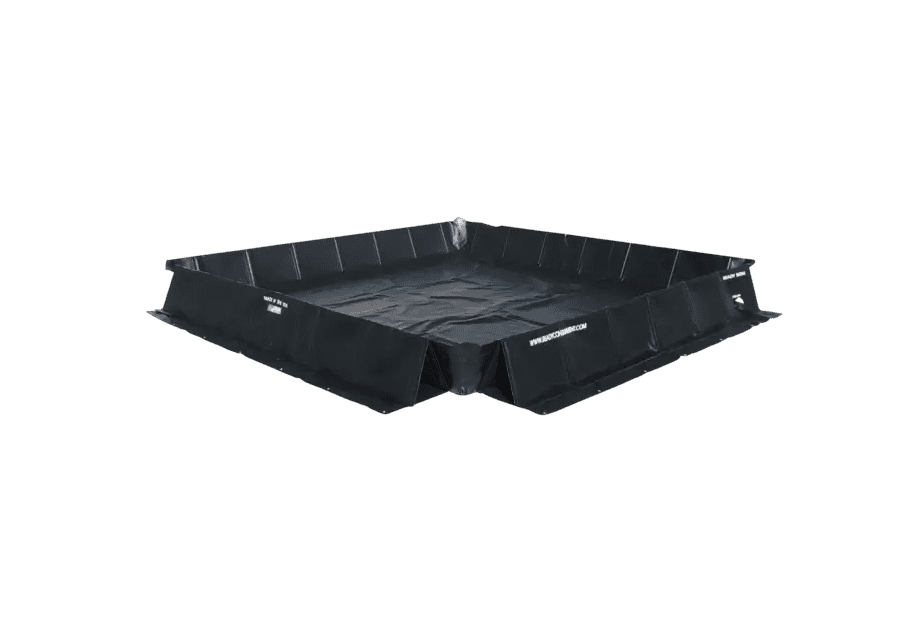
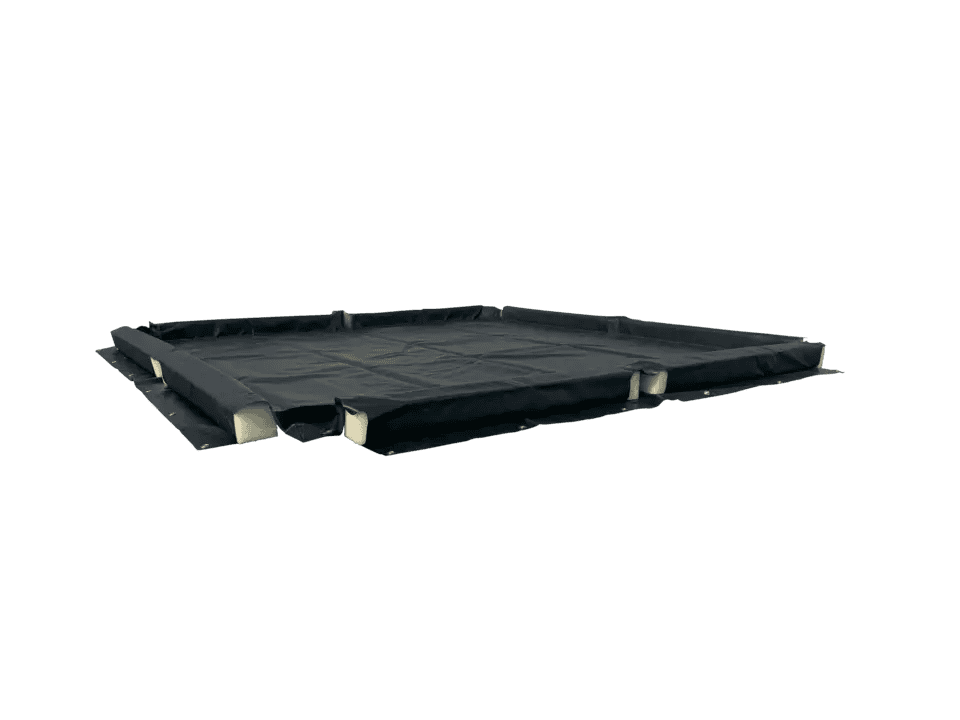
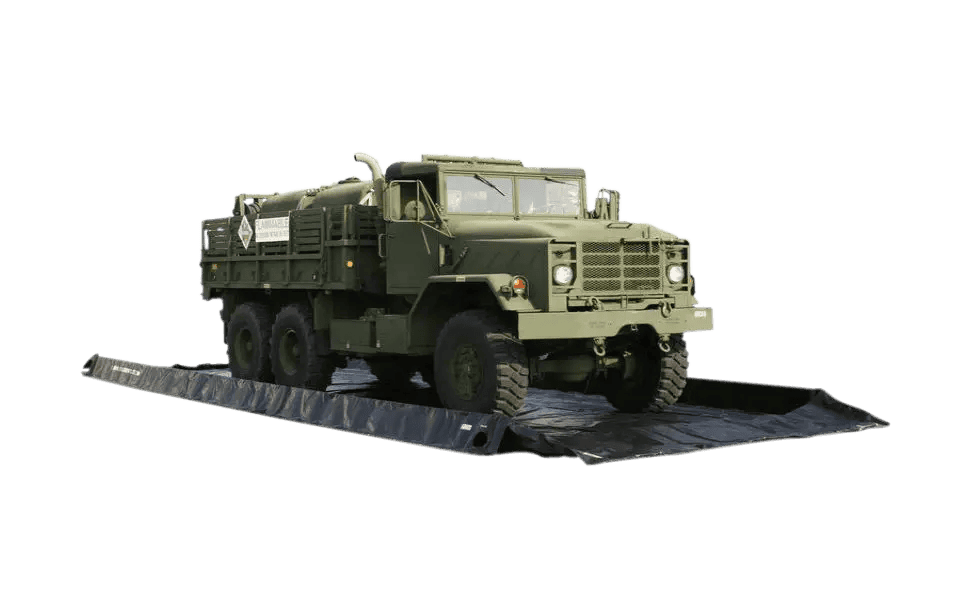
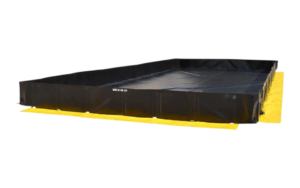
Ready Berms from Ready Containment
Different configurations address mobility, capacity, liquid compatibility, environmental protection, and deployment speed. Flexible systems provide high storage volume with a small packed footprint, while rigid systems may suit repeated handling, structural protection, or transport integration.
Water Bladders
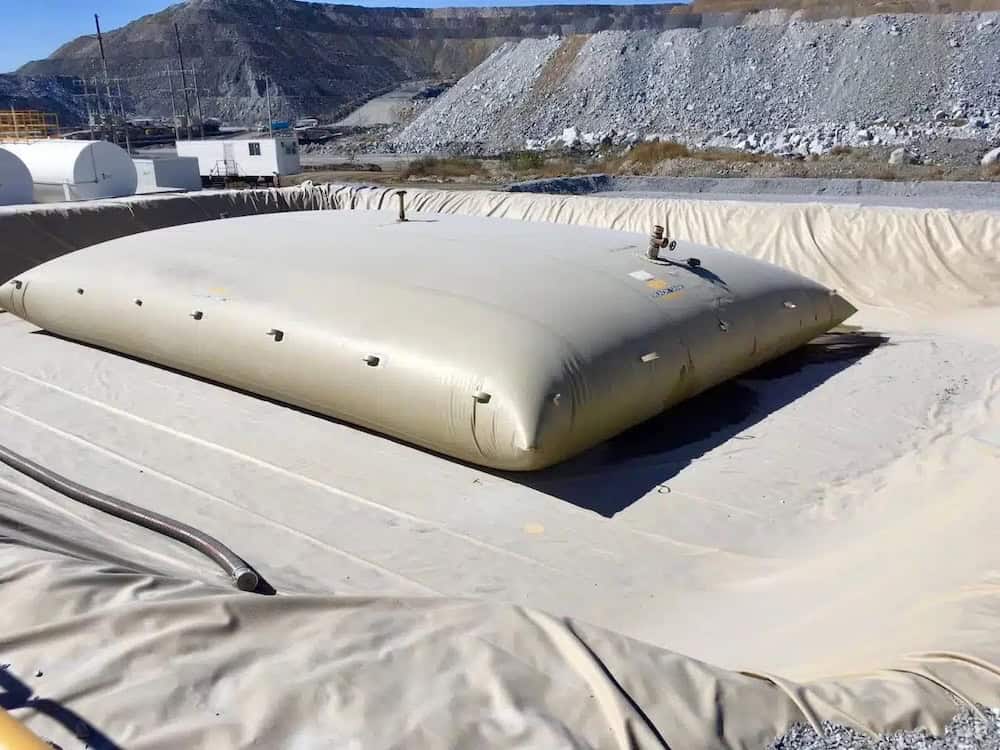
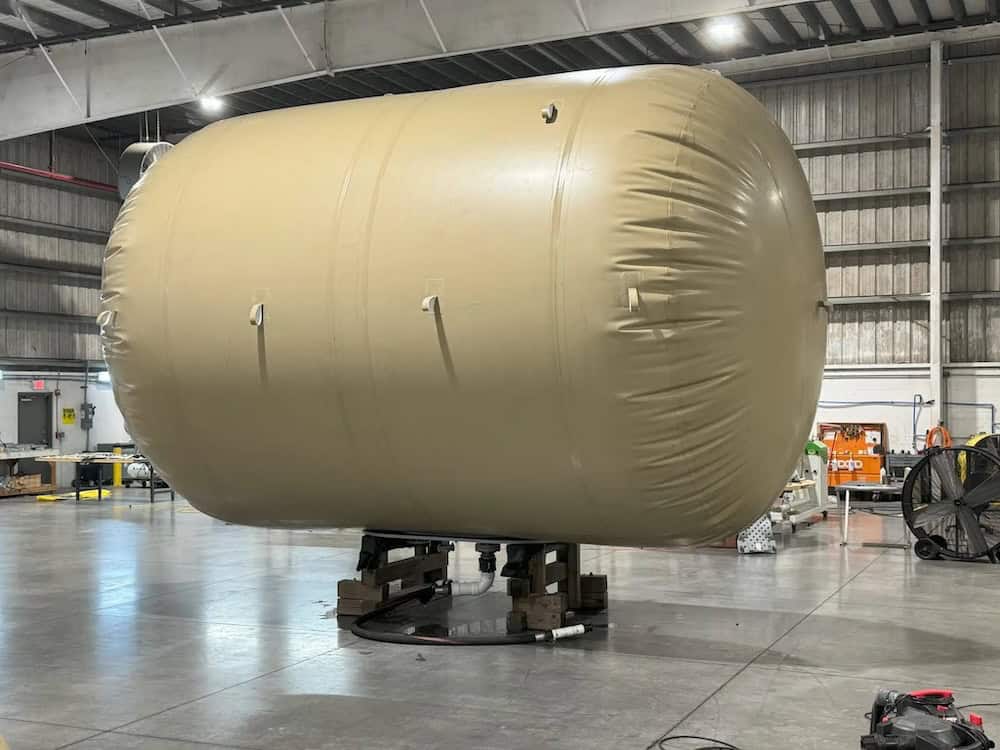
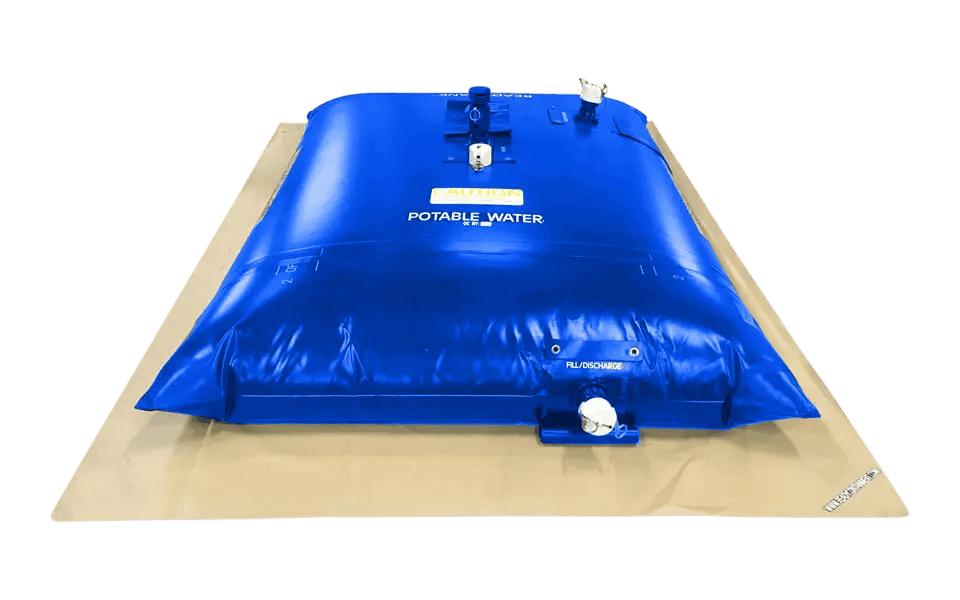
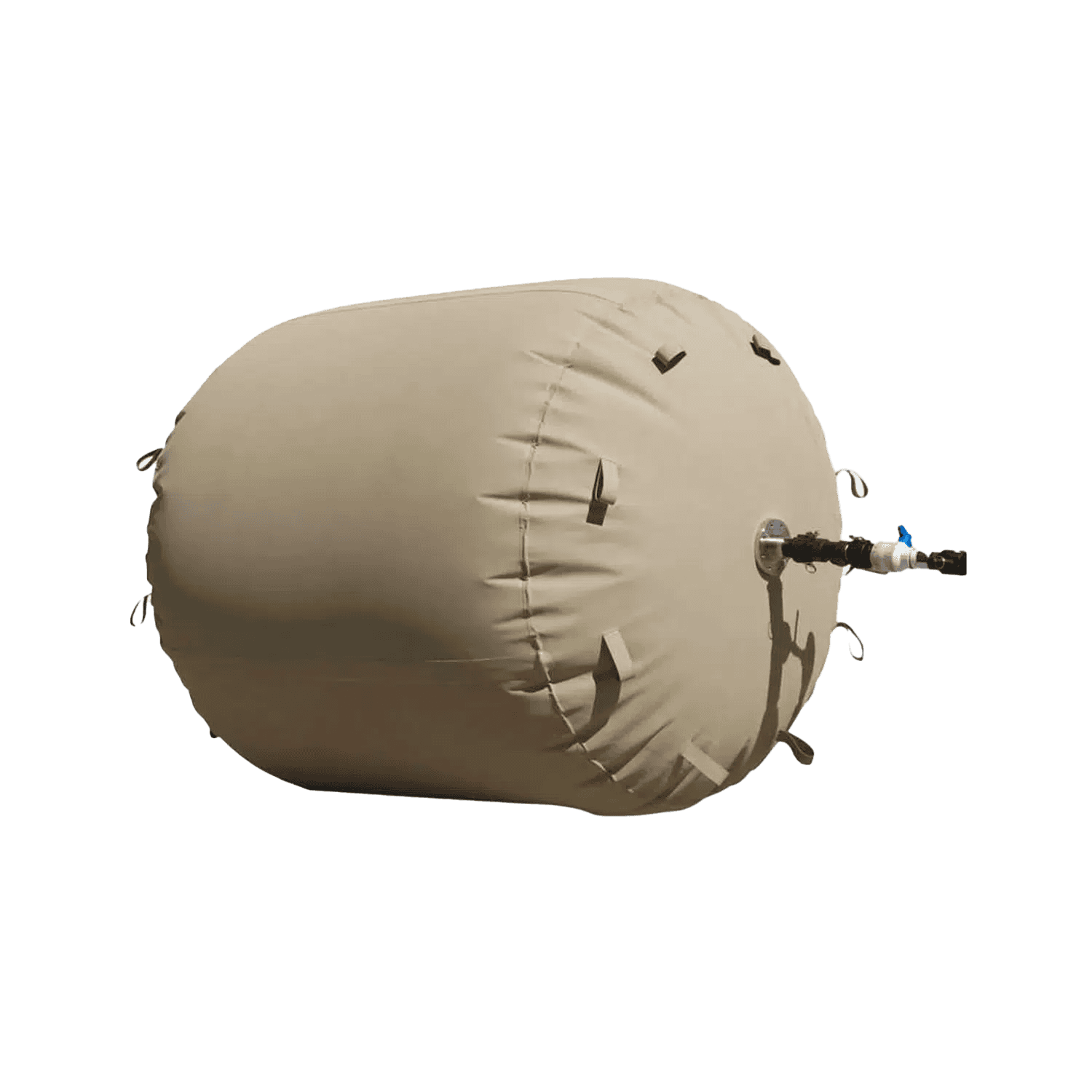
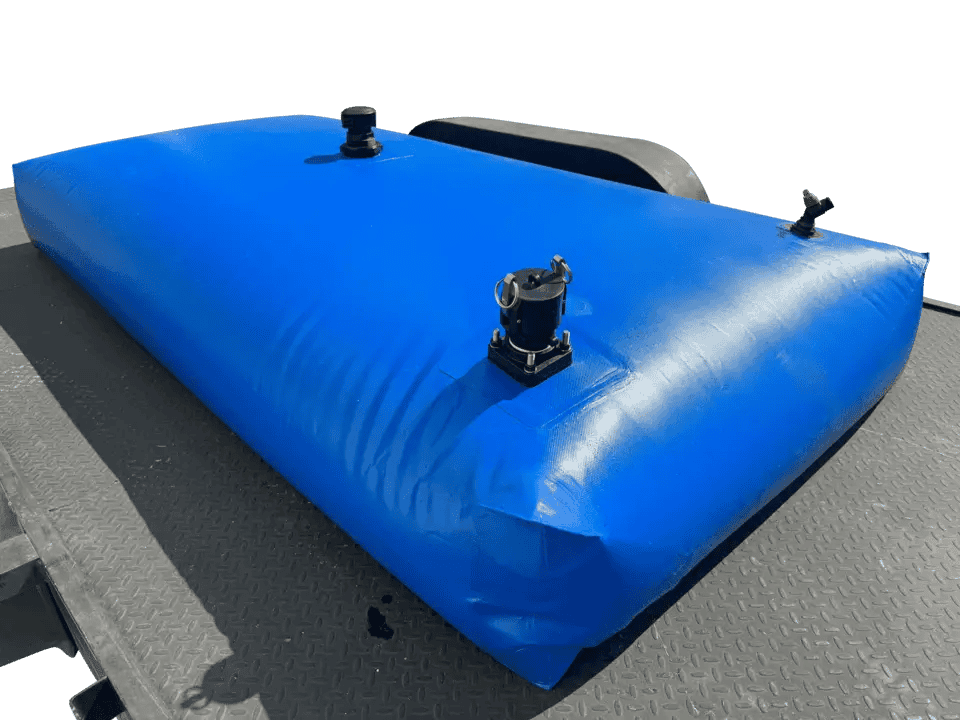
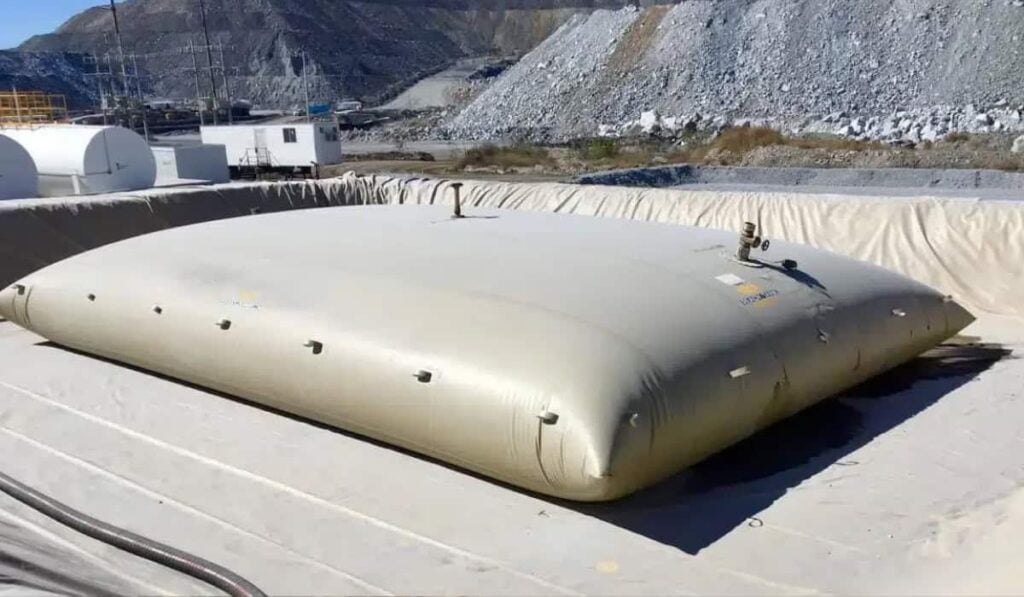
Water bladders are enclosed flexible tanks used for potable, process, firefighting, or general-purpose water. When empty, they can be folded or rolled for transport and positioned near purification or distribution equipment. Potable-water systems require suitable materials, fittings, cleaning procedures, and protected filling and dispensing arrangements to preserve water quality.
Fuel Bladders
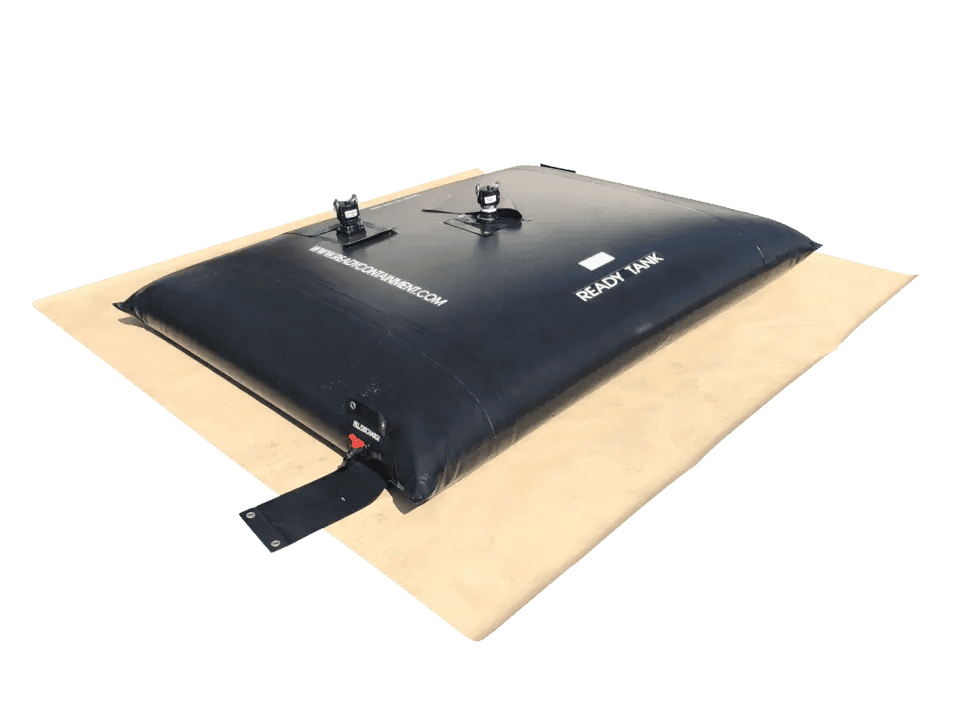
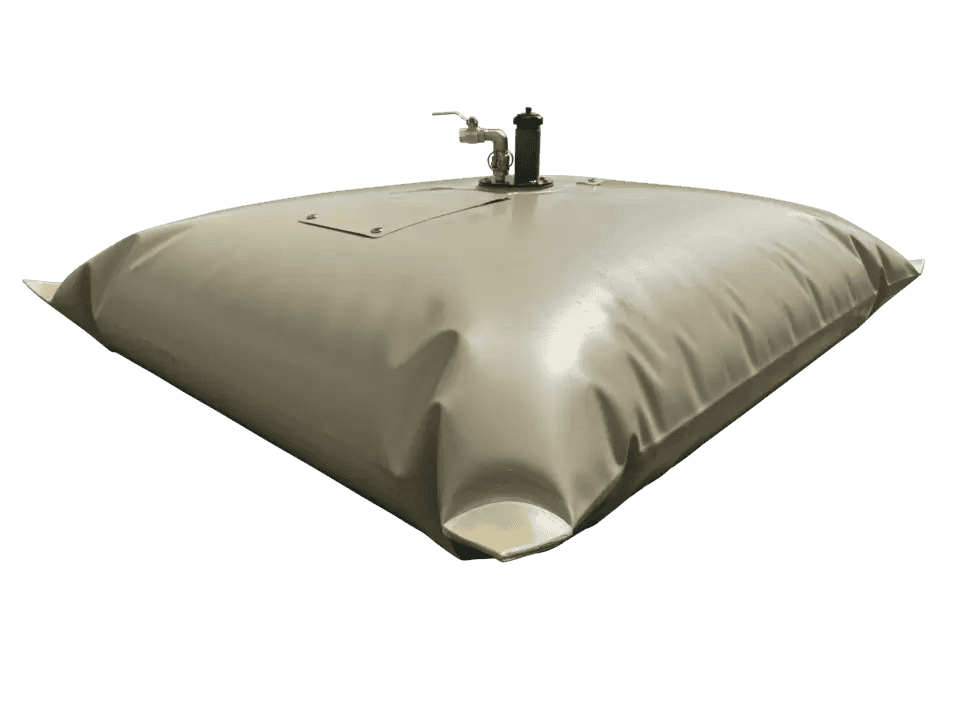
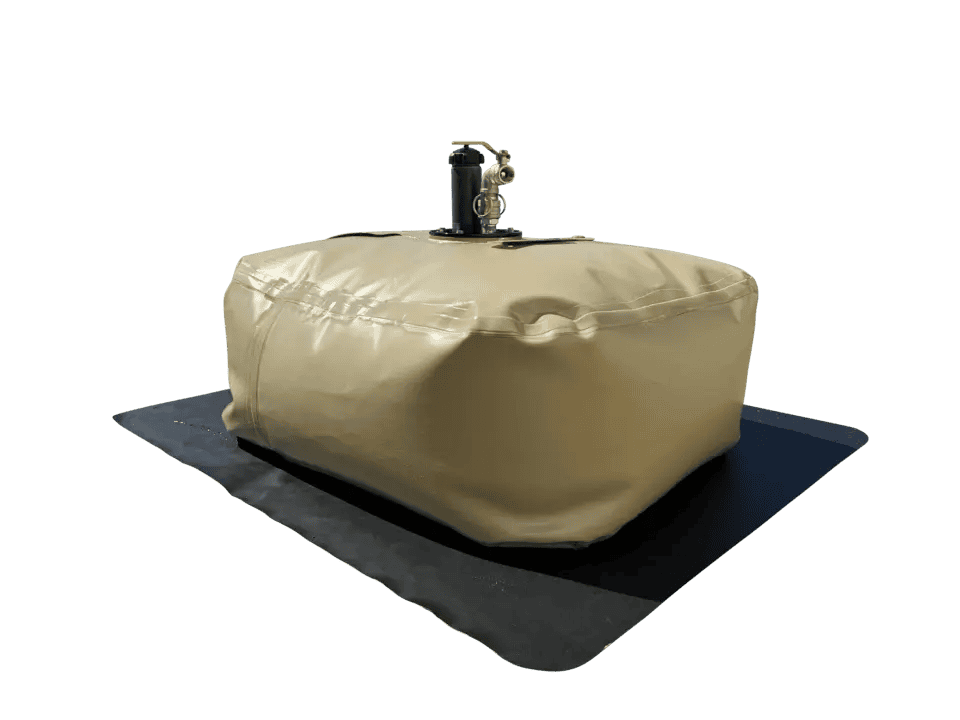
Fuel bladders provide flexible bulk storage for compatible aviation, ground vehicle, generator, and other operational fuels. They can form part of expeditionary fuel farms or dispersed refueling points connected to transfer and dispensing equipment. Compatibility must include seams, seals, valves, fittings, and transfer equipment. Fuel operations also require filtration, water and sediment control, bonding and grounding, overfill prevention, and ignition-source control.
Chemical Bladders
Chemical bladders are selected around the compatibility requirements of the stored liquid. Construction depends on chemical composition, concentration, temperature, storage duration, and interaction with coatings, polymers, elastomers, and metallic fittings. Compatibility should cover the complete system where degradation, permeation, swelling, or contamination could affect safety or product quality.
Subsea & Marine Bladders
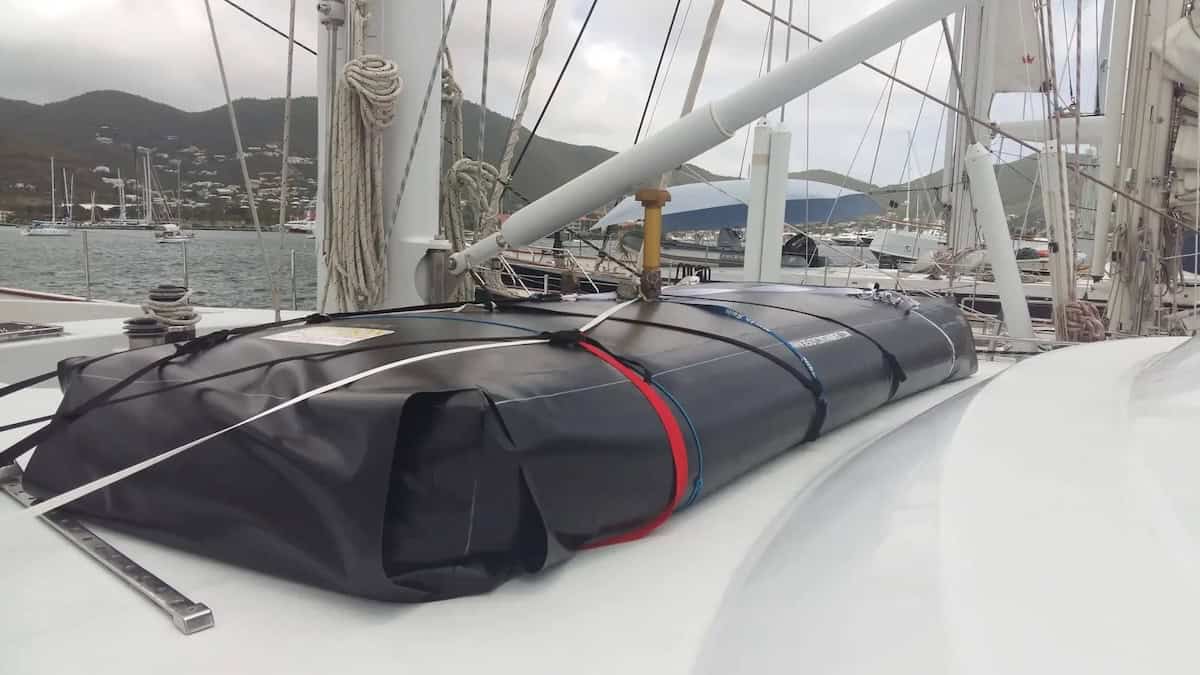
Subsea and marine bladders support temporary liquid storage or transfer in offshore, coastal, harbor, and littoral environments. Designs may need to account for seawater exposure, hydrostatic pressure, buoyancy, corrosion, anchoring, hose routing, and restricted inspection access. Requirements vary significantly between surface, vessel-mounted, submerged, and seabed installations.
Onion Tanks
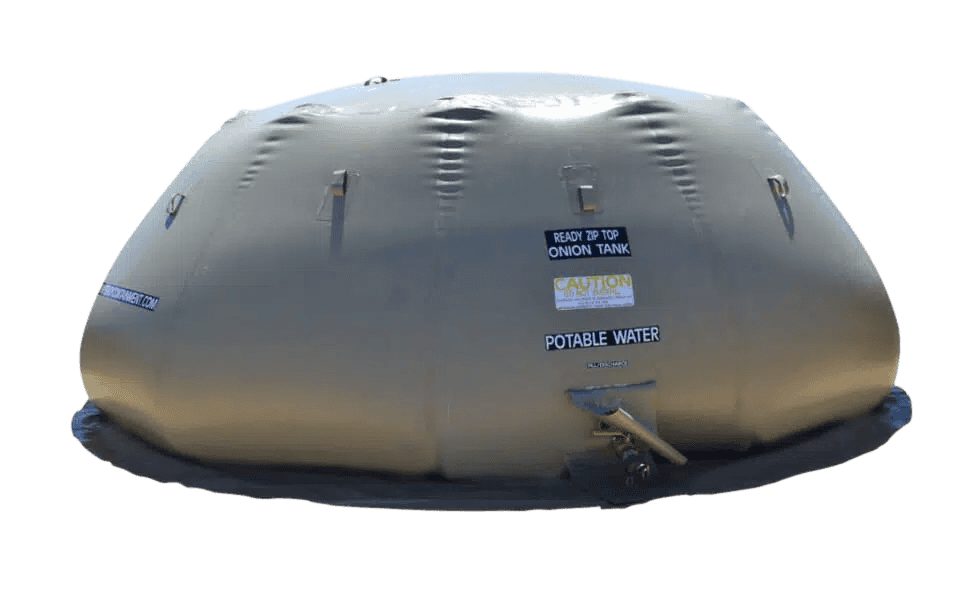
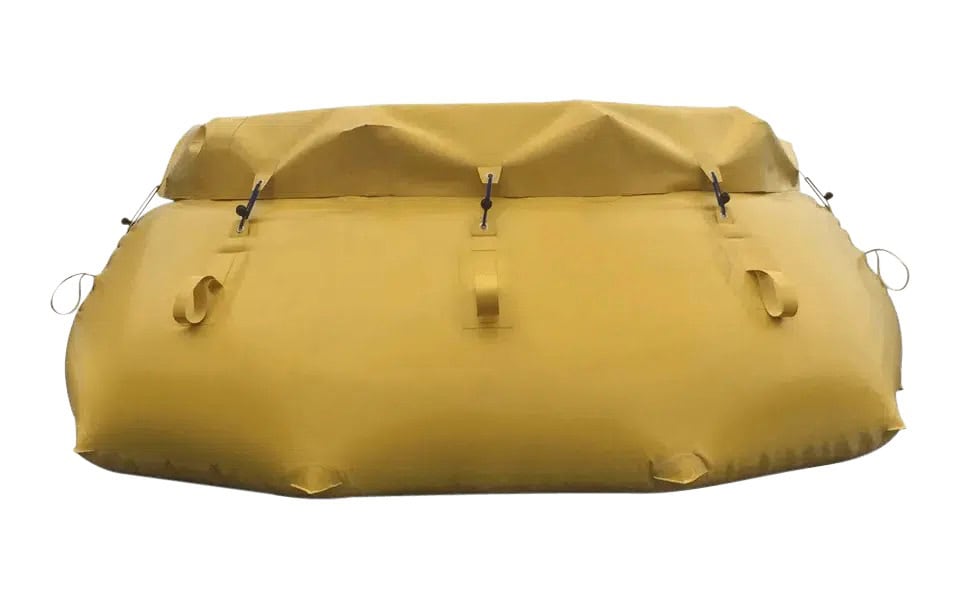
Onion tanks are collapsible, self-supporting open-top tanks used for water storage, firefighting supply, liquid collection, treatment processes, and applications where rapid access is useful. Their open configuration simplifies filling and extraction but increases exposure to debris, contamination, evaporation, and weather. Covers, controlled access, and sanitation measures may therefore be required.
Spill Containment Berms & Tank Containment Systems
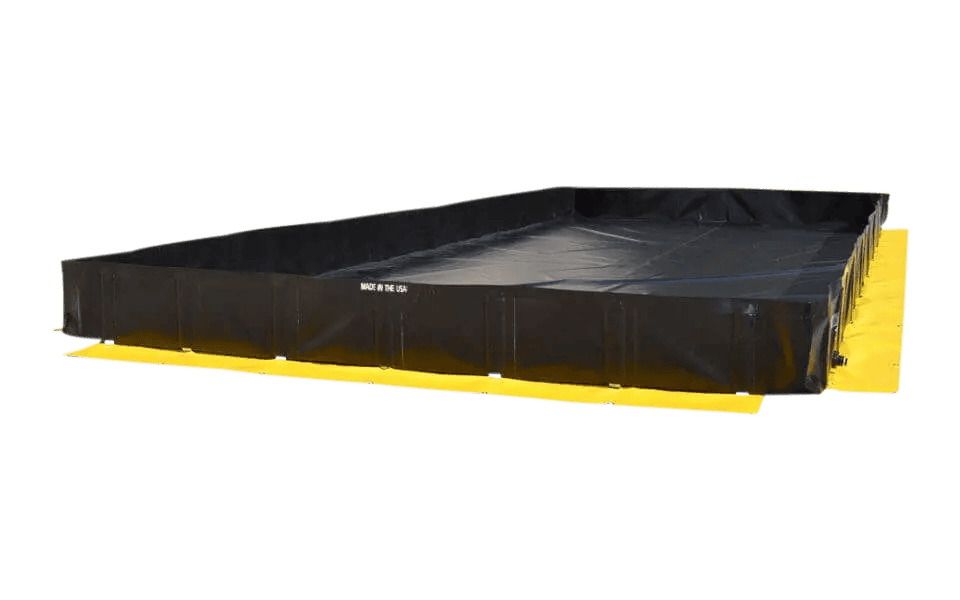
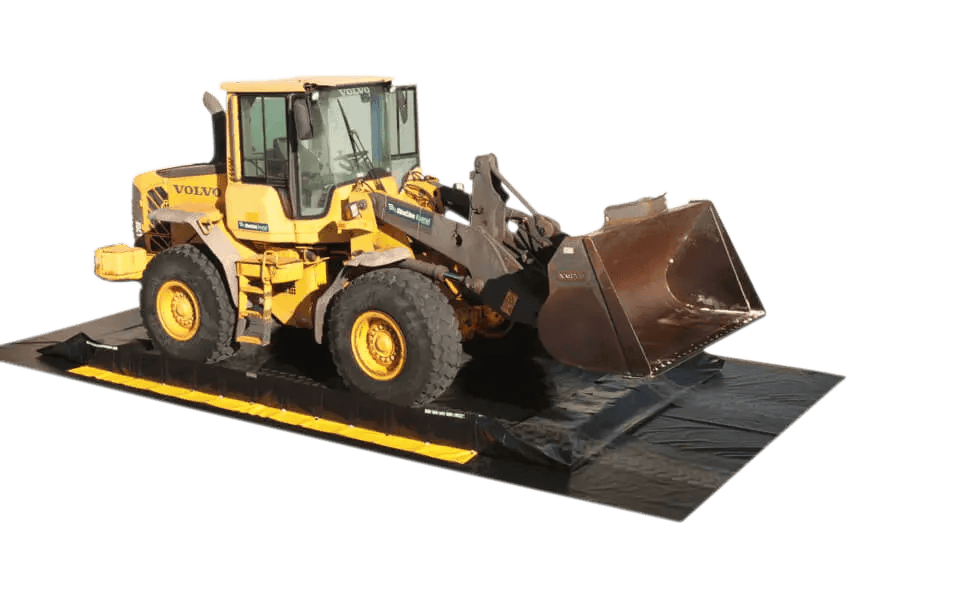
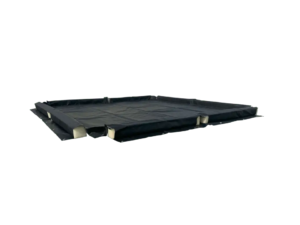
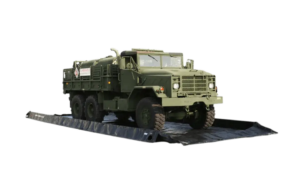
High-traffic spill containment berms from Ready Containment
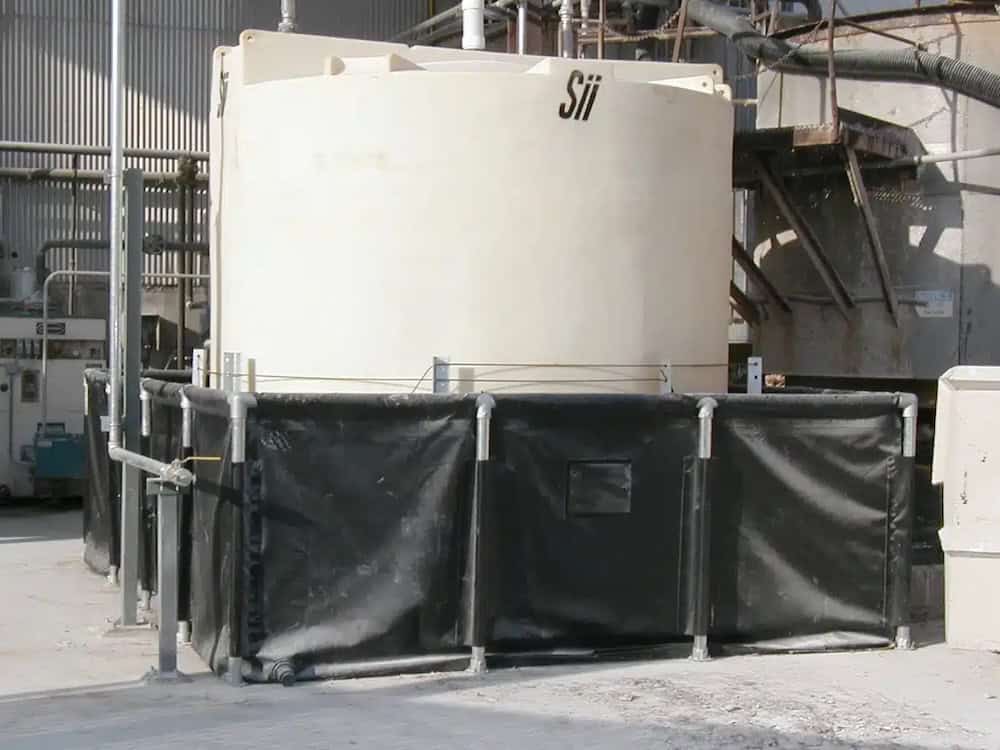
Spill containment berms and tank containment systems provide secondary containment around bladders, rigid tanks, drums, transfer points, and other liquid-handling equipment. Flexible berms suit deployable operations because they pack compactly and assemble around temporary sites. Capacity, wall design, chemical resistance, drainage, vehicle access, and site grading should reflect the primary system and consequences of a leak or overfill.
Fuel Tanks
Rigid and semi-rigid deployable fuel tanks provide an alternative where durability, structural protection, handling, or transport integration is more important than minimum packed volume. They may be incorporated into modular fuel installations with transfer and dispensing equipment. Selection should consider lifting, capacity, fuel compatibility, venting, connections, transfer rate, and inspection access.
Military Applications of Deployable Liquid Storage Systems
Deployable storage supports military operations wherever fuel, water, or specialist liquids must be positioned independently of permanent infrastructure. The storage system forms part of a wider logistics chain covering transport, distribution, replenishment, inspection, and spill control.
Forward Operating Bases and Temporary Installations
Forward bases and temporary facilities may require storage before permanent infrastructure can be established. Flexible tanks and modular systems allow capacity to be scaled to force size, consumption, replenishment intervals, and deployment duration. Site preparation, drainage, containment, access, security, and connection to distribution equipment remain important.
Distributed and Dispersed Operations
Distributed operations can require liquid stocks to be divided across smaller locations rather than concentrated at one logistics hub. Deployable tanks allow storage nodes to be relocated, expanded, or reduced as operating areas change. Planners must balance resilience against added transport, pumping, inventory monitoring, protection, maintenance, and resupply requirements.
Aviation Ground Support
Expeditionary aviation requires fuel storage and transfer infrastructure away from established fuel farms. Deployable fuel tanks can connect to filtration, water-separation, transfer, and dispensing equipment. Design must account for aviation-fuel compatibility, cleanliness, flow rates, contamination control, and the operational tempo of supported aircraft.
Land Forces and Mobile Logistics
Land forces use deployable liquid storage to support vehicles, generators, engineering equipment, personnel, and temporary facilities. Storage may be positioned at logistics nodes or moved as operating areas shift. Capacity must be balanced against transport burden, terrain, setup, replenishment frequency, survivability, and recovery for redeployment.
Maritime and Littoral Operations
Maritime and littoral forces may require liquid storage ashore, afloat, or near the shoreline. Flexible systems can support temporary fuel and water infrastructure where ports or permanent storage are unavailable. Marine operations add requirements for corrosion resistance, anchoring, transfer hoses, tidal conditions, saltwater exposure, stability, and ship-to-shore integration.
Humanitarian Assistance and Disaster Response
Military forces supporting humanitarian assistance or disaster response may need temporary water and fuel storage after local infrastructure is damaged or overwhelmed. Deployable tanks can support water purification, generators, medical facilities, vehicle fleets, and distribution points. Potable-water installations require compatible materials, protected connections, routine inspection, and contamination control throughout storage and dispensing.
Remote Infrastructure and Contingency Operations
Remote communications sites, surveillance installations, field hospitals, engineering projects, and contingency facilities can require storage for extended periods. Deployable systems establish capacity without permanent construction. Longer deployments increase the importance of inspection, cleaning, maintenance, environmental protection, repair, inventory control, and recovery planning.
Safety, Qualification & Military Standards
Qualification requirements vary with the stored liquid, operating environment, procurement authority, and storage-system type. Military specifications can define requirements for particular equipment classes, while environmental standards support test programs tailored to expected service conditions.
MIL-PRF-32233: This performance specification addresses collapsible military fuel storage tank assemblies in 3,000, 10,000, 20,000, 50,000, and 210,000 U.S. gallon capacities.
MIL-STD-810: This standard provides environmental engineering guidance and laboratory test methods based on environmental tailoring. It does not prescribe one universal environmental test program for every item of defense equipment.
Qualification should be determined from the complete procurement and operational requirement. Liquid compatibility, environmental exposure, transport loads, interfaces, fuel or water quality controls, secondary containment, static control, inspection, repair, and service life can all affect test and acceptance criteria.
Emerging Developments in Deployable Liquid Storage
Development increasingly focuses on reducing logistics burden while improving modularity, monitoring, and operational awareness. Improvements can involve the tank as well as surrounding sensors, pumping equipment, and digital systems.
Improved flexible materials: Advanced coated fabrics and construction methods can reduce weight while maintaining resistance to abrasion, weather, handling, and compatible stored liquids.
Modular storage architectures: Interchangeable tanks, pumps, filters, manifolds, hoses, and dispensing equipment allow capacity and distribution layouts to adapt to changing requirements.
Digital inventory monitoring: Electronic level sensing, flow measurement, and connected monitoring can improve stock visibility and replenishment planning.
Leak monitoring: Sensors and automated monitoring can identify unexpected liquid loss and support earlier investigation of containment or equipment faults.
These developments are moving deployable liquid storage toward integrated logistics systems in which storage, transfer, containment, monitoring, and distribution operate as connected capabilities rather than isolated equipment.
Ready Containment provides rugged, rapidly deployable spill containment and flexible liquid storage solutions for fuel, water, chemicals and other mission-critical fluids in demanding defense operations
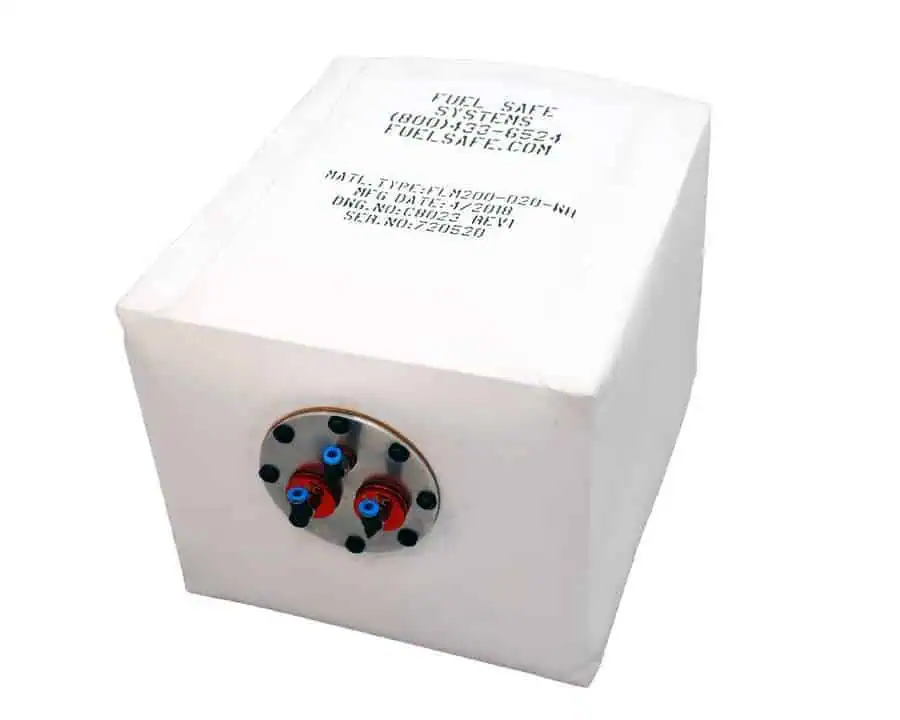
UAV Propulsion Tech is going to market Fuel Safe Systems’ fuel bladder & tank systems to the United States UAV market, expanding the reach of their specialized expertise
The latest defense technology news, straight to your inbox.
Get our weekly roundup of technology developments, new products and industry news.
THANK YOU FOR SIGNING UP
Thanks for joining us. Check your inbox.
We've sent you an email. Click the confirmation link to complete your subscription to the weekly eBrief. In the meantime, explore the latest news, suppliers and technologies on DA.
Advancing Defense Capability Through Strategic Collaboration
Defense Advancement works with major OEMs to foster collaboration and increase engagement with SMEs, to accelerate innovation and drive defense capabilities forward.