Showcase your capabilities
If you design, build or supply AIS Beacons, create a profile to showcase your capabilities and connect with visitors who have an active requirement for your solutions.




AIS beacons combine Automatic Identification System (AIS) VHF signaling with locator-beacon functionality to transmit precise GNSS/GPS-based distress or tracking data across maritime safety and defense networks. These systems support Man Overboard (MOB) retrieval, asset tracking, and maritime security by broadcasting standardized AIS messages detectable by naval vessels, coastal stations, and integrated command platforms.
This category showcases suppliers of AIS locator beacons featuring rugged housings and dual-frequency AIS transmission for reliable use on naval vessels, military personnel, and ocean buoys.
Read the Technology Overview
Marine & Ground-Based Tracking Beacons: Track, Monitor, & Safeguard Critical Naval & Defense Assets

If you design, build or supply AIS Beacons, create a profile to showcase your capabilities and connect with visitors who have an active requirement for your solutions.

An AIS-compatible beacon integrates two key technologies:
By combining both, AIS-compatible beacons function like PLB and AIS devices: transmitting distress signals via the AIS network, ensuring nearby vessels, coastal stations, or military platforms receive them.
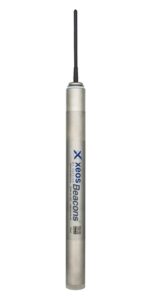
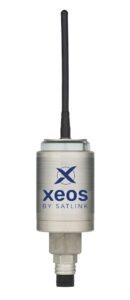
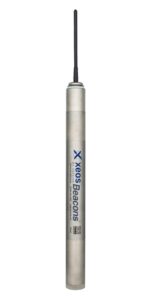
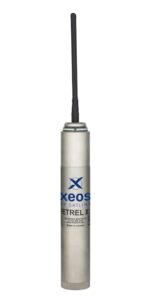
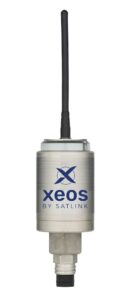
Petrel X7 AIS Beacon from Xeos by Satlink.
Core features of AIS locator beacons:
In search and rescue (SAR) and combat scenarios, an AIS-compatible personal AIS MOB beacon (man‑over‑board) allows fallen-overboard or stranded personnel to transmit distress location, visible to nearby naval escorts, patrols, and allied vessels.
Whether deployed by special forces, reconnaissance drones, or unmanned surface vessels (USVs), the AIS vessel tracking function ensures real-time awareness of mission-critical hardware, aligned with operational dashboards.
In coastal, shallow-water theaters, AIS beacons integrated on buoys or expendable sensor packages (including AIS buoy beacons) assist in range safety, navigation marking, and delineation of restricted zones.
Navies and coast guards use AIS locators to monitor suspicious small craft. AIS tracker devices allow continuous surveillance in conjunction with maritime domain awareness frameworks.
Each device is built to AIS standard but adapted to specific form factors and ruggedness levels suitable for military missions.
AIS beacons are compatible with:
Their intelligence-sharing capability improves transparency among allied units and ensures reliable tracking even in congested or contested waters.
AIS-compatible locator beacons intended for defense use may need to comply with several MIL-STDs and NATO standards, ensuring ruggedness, electromagnetic compatibility, and performance reliability:
These standards ensure AIS locator beacons withstand harsh environments, don’t interfere with other electronics, and can seamlessly operate with allied forces’ communication systems.
When choosing AIS locators for defense use, consider:
In defense deployments, AIS locator beacons bridge standardized maritime identification systems with tactical survival and tracking needs. Complying with MIL‑STD‑810H, 461G, 1275, 1474E, STANAG 4603, and IEC 61097‑14 ensures rugged, interoperable performance. Whether used for AIS MOB beacon crew recovery, AIS buoy beacon deployment, or AIS vessel tracking, these devices offer encrypted, route-aware, real-time location awareness vital for commanders and SAR teams. Their adherence to the AIS standard ensures compatibility with commercial and military maritime traffic systems, enhancing mission safety and coordination across allied forces.


 Searching Companies & Products