


Batteries
Discover cutting-edge solutions from 6 leading global suppliers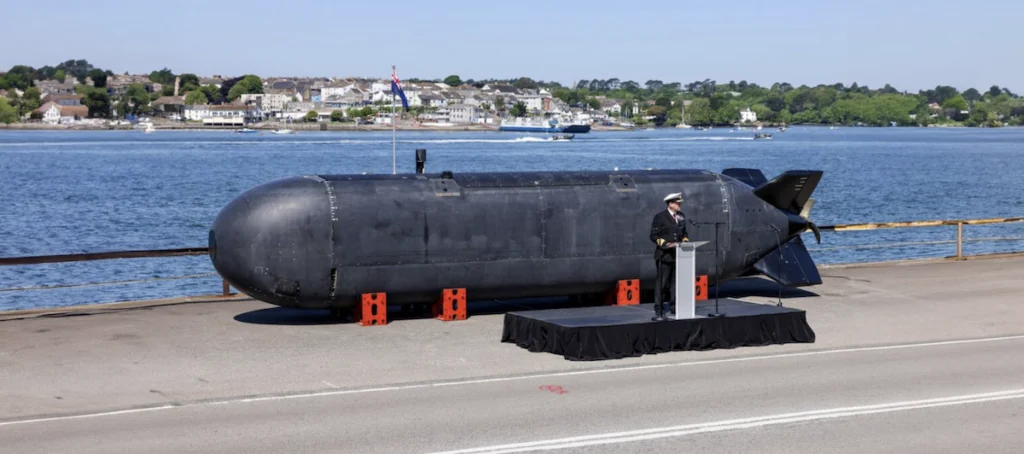
Lithium-sulfur battery cells developed by Li-S Energy have successfully operated under simulated ocean depths of 1,000 metres during pressure vessel testing conducted in collaboration with undersea systems specialist MSubs.
The evaluation was carried out at Li-S Energy’s Battery Testing Centre in Geelong during the June 2026 quarter using an MSubs pressure vessel. During the programme, 10 Ah lithium-sulfur cells underwent repeated pressure cycles equivalent to diving to 1,000 metres, or 100 bar, and returning to the surface. Post-test inspections revealed no mechanical damage, swelling, leakage, or loss of mass, while cell voltage remained stable throughout the testing cycle and for 24 hours afterwards. The test report was delivered to and accepted by MSubs, confirming that the cells continued to deliver propulsion current while subjected to ambient subsea pressure profiles.
Dr Steve Rowlands, Chief Technology Officer of Li-S Energy, said, “This is a result the whole team is proud of. The pressure at 1,000 metres is one of the hardest environments you can ask a battery cell to work in. Our cells did not just survive it, they kept delivering propulsion current through repeated dives and came back to the ‘surface’ undamaged, with no change in mass and a textbook recovery to open-circuit voltage. That removes a key risk for using our cells in water-filled UUVs at ambient pressure, and it reiterates to us that the cell design is fundamentally right for this application.”
The demonstrated pressure tolerance eliminates the requirement for heavy pressure containment vessels or extensive buoyancy foam in submersible designs. In addition to delivering approximately twice the energy density of conventional lithium-ion batteries with lower overall weight and near-neutral buoyancy, the cells can charge and discharge at temperatures of 5°C, matching representative subsea operating conditions. These physical and electrochemical characteristics address primary constraints for uncrewed underwater vehicles, where mission endurance depends directly on battery mass and available energy.
Rob Shaw, Engineering Director at MSubs, commented, “Pressure tolerance was a major gate in our feasibility assessment, and Li-S Energy’s cells have passed it convincingly. Cells that keep delivering propulsion current through repeated dives to 1,000 metres, and surface with no damage and a stable voltage, are precisely the evidence we needed to see. We are very pleased with the outcome. Pressure tolerance, low weight and near-neutral buoyancy are attractive features in a battery system for high-endurance UUV propulsion, and these results give us real confidence as we continue the qualification process with Li-S Energy.”
Headquartered in Plymouth, UK, MSubs designs and manufactures crewed and uncrewed underwater systems for commercial clients as well as defence organisations, including the UK Ministry of Defence, the US Navy, and US Special Operations Command. Among its platforms is XV Excalibur, the Project CETUS extra-large uncrewed underwater vehicle (XLUUV) handed over to the Royal Navy in December 2025. The partnership between the two companies, originally announced in December 2025, evaluates lithium-sulfur technology for large-scale propulsion systems across high-endurance subsea platforms. This progress comes amid expanding international procurement of large submersibles, including the Australian government’s A$1.7 billion commitment to its Ghost Shark programme in 2025, alongside commercial requirements for subsea inspection, offshore energy, and seabed surveys.
Following the successful 100-bar trials, Li-S Energy and MSubs have outlined the next phases of their qualification programme. The upcoming stages will assess performance in pressure vessels at greater simulated depths, evaluate cell charging and discharging at depth, and map thermal operating profiles representative of subsea environments. Pending the results of these assessments, the companies intend to trial a full battery pack during an open-water dive mission aboard an operational extra-large uncrewed underwater vehicle.