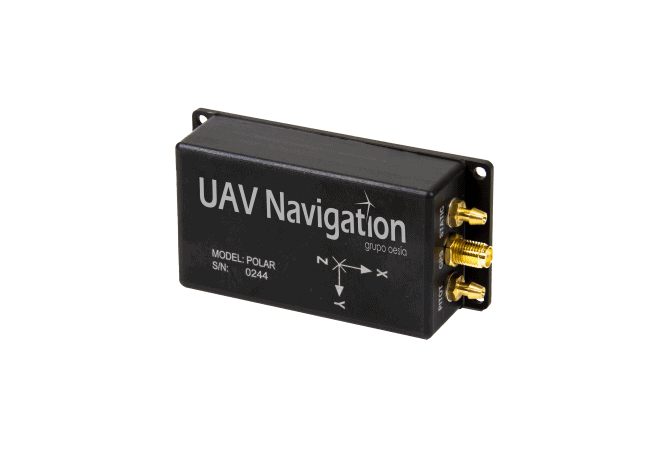




UAV Navigation is a provider of guidance, navigation, and control technologies designed for unmanned aerial systems operating in complex and contested environments. The company focuses on delivering solutions that enable autonomous operation, coordinated flight, and mission execution without reliance on continuous external inputs. Its capabilities are particularly relevant in applications involving decoy unmanned aerial systems, where precision, adaptability, and operational efficiency are critical.
Unmanned aerial systems have become integral to modern defense strategies, extending beyond intelligence gathering to include active roles in airspace protection. Among these applications, decoy platforms serve as a tactical mechanism for safeguarding higher-value assets such as crewed aircraft and surveillance systems. These platforms are engineered to replicate the radar and electronic characteristics of more significant targets, introducing ambiguity into the operational environment and complicating adversary response.
The effectiveness of decoy systems is not limited to signal imitation. Their presence alone introduces uncertainty, requiring opposing forces to allocate time and resources to identification and potential engagement. This diversion reduces the efficiency of defensive systems and allows genuine assets to operate with reduced exposure. By compelling adversaries to respond to uncertain threats, decoy platforms impose both operational strain and strategic complexity.
In addition to immediate tactical benefits, these small unmanned systems contribute to longer-term effects on opposing forces. The requirement to engage or track multiple potential threats leads to increased expenditure of resources, both material and cognitive. Over time, this sustained pressure can degrade operational readiness and force decision-making under constrained conditions. When equipped with limited payload capabilities, decoy systems can also contribute to direct disruption, further amplifying their role in attrition-based strategies.
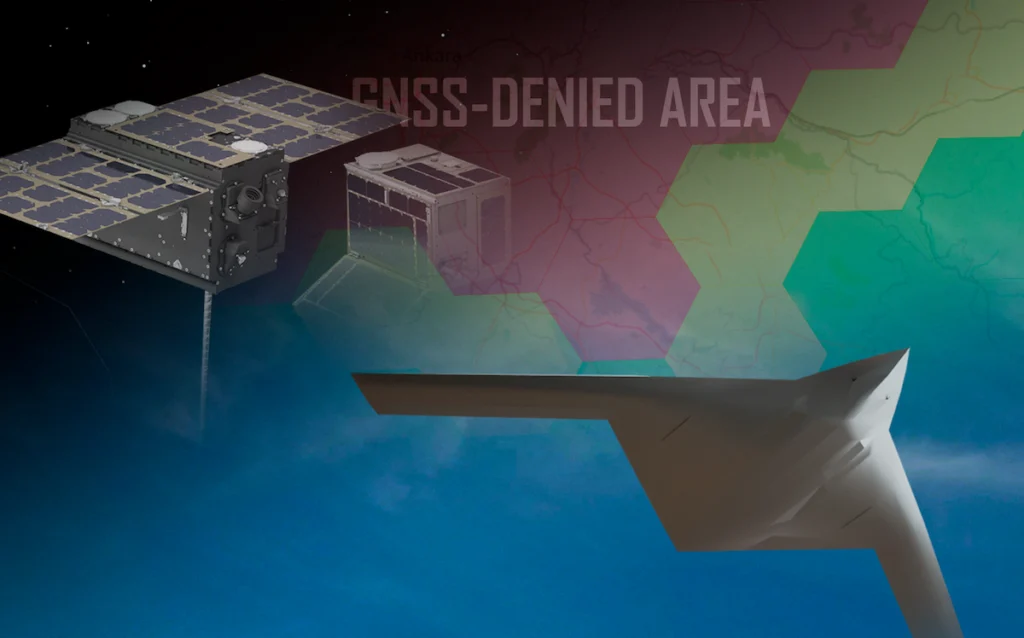
To achieve these outcomes, specialized flight control systems are required. UAV Navigation develops solutions that support advanced maneuvers such as deployment from airborne platforms, coordinated swarm behavior, and autonomous mission execution. These systems are designed to function in environments where communication links may be unreliable or unavailable, and where satellite-based positioning signals may be disrupted.
Effective decoy operations depend on robust guidance, navigation, and control architectures capable of managing multiple platforms simultaneously. This includes maintaining formation integrity, ensuring safe separation, and adapting to dynamic operational conditions. At the same time, system design must account for cost constraints associated with platforms that are not intended for extended service life. UAV Navigation addresses this requirement through optimized solutions that balance performance with production efficiency.
Coordinated Flight and Swarm Operations
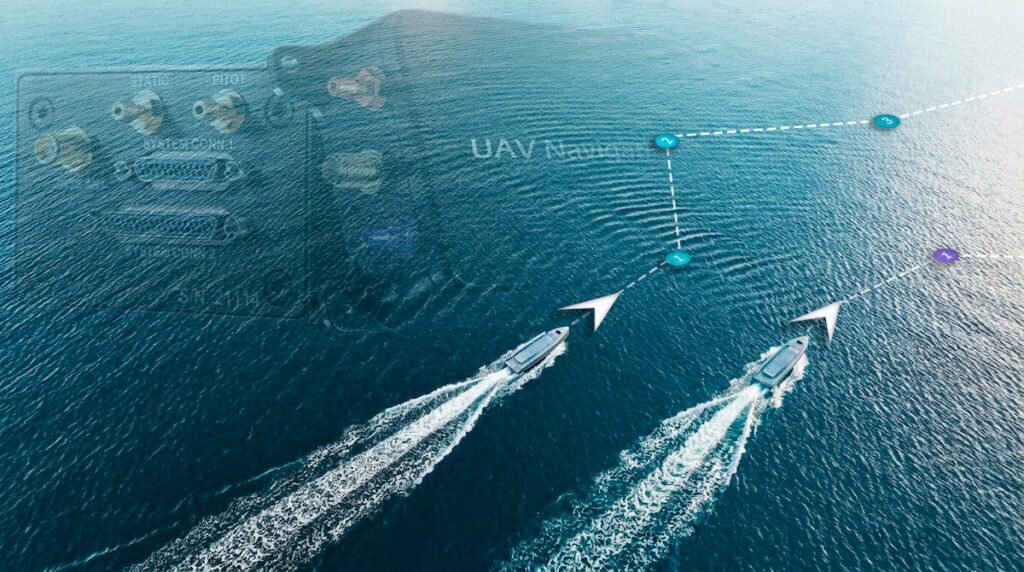
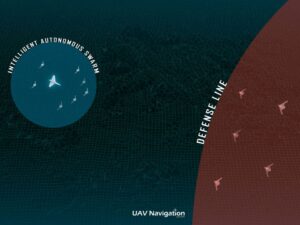
Swarm functionality enables multiple unmanned systems to operate as a cohesive unit, adjusting their configuration in real time to influence detection and tracking systems. Through coordinated positioning and movement, these platforms can alter their collective radar signature, creating the appearance of larger or more complex targets. Variations in formation can also produce intermittent signal returns, complicating tracking efforts and increasing the likelihood of misinterpretation.
This coordinated behavior can overwhelm defensive systems by presenting multiple evolving targets, forcing rapid assessment and response. In doing so, adversary systems may reveal operational parameters such as detection range and response timing. This information can be used to inform subsequent mission planning and improve overall operational effectiveness.
Deployment from Airborne Platforms
A defining capability of decoy unmanned systems is their ability to be deployed from crewed aircraft during flight. This method allows rapid insertion into operational areas without dependence on ground infrastructure. UAV Navigation supports this functionality through control systems that manage the transition from deployment to independent flight, even under challenging conditions.
Deployment algorithms are responsible for initiating the mission immediately following release. These systems must account for variables such as initial velocity, altitude, and proximity to the launch platform. Reliable activation and stabilization are essential to ensure safe separation and mission continuity. Autonomous navigation capabilities further ensure that the system can proceed with its objectives even if communication with the launch platform is interrupted.
Adaptive mission logic allows the system to modify its behavior based on environmental conditions and operational requirements. This flexibility enhances the effectiveness of the decoy by enabling it to respond to evolving scenarios without external intervention.
Conclusion
Decoy unmanned aerial systems represent a practical and efficient approach to enhancing air defense operations. By introducing uncertainty and requiring adversaries to expend resources on low-cost targets, these systems provide both protective and strategic advantages. Their ability to expose defensive systems and gather operational insights further increases their value.
The effectiveness of such platforms depends on achieving a balance between capability and cost. UAV Navigation contributes to this objective by delivering guidance, navigation, and control technologies that enable autonomous operation, coordinated swarm behavior, and deployment from airborne platforms. These capabilities support scalable production and deployment while maintaining operational impact.
Through this approach, decoy systems serve not only as protective measures but also as tools for shaping the operational environment, reducing adversary effectiveness, and supporting informed decision-making in modern defense scenarios.