




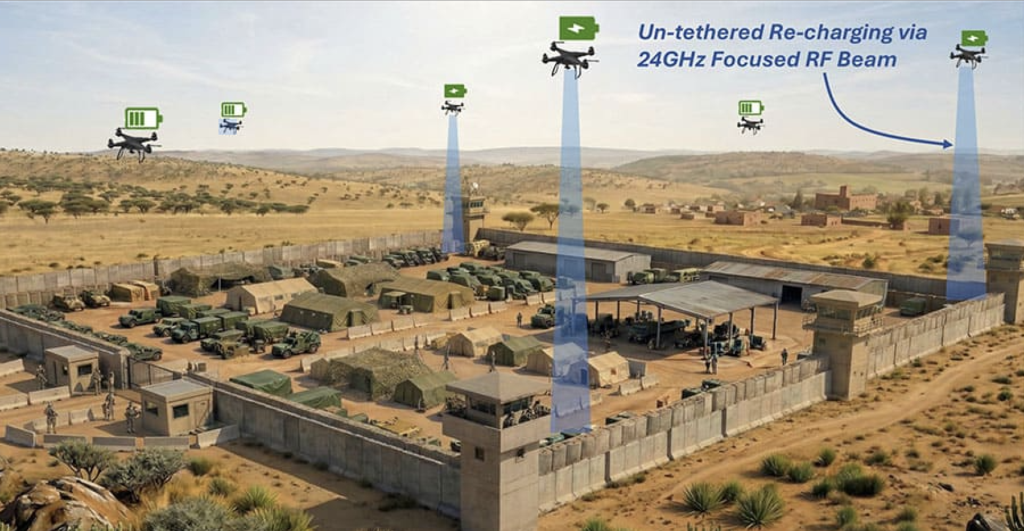
Maintaining persistent airborne surveillance is a challenge for small unmanned aircraft systems (sUAS), with limited battery endurance often requiring frequent landings and battery changes. GuRu Wireless is addressing this limitation through its 24 GHz wireless power transfer technology, which delivers energy to aircraft while they remain airborne.
In this Q&A, the company explains how its approach works, its potential to support continuous intelligence, surveillance and reconnaissance (ISR) operations, and the technical developments needed to enable longer-endurance, multi-aircraft missions in defense and national security environments.
1. Could you provide an overview of GuRu Wireless’ wireless power transfer technology and explain how it is enabling new possibilities for persistent unmanned systems in defense and national security applications?
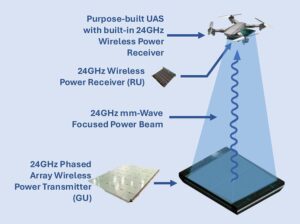
GuRu Wireless uses focused 24 GHz radio-frequency energy to deliver electrical power to remote platforms without a physical connection. For persistent flight small-UAS (sUAS), a ground-based Generator Unit transmits energy to an airborne Recovery Unit, which converts it into DC power for the aircraft and its battery.
For defense and national security users, this enables a different approach to sUAS endurance. Aircraft can replenish energy while airborne, creating the opportunity to maintain an observation capability without recurring landings for battery replacement.
Our focus is on operational needs such as base, border, port, and critical infrastructure security, including aerial sensing that can support counter-UAS operations. We are developing these capabilities around validated mission requirements, with particular emphasis on aircraft coordination, sensor integration, and a practical path to field assessment and transition.
2. Persistent ISR is a key application for GuRu’s technology. How can continuous in-flight wireless power change the way military forces conduct surveillance and intelligence-gathering missions compared with conventional battery-powered sUAS
Conventional battery endurance often determines how long a small UAS can observe an area before it must leave its station. Those interruptions can break surveillance continuity, complicate aircraft handoffs, and increase operator workload.
In-flight wireless power allows mission planning to place greater emphasis on the observation requirement. Aircraft can rotate between charging and mission positions, with the objective of maintaining persistent coverage and custody of a developing threat.
That continuity can help operators understand patterns of activity, follow events over time, and provide a more consistent aerial view to decision makers. Maintaining custody also requires suitable sensors, communications, and coordinated handoffs; endurance is an enabling part of that broader capability.
The opportunity is especially relevant to sustained observation around fixed sites and defined areas where the power system can be positioned to support the mission.
3. What are the key technical challenges involved in reliably delivering wireless power to moving UAS, and how does GuRu’s beamforming and smart lensing technology address factors such as aircraft position, range and power efficiency?
The central challenge is delivering sufficient usable energy to an aircraft whose position, orientation, and power demand can change throughout a mission.
GuRu’s beamforming and smart RF lensing technology controls the transmitted energy distribution, allowing the system to steer and focus energy onto the receiver. This helps concentrate power where it can be captured, while transmitter and receiver dimensions establish important parameters of performance at a given distance.
Aircraft integration is equally important. Receiver placement, weight, thermal management, and electrical compatibility affect how much benefit reaches the mission.
Our operating concept coordinates power delivery with aircraft flight and battery management. Aircraft replenish energy within a defined charging region and retain battery reserves for mission excursions and contingencies. Reliable performance ultimately requires sufficient energy margin across the full operating cycle, including representative environmental conditions.
4. For defense operators working in austere or infrastructure-limited environments, what advantages could wireless power delivery offer in terms of logistics, sustainment and reducing reliance on battery replacement and charging infrastructure?
Wireless power could reduce the recurring handling associated with short aircraft endurance: retrieving aircraft, replacing batteries, managing charging queues, and relaunching missions. For a sustained observation requirement, those activities can impose a significant personnel burden.
A ground-based power-beaming system creates the opportunity to centralize energy delivery while aircraft remain airborne. Depending on the mission, this could reduce battery inventory requirements and repeated trips to aircraft recovery or charging locations.
The system still requires an electrical energy source, and batteries remain important for reserves and contingency operation. The sustainment assessment must therefore include the Generator Unit, its power supply, transportability, maintenance, and site setup.
The relevant measure is the total effort required to sustain the mission. Our objective is to help operators maintain coverage with fewer energy-related interruptions and less routine intervention.
5. What are the next major developments in GuRu’s defense technology, particularly in areas such as increased power and range, multi-UAS operations, reduced size, weight and power, and integration with existing military systems?
Our next developments focus on scaling mission capability while making the system easier to integrate and operate. Priorities include higher delivered power, greater practical range, improved efficiency, lighter airborne receivers, and coordinated autonomous operation of multiple sensor-equipped aircraft.
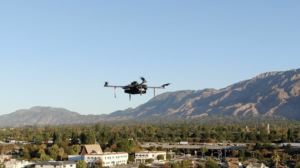
Our demonstrated configurations provide distinct foundations for this work: TRL-5 indoor dual-drone persistent flight without ISR payloads, and a live-demonstrable TRL-7 single-drone capability with an ISR payload. We also have video evidence of a larger TRL-6 system with a larger aircraft and more capable ISR payload that we use for on-site demonstrations. These are separate configurations with different maturity levels.
For defense integration, priorities include compatibility with aircraft power systems, flight autonomy, payloads, and command-and-control workflows. Government and operational partners are central to defining assessment criteria and transition plans. The next step is to demonstrate mission value under representative conditions and shape development around the needs of the intended user.
Find out more about GuRu Wireless’ RF power beaming technology for tactical drones.