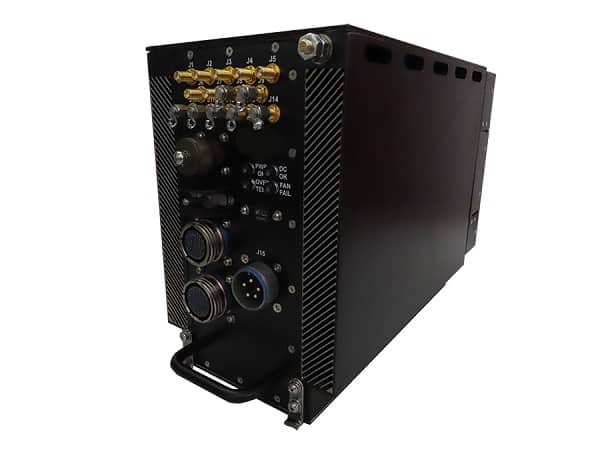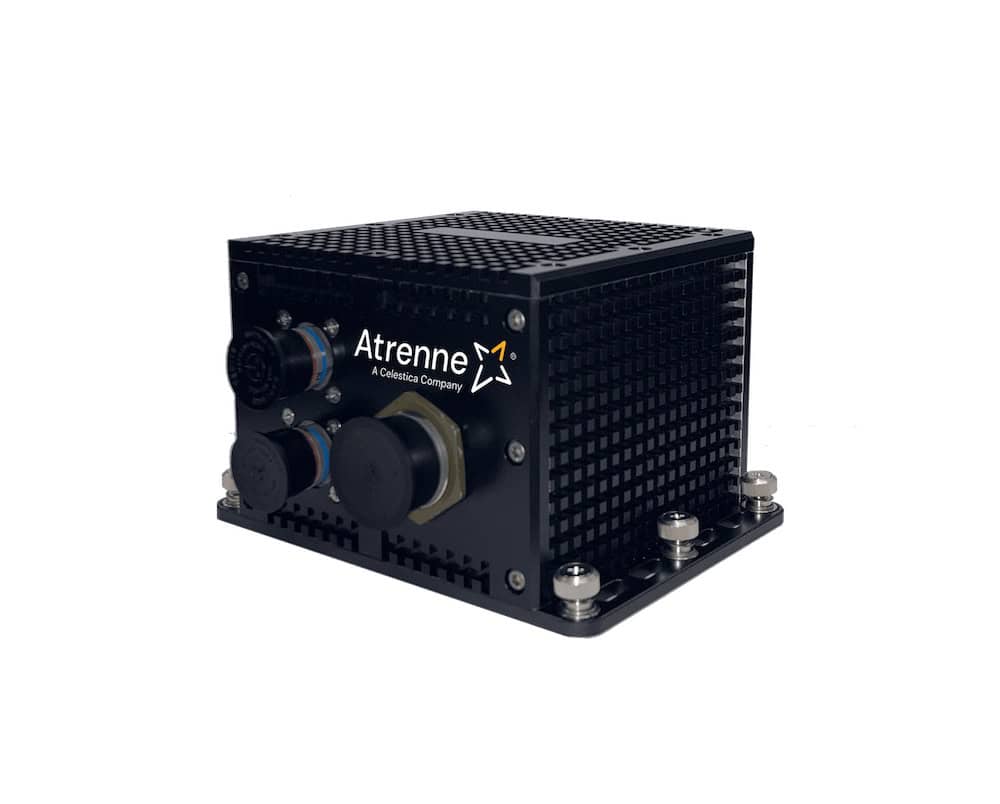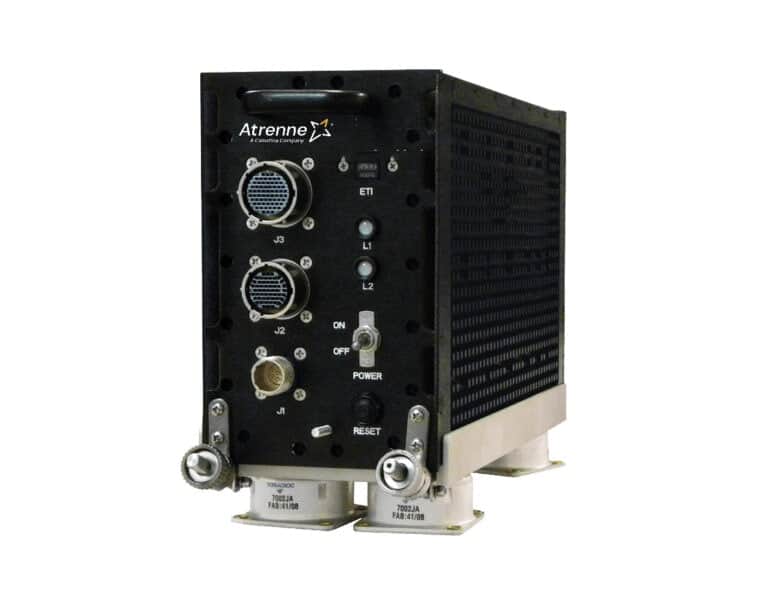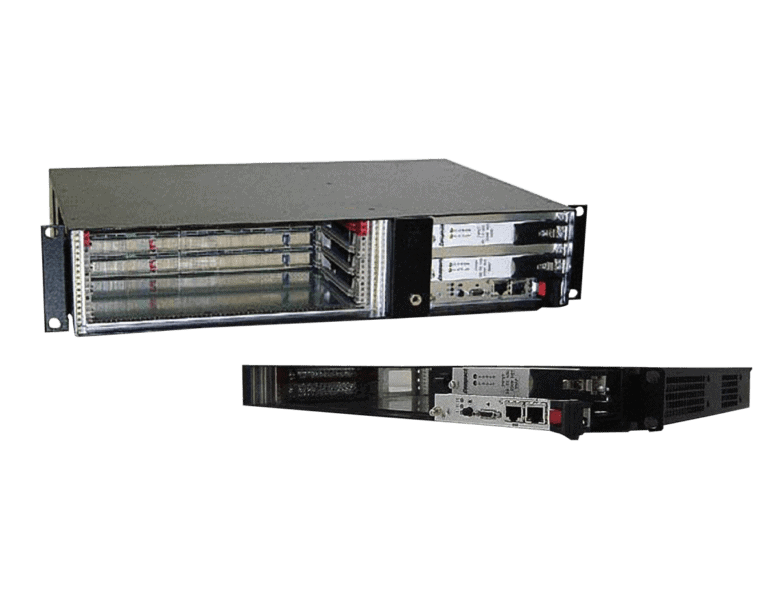
Atrenne, A Celestica Company, outlines the main considerations involved in selecting an Air Transport Rack (ATR) chassis for rugged defense and aerospace electronics. Read more >>
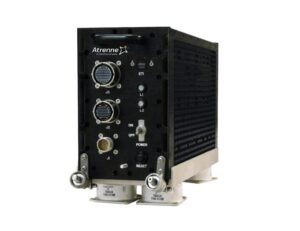
In these applications, the chassis provides the mechanical, thermal, and electrical foundation for mission-critical systems operating in demanding environments. ATR enclosures are widely used across airborne, ground, naval, unmanned, Intelligence, Surveillance, and Reconnaissance (ISR), communications, and ELINT systems, where electronics may be exposed to shock, vibration, temperature extremes, EMI/RFI concerns, and Size, Weight, and Power (SWaP) constraints.
Available formats include 1/4 ATR, 1/2 ATR, 3/4 ATR, 1 ATR, and larger extended configurations, allowing designers to match enclosure size with platform space, payload capacity, cooling requirements, and power needs. Selection should begin with the intended operating environment, including temperature range, shock and vibration exposure, altitude and pressure conditions, EMI/RFI shielding, sand, dust, humidity or salt fog exposure, available airflow, mounting and installation constraints, and overall SWaP limits.
ATR Form Factor, Architecture & Cooling
Chassis size must also correspond with the wider system architecture rather than available space alone. Slot count, payload modules, power supplies, I/O connections, and thermal capacity all influence the appropriate ATR format. Smaller systems may use 1/4 ATR or 1/2 ATR configurations, while applications such as sensor processing, mission computing, or ELINT may require 3/4 ATR, 1 ATR, or larger designs.
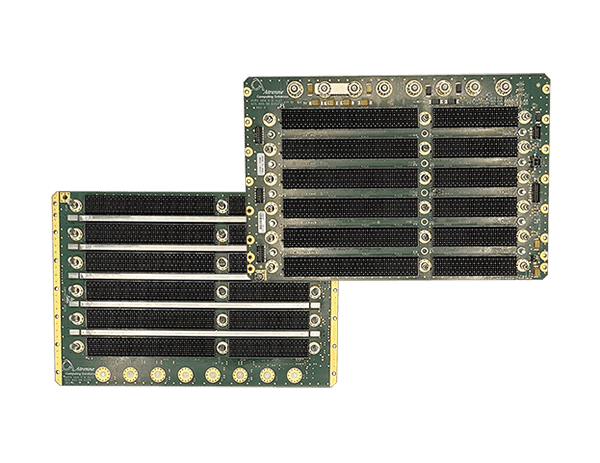
Atrenne, A Celestica Company, supports ATR chassis solutions for OpenVPX, VPX, VME, VXS, CompactPCI, and SOSA-aligned embedded computing architectures, allowing programs to accommodate both legacy architectures and modern open standards. For programs adopting a Modular Open Systems Approach (MOSA), OpenVPX and SOSA-aligned requirements add further considerations around payload profiles, backplane topology, slot count, data rates, power distribution, and cooling method. The chassis, backplane, power supply, I/O panel, and payload modules must operate together as a complete system, particularly in high-throughput applications where performance, modularity, and reliability are all important.
Thermal management is another central factor as embedded systems become more powerful and generate more heat within constrained spaces. Depending on the platform, power density, environmental exposure, and reliability requirements, ATR systems may use forced-air cooling where suitable airflow is available, conduction cooling to transfer heat from electronics into the chassis structure, air-over-conduction designs that combine conduction-cooled modules with airflow across heat-dissipating surfaces, or liquid cooling for high-power systems requiring greater thermal capacity.
Backplane, I/O & Customization Considerations
Backplane and I/O requirements should also be defined early, including the selected architecture, slot count and pitch, signal integrity and data-rate requirements, power distribution, Rear Transition Module (RTM) or I/O panel requirements, RF, optical, or high-speed interconnect needs, and provisions for future expansion or upgrades. Because Atrenne, A Celestica Company, provides both chassis and backplane solutions, mechanical, electrical, thermal, and integration considerations can be addressed together.
Program requirements will ultimately determine whether a standard, modified, or fully custom ATR chassis is appropriate. Standard or configurable designs can suit applications whose requirements align closely with available configurations, while modified systems can accommodate changes involving cooling, mounting, I/O, power, or backplane design. Fully custom chassis may be required for specialized defense applications where performance, packaging, and environmental demands are closely linked, including applications requiring mission-specific payload integration.
Atrenne, A Celestica Company, provides rugged chassis enclosures, backplanes, system integration, thermal management, and custom engineering capabilities, reflecting the wider influence chassis selection has on cooling performance, signal integrity, power distribution, maintainability, and long-term system readiness. These capabilities support programs requiring standard ATR enclosures, configurable development chassis, or custom rugged solutions from concept through deployment.