



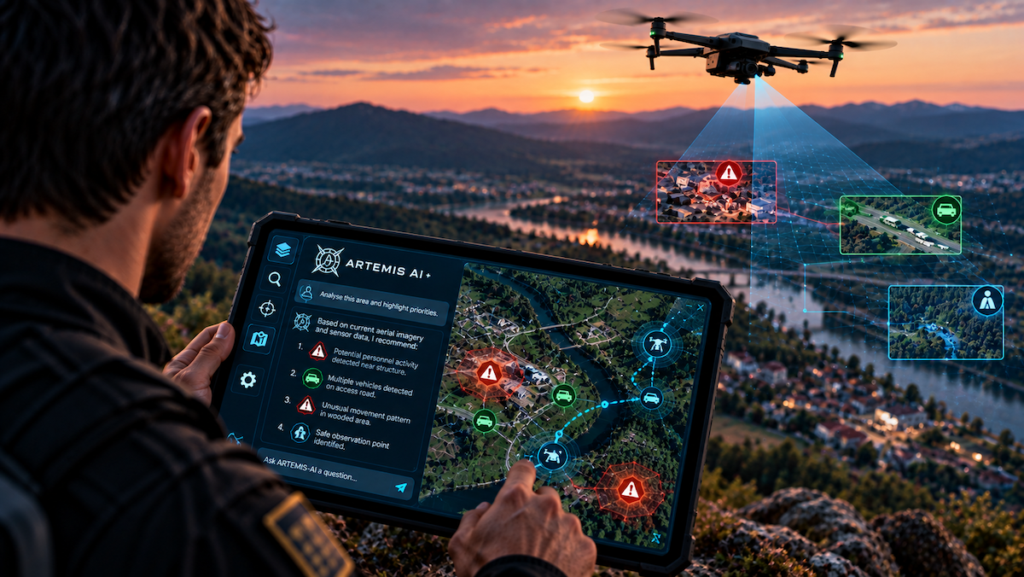
In a recent conversation with Defense Advancement, Andrew Munro, Managing Director at Smith Myers, discussed how ARTEMIS-AI is being developed to support intelligence-led defence and security missions through offline AI processing, cellular activity analysis and reduced operator workload.
Andrew also outlined how the capability could support situational awareness, after-action review and mission configuration while maintaining data sovereignty and keeping human operators in control.
What kinds of tactical defense missions or defense and security agencies will benefit most from ARTEMIS AI?
ARTEMIS-AI will provide significant value across intelligence-led operations, particularly Intelligence, Surveillance and Reconnaissance (ISR), border security and control, maritime surveillance, force protection and other missions where understanding cellular activity contributes to the operational picture.
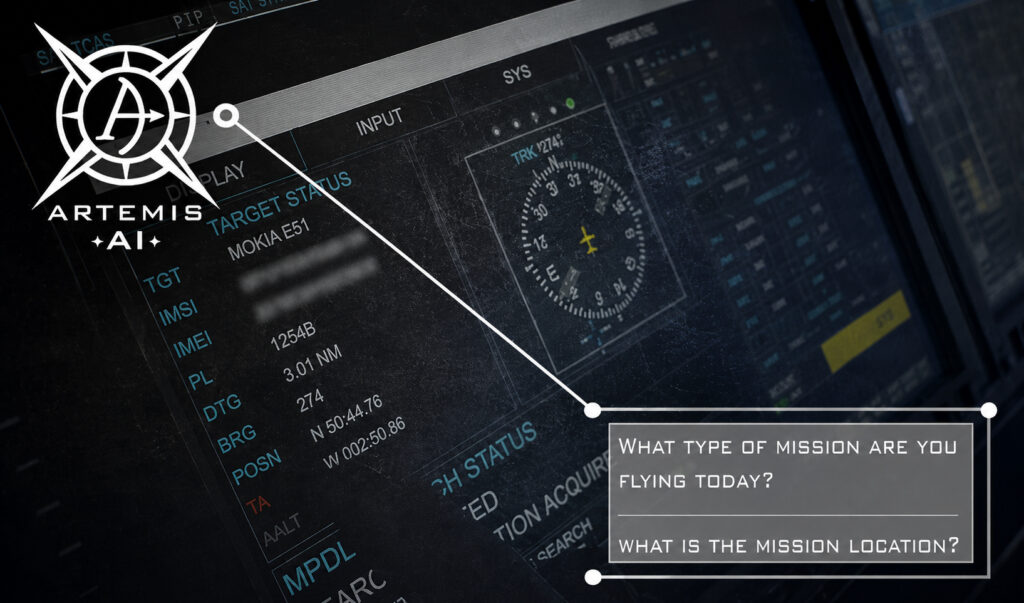
A key advantage is the ability to interact with the system using natural language. Rather than configuring multiple parameters or manually interrogating datasets, an operator could simply tell ARTEMIS-AI what matters for a mission, for example, “today I am particularly interested in X and Y”. The system can then use that intent to help configure the mission, analyze the resulting information and prioritise what is presented.
The capability becomes more valuable over time. By drawing on previous missions in the same area or under similar conditions, ARTEMIS-AI can help establish what ‘normal’ looks like and highlight activity that warrants attention. Rather than simply reporting what is happening today, it could alert the operator when particular cellular activity is significantly higher, lower or otherwise different from comparable previous missions.
For intelligence-led operations, this shift from collecting data to understanding context and identifying anomalies is extremely powerful. It reduces cognitive workload and helps operators focus on activity with potential operational significance, accelerating the transition from collection to actionable intelligence.
Can you give a real-world defense mission scenario where ARTEMIS AI would significantly improve an operator’s situational awareness and decision-making?
A strong example would be a persistent border or maritime surveillance mission using an uncrewed aircraft, where the area of interest is large and the tactical situation can change quickly.
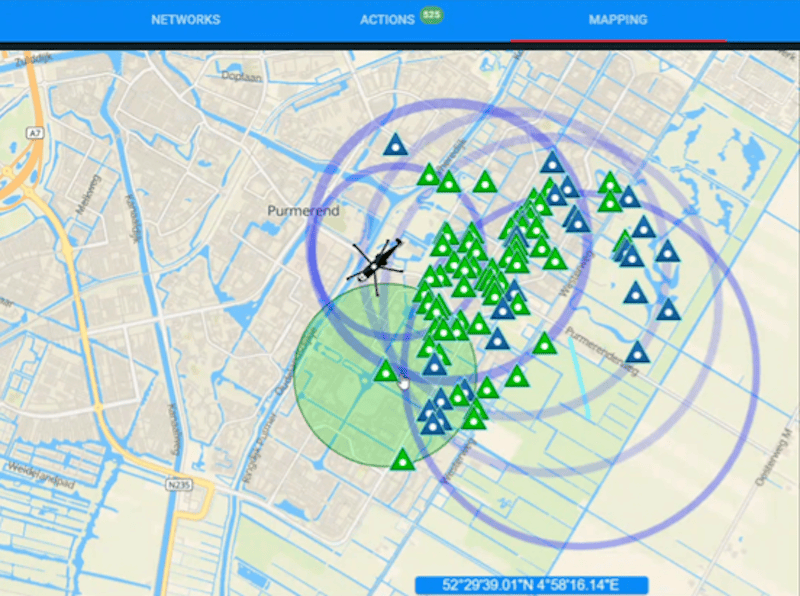
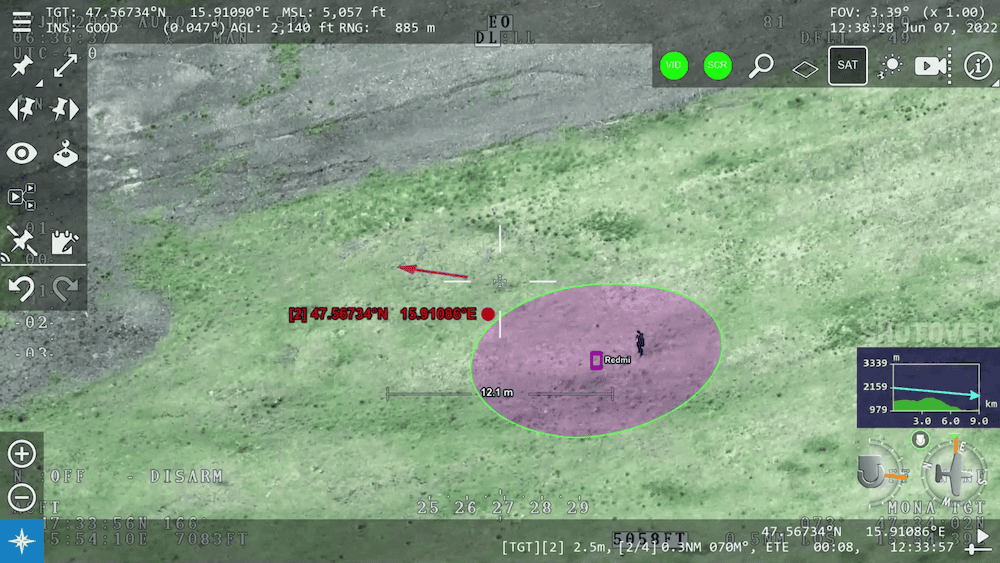
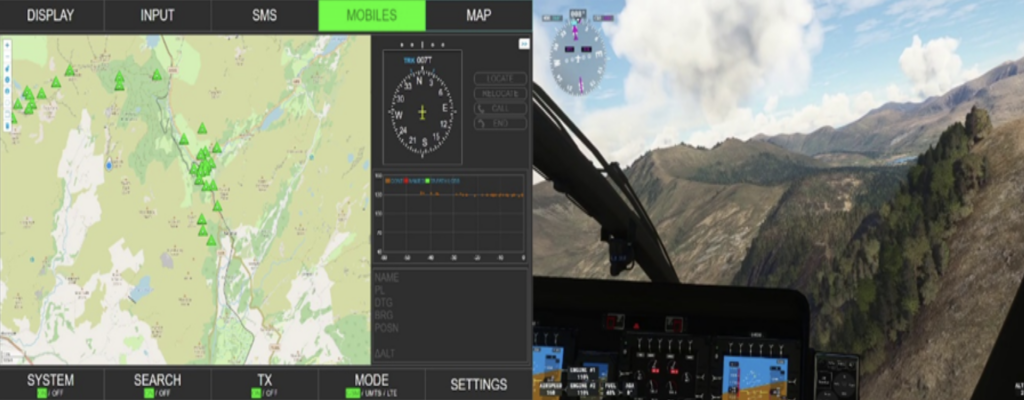
ARTEMIS-AI could simplify the mission by allowing an operator to describe the requirement in natural language, then helping configure the mission, analyze the cellular environment, compare activity with previous missions and highlight anomalies or other activity of interest.
In maritime patrol or border-control operations, this could help identify behaviour that differs from established patterns and direct attention towards areas requiring further investigation, accelerating the move from detection to actionable intelligence.
Looking further ahead, ARTEMIS-AI could recommend flight paths to investigate activity, revisit areas or ensure systematic coverage, with the potential to work more directly with the aircraft’s flight-control system within defined operational parameters.
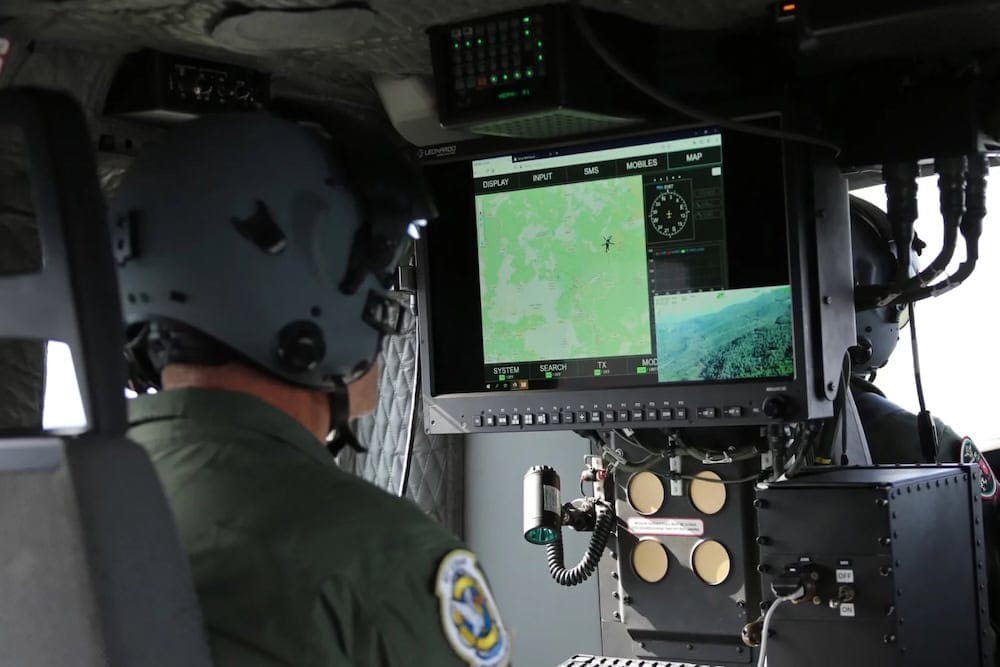
This would shift the operator away from managing the sensor, and potentially the aircraft, towards managing the wider tactical situation, reducing cognitive workload in complex defense or security operations.
ARTEMIS AI runs entirely offline. How have you managed to deploy a Large Language Model without relying on cloud connectivity, and what compromises, if any, have you had to make to guarantee complete data sovereignty in electronic warfare or classified environments?
A fundamental design principle of ARTEMIS-AI is that it is completely standalone. It does not depend on the cloud, an internet connection or any external AI service. The Large Language Model and processing environment are hosted locally, either within ARTEMIS or the user’s ground control environment.
Operational data therefore does not need to leave the user’s controlled environment. There is no requirement to send mission information to Smith Myers, a cloud provider or any third party, giving defense users full control over where data resides and how it is processed.
This requires careful optimisation, particularly on uncrewed platforms where size, weight, power and processing capacity matter. Where appropriate, processing can instead be handled by the ground station while remaining within the user’s secure environment.
The result is a sovereign AI capability that can continue operating when external communications are degraded, denied or deliberately disconnected, without relying on infrastructure outside the user’s control.
How does ARTEMIS AI ensure that tactical operators can trust the recommendations it provides during high-stakes, mission-critical defense operations while keeping human decision-makers firmly in control?
Trust is fundamental in any mission-critical defense environment. ARTEMIS-AI is designed to augment the tactical operator, not replace them, with the human remaining in control of operational decisions.
Rather than presenting unexplained conclusions, ARTEMIS-AI can provide recommendations in the context of current mission data, previous missions and other relevant information within the secure system. This helps operators understand why activity has been highlighted, review the supporting information and assess it against the wider tactical picture.
In fast-moving or contested environments, ARTEMIS-AI can help identify patterns, recognise anomalies and draw attention to significant changes, ensuring operators focus on what matters rather than the volume of data being collected.
Crucially, ARTEMIS-AI does not assume command authority. Its purpose is to improve situational understanding, reduce cognitive workload and help operators make informed decisions more quickly.
How does the system learn, adapt, or generate after-action reviews over time if it operates in a fully closed, air-gapped defense environment with no internet connectivity?
Operating in a closed or air-gapped environment does not mean ARTEMIS-AI is static. As missions are conducted, data can be retained and analyzed locally, helping the system build a deeper understanding of previous missions, recurring patterns and the operational environment.
This is particularly valuable for after-action review. ARTEMIS-AI can help reconstruct mission activity, identify significant events and anomalies, compare operations with previous missions and generate structured summaries. Operators can also interrogate completed missions using natural language, turning accumulated mission data into a growing intelligence resource.
Users can incorporate their own procedures, mission protocols, geographic information and other organisation-specific knowledge, which ARTEMIS-AI can use alongside current and historical mission data to provide more relevant support.
Crucially, none of this information needs to leave the user’s secure environment. Operational data, doctrine and mission history remain under the user’s control.
Validated AI improvements can also be developed and tested separately before being introduced to the deployed system, allowing ARTEMIS-AI to evolve while maintaining security, configuration control and data sovereignty.
Will ARTEMIS AI be available as an upgrade for existing ARTEMIS users, or is it tied to new hardware processing and future platform variants across crewed and uncrewed fleets?
Yes. ARTEMIS-AI is being designed to be available as an upgrade for existing ARTEMIS users, with the add on of additional hardware and will be incorporated as a standard feature on future system configurations.
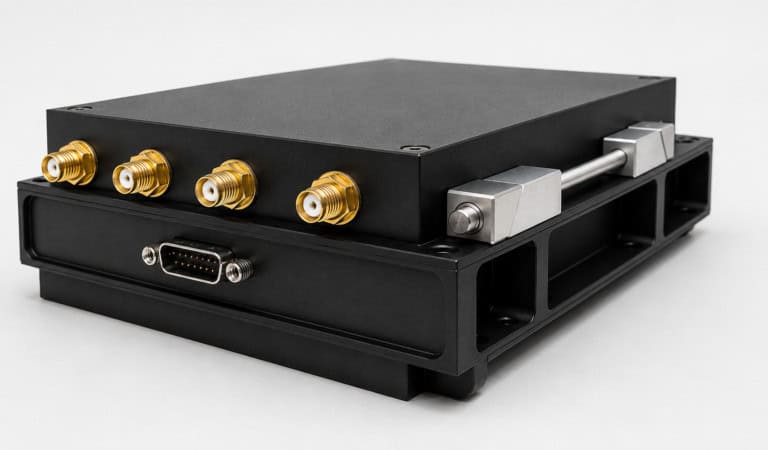
This is important to us because there is already a significant installed base of ARTEMIS systems operating around the world, and we want those users to be able to benefit from ARTEMIS-AI without having to replace their existing systems. The additional AI processing capability can be introduced into a deployed ARTEMIS architecture, with a number of options for where that processing is hosted depending on the platform and operational requirement.
So ARTEMIS-AI is not tied to a particular future platform or new generation of ARTEMIS hardware. It is an evolution of the ARTEMIS capability that we intend to make available to both existing and future users.
Thank you to Andrew for taking the time to speak with Defense Advancement. We look forward to following the development of ARTEMIS-AI and its application across future defense and security operations.