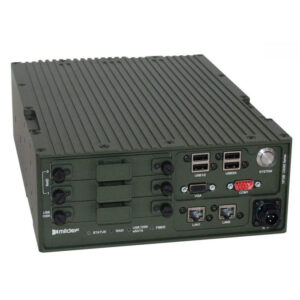
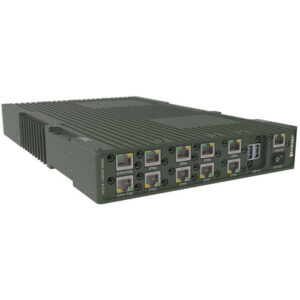
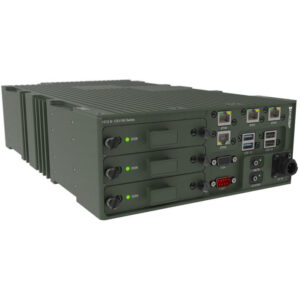
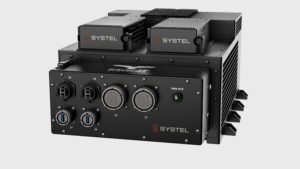
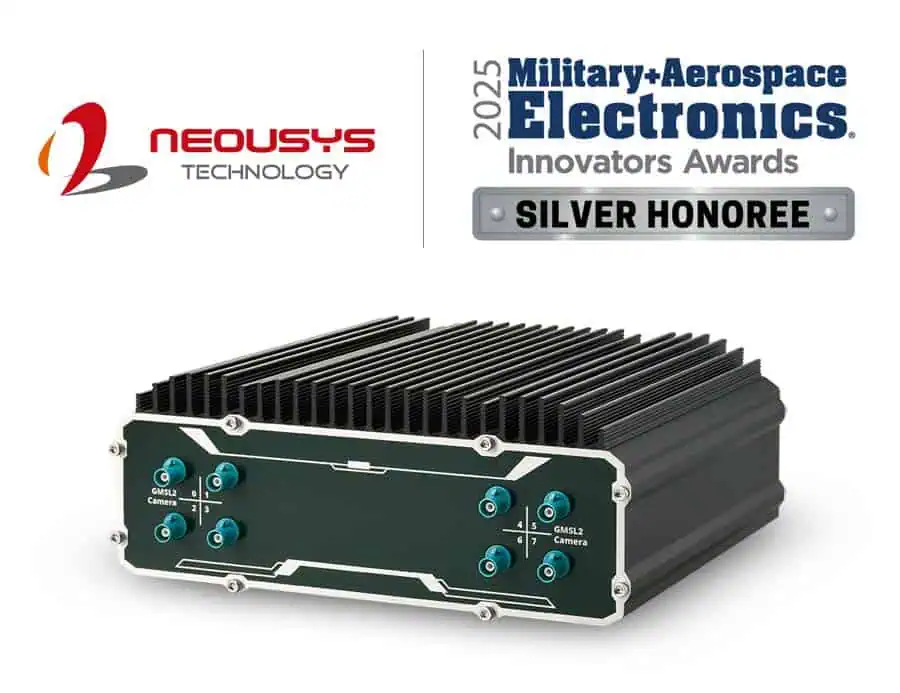
Showcase your capabilities
If you design, build or supply Mission Computers, create a profile to showcase your capabilities and connect with visitors who have an active requirement for your solutions.




Mission computers are the central nervous systems of modern defense platforms. These ruggedized, high-performance processing units coordinate everything from sensor fusion and weapons control to communications, navigation, and data sharing across air, land, sea, and space domains.
This guide showcases leading global suppliers of mission computing solutions engineered specifically for defense platforms, supporting the advanced systems that enable today’s connected, data-driven military operations.
Read the Technology Overview


State-Of-The-Art Flight Control & GNSS-Denied Navigation Technologies for Tactical UAV Platforms

Mission-Critical Hardware & Software Technologies for Enhanced Command & Control in Challenging Battlefield Environments

WE ARMOR IT. MilSpec Electronics & Rugged IT Equipment for Military, Government & Critical Infrastructure

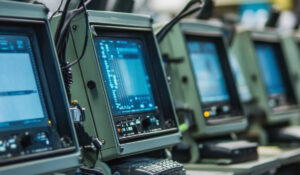
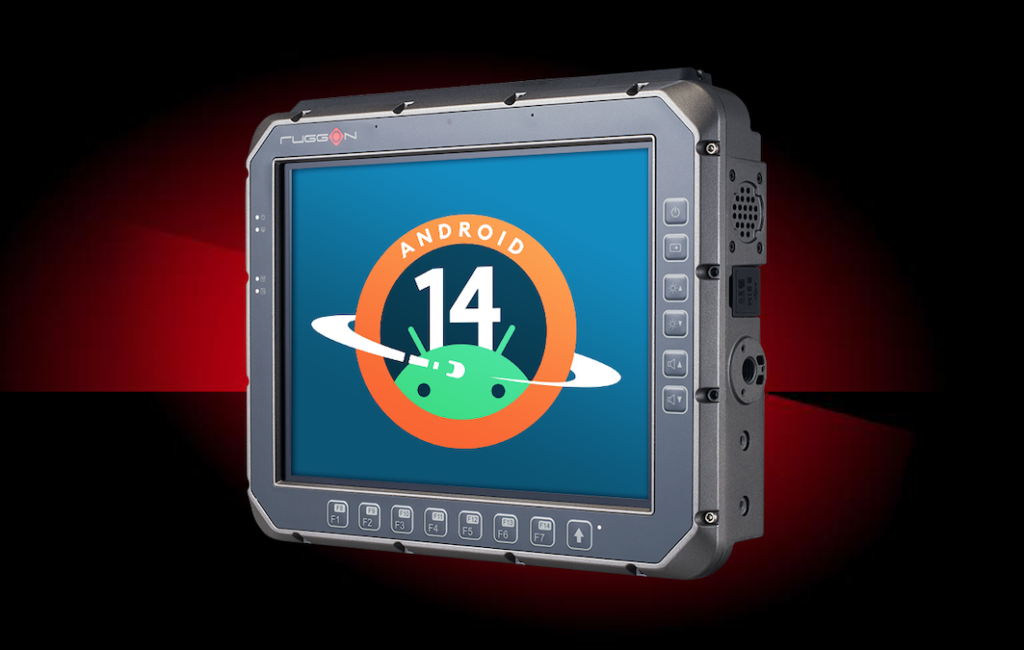
Mission-Critical Rugged Displays, Embedded Computing & Electronics for Defence Systems

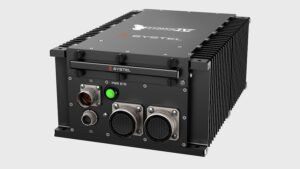
Rugged Mission-Critical Computing Solutions for Defense & Government Applications: Air, Land & Sea

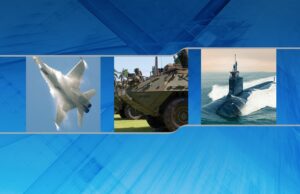
Mission-Critical Integrated Systems, Chassis & Backplanes For Military Systems Operating In All Domains

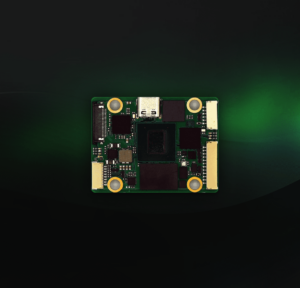
NDAA-Compliant Software-Defined Ecosystem For Next-Generation Robotics & Autonomous Vehicle Platforms

If you design, build or supply Mission Computers, create a profile to showcase your capabilities and connect with visitors who have an active requirement for your solutions.


Think of the mission computer as the central nervous system of any modern defense platform. These ruggedized, high-performance processors don’t just compute; they manage everything from sensor fusion and weapons control to communications, navigation, and data sharing across air, land, sea, and space domains.
Crucially, mission computers enable real-time decision-making. They achieve this by integrating inputs from dozens of subsystems, instantly translating raw data into actionable intelligence for both human operators and autonomous systems alike. Whether coordinating flight control in advanced combat aircraft, powering onboard intelligence in unmanned vehicles, or managing mission-critical networks aboard naval vessels, mission computers underpin the reliability, precision, and situational awareness that modern defense operations absolutely depend on.

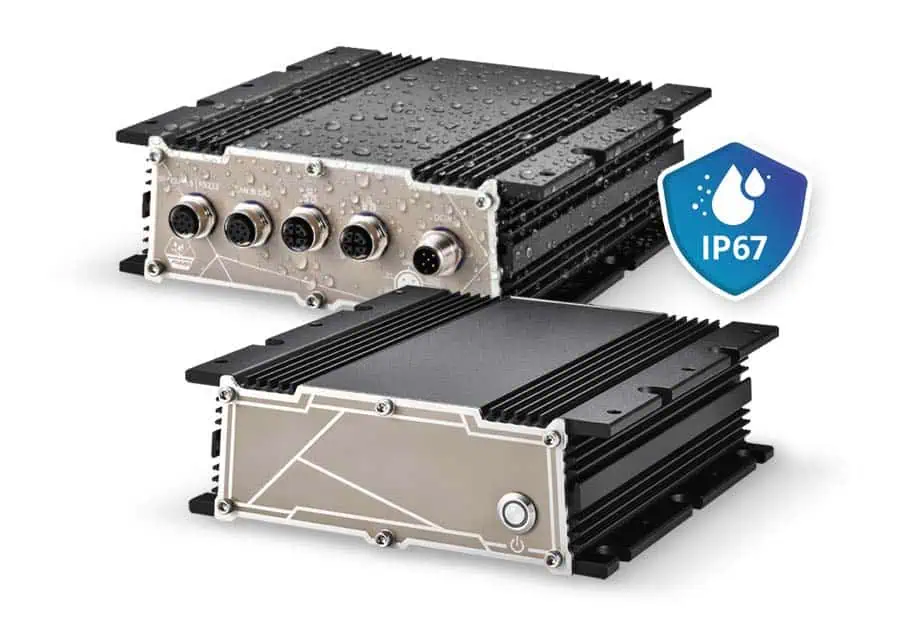
Systel’s Kite-Strike II Mission Computer
A mission computer is the primary processing unit that governs and controls a defense platform’s operational systems. It’s engineered specifically to handle all critical computing functions on board, from processing sensor data and managing communications to controlling weapons, navigation, and display systems. In simple terms, the mission computer provides the processing backbone that allows a vehicle, aircraft, ship, or unmanned system to execute its mission reliably, securely, and efficiently.
Data fusion and sensor integration form the very foundation of how a mission computer interprets its operational environment. Modern defense platforms carry multiple, disparate sensors—radar, electro-optical/infrared (EO/IR), LIDAR, acoustic, inertial, and navigation systems—each generating a flood of data in different formats and at varying update rates. The mission computer immediately acquires, aligns, and processes these inputs in real time, synthesizing them to produce a single, unified, and accurate representation of the battlespace.
Mission management governs how a platform executes its assigned tasks. The mission computer orchestrates flight or vehicle operations, sensor scheduling, and engagement sequencing while ensuring strict alignment with mission objectives and rules of engagement. Decision-support software doesn’t replace the operator, but rather assists by evaluating complex options against constraints such as fuel, threat range, or timing. It presents clear recommendations or automated actions that can be overridden at any time, ensuring missions are executed efficiently, safely, and in accordance with command intent.
The mission computer serves as the central node for data exchange across the platform and with external networks. It manages multiple interfaces including deterministic Gigabit Ethernet (GbE) and, increasingly, Time-Sensitive Networking (TSN) for high-speed payload data, Link-16 for tactical communications, and CAN or MIL-STD-1553 buses for subsystem control. Each link operates under strict timing and prioritization schemes to ensure critical information—such as target data or command messages—flows without interruption. Reliable communication management is non-negotiable for situational awareness, command coordination, and joint-force interoperability.
Human–machine interface (HMI) functions translate complex system data into clear, actionable displays for operators. The mission computer drives multi-function displays, head-down consoles, or helmet-mounted systems, carefully tailoring information delivery to match the operator’s role and workload. It manages video routing, symbology generation, and control inputs, maintaining responsiveness even under high computational load.
The computer must support a variety of video interfaces for modern and legacy displays, including SDI (Serial Digital Interface), DisplayPort/HDMI for high-resolution graphics, and VGA/DVI for older cockpit and ground vehicle mission display equipment. Ultimately, well-designed HMI integration is what allows an operator to interpret the situation at a glance, make informed decisions in seconds, and maintain absolute control in dynamic operational environments.
Weapon control functions inside the mission computer handle fire control calculations, target handover, and engagement authorization. These processes combine sensor inputs, platform attitude data, and weapon parameters to generate accurate firing solutions. The computer rigorously enforces safety interlocks, verifies arming conditions, and logs every engagement for traceability. Precision, timing, and fail-safe design are absolutely critical—errors in computation or sequencing can compromise both mission success and safety. Robust weapon management software ensures reliable and repeatable performance under all conditions.
Health and Usage Monitoring System (HUMS) integration allows the mission computer to track platform condition and predict maintenance needs before failure occurs. It aggregates data from sensors, power systems, and subsystems to detect deviations from normal operation, logging parameters such as vibration, temperature, and load cycles. The processed data supports condition-based maintenance and fleet readiness analysis. Integrating HUMS at the mission computer level reduces unplanned downtime and ensures that maintenance actions are based on real operational evidence rather than fixed intervals.

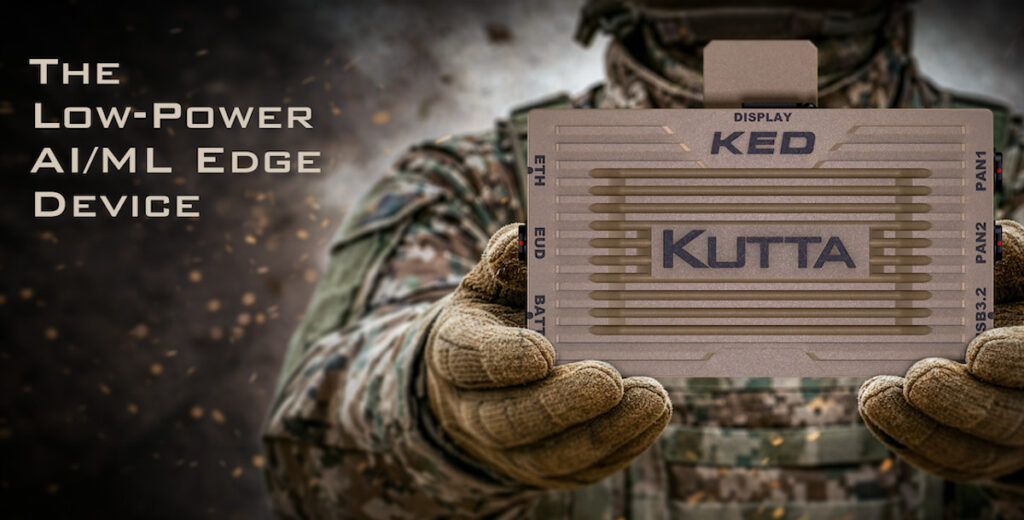
Small Mission Computer for UAV and UGV platforms, by Kutta Technologies
Mission computer hardware is typically modular, combining general-purpose processors (CPUs), graphics or vector processors (GPUs/VPUs), and programmable logic (FPGAs) to balance flexibility and deterministic performance. CPUs manage control logic and mission applications, while GPUs accelerate image processing, AI inference, and other parallel workloads. AI Accelerators and Vision Processing Units (VPUs) often handle these tasks at lower power, accelerating video analytics in unmanned systems. FPGAs are reserved for applications requiring ultra-low latency and reconfigurable interfaces, performing signal conditioning, protocol translation, or hardware-level data fusion.
Physical Standards (Form Factors): While modern modular mission computers adopt MOSA standards like OpenVPX, mission computers are commonly housed in standard module sizes such as 3U and 6U (referring to height in rack units). Legacy systems often utilize the VMEbus architecture, which remains a key consideration for platform sustainment and upgrades today.
The I/O subsystem connects these compute elements to sensors, effectors, and communications hardware using interfaces such as Ethernet, MIL-STD-1553, ARINC 429, CAN, and serial links. This architecture ensures data moves efficiently, supporting both time-critical control and computationally intensive processing within the same system envelope.
The software layer defines how a mission computer schedules tasks, manages resources, and maintains reliable operation under all conditions. At the heart of this reliability are Real-Time Operating Systems (RTOS) such as VxWorks, Integrity, and LynxOS. These aren’t standard operating systems; they’re specialized to provide deterministic execution, strict task prioritization, and critical fault isolation. These operating environments often employ secure partitioning, where each software function runs within an isolated memory and processing domain. This approach prevents faults or security breaches in one partition from affecting others—an essential feature in systems handling mixed security classifications or both safety- and mission-critical workloads. Above the RTOS, middleware frameworks such as FACE or DDS define standard interfaces for data exchange and software component reuse across platforms, supporting modular upgrades and long-term maintainability.
The Modular Open Systems Approach (MOSA) is now a non-negotiable cornerstone of defense computing architecture. It promotes the use of open standards and modular hardware and software components to drastically reduce lifecycle cost, simplify upgrades, and improve interoperability between suppliers.
For mission computers, MOSA principles are embodied in several critical standards that define the physical, electrical, and logical framework:
The ultimate benefit of this unified MOSA ecosystem is agility: integrators can now replace or enhance specific subsystems—like SWaP mission processors—without ripping out the entire chassis. This revolutionary approach paves the way for the rapid field deployment of AI, new sensors, and other leading-edge technologies.
Mission computers must comply with a range of defense and aerospace standards that define how equipment is designed, built, and validated for use in critical environments. Compliance is not simply a procurement checkbox — it directly influences component selection, enclosure design, software assurance, and lifecycle support. Meeting these standards demonstrates that a rugged mission computer can operate dependably under extreme conditions.
Below are some of the most common international standards relevant to mission computer design and qualification:

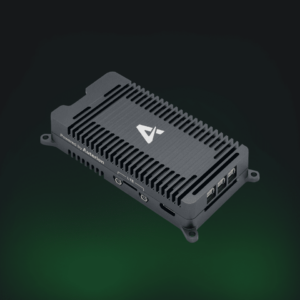
Vector MCC Mission Computer, by UAV Navigation
Mission computers are meticulously engineered to operate reliably under the environmental extremes encountered by military platforms. The mechanical design prioritizes maintaining structural integrity under shock, vibration, temperature cycling, and pressure variation. Enclosures are typically machined from lightweight, durable aluminium or magnesium alloys to provide strength, thermal conductivity, and electromagnetic shielding. Mounting points are engineered to isolate vibration and absorb impact loads, ensuring that circuit boards and connectors remain stable over thousands of operating hours. Sealing to IP65 or higher protects against dust, moisture, and salt fog, allowing deployment in aircraft bays, vehicle hulls, or exposed deck environments.
Thermal management is often the primary engineering constraint in mission computer design, as high-performance processors generate significant heat in compact, sealed enclosures. Two cooling strategies dominate: conduction and convection. Conduction-cooled systems transfer heat directly from components through metal frames to cold plates or chassis walls, providing predictable performance in sealed or airborne environments where airflow is limited. Convection-cooled systems rely on internal fans or external airflow over finned surfaces, offering simpler integration in ground or naval platforms with available ventilation.
Optimizing Size, Weight, Power, and Cost (SWaP-C) is central to modern mission computer development. Platform designers demand maximum computing capability within the smallest and most efficient physical footprint. This drives the adoption of multi-core processors, system-on-chip architectures, and shared resource modules that reduce board count and cabling. Weight is minimized through material selection and mechanical integration, while power budgets are tightly controlled to manage thermal loads and reduce platform demand. Cost is addressed through modular designs that reuse common processing and I/O modules across programs. Achieving an effective SWaP-C balance directly influences payload capacity, endurance, and overall system affordability.
Mission computers deftly combine multiple processing technologies to balance general-purpose computing, parallel processing, and deterministic control.
Cybersecurity in mission computers begins at the hardware level, before any operational code runs. Secure boot mechanisms ensure that only authenticated firmware and software are executed, using cryptographic signatures to verify integrity. This prevents tampered or unauthorized software from loading. Many mission computers implement a hardware root of trust (HRoT)—a dedicated security element or Trusted Platform Module (TPM) that stores encryption keys and validates the entire boot chain. Data at rest and in transit is protected through hardware-accelerated encryption algorithms such as AES-256. These measures form the foundation of a trusted computing environment capable of maintaining operational integrity even under cyber threat conditions.
Beyond perimeter defenses, modern mission computers are designed for cyber resilience—the ability to detect, contain, and recover from malicious activity without loss of mission functionality. Embedded intrusion detection systems (IDS) continuously monitor internal communication buses, I/O interfaces, and configuration states for anomalies. System partitioning ensures that any intrusion or software failure is contained within isolated domains. Combined with continuous monitoring and secure firmware update paths, these architectures provide layered protection suited to contested and networked operational environments.
Mission computers routinely handle information across multiple classification levels. Data segregation is achieved through both physical and logical separation of networks and storage domains, often using hardware-enforced security partitions or Multiple Independent Levels of Security (MILS) architectures. Encrypted data channels protect external communications, employing protocols such as IPsec, TLS, or NSA Type 1 algorithms. Security gateways and data guards tightly control the flow of information between domains. These mechanisms allow encrypted mission computing systems to exchange operational data securely while maintaining compliance with national and allied information assurance policies.
Mission computers are developed using two main approaches: Commercial Off-The-Shelf (COTS) and custom-designed solutions. COTS-based systems leverage pre-qualified, modular components built to open standards such as VPX or CompactPCI, allowing integrators to configure mission computers quickly while reducing cost and development time. They are particularly suited to programs that value interoperability, scalability, and rapid technology insertion. In contrast, custom mission computers are developed for platforms with unique environmental, safety, or certification requirements—for example, fast jets or deep-sea submersibles where bespoke thermal design, mechanical layout, or software assurance levels are mandatory. Custom builds allow maximum optimization for form factor, performance, and power consumption but demand longer development cycles and higher non-recurring engineering costs.
In airborne systems, mission computers serve as the primary control and data processing nodes that integrate avionics, sensors, and weapons into a single operational framework. In fighter aircraft, they manage sensor fusion, flight management, and targeting. UAVs rely on mission computers for autonomous navigation, payload management, and datalink control. The mission computer in aircraft is fundamental to operations. Across all airborne mission computer platforms, low latency, deterministic performance, and certification to standards such as DO-178C and DO-254 are mandatory to guarantee safe and predictable behaviour.
On ground platforms, mission computers act as the command and control core for vehicle subsystems and battlefield networking. In armored fighting vehicles, they manage fire control, sensor displays, navigation, and battle management system interfaces. These environments demand extreme mechanical robustness, EMC resilience, and rapid boot and recovery capabilities for successful ground vehicle mission computing. Ground vehicle mission computers on land vehicles are often designed with modular I/O configurations to accommodate varying turret, sensor, or communications fits across different vehicle variants.
In naval applications, mission computers underpin combat management, navigation, and sensor integration systems across a wide range of vessel types. Surface ships use them to manage radar, sonar, EO/IR sensors, and weapon systems. Submarine mission computers must operate under high EMI loads and tight thermal constraints, supporting sonar processing, guidance, and platform control in sealed environments. Maritime systems place particular emphasis on sealed enclosures, corrosion resistance, and redundancy, ensuring reliable operation in high-humidity, salt-laden conditions where maintenance access is limited.
The mission computer market is dominated by a combination of established defense electronics primes and specialized embedded computing manufacturers. Major system integrators such as BAE Systems, Thales, Leonardo, Collins Aerospace, and Honeywell develop mission computers as part of larger avionics or vehicle control suites.
Alongside these primes, the market relies on dedicated, innovative rugged computing specialists who supply modular processing platforms and VPX-based subsystems for defense programs. These include:
This diverse ecosystem, from large primes to specialized technology providers, ensures that platforms across air, land, and sea have access to the exact mission computing solutions required for modern warfare.


 Searching Companies & Products


 Subscribe to the Weekly eBrief
The latest engineering and technical developments straight to your inbox - join thousands of engineers who receive it.
Subscribe to the Weekly eBrief
The latest engineering and technical developments straight to your inbox - join thousands of engineers who receive it.