Naval installations face many threats, from stealthy submarines and seabed mines to sabotage and autonomous incursions. Effective defense requires a tightly integrated suite of technologies, tactics, and platforms capable of detecting, identifying, and neutralizing threats before they reach high-value targets.
Comprehensive Surveillance and Detection
At the heart of naval base protection are enhanced surveillance and detection systems, including C4ISR platforms (Command, Control, Communications, Computers, Intelligence, Surveillance, and Reconnaissance). These systems integrate active and passive sonar networks, synthetic aperture sonar, magnetic anomaly detection (MAD), and acoustic intelligence (ACINT) sensors to monitor undersea activity and seabed conditions. Fixed seabed sensor arrays work alongside mobile platforms, like ASW helicopters equipped with dipping sonar or maritime patrol aircraft deploying sonobuoys, to ensure continuous coverage around high-value assets. This multi-layered sensor fusion allows defense forces to identify and track submarines, UUVs, hostile divers, or mine-laying operations before they reach sensitive areas.
Neutralizing Underwater Hazards
The mine threat remains a potent danger to naval bases and anchored vessels. Effective mine warfare strategies incorporate mine countermeasures with both sweeping and hunting techniques. Mechanical sweep systems clear traditional moored mines, while advanced mine detection platforms, such as unmanned surface vehicles (USVs) or towed array sonar systems, scan the seabed for unexploded ordnance. Once located, focused mine neutralization systems or EOD platforms perform targeted clearance, allowing safe navigation near ports, under piers, or around anchored vessels.
Defeating Submarine and UUV Threats
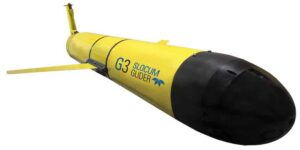
Slocum G3 Glider by Teledyne Marine.
Protecting ships, even when moored, extends beyond mine concerns to include submarines and advanced unmanned threats. Anti-submarine warfare technology deploys layered defenses including lightweight torpedoes, anti-torpedo systems, and towed array sonar. ASW craft, whether helicopters, drones, or patrol ships, rapidly respond to incursions. Unmanned underwater vehicles, meanwhile, serve dual roles: acting as reconnaissance platforms while also serving as mobile sensors or SIAD (submarine interdiction and defense) units. Autonomous maritime systems provide persistent perimeter surveillance, particularly in challenging coastal environments.
Clearing Explosives and Addressing Sabotage
Coastal installations face both submerged and surface-borne sabotage risks. Navy EOD units deploy EOD robots or diver teams to inspect suspicious items near quay walls or on hulls. Mine rescue and clearance equipment enables rapid suppression of improvised naval ordnance. Effective EOD clearance systems are indispensable for safeguarding vessels and dockside infrastructure against sabotage or asymmetric threats.
Technologies & Platforms in Naval Defense
The following categories represent the critical systems protecting naval bases, installations, or craft:
Mine countermeasures (MCM)
- Mine detection: Utilizes autonomous mine-hunting drones, towed sonar arrays, and seabed classification systems.
- Mine neutralization: Employs EOD robots and explosive charges to clear threats.
Anti-submarine warfare (ASW)
- Sonar systems: Combining active sonar, passive array, and dipping sonar for full-spectrum detection.
- ASW platforms: Maritime patrol aircraft, ASW helicopters, surface ships, and UUVs conducting classification and engagement.
Unmanned underwater and surface systems
- UUVs/AUVs: Autonomous maritime systems for surveillance, seabed mapping, threat classification, and perimeter control.
- USVs: Remote or autonomous vessels performing mine sweeping, sensor operations, or acting as decoys.
C4ISR and ACINT
- Sensor fusion: Integrates MAD sensors, sonar systems, and data from diverse platforms.
- Real-time processing: Enables rapid decision-making via secure communications and command nodes.
EOD and explosive clearance
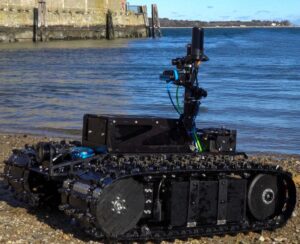
Bayonet 250 by Greensea IQ.
- EOD robots and diver support: Rapid, remote inspection and disposal of explosive threats on infrastructure or vessels.
- Neutralization systems: Targeted solutions to safely eliminate naval mines or improvised devices.
Torpedo defense
- Protection against inbound torpedoes, even in port, is provided by active countermeasures, lightweight torpedoes, decoys, and hard-kill systems.
Integration and Deployment
Naval defense is effective when all components work in concert:
- Layered perimeter: An external sensor fence utilizing UUVs, USVs, moored sonars, and ASW aircraft ensures early detection beyond sonar range.
- Intermediate defense: Surface ships and helicopters armed with torpedoes or minesweeping gear respond to classified threats.
- Final barrier: Hardened harbor infrastructure, EOD teams, and anti-torpedo systems protect vessels and bases within the perimeter.
Computer-aided threat classification, data fusion, C4ISR systems, and secure communications maintain situational awareness and enable quick, coordinated responses.
Applying MIL‑STD and Best Practices
Naval installations often require compliance with military standards such as MIL‑STD‑810 (environmental testing) for sensor toughness, MIL‑STD‑461 (EMC compatibility) for electronic systems, and MIL‑STD‑882 (risk management). Platforms must also align with requirements for anti-submarine warfare, mine safety, and interoperability with existing naval networks.
Best practices involve frequent training, interoperability trials, field exercises simulating seabed incursions, and judicious adoption of emerging technologies such as cloud-based analytics and AI‑enhanced sensor fusion.
Recent Advancements and Emerging Trends
- Autonomous threat response: UUVs and USVs capable of detecting threats and executing neutralization or warning deployments.
- Enhanced acoustic networking: Underwater sensor networks with real-time telemetry to central control.
- Advanced AI-driven analytics: Rapid classification of objects—mine, diver, or sub—reducing false alarms and response latency.
- Modular, scalable systems: Adaptive sensor suites and countermeasure loads tailored to each base’s threat profile.
Protecting Naval Installations with Naval Defense Systems
By integrating MCM, ASW, UUVs, C4ISR, and EOD platforms into a cohesive architecture, naval forces secure their installations, naval bases, and anchored vessels from multifaceted threats. These systems form a layered, agile, and responsive defensive ecosystem, to ensure the safety of naval infrastructure. With modern innovations like AI-enabled sensors, autonomous response vessels, torpedo defense systems, and digital command integration, defense planners can tailor protection systems to evolving threats while conforming to MIL‑STD specifications and operational frameworks.
Protecting naval defense installations is not a single product—it’s an orchestration of technologies, tactics, and procedures aimed at a single mission: safeguarding maritime assets against underwater and coastal threats.