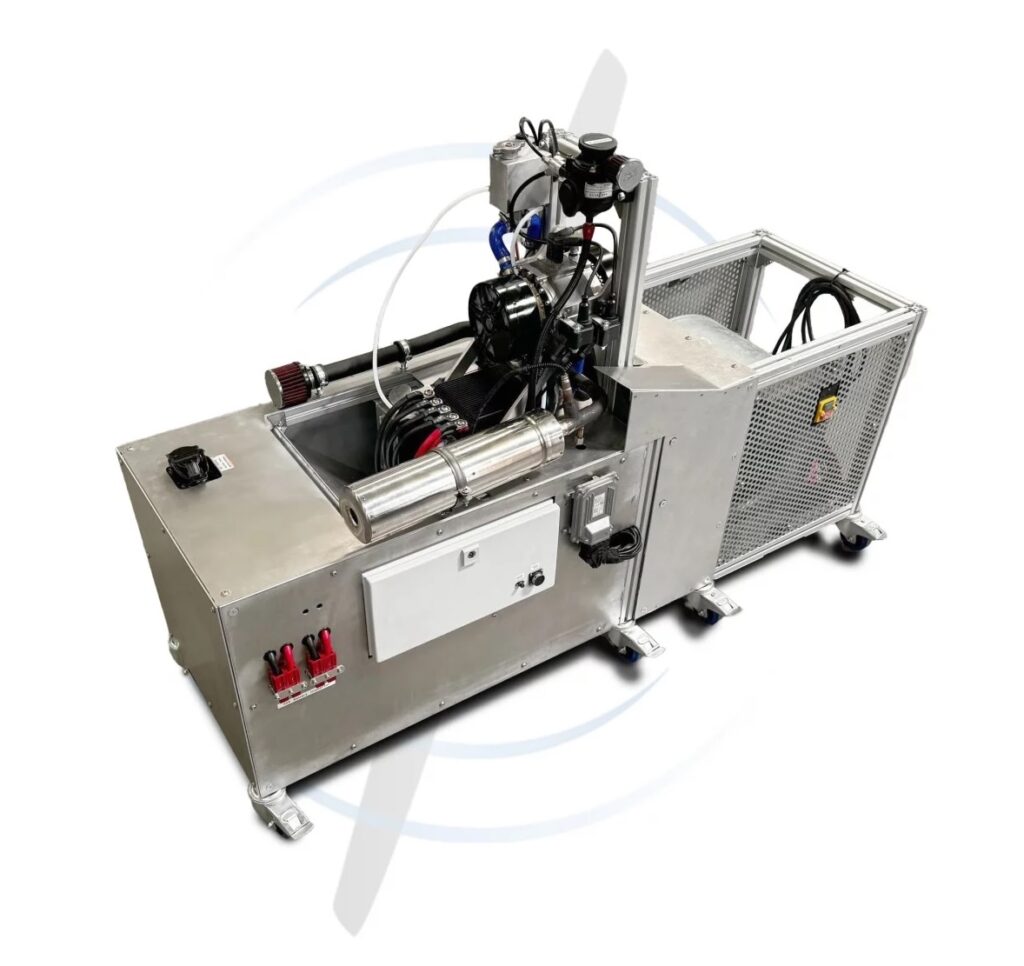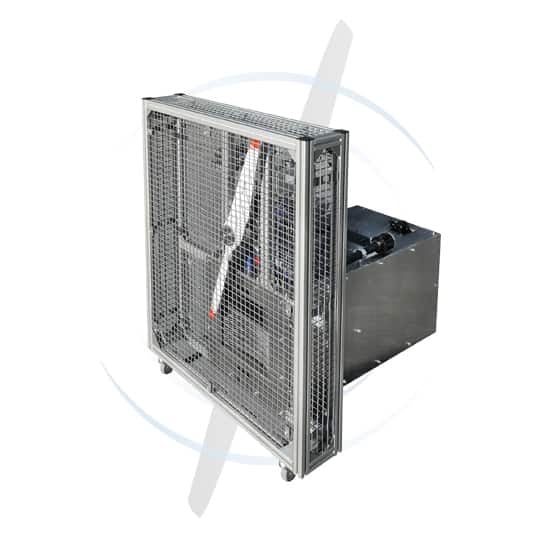
Sky Power International outlines the operational differences between two-stroke and Wankel propulsion systems for Unmanned Aerial Vehicles (UAVs), highlighting how engine architecture affects UAV performance, payload integration, maintenance requirements, and mission suitability.
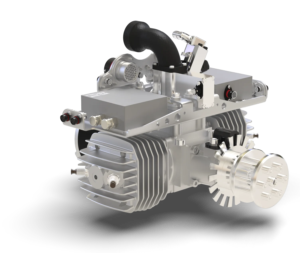
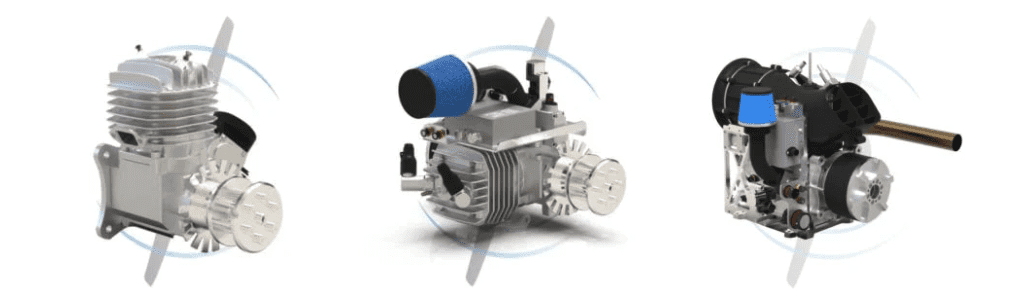
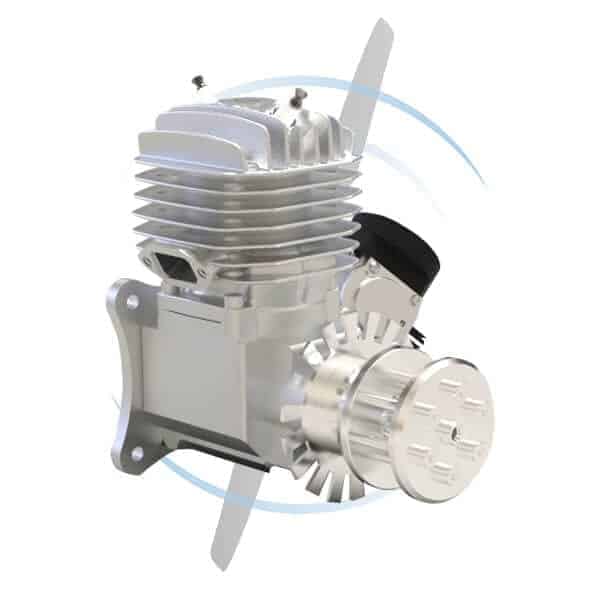
Sky Power International SP-110 FI TS twostroke engine with fuel injection
Selecting a propulsion system directly affects endurance, payload capacity, integration flexibility, and operating costs. For tactical UAVs, ISR missions, and long-range operations, the engine forms a central part of the overall aircraft architecture.
Two-stroke engines use a reciprocating piston configuration with a compact operating cycle that combines intake, compression, combustion, and exhaust. Their relatively simple mechanical design results in fewer moving components, reduced complexity, and a strong power-to-weight ratio. These characteristics support widespread use in UAV platforms prioritizing robustness, scalability, and operational affordability.
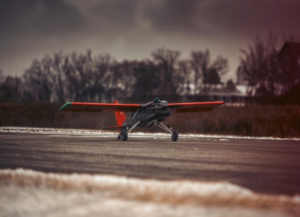
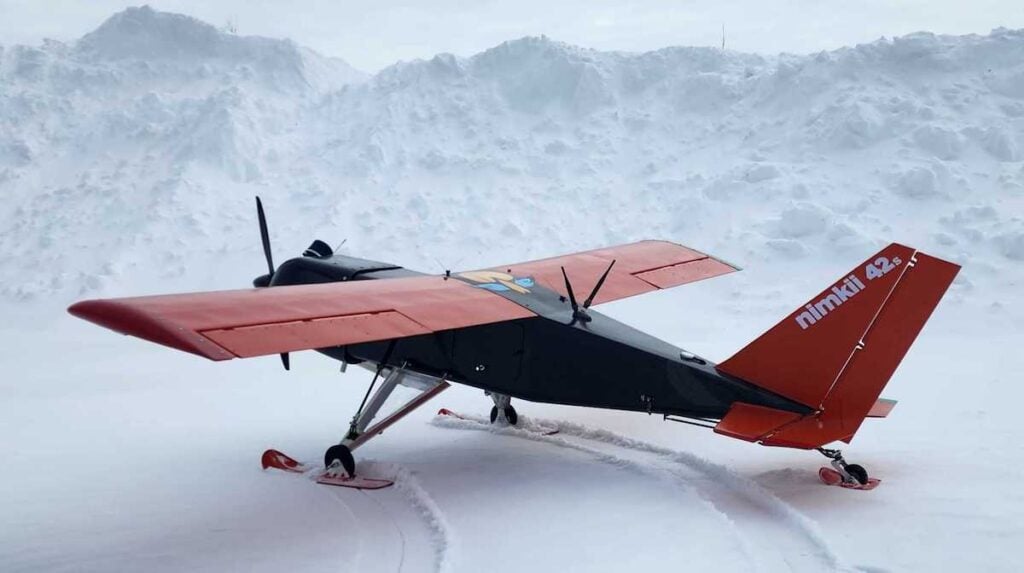
The Nimkii 42-S standard UAV platform from Sky Canoe in Canada uses a single-cylinder two-stroke SP-55 FI TS ROS engine as the power unit for its transport UAV
High power output relative to engine weight remains a key advantage in applications where payload capacity, range, and endurance are directly influenced by system weight. The simplified design can also reduce maintenance complexity and support operation in field environments with limited servicing infrastructure. Sky Power International’s SP-110 FI TS fuel-injected two-stroke engine reflects this approach, combining compact integration with high power density for UAV applications.
Limitations of the two-stroke concept include higher fuel consumption, increased vibration levels, and reduced smoothness of operation. UAVs equipped with ISR or electro-optical payloads may therefore require additional vibration isolation and structural decoupling measures.
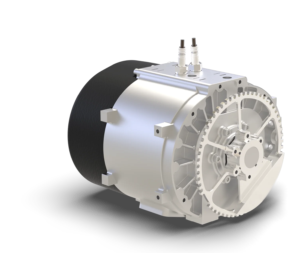
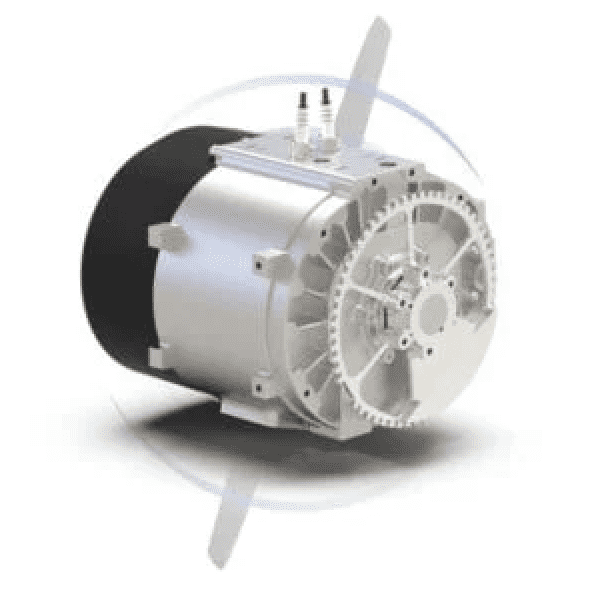
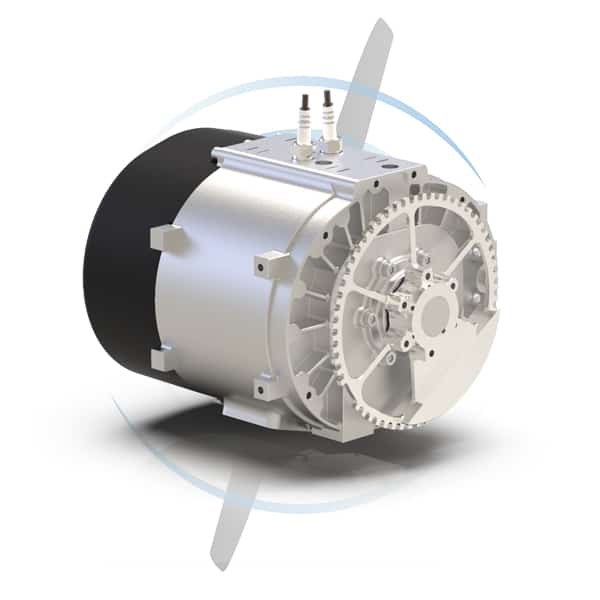
Sky Power International SP-180 single-disc Wankel engine
Wankel engines use a rotary design in which a triangular rotor moves within a specially shaped housing rather than relying on reciprocating pistons. This configuration produces smooth power delivery with lower vibration levels, making Wankel propulsion systems well suited to UAVs carrying optical, surveillance, and reconnaissance payloads.
Reduced vibration can improve image stability and support more consistent operation of ISR and electro-optical systems. The compact geometry of the Wankel architecture also supports installation in UAV platforms with limited internal space. Sky Power International’s SP-180 single-disc Wankel engine is designed for compact integration and reduced vibration characteristics. Unlike air-cooled two-stroke engines, Wankel propulsion systems commonly incorporate water and oil cooling systems and can support operation using gasoline, JP-8, and Jet A1 fuels.
Two-stroke engines are commonly selected for UAV applications prioritizing lightweight design, simplified maintenance, and cost efficiency, while Wankel engines are typically used in platforms requiring low-vibration operation, compact packaging, and compatibility with sensitive ISR payloads. Propulsion selection therefore depends on mission profile, payload requirements, integration constraints, and operational priorities.
Learn more about which propulsion technology is best suited to different UAV mission profiles here.