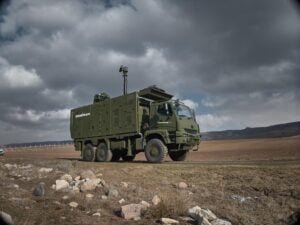
Anti-drone laser systems are directed-energy weapons that use concentrated laser beams to disable or destroy hostile UAVs. These systems typically integrate high-energy lasers with radar, EO/IR tracking sensors, fire control equipment, and precision beam directors to support military C-UAS operations.
This page features suppliers of counter-drone laser systems and C-UAS lasers for base protection, force protection, maritime security, and counter-reconnaissance missions.
If you design, build or supply Anti-Drone Laser Systems, create a profile to showcase your capabilities and connect with visitors who have an active requirement for your solutions.
Overview of Anti-Drone Laser Systems for Military C-UAS
Overview by
William Mackenzie
Updated:
Introduction to Anti-Drone Laser Systems
Anti-drone laser systems use high-energy laser beams to disable or destroy hostile Unmanned Aerial Systems (UAS). These counter-drone laser weapons concentrate optical energy on a target to damage its structure, propulsion components, sensors, or other flight-critical systems. Integrated with detection and tracking sensors, fire control systems, and precision beam directors, laser-based anti-drone systems maintain concentrated energy on targets to achieve the required effect. They provide a precision engagement capability for military Counter-Unmanned Aircraft Systems (C-UAS) operations.
Military anti-drone lasers can be deployed at fixed installations, integrated onto tactical ground vehicles, or installed aboard naval vessels. Unlike conventional kinetic interceptors, high-energy laser weapons do not consume conventional ammunition during engagements, although their operation depends on electrical power, cooling capacity, accurate target tracking, and suitable atmospheric conditions. Laser drone defense systems can operate alongside electronic warfare equipment and conventional air defense weapons within a layered defense architecture.
Military Applications of Counter-Drone Laser Systems
Military Bases, Airfields, and Critical Infrastructure
Fixed-site anti-drone laser systems can protect military installations, airfields, command facilities, and other critical infrastructure against hostile drone incursions. Integrated radar and Electro-Optical/Infrared (EO/IR) sensors support target detection and tracking, while laser weapons provide a means of engaging drones within the system’s effective range. Installations require appropriate beam safety controls, unobstructed engagement paths, and adequate electrical and cooling infrastructure.
Tactical Ground Forces and Maneuver Units
Vehicle-mounted counter-drone laser systems can protect tactical formations, forward operating positions, and deployed ground forces against reconnaissance and attack drones. Mobile configurations integrate laser weapons with tracking sensors, beam directors, fire control equipment, and onboard power and cooling systems. Stabilization supports target tracking and engagement from mobile platforms, although firing while moving introduces additional beam control challenges.
Naval Vessels and Maritime Force Protection
Naval laser weapons provide a directed-energy defense option against drone threats approaching surface vessels. Shipboard systems can integrate with naval surveillance sensors and combat management systems to support target identification, tracking, and engagement. Maritime installations must account for vessel motion, saltwater exposure, atmospheric conditions, and available shipboard power and cooling capacity. Some naval laser weapon systems can also engage other air and surface threats, depending on their individual capabilities.
Border Security and Perimeter Defense
Anti-drone lasers can support the protection of military border areas, secured facilities, and restricted operational zones against unauthorized or hostile UAS activity. Ground-based sensors detect and track approaching drones, enabling operators to assess threats and authorize laser engagements where permitted. Effective deployment requires suitable coverage, defined engagement sectors, and safety measures that account for surrounding personnel, aircraft, and infrastructure.
Counter-Surveillance and Reconnaissance Drone Mitigation
Counter-drone laser weapons can engage UAS conducting hostile surveillance, reconnaissance, or targeting activities. High-energy laser systems may disable flight-critical components, while specialized lower-power laser systems can disrupt susceptible optical sensors. Physical damage and optical sensor disruption involve different mechanisms, power requirements, and engagement effects, with laser safety and legal restrictions applying to both. Laser C-UAS equipment can therefore complement electronic warfare and other counter-reconnaissance measures.
Anti-Drone Lasers Compared with Other Drone Defense Technologies
Laser-based anti-drone systems have different operational characteristics from kinetic, Radio Frequency (RF), microwave, and cyber-based C-UAS technologies. The principal distinctions include engagement mechanisms, target compatibility, operational constraints, and ammunition or power requirements.
Kinetic Interceptors: Missiles, projectiles, and interceptor drones physically engage hostile UAS. Unlike kinetic weapons, high-energy lasers deliver energy without launching a projectile or consuming conventional ammunition, but require sustained target illumination and suitable atmospheric conditions.
RF Signal Jamming: RF jammers disrupt susceptible drone command, control, navigation, or communication links. Counter-drone lasers can physically damage targets and engage UAS that do not depend on vulnerable RF links, provided tracking, beam propagation, and energy delivery requirements are met.
High-Power Microwave (HPM) Systems and Anti-Drone Guns: HPM weapons direct electromagnetic energy toward drone electronics and may affect multiple targets within an illuminated area. Anti-drone guns commonly refer to handheld RF disruption equipment, although the term can also describe projectile-based systems. High-energy laser weapons instead concentrate optical energy on individual targets, generally requiring precise tracking and sufficient dwell time.
Drone Cyber Takeover Systems: Cyber-based counter-drone technologies exploit supported communication protocols or vulnerabilities to obtain control of susceptible UAS. Laser systems do not require access to drone communications or onboard software, but typically disable or damage aircraft rather than recover them intact.
These technologies can be integrated into layered C-UAS architectures, allowing military operators to select engagement methods according to the threat, operational environment, and applicable authorization requirements.
Emerging Developments in Laser Drone Defense Systems
Developments in military laser C-UAS technology focus on improving engagement performance, deployment flexibility, and integration with existing air defense systems.
Higher-Power Solid-State Laser Systems: Advances in laser source efficiency, fiber and other solid-state laser architectures, and beam combining are supporting scalable optical output for C-UAS applications. Higher power can increase energy delivery capability, although engagement effectiveness also depends on beam quality, tracking accuracy, target characteristics, and atmospheric conditions.
Advanced Beam Control and Adaptive Optics: Developments in precision pointing, beam stabilization, and adaptive optics are improving energy delivery against moving targets. Adaptive optics can compensate for certain atmospheric distortions, helping maintain beam quality, although effectiveness depends on operating conditions and system design.
Compact and Mobile Laser Weapons: Improvements in laser packaging, subsystem integration, and Size, Weight, and Power (SWaP) characteristics are supporting transportable and vehicle-mounted counter-drone laser systems. Mobile configurations must balance optical output, electrical demand, cooling capacity, and platform integration constraints.
Improved Power and Thermal Management: Advances in power conversion, energy storage, and cooling technologies are supporting more efficient laser operation and repeated engagements. Thermal management remains a significant design consideration because high-energy laser systems generate substantial waste heat that must be removed to maintain operational performance.
These developments support the continued integration of anti-drone laser systems into military air defense networks, alongside radar, electronic warfare equipment, kinetic interceptors, and other C-UAS technologies.
The latest defense technology news, straight to your inbox.
Get our weekly roundup of technology developments, new products and industry news.
THANK YOU FOR SIGNING UP
Thanks for joining us. Check your inbox.
We've sent you an email. Click the confirmation link to complete your subscription to the weekly eBrief. In the meantime, explore the latest news, suppliers and technologies on DA.
Advancing Defense Capability Through Strategic Collaboration
Defense Advancement works with major OEMs to foster collaboration and increase engagement with SMEs, to accelerate innovation and drive defense capabilities forward.