



Quadcopters
Discover cutting-edge solutions from leading global suppliers
Beyond Vision successfully demonstrated several next-generation Unmanned Aerial Vehicle (UAV) capabilities during the REPMUS 2025 multinational defense innovation exercise.
The demonstrations highlighted the company’s commitment to developing interoperable, mission-ready systems designed to enhance situational awareness, protection, and maritime intelligence for defense operations.
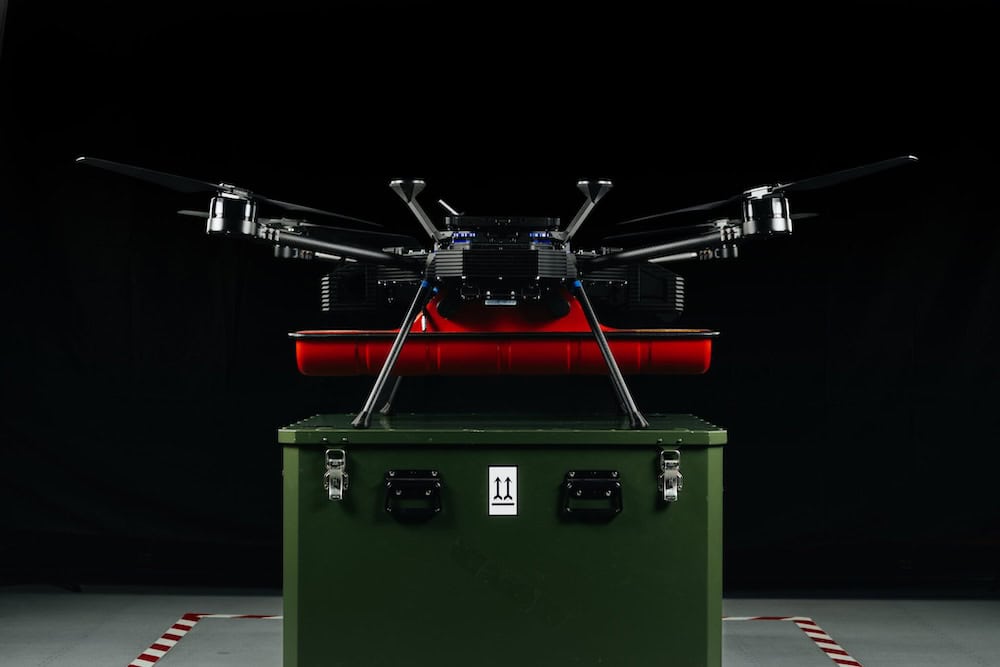
Key operational successes included the BVQ418 quadcopter UAV, which successfully detected and identified sea mines during live operations using a Magnetic Anomaly Detector (MAD) system. This same MAD technology allowed the BVQ418 to identify and track submarine trajectories at depths of up to 175 meters, performing take-offs and landings from a ship.
For harbor protection, the VTOne (BVT516) fixed-wing VTOL executed long-range surveillance missions up to 4 km, securing harbor and vessel movements. The VTOne also performed nighttime reconnaissance using a thermal camera, accurately identifying targets and maintaining performance in low-visibility conditions.
A new modular payload system was demonstrated on the BVQ418 smart quadcopter, capable of carrying and deploying up to two grenades simultaneously or at separate locations for coastal defense missions.
All Beyond Vision systems were tested under STANAG 4817, the NATO framework for unified command and control of multi-domain unmanned assets, ensuring full interoperability across air, sea, and ground systems. The company also introduced its new Mobile Ground Control Station (GCS), designed to enable flexible operations and improved field command capability.
Dário Pedro, CEO of Beyond Vision, commented, “REPMUS 2025 was an opportunity to validate Beyond Vision’s readiness to support complex, multi-domain operations. These demonstrations underscore our ability to integrate AI, advanced sensors, and resilient design to meet the operational demands of modern defense.”
The company’s performance reinforces its role as a key European contributor to defense technology innovation, supporting NATO interoperability and advancing the continent’s strategic autonomy in unmanned systems.