Single Board Computers (SBC)
Discover cutting-edge solutions from leading global suppliers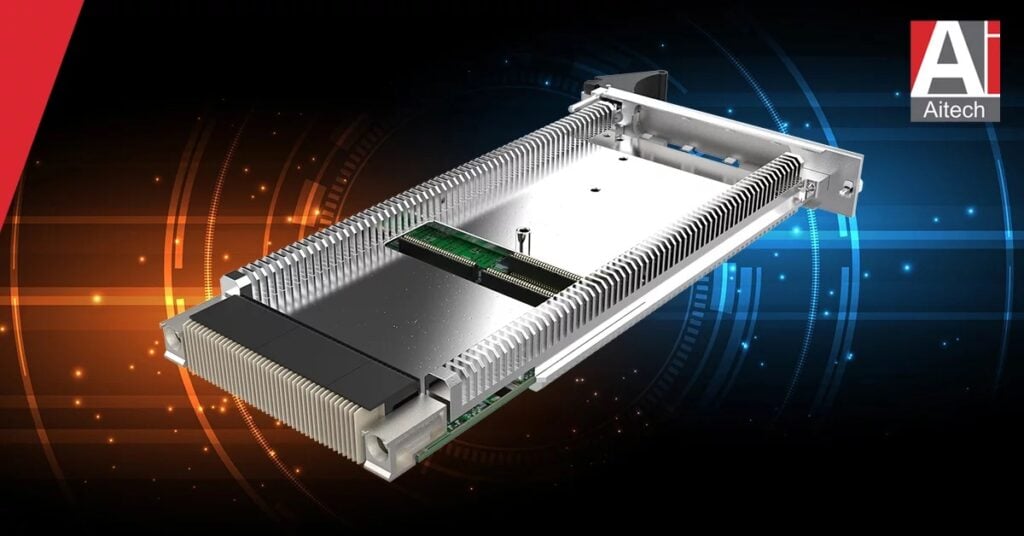
Aitech, a leader in rugged embedded systems for military, aerospace, and space applications, has introduced the 3U OpenVPX SP1—a space-rated single-board computer (SBC) designed to support the next generation of space exploration and satellite operations.
Engineered for high-performance missions across low Earth orbit (LEO), geostationary orbit (GEO), lunar, and deep space environments, the SP1 enhances computational capabilities for spacecraft and payload systems, delivering advanced edge processing and onboard analysis.
John White, Space Solutions Director at Aitech, said, “The space market is rapidly evolving, and next generation, more powerful SBCs are essential in enabling multi-core high performance supporting increasingly complex missions. Aitech’s SP1 is indispensable in the space market by providing efficient and reliable computing solutions for Earth observation, communications, Command and Data Handling (C&DH), robotic applications with vision processing, power distribution and management, and signal processing and analysis, from LEO to lunar and deep space missions.”
The SP1 is built to meet the increasing demands of modern space missions, offering a powerful onboard processor, extensive I/O options, and a high-performance configurable FPGA. These features enable mission-critical reliability, adaptability, and scalability, making the SP1 an ideal solution for spacecraft requiring high-bandwidth data processing and real-time decision-making.
Key Applications of the 3U OpenVPX SP1
Autonomous Space Maintenance and Operations
As a digital backbone for spacecraft, the SP1 supports autonomous decision-making and maneuvering by integrating AI/ML algorithms. This reduces reliance on ground-based commands, enabling real-time adaptability and enhancing mission efficiency for both crewed and uncrewed operations.
Debris Avoidance and Situational Awareness
With an increasing amount of space debris posing a risk to satellites and spacecraft, the SP1’s high-speed processing capabilities play a critical role in detecting and mitigating collision threats. It enables enhanced situational awareness, dynamic trajectory adjustments, and autonomous collision avoidance to ensure mission longevity and safety across all orbital levels.
Multiple Payload Hosting and Control
Leveraging OpenVPX architecture and high-bandwidth I/O capabilities, the SP1 offers seamless integration with diverse sensors and payloads. It supports a wide range of digital backbone architectures, including Gigabit Ethernet, GPIO, UART Serial, USB 2.0, SpaceWire, SpaceFibre, CANbus, and SPI. Additionally, its onboard FPGA and PMC connector allow for supplementary I/O expansion, facilitating stepper motor control, high-speed camera interfaces, power management, and digital/analog input-output.
Mission-Critical Reliability
Designed for long-duration space missions, the SP1 is built to withstand extreme radiation environments. It incorporates electronic reliability features tailored for different mission profiles, from LEO to deep space, ensuring operational integrity in both unmanned and human-critical applications. Equipped with four 1.8 GHz 64-bit ARM Cortex-A72 cores delivering 44,000 CoreMarks of performance, the SP1 utilizes ECC-equipped DDR4 memory to optimize data processing efficiency. This local processing capability reduces bandwidth demands by transmitting only essential information.
To further enhance durability, the SP1 undergoes rigorous radiation testing, achieving characterization to 100 krad (Si) and providing latch-up immunity to 67 MeV-cm²/mg in an ISS orbit. These specifications ensure resilience against space radiation, making the SP1 a robust computing solution for advanced space missions.
With its combination of processing power, adaptability, and mission-critical resilience, the Aitech SP1 stands as a pivotal advancement in space-rated computing, ready to support the future of space exploration and satellite operations.