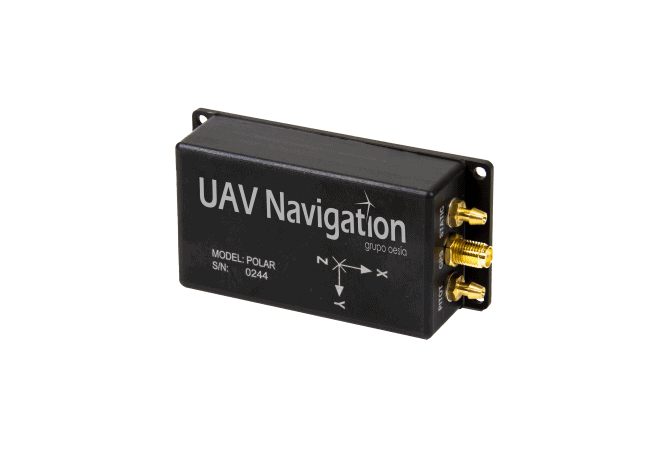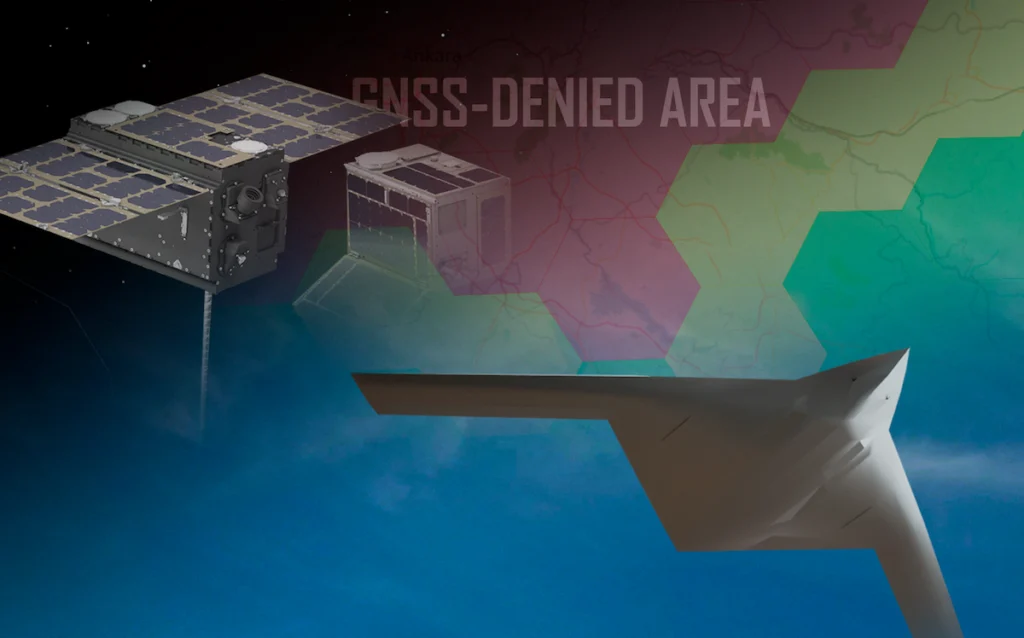
UAV Navigation-Grupo Oesía is applying layered navigation, communication, and onboard autonomy technologies to help unmanned aircraft maintain safe, predictable operation when GNSS signals or data links are degraded or denied.
In the interview, Miguel Ángel de Frutos Carro, Director and CTO at UAV Navigation-Grupo Oesía, discusses sensor fusion, swarm behavior, attritable UAV architectures, and the software and industrial challenges associated with mission continuity in contested environments.
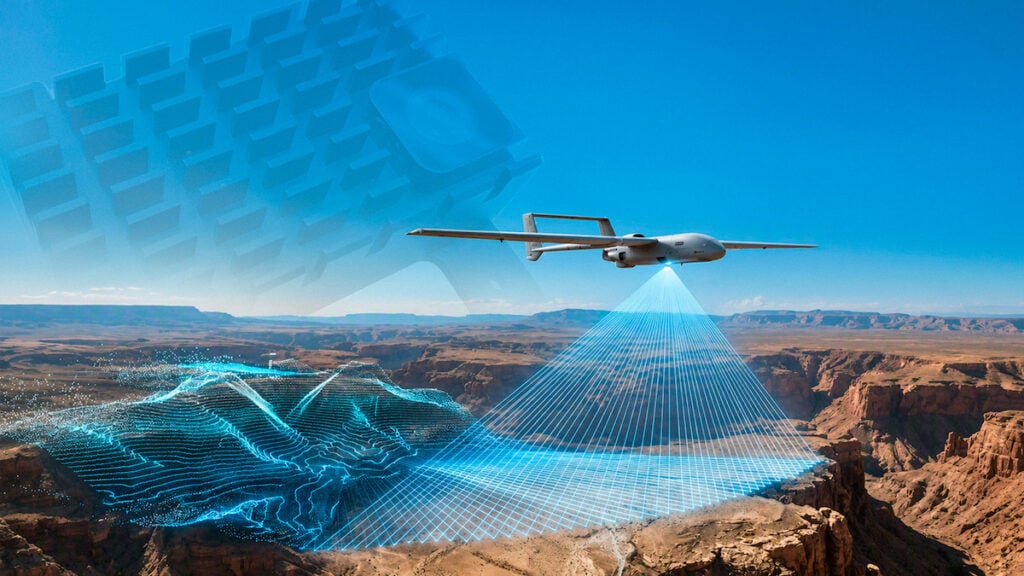
The article examines how inertial navigation is combined with air data, magnetometers, visual navigation, signals of opportunity, and other aiding sources. In inertial-only operation, the company reports drift of approximately 4% of the distance traveled. Its Visual Navigation System can reduce that figure to about 1% in unfamiliar terrain and can effectively eliminate drift in previously mapped or revisited areas. Continuous integrity monitoring also allows the navigation system to identify and reject inputs associated with jamming, spoofing, and other forms of navigation warfare.
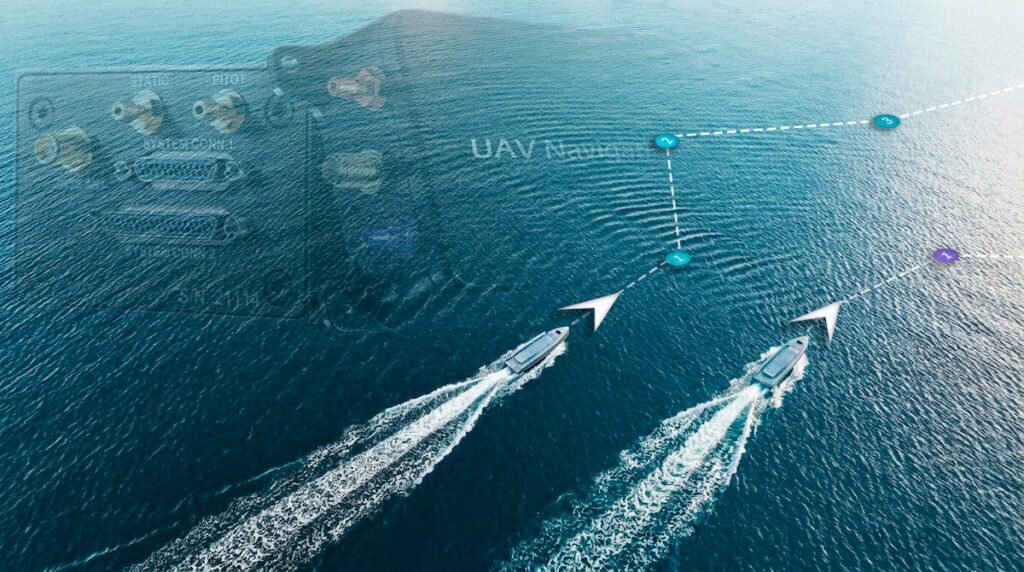
Swarm resilience is another central topic. Tight formations require inter-vehicle communications, but sustained link loss prompts a transition toward safer, more separated formations. UAV Navigation-Grupo Oesía is also evaluating vision-based relative awareness, directional radio-frequency links, and free-space optical communications to support collision avoidance, basic formation awareness, and operational continuity when conventional links become unreliable.
The full interview also covers autonomy for attritable aircraft, including the division between safety-critical onboard functions and computationally intensive tasks completed before deployment or outside the vehicle. It considers lessons from active contested environments, the need for rapid software updates, and broader engineering constraints involving production scale, interoperability, representative datasets, and defense acquisition cycles.