Showcase your capabilities
If you design, build or supply Rugged PDA Devices, create a profile to showcase your capabilities and connect with visitors who have an active requirement for your solutions.



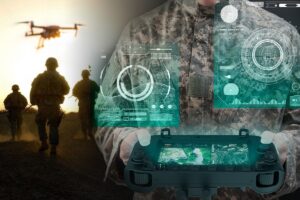
Rugged PDA devices provide mission-ready mobile computing capabilities for dismounted operators, delivering secure access to command tools, mapping, and real-time situational awareness in austere environments. These mobile computers withstand shock, extreme climates, and contested electromagnetic conditions while integrating with tactical radios, sensors, and C4ISR networks.
This category showcases suppliers of rugged handheld computers and military PDA devices supporting navigation, messaging, targeting, and unmanned systems control, enabling distributed operations across land, maritime, and air domains.
Read the Technology Overview
Ultra-Reliable & Mission-Proven Rugged Computing Solutions for Demanding Defense & Security Applications

If you design, build or supply Rugged PDA Devices, create a profile to showcase your capabilities and connect with visitors who have an active requirement for your solutions.

Rugged Personal Digital Assistant (PDA) devices and military handheld computers provide frontline personnel with direct access to command-and-control functions, digital mission tools, and real-time situational awareness. Unlike commercial devices, military mobile computers are meticulously engineered to operate in contested electromagnetic environments, withstand battlefield abuse, and integrate seamlessly with tactical radios, specialized sensors, and C4ISR networks. They function as the warfighter’s portable mission processor, delivering critical, actionable information precisely where it is needed most: at the decisive point of contact.
Defense forces increasingly rely on distributed, network-enabled warfare, a shift where every operator becomes a critical sensor and decision-maker. This operational paradigm creates stringent and complex requirements for handheld computing systems. Core demands include reliable connectivity even under degraded or denied conditions, secure data handling and encryption at rest, multi-domain interoperability, and persistent power availability over multi-day missions. These devices must demonstrably function across extreme climates, manage secure communications, and host computationally intensive mission applications with minimal latency.
Rugged mobile computers and tactical PDAs empower operators with digital overlays of terrain, friendly force positions, mission objectives, and dynamic threat data. Mission planning functions, once largely confined to fixed command posts, are now securely accessible directly to dismounted personnel. These integrated tools significantly reduce cognitive load and enhance the speed and fidelity with which soldiers can interpret and act upon fast-changing battlefield information.
Integrated Geographical Information System (GIS) applications enable rapid, real-time mapping, complex route planning, and on-demand geospatial intelligence (GEOINT) analysis. Blue Force Tracking (BFT) functions dramatically improve coordination by displaying friendly positions and sharing current unit status over tactical, low-bandwidth networks. These sophisticated capabilities are absolutely essential in complex urban or non-permissive terrain, minimizing fratricide risk and supporting seamless joint and coalition operations.
Rugged handheld computers act as essential edge terminals for secure messaging, digital forms, and tactical chat, enabling squads to exchange time-sensitive mission updates, high-resolution imagery, and command directives. When securely connected to next-generation soldier radios or self-forming Mobile Ad-hoc Networks (MANETs), these devices enhance unit cohesion and extend communication reach without reliance on vulnerable fixed infrastructure.
Modern military PDA devices are designed to robustly interface with a wide range of external, role-specific sensors. Biometrics modules support rapid identity verification during checkpoint operations or Special Operations Forces (SOF) missions. Chemical, Biological, Radiological, and Nuclear (CBRN) detectors and chemical sensing peripherals provide immediate hazard awareness to the operator. Furthermore, laser rangefinders and weapon-mounted sensors feed real-time targeting and mapping applications, critically improving precision engagement capabilities.
Military handhelds invariably include hardened Global Navigation Satellite System (GNSS) receivers capable of simultaneously tracking multiple constellations, including GPS, GLONASS, Galileo, and BeiDou signals. Sophisticated Dead Reckoning (DR) technologies such as integrated Inertial Measurement Units (IMUs) maintain superior positional accuracy even when satellite signals are intentionally degraded or completely denied (e.g., in subterranean settings, urban canyons, or electronically contested environments). This combination ensures the user can rely on persistent, accurate navigation.
For ground troops, the rugged PDA functions as a core mission planner, precision navigation aid, and secure communications hub. These devices fundamentally improve small-unit situational awareness and streamline coordination during dynamic and complex operations.
SOF operators rely on advanced handheld devices for secure intelligence collection, persistent target surveillance, and precision geolocation. Their compact form factor, low-emissions profile, and highly secure operation make them ideally suited for clandestine or denied-area missions.
Mounted forces effectively use handheld computers to access Battle Management System (BMS) overlays, complex convoy routing, and critical logistics data. Their portability is key, allowing crews to maintain access to essential digital tools even when they are dismounted from the vehicle platform.
Boarding parties employ rugged handhelds to verify identities, inspect vessels, record and encrypt evidence, and maintain resilient, encrypted communications with the parent ship, all while operating in unforgiving high-moisture, salt-rich environments.
Handheld systems are vital for supporting maintenance crews with digitized technical manuals, sophisticated fault diagnostics, and electronic logbooks. Aircrew utilize them for ground-based mission planning, as navigation supplements during flight, and as essential debriefing tools.
While focused on defense, these resilient systems are also critical for civil agencies, which rely on rugged PDAs for field assessments, detailed incident reporting, and secure, cross-agency coordination among dispersed teams. Their inherent resilience makes them indispensable for wildfire response, disaster zones, and hazardous industrial environments.
Integrated soldier modernization systems utilize the rugged handheld computer as a central processing and data routing node. This central device connects helmet-mounted displays, various body-worn sensors, and tactical radios to effectively consolidate and display situational awareness across the entire squad.
By tightly interfacing with platform mission computers and tactical radios, handheld devices effectively extend vehicle situational awareness to dismounted personnel and critically support two-way, cross-platform mission data exchange.
Rugged PDAs frequently serve as intuitive, robust Ground Control Stations (GCS) for Unmanned Aerial Vehicles (UAVs), Unmanned Ground Vehicles (UGVs), and Unmanned Underwater Vehicles (UUVs), enabling direct payload management, rapid waypoint editing, and essential sensor data visualization.
Forward observers and Joint Terminal Attack Controllers (JTACs) depend heavily on handheld systems for digital call-for-fire workflows, secure laser target handoff, and high-precision strike coordination.
Modern rugged PDAs utilize multi-core ARM or x86 processors specifically optimized for low-power consumption and real-time operation. Critically, many platforms are integrating AI accelerators and Vision Processing Units (VPUs) to support essential on-device analytics for rapid target recognition, predictive route optimization, and threat classification without mandatory reliance on continuous, high-bandwidth network connectivity. Furthermore, the selection of these components must align with a hardware root of trust to ensure system integrity from initial boot.
The employment of solid-state storage (SSD) coupled with robust cryptographic protection is non-negotiable for safeguarding sensitive mission data. Furthermore, removable secure drives are common, allowing for rapid zeroization or secure transfer while maintaining strict compartmentalization of classified information according to operational protocols.
Rugged displays are meticulously engineered for maximum readability in direct, harsh sunlight and mandatory compatibility with night-vision equipment (NVE). Capacitive touchscreens are reinforced, chemically hardened, and designed for reliable gloved operation and extreme mechanical stress.
Defense devices rely on robust, MIL-grade connectors to reliably support peripheral interfacing, ranging from specialized radios to custom sensors. Expansion modules are a key feature, enabling rapid, role-specific payload integration, such as specialized biometric scanners, high-resolution thermal imagers, or power extension blocks.
Long-duration mission profiles necessitate sophisticated power management. Hot-swappable battery systems ensure uninterrupted operation, while energy-efficient processing architectures are strategically utilized to maximize mission endurance while simultaneously supporting high-intensity computational workloads.
Rugged handhelds must flawlessly interface with soldier radios, resilient MANET networks, and Software-Defined Radio (SDR) platforms. They effectively act as crucial control terminals or gateways for voice, high-speed data, and situational awareness traffic across the battlespace.
When mission parameters permit, broadband backhaul (often leveraging tactical Private LTE/5G networks) extends access to cloud-based intelligence, mission planning servers, and remote command nodes. Wi-Fi 6 offers high-throughput local connectivity, while SATCOM ensures global reach.
Low-power wireless connections (Bluetooth Low Energy) reliably support a host of sensors, smart wearables, and weapon-mounted devices without disproportionately burdening the soldier’s critical energy budget.
Integrated antenna systems must maintain high performance even when the rugged handheld is body-worn or mounted to a soldier’s gear. Co-site mitigation is a crucial design factor, ensuring they can operate alongside powerful tactical radios without generating problematic signal interference.
Handhelds are required to synchronize mission data seamlessly across both tactical and strategic networks, utilizing secure protocols to ensure soldiers on the ground consistently operate with the most current and authoritative information.
While Android Tactical variants and secure Windows builds are prevalent, the defense sector increasingly relies on highly customized Linux-based embedded systems or hardened Government Off-The-Shelf (GOTS) solutions, all rigorously adapted for security partitioning and mission reliability.
Core applications support precise mapping, digital targeting workflows, CBRN alerts, detailed logistics workflows, and interactive digital checklists. Their modular, secure nature enables the rapid, reliable deployment of new mission capabilities as threats evolve.
As tactical clouds continue to evolve, strategic on-device AI provides increasingly sophisticated autonomous decision support, real-time target detection (especially for image/video filtering), and advanced route planning when disconnected from higher, centralized networks.
The User Interface and User Experience (UI/UX) are exhaustively optimized for rapid comprehension, minimal required keystrokes, and reliable operation during times of high fatigue, adverse weather, and high-adrenaline, mission-critical environments.
Handheld systems must securely and seamlessly share data with vehicle mission systems, command posts, and authorized cloud environments, fundamentally supporting the distributed operations model.
Next-generation devices are rapidly integrating specialized neural processing units (NPUs) capable of real-time video analytics, automated threat detection, and machine-driven reporting, transforming raw data into immediate, tactical intelligence.
The rugged handheld is evolving into the central processing hub for an interconnected array of body-worn sensors, smart textiles, physiological health monitors, and augmented vision systems, creating a unified soldier platform.
Advanced Augmented Reality (AR) overlays, delivered via integrated helmets or specialized eyewear, are transforming the handheld into a powerful back-end processor for immersive navigation, sophisticated targeting systems, and collaborative mission visualization.
Relentless advancements in energy density, localized power harvesting (e.g., solar, kinetic), and ultra-low-power processing are the key to unlocking significantly longer mission endurance and crucially reducing the size, weight, and power (SWaP) burden carried by the dismounted soldier.


 Searching Companies & Products


 Subscribe to the Weekly eBrief
The latest engineering and technical developments straight to your inbox - join thousands of engineers who receive it.
Subscribe to the Weekly eBrief
The latest engineering and technical developments straight to your inbox - join thousands of engineers who receive it.