



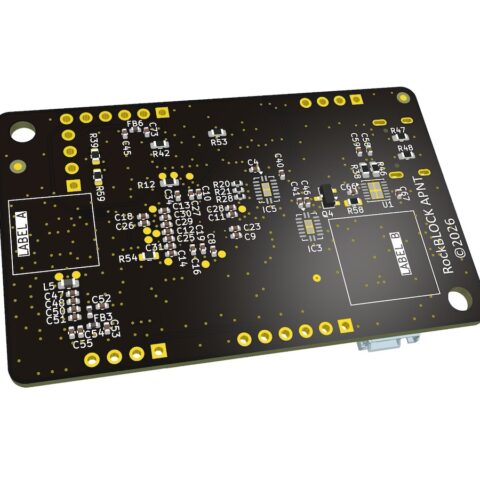


Showcase your capabilities
If you design, build or supply GPS Denied Navigation, create a profile to showcase your capabilities and connect with visitors who have an active requirement for your solutions.





Discover suppliers and manufacturers of GPS/GNSS-denied navigation technologies that keep military platforms operational even when satellite signals are compromised. These solutions provide reliable positioning and control for unmanned systems operating in contested, subterranean, urban, and underwater environments.
Read the Technology Overview


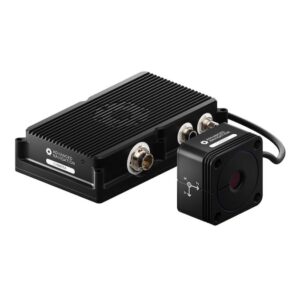
Advanced Inertial Navigation Systems (INS) for Reliable Navigation in Challenging Operational Environments


Cutting-Edge Inertial Solutions for High-Accuracy Navigation & Positioning in GPS-Denied Environments


Advanced Solutions for Defense Modernization: Propulsion, Sensors, Communication & Augmented Reality Systems

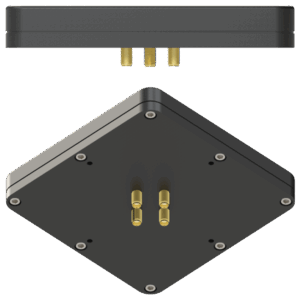
Tactical Grade IMU, GPS/INS, Weapon Orientation Solutions


MEMS-Based & ITAR-Free Inertial Navigation Solutions for Mission-Critical Applications

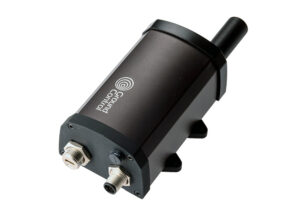
Reliable, Resilient and Secure Satellite Communications & Assured PNT Solutions for Mission-Critical Applications

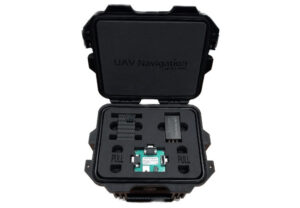
State-Of-The-Art Flight Control & GNSS-Denied Navigation Technologies for Tactical UAV Platforms

High-Performance Fiber Optic and MEMS Inertial Sensors & Navigation Systems


MEMS Inertial Sensors, Gyroscopes & Accelerometers for Inertial Guidance, Control & Stabilization

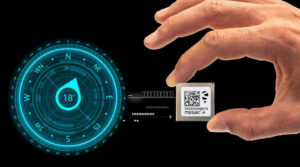
Assured PNT Solutions for Mission Critical Military, Defense & Government Applications


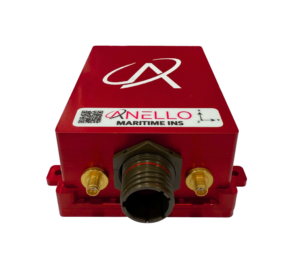
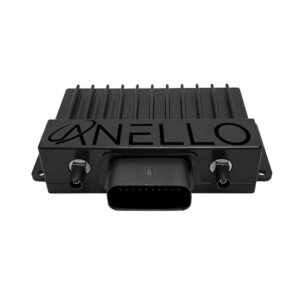
MEMS-based Inertial Navigation Systems for Supporting Tactical Unmanned Operations in GPS-Denied Environments

If you design, build or supply GPS Denied Navigation, create a profile to showcase your capabilities and connect with visitors who have an active requirement for your solutions.

GPS/GNSS-denied navigation allows military vehicles and autonomous platforms to determine their position and movement in environments where global navigation satellite systems are unavailable, jammed, or spoofed.
These environments are increasingly common in modern combat zones, especially where adversaries deploy electronic warfare measures.
Without reliable satellite signals, unmanned systems require alternative solutions that combine inertial measurement, environmental sensing, mapping, and algorithmic estimation. These solutions are often tailored to the operating domain, land, air, sea, or subsurface, and optimized for resilience, accuracy, and real-time responsiveness.

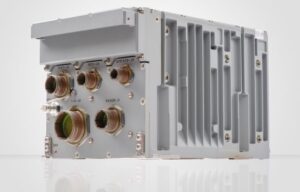
HGuide o480 inertial/GNSS for drone navigation from Honeywell.
GNSS-denied capabilities are vital across multiple mission types. The following domains represent the primary defense applications for these technologies:
Military UAS (Unmanned Aerial Systems) are often deployed in anti-access/area-denial (A2/AD) zones where GNSS spoofing and jamming are expected. In these missions, UAVs rely on inertial navigation systems, terrain-referenced navigation, visual odometry, and SLAM to maintain flight control, execute precision targeting, or conduct ISR without satellite support.
Applications include long-endurance reconnaissance, tactical mapping, loitering munitions, and drone swarm coordination, all requiring independent navigation resilience.
Urban canyons can cause multi-path distortion or a complete loss of signal. In these settings, Unmanned Ground Vehicles (UGVs) use tactical-grade IMUs, LIDAR sensors, radar, and SLAM algorithms to support:
These platforms must be capable of operating in GPS-denied corridors, underpasses, basements, or confined infrastructure environments.
Specialized unmanned systems are deployed for subterranean exploration in denied areas, such as tunnel networks, cave complexes, or hardened military structures. These vehicles must navigate without access to GNSS and are equipped with sensor packages for mapping, localization, and structural analysis.
They are used for:
GNSS signals do not penetrate water, making all underwater operations inherently GPS-denied. Unmanned Underwater Vehicles (UUVs) use Doppler velocity logs (DVLs), inertial sensors, bathymetric maps, and acoustic beacons for navigation.
Applications include:
Handheld or body-worn navigation tools are essential for troops operating in electronic warfare zones or GNSS-degraded environments. These tools use dead reckoning, magnetometers, and terrain data to guide operators silently and precisely.
Such systems are designed for:

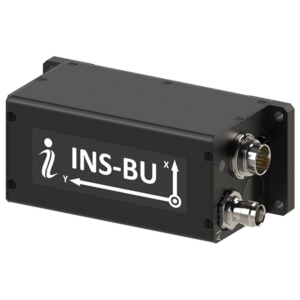
MEMS Inertial Measurement Unit, IMU-H100, for drone, submarine, and autonomous vehicle navigation, by Inertial Labs.
Unmanned logistics vehicles support mission sustainment in GNSS-contested regions. Ground or aerial resupply platforms use preloaded routes, obstacle detection, and terrain-following algorithms to complete deliveries in hostile environments.
Common use cases include:
GNSS-denied systems integrate multiple sensor modalities and computational methods to achieve accurate navigation. Core technologies include:
GNSS-denied capabilities vary by mission and platform. Key system types include:
GNSS-denied navigation systems must meet rigorous defense standards to ensure performance and interoperability. Commonly applied standards include:
These standards ensure reliability in extreme operational environments and allow integration with existing command-and-control frameworks.
Traditional navigation systems rely heavily on GNSS constellations such as GPS, GLONASS, Galileo, and BeiDou. While effective in open and stable environments, these systems are vulnerable to:
GNSS-denied systems mitigate these vulnerabilities through internal sensing, passive data acquisition, and terrain-based localization, offering resilience and independence from space-based infrastructure.
As military forces become more reliant on autonomous and semi-autonomous systems, the ability to operate in GNSS-denied conditions is essential for mission assurance. Adversarial threats to satellite infrastructure and increasing electronic warfare capabilities highlight the strategic need for resilient, modular, and signal-independent navigation systems.
GNSS-denied solutions support operational flexibility, enhance survivability, and ensure mission continuity across domains, land, air, sea, and subsurface.


 Searching Companies & Products


 Subscribe to the Weekly eBrief
The latest engineering and technical developments straight to your inbox - join thousands of engineers who receive it.
Subscribe to the Weekly eBrief
The latest engineering and technical developments straight to your inbox - join thousands of engineers who receive it.