




Advanced Navigation outlines the increasing vulnerability of commercial and autonomous platforms to GNSS spoofing, and presents its Inertial Navigation System (INS) technologies with integrated electronic protection as a practical method for maintaining Positioning, Navigation, and Timing (PNT) integrity in contested environments.
GNSS continues to support a wide range of applications, including autonomous vehicles, aviation, and maritime operations. However, the dependence on unencrypted satellite signals introduces a growing exposure to interference. Spoofing attacks transmit deceptive GNSS signals that cause receivers to calculate incorrect position, velocity, or time.
Unlike jamming, spoofing provides plausible but false data, allowing systems to continue operating without immediate detection. This creates a significant risk, as platforms may unknowingly deviate from intended routes or operate with inaccurate timing. Advanced Navigation highlights that such vulnerabilities can lead to safety incidents and operational disruption across multiple commercial sectors.
INS as a Foundation for Resilient Navigation
Advanced Navigation identifies INS as a critical component in mitigating GNSS-related risks. INS technology determines position and motion using internal sensors, enabling navigation without reliance on external signals. While inertial systems accumulate drift over time, they deliver highly accurate short-term data.
When integrated with GNSS, INS enhances overall system resilience. The combined approach enables continued operation during signal disruption or manipulation, supporting fallback navigation and preserving PNT integrity in environments where GNSS cannot be trusted.
Electronic Protection and Sensor Fusion
To address increasingly sophisticated interference, Advanced Navigation incorporates electronic protection directly into its INS solutions. These systems monitor GNSS inputs for anomalies such as inconsistent positioning data, abnormal signal behavior, or unexpected satellite configurations.
Sensor fusion plays a central role by continuously comparing GNSS data with inertial measurements and other inputs. This multi-layered validation allows the system to identify and reject unreliable signals, while prioritizing trusted data sources. When interference is detected, the system can transition to inertial navigation to maintain accuracy and continuity.
INS Solutions with Integrated Protection
Advanced Navigation’s product portfolio demonstrates how these capabilities are applied across different operational requirements.
Certus Evo is a MEMS-based GNSS/INS designed for applications where size, weight, and power constraints are important. It combines multi-constellation GNSS support with tightly coupled inertial sensing and electronic protection, enabling reliable performance in environments with potential signal interference.
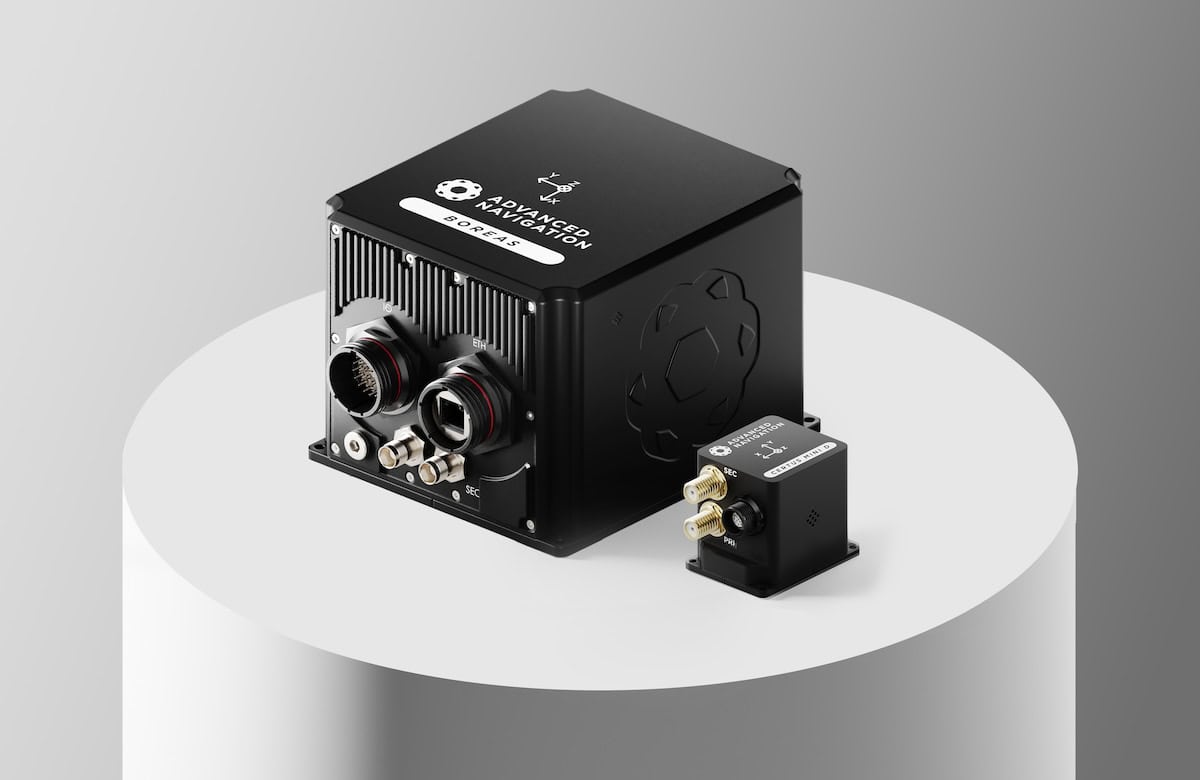
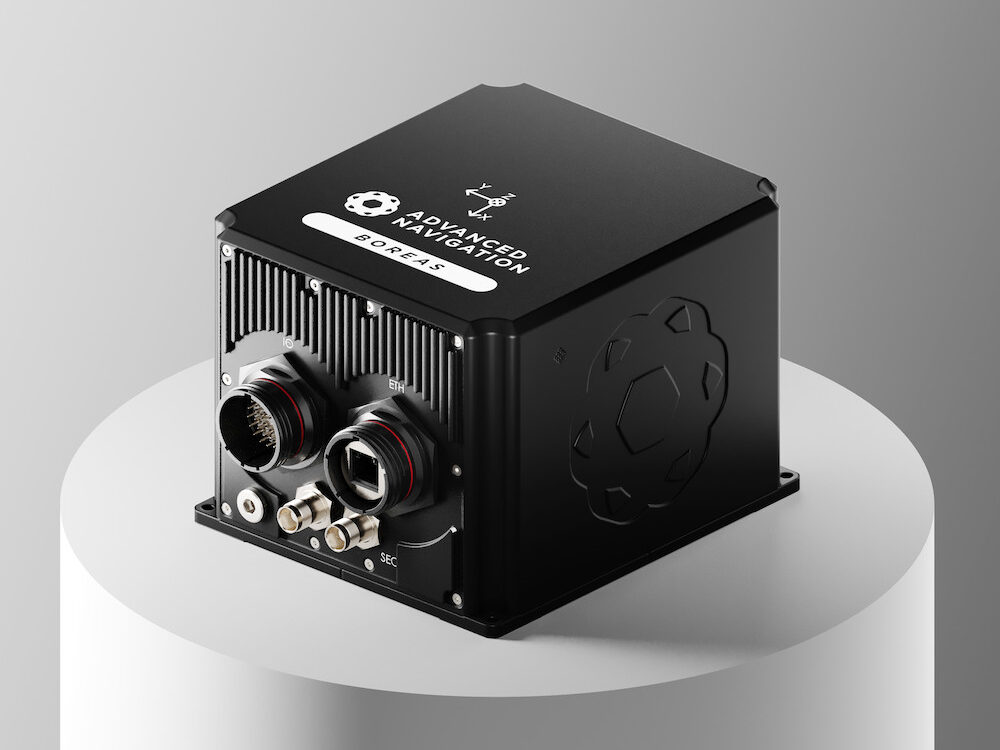
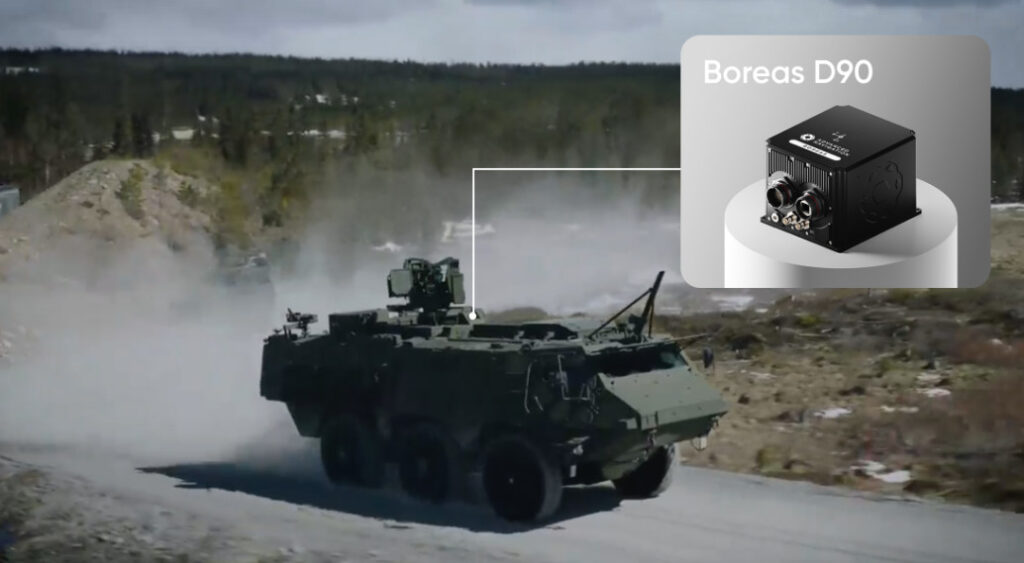
Boreas D Series, including the D50, D70, and D90 models, provides strategic-grade INS performance for high-value and mission-critical platforms. Utilizing fiber optic gyroscope technology, these systems offer low drift rates and sustained accuracy during extended GNSS outages. Enhanced electronic protection capabilities enable detection of more subtle spoofing attempts, supporting operation in heavily contested environments.
Strengthening Navigation Resilience
Advanced Navigation emphasizes that reliance on GNSS alone is no longer sufficient for modern commercial systems. Integrating INS with electronic protection establishes a multi-layered approach to navigation, reducing vulnerability to spoofing and other forms of interference.
By combining inertial sensing, sensor fusion, and signal validation within a single architecture, Advanced Navigation’s solutions provide a commercially available pathway to maintaining accurate and reliable PNT. This approach supports safer and more consistent operation across autonomous and commercial platforms where navigation integrity is essential.