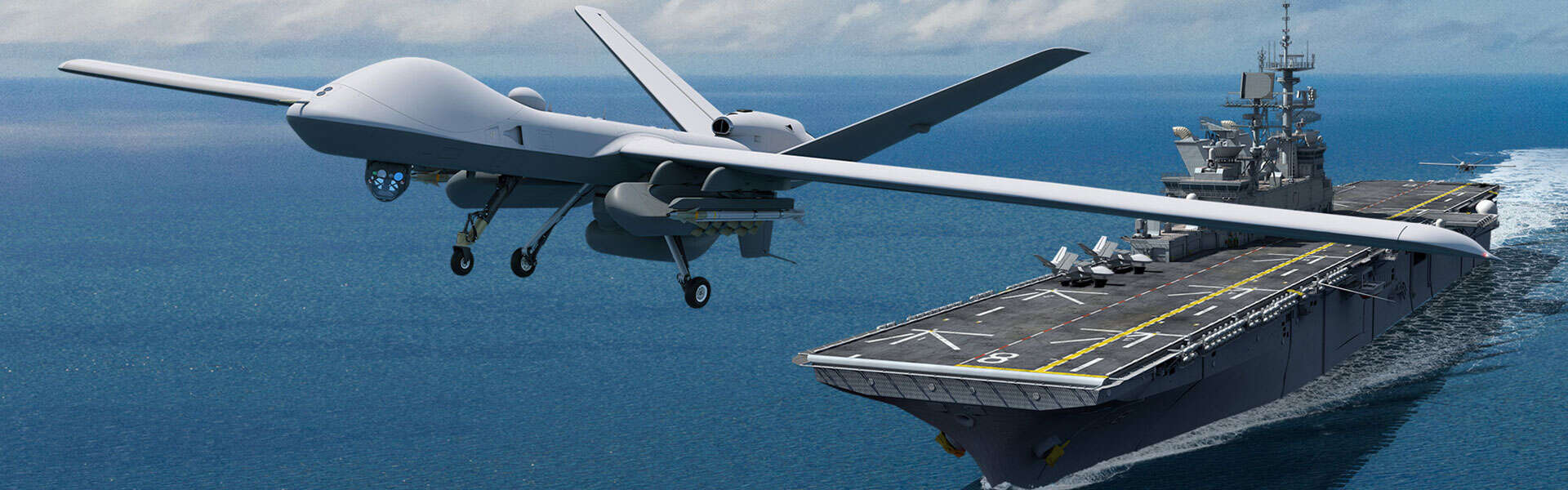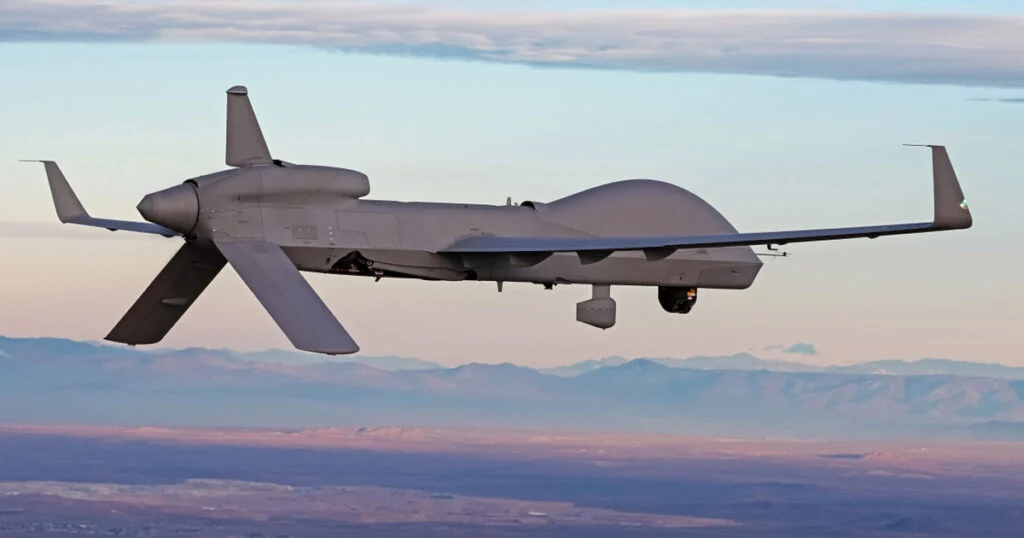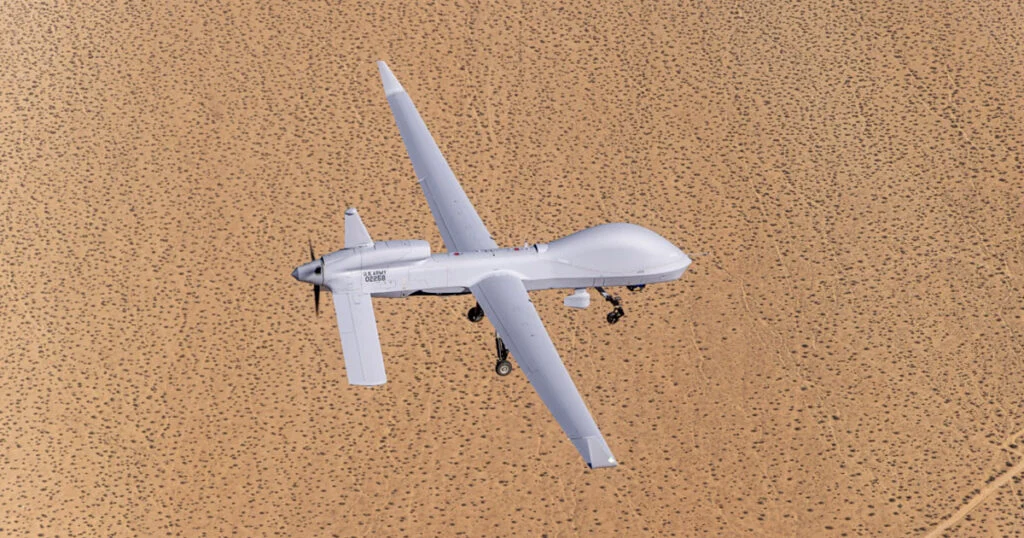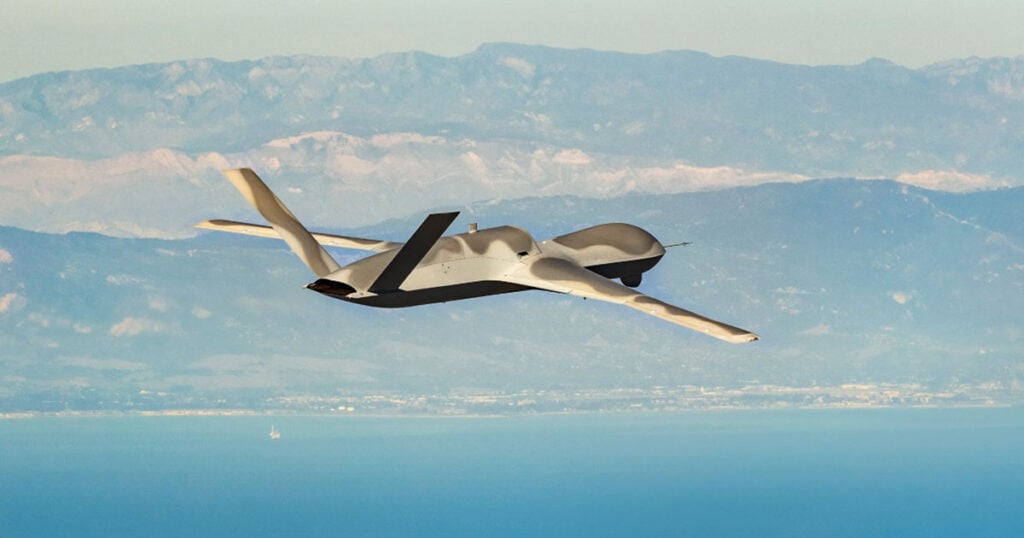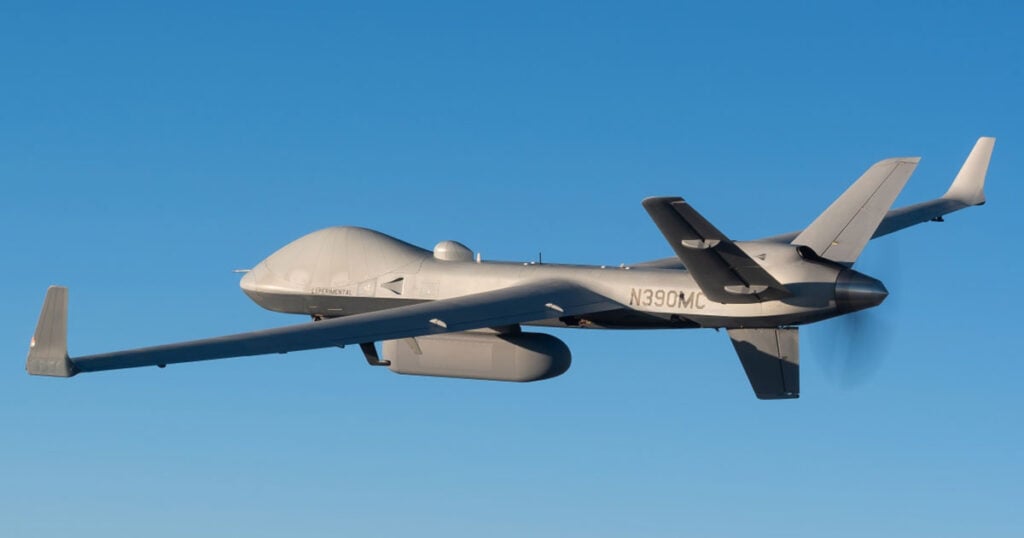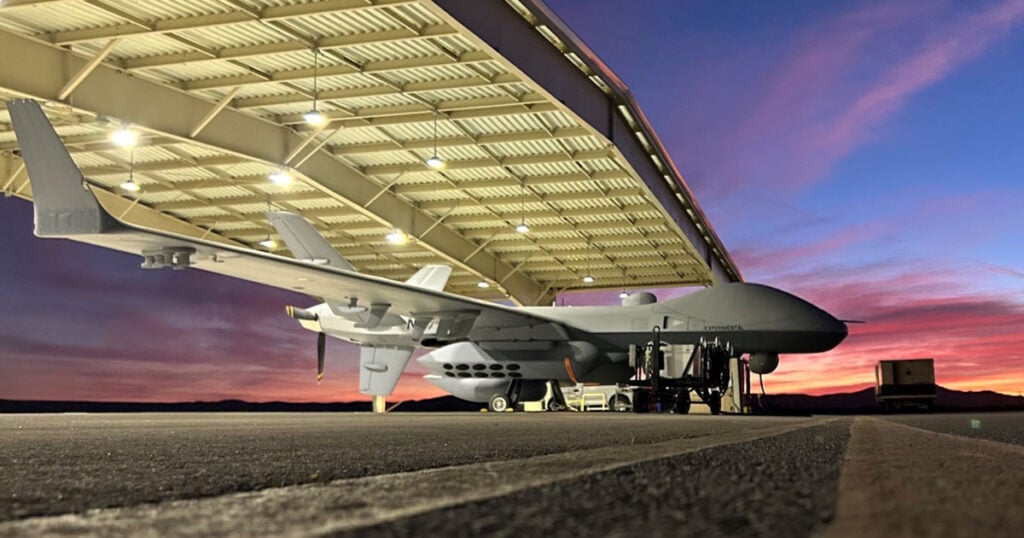



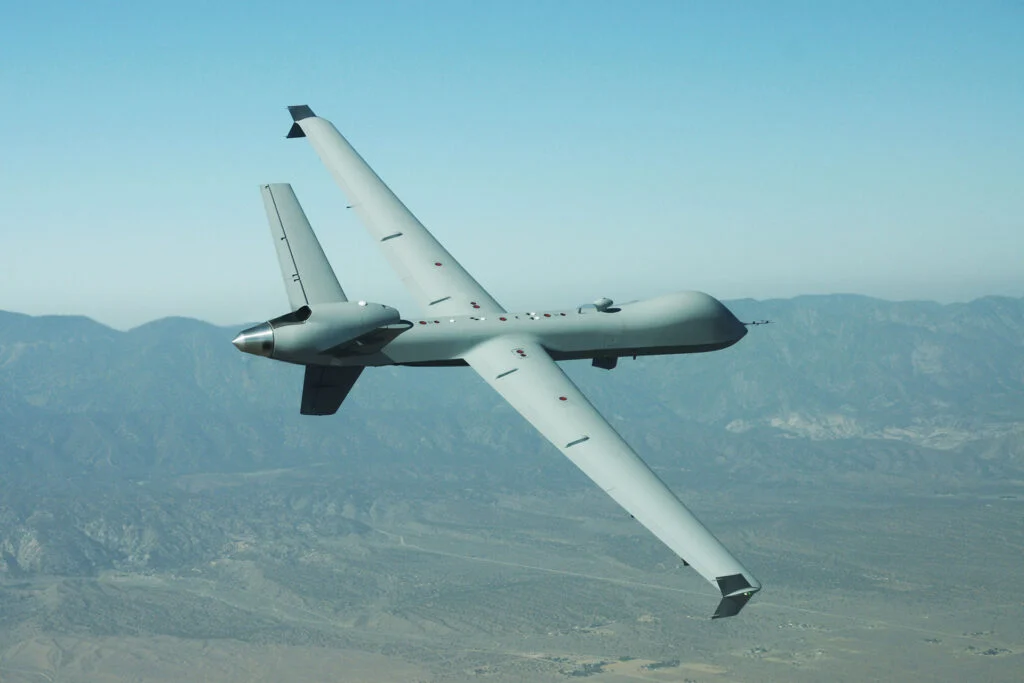
The MQ-9A Reaper® is a turboprop-powered, multi-mission Remotely Piloted Aircraft (RPA) developed by General Atomics Aeronautical Systems. It provides long-endurance, persistent ISR and strike capabilities with advanced modular payload integration.
Overview
The MQ-9A Reaper is a sophisticated evolution of the battle-proven Predator RPA, developed by General Atomics Aeronautical Systems (GA-ASI). First flown in 2001 with GA-ASI funding, the MQ-9A represents a major leap forward in endurance, performance, and reliability. Initially designated “Reaper” by the U.S. and Royal Air Force, the name has since been widely adopted for any weaponized Predator B variant.
Designed for multi-mission Intelligence, Surveillance, and Reconnaissance (ISR) over land and sea, the MQ-9A features unmatched operational flexibility. It has an endurance of over 27 hours, a maximum airspeed of 240 KTAS, and can operate at altitudes up to 50,000 feet. Its robust payload capacity of 3,850 pounds (1,746 kg) allows for multiple sensors and weapon configurations. With a 500% increase in payload capacity and nine times the horsepower of its predecessor, it is a formidable asset for modern warfare.
The MQ-9A is powered by the Honeywell TPE331-10 turboprop engine, which incorporates Digital Electronic Engine Control (DEEC) to enhance fuel efficiency and performance, particularly at lower altitudes. The aircraft meets and exceeds manned aircraft reliability standards, featuring a fault-tolerant flight control system and triple-redundant avionics architecture, making it one of the most reliable RPAs in operation.
Payloads and Capabilities
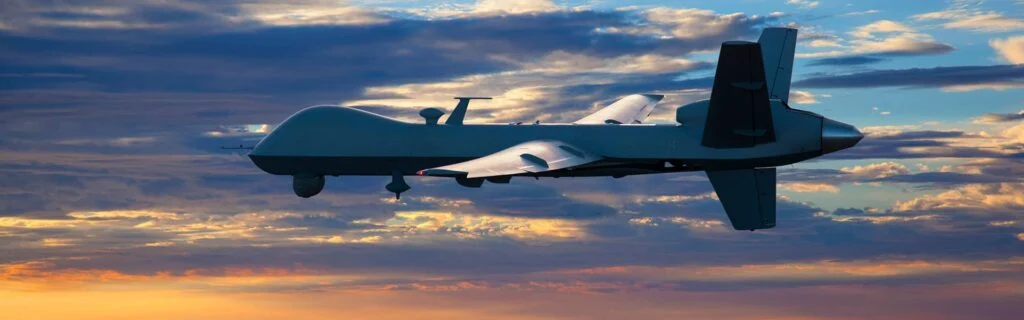
The MQ-9A is a highly modular system, capable of integrating a variety of mission payloads to enhance its surveillance and combat effectiveness. These include:
- Electro-Optical/Infrared (EO/IR) sensors
- Lynx® Multi-mode Radar
- Multi-mode Maritime Surveillance Radar
- Electronic Support Measures (ESM) / Signals Intelligence (SIGINT)
- Laser Designators
- Automated Identification System (AIS)
- Communications Relay Payloads
The aircraft is equipped with a MIL-STD-1760 stores management system, allowing it to carry a range of external stores across seven external hardpoints. It is controlled via a C-Band Line-of-Sight (LOS) data link or a Ku-Band Beyond Line-of-Sight (BLOS) SATCOM link, ensuring robust connectivity for remote operations.
Extended Range (ER) Variant
The MQ-9A Extended Range (ER) variant was designed to further improve endurance and mission flexibility. This version features:
- Wing-borne fuel pods for increased fuel capacity
- Reinforced landing gear to accommodate longer flight durations
- Extended endurance of up to 34 hours, compared to 27 hours in the base model
The MQ-9A continues to evolve, ensuring it remains relevant to its operators’ emerging needs. It has been acquired by the U.S. Air Force, U.S. Department of Homeland Security, NASA, the Royal Air Force, the Italian Air Force, the French Air Force, and the Spanish Air Force.