Cargo Drones
Discover cutting-edge solutions from 4 leading global suppliers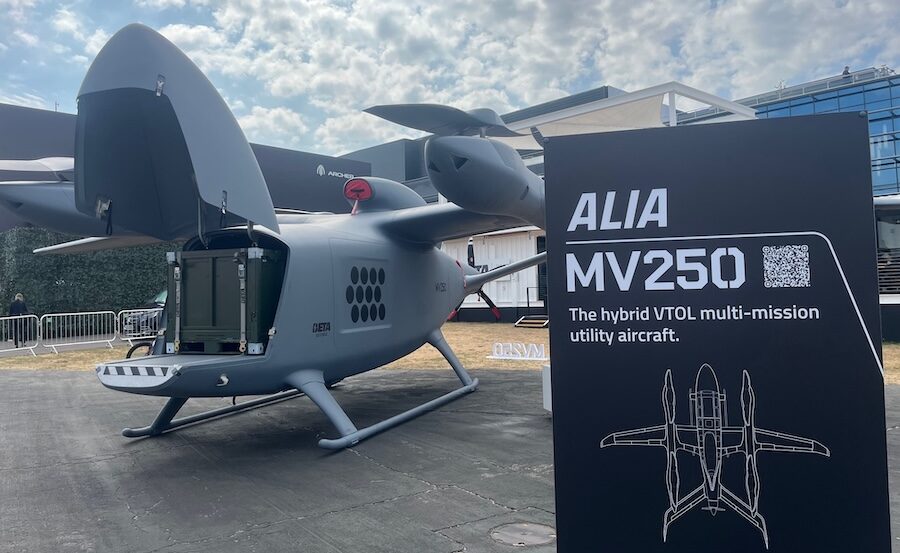
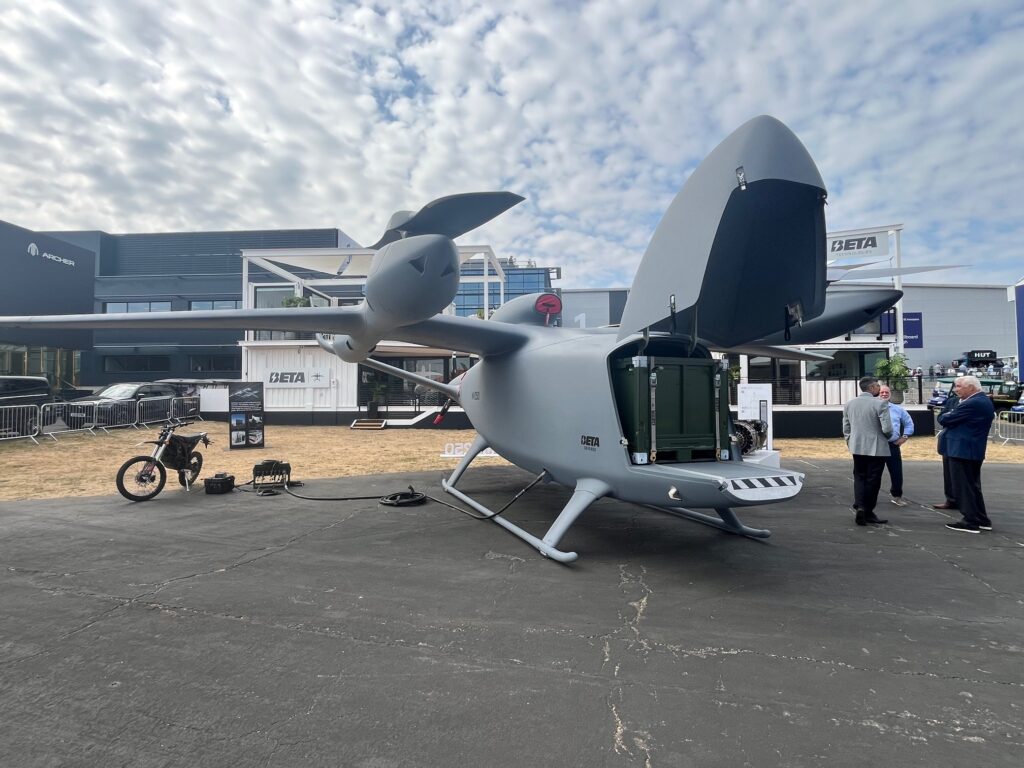
BETA Technologies has unveiled the MV250, an autonomous hybrid-electric Vertical Take-Off and Landing (VTOL) aircraft designed to provide greater range, higher speed, increased payload capability, and lower operating costs for military logistics in contested environments.
Built on the common architecture of BETA’s civil ALIA VTOL platform, the aircraft carries a 2,000-pound payload within a tactical range of 250 nautical miles and has a repositioning range of 1,300 nautical miles. Rather than beginning with a clean-sheet defense program, the platform draws on flight-proven propulsion, flight controls, software, batteries, and manufacturing systems. Major commodities and systems for the aircraft are produced on BETA’s existing production lines using common tooling and processes, providing cost and speed-to-market advantages.
Kyle Clark, Founder and CEO of BETA Technologies, stated, “The basic physics of the MV250 enable significantly longer range, higher speed and a lower cost of operations when compared to tiltrotor and legacy platforms. I believe we should be offering our military the most robust and best equipment in the world to maintain superiority and thus deterrence. MV250 uses advanced airframes and technologies we at BETA have spent years flying and combines them with exceptional products from GE Aerospace and Sikorsky. The combination gives commanders a highly available, adaptable platform that can evolve as operational needs change, all at a lower procurement cost and a lower logistics tail.”
GE Aerospace and BETA jointly developed the aircraft’s series hybrid-electric turbogenerator under a Joint Technology Development Agreement. The turbogenerator features a mechatronic design that closely couples electromagnetics and power electronics with a CT7/T700-based turbine, increasing efficiency and durability while reducing weight and system cost. In addition to extending operational flight range, it can provide ground-based power for auxiliary equipment in expeditionary applications.
Amy Gowder, CEO, Defense & Systems for GE Aerospace and BETA board member, stated, “We’re proud to be partnering with BETA to develop the mission critical technologies that will deliver the operational advantage our military customers need. In collaboration with BETA we’re bringing our expertise in electrical power and advanced propulsion systems to build the turbogenerator that ultimately unlocks greater range and mission flexibility when the customer needs it most. This collaboration reflects the potential of hybrid systems to advance military logistics capability.”
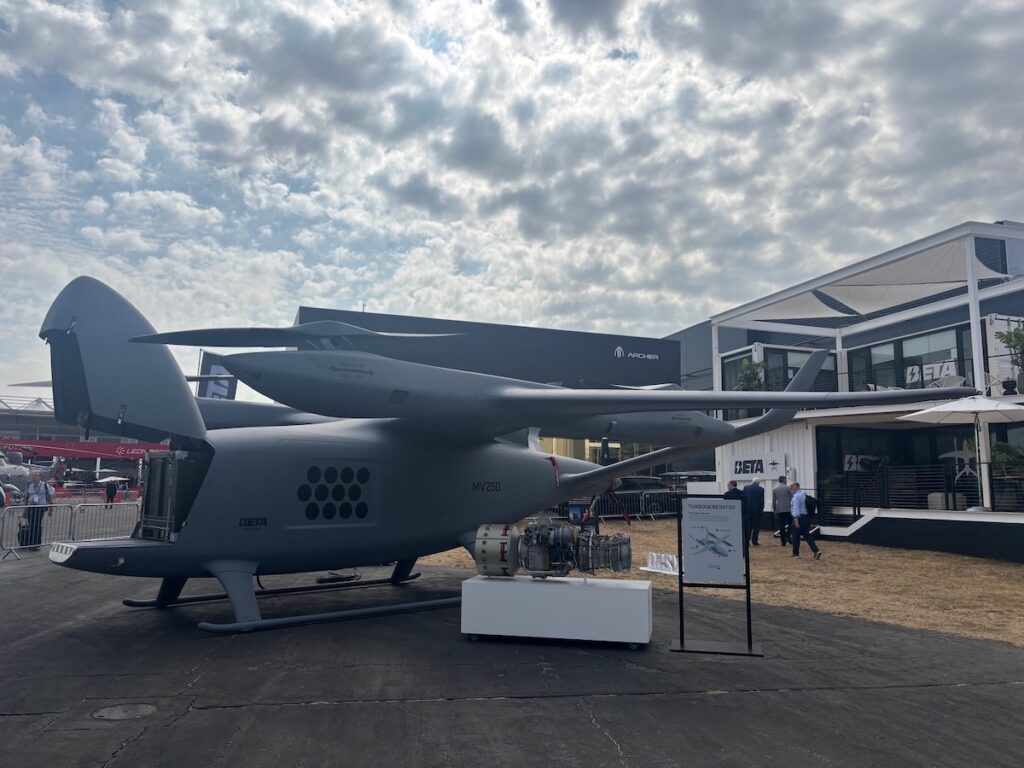
The MV250 features an uncrewed fuselage, autonomous flight capability, and a Modular Open Systems Approach (MOSA)-compliant architecture. BETA’s open-architecture flight control system is agnostic to the autonomous mission system and can integrate with a variety of mission platforms. BETA has flown its all-electric aircraft using both Sikorsky MATRIX™ systems and BETA’s internally developed autonomy systems.
Rich Benton, vice president and general manager of Sikorsky, a Lockheed Martin company, added, “Every time new platforms join the MATRIX™ autonomy family, we widen the network of uncrewed systems available to commanders, giving them greater resilience and flexibility to move critical resources to the point of need in contested environments. We view the dual-use hybrid-electric MV250 as a unique and complementary capability to Sikorsky’s UAS platforms. The rapid integration efforts and close collaboration with BETA is intended to address logistics mission needs of our DoW and international customers.”
The unveiling builds on BETA’s ongoing engagement with military customers, including a deployment earlier in 2026 during NATO Exercise Aurora 26 in Sweden. At the invitation of the U.S. Army, BETA operated its all-electric ALIA CTOL aircraft alongside conventional military assets in an expeditionary environment. Insights from the deployment continue to inform development of the MV250 and future mission capabilities, and BETA expects the aircraft to participate in upcoming large-scale military exercises.