


Data Interoperability
Discover cutting-edge solutions from leading global suppliers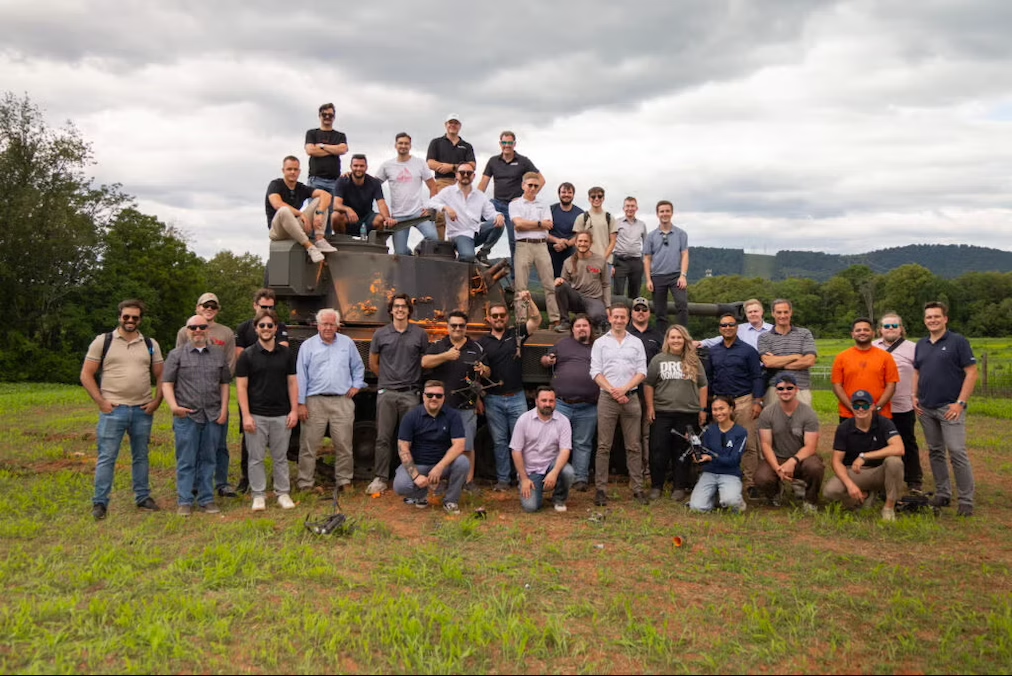
Engineers from 14 participating companies successfully demonstrated cross-vendor systems integration using the draft MAVLink-Military specification during a hands-on industry hackathon.
Hosted by the Dronecode Foundation at Auterion’s manufacturing facility, the event brought together 38 participants from government and industry as the sector seeks to reduce fragmentation between uncrewed platforms, payloads, and control systems.
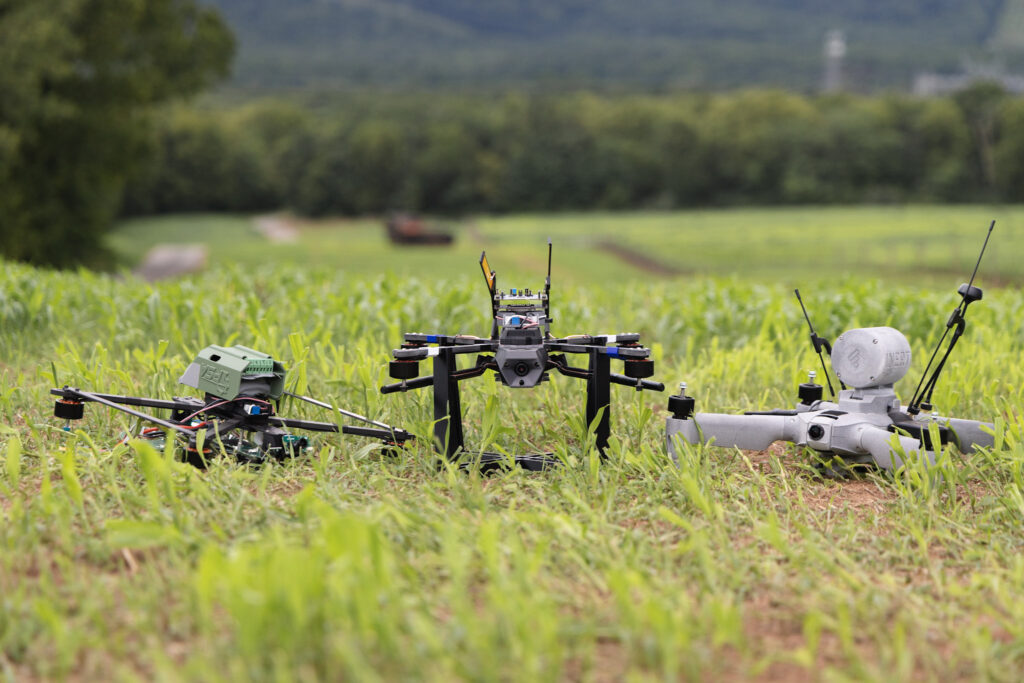
Over two days of technical development and one day of field demonstrations, teams completed seven working integrations across flight controllers, payloads, and ground control stations, with every implementation verified end-to-end using a neutral test payload. MAVLink-Military (MAVLink-M) is an open MAVLink 2 dialect that resides within a reserved ID block, maintaining full compatibility with the civilian MAVLink protocol already proven on more than one million vehicles. Its deepest current coverage is payload command and control.
Ramón Roche, Executive Director of Dronecode Foundation, part of The Linux Foundation, commented, “In less than 48 hours, members of the Dronecode community integrated their drone platforms, proving that competing vendors can solve interoperability problems faster in the open than any of them can alone. With MAVLink-M we are building toward a future where cross-vendor plug-and-play payloads are the default, not a custom integration project.”
Auterion sponsored and hosted the gathering, reflecting its long-standing role in the open-source autonomy ecosystem. Auterion CEO Lorenz Meier created foundational ecosystem technologies including MAVLink, PX4, QGroundControl, and Pixhawk, which are stewarded through the Dronecode community.
Lorenz Meier, CEO and Founder of Auterion, stated, “MAVLink was created to give robotic systems a common language that builders could rely on. MAVLink-M brings that same foundation to defense, where every integration delay slows down capability for the operator. Payload interoperability has to move at mission speed, giving warfighters trusted capabilities they can integrate, validate, and field faster.”
Participating companies spanned the full technological stack and included Applied Aeronautics, Ascend Engineering, Artificer Group, Auterion, Carlson Software / Camflite / Viter Systems, DeltaQuad, Firestorm Labs, IS4S, Neros Technologies, Production Systems Automation, ORQA, Rajant, RIIS, and UVIFY. The event also drew support from the Drone Dominance Program, which backs industry-led efforts to address interoperability and was represented by Dr. Erin Cherry, Senior Advisor at the Test Resource Management Center.
Sander Smeets, CEO of DeltaQuad, said, “Defence organisations need systems that work together from day one. At DeltaQuad, we believe open standards are essential to making that possible, which is why we actively contribute to MAVLink-M together with the Dronecode community. By enabling platforms, payloads, AI and ground control systems to work together seamlessly, each company can focus on what it does best while giving operators greater flexibility and faster access to integrated capabilities.”
Robert J. Schena, CEO, Rajant Corporation, added, “Mission success depends on resilient communications and interoperability. Rajant is proud to support the Dronecode Foundation and initiatives like MAVLink-M that advance open standards across the autonomous systems industry. Our work in swarm communications and distributed edge intelligence is built on the belief that open ecosystems accelerate innovation and enable more capable, mission-ready solutions.”