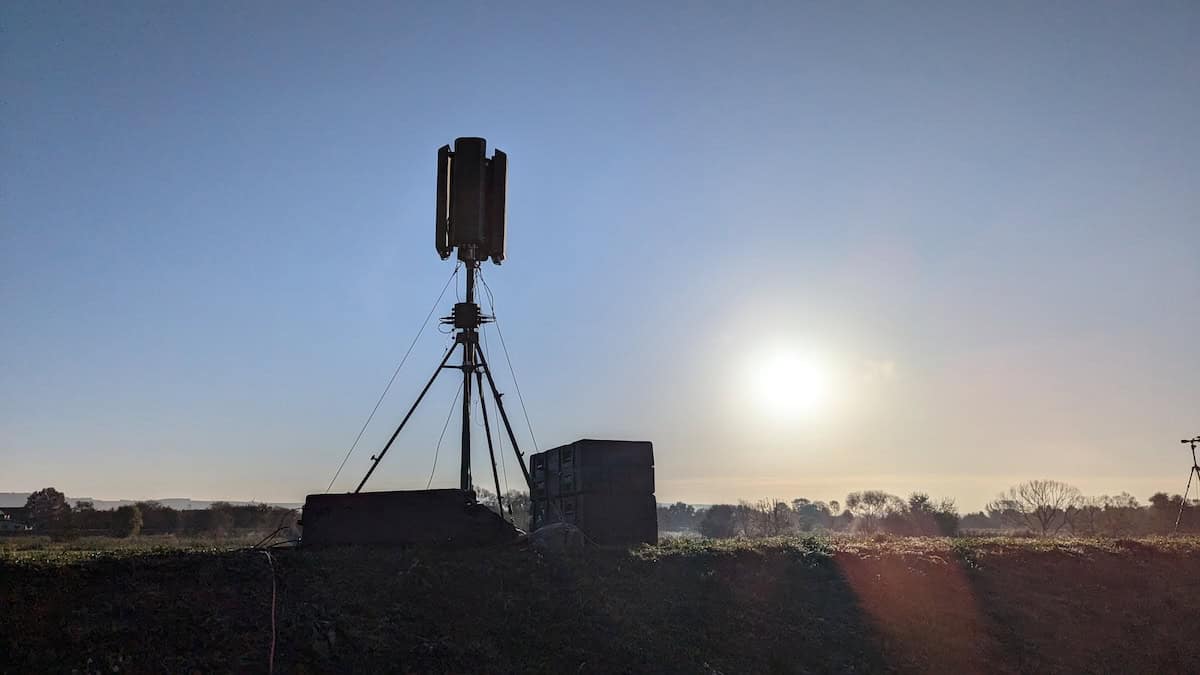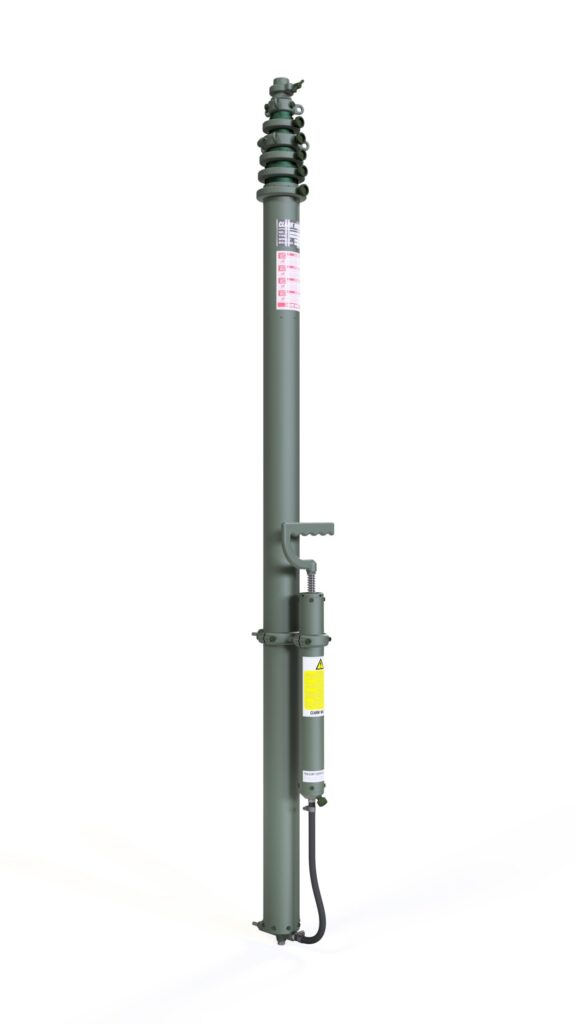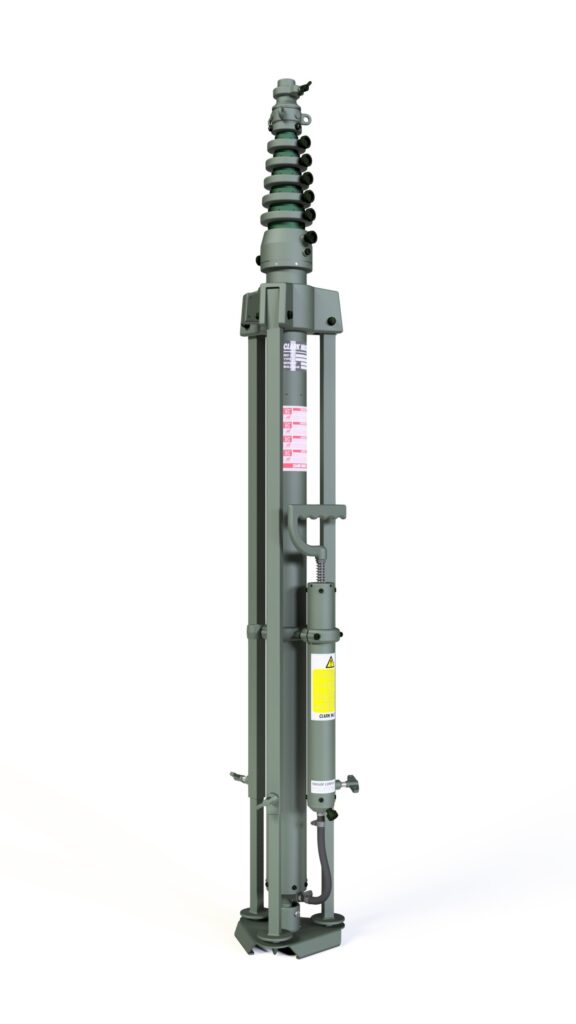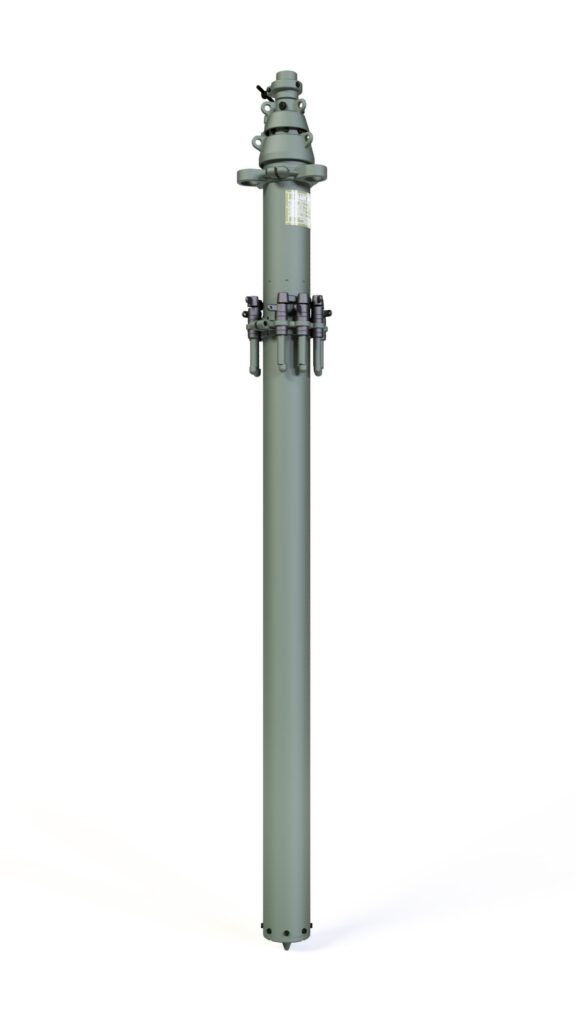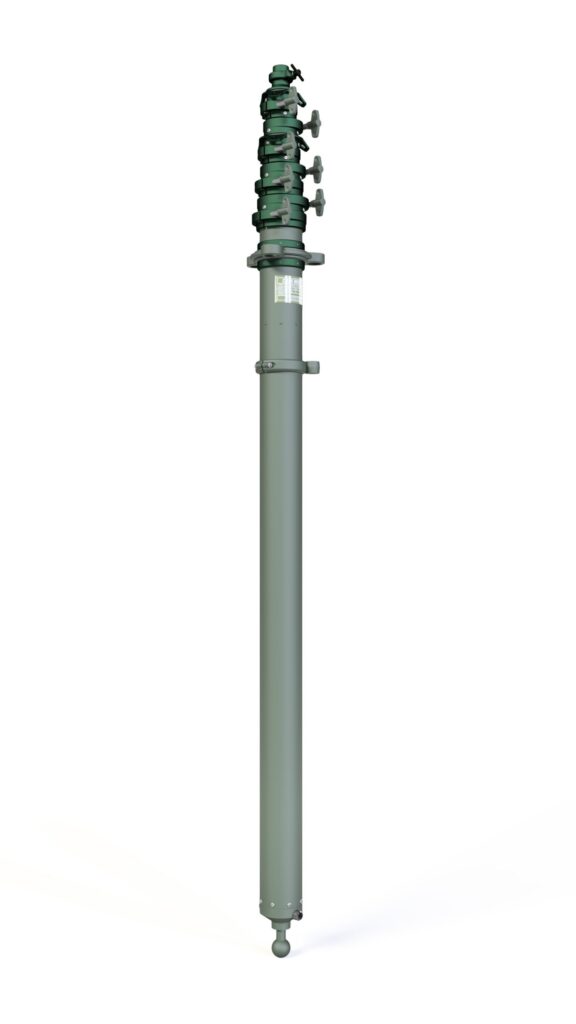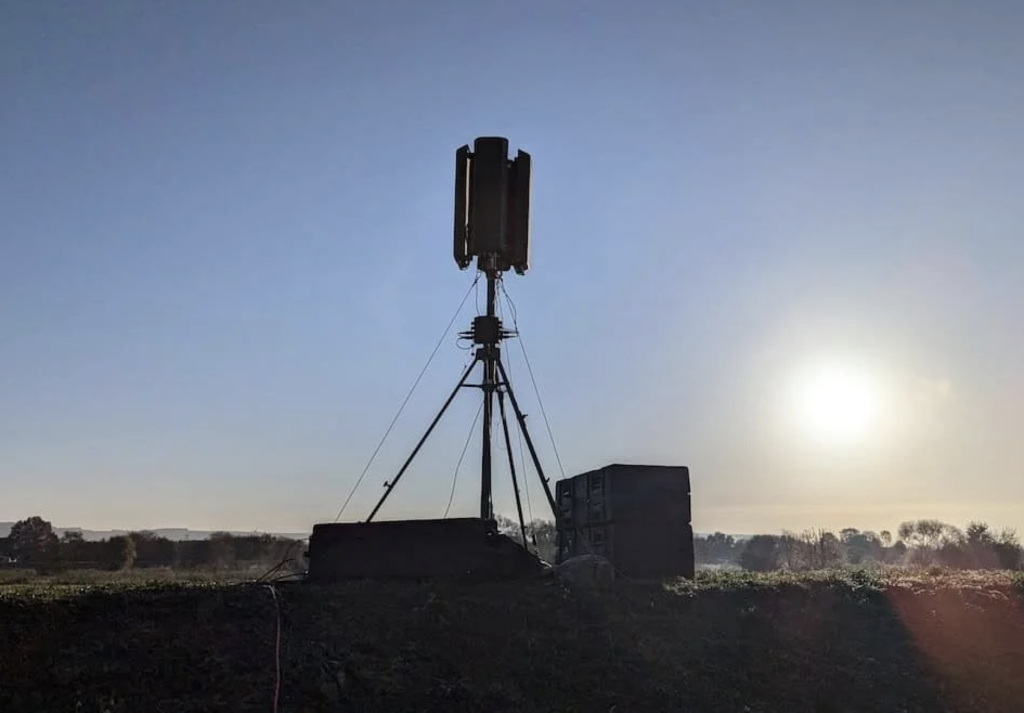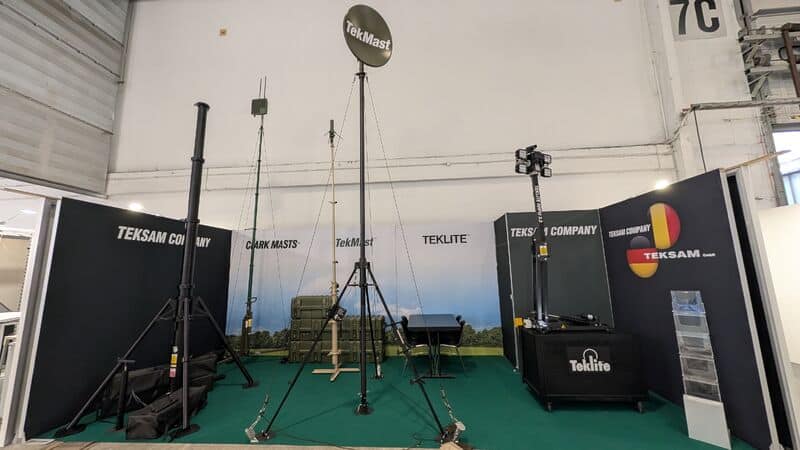



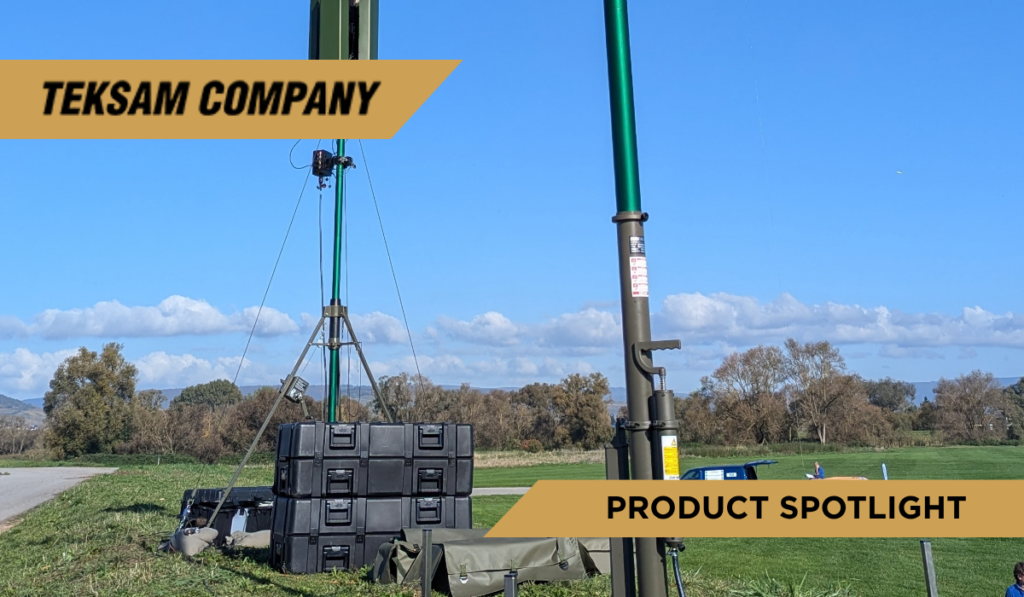
The Clark Masts QT Series available from Teksam provides an air-operated telescopic mast platform for elevating radio communications equipment and other headloads in freestanding, vehicle-mounted and shelter-mounted configurations.
Derived from the earlier RT Series, first introduced in 1959, the QT design has undergone a number of updates while retaining its underlying telescopic mast concept.
The current QT family comprises more than 50 models, with extended heights ranging from 3 to 15 meters. In addition to radio communications equipment, the masts can support floodlights, meteorological instruments, survey equipment, microphones and cameras.
Pneumatic Extension with Mechanical Locking
QT masts use air pressure for extension, with the standard arrangement incorporating a Hand Pump connected to the Base Tube. The mast sections are pneumatically extended and secured using Clamp Collars and Clamp Screws.
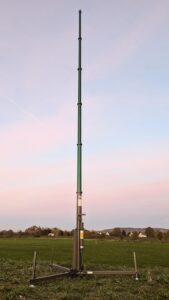
These mechanical locks allow the mast to remain extended independently of air pressure once the sections have been clamped. The operating documentation notes that some leakage of air pressure is normal, but the Locking Collars allow the mast to remain extended without relying on continued pneumatic pressure.
Where an external air supply is used instead of the Hand Pump, the operating instructions specify the use of a pressure safety valve, Cat. No. 52185.
Freestanding, Vehicle and Shelter Installation
The QT Series supports several mounting configurations. A mast can be connected to a fold-up Tripod Stand for freestanding operation or mounted internally or externally on a vehicle or shelter. For vehicle or shelter installations, the operating instructions specify securing the mast using the Studs fitted to the Hand Pump and Mast Base.
QT masts are fitted with a 24 mm-diameter Mast Top Socket for mounting an antenna or other headload. The corresponding Antenna Spigot dimensions are specified to eliminate the need for adapters when a matching spigot is used, while a Tommy Screw secures the antenna in the Mast Top Socket.
Guying is required if there is a chance of strong winds or if the headload is near its maximum recommended weight and surface area. The handbook specifies that Guys should be positioned between 30 and 45 degrees to the vertical. Pickets should be driven at least 60% of their length into firm ground and to their full length in softer ground, while Guy tension should be limited to that required to eliminate slackness.
QT-R Adds a Rotation Collar
The QT-R version differs from the non-rotatable QT mast through the addition of a Rotation Collar at the top of the Base Tube and below the stack of Clamp Collars.
The QT-R operating procedure allows the mast to be turned by loosening the Clamp Screw, rotating the mast with the Rotation Collar to the desired position and then retightening the Clamp Screw.
This arrangement differs from the standard QT configuration. Its handbook states that the QT mast cannot be turned when mounted and fully guyed. If a directional antenna is used in this configuration, a rotator must also be fitted to the Mast Top Socket, using the same 24 mm socket size.
The Rotation Collar therefore represents the principal documented distinction between the QT-R and non-rotatable QT configurations, while both retain the pneumatic extension and mechanical section-locking arrangement of the QT family.
Environmental and Maintenance Considerations
The operating documentation addresses several considerations associated with air-operated telescopic masts, including water ingress and operation in freezing conditions.
Water can enter a mast through the air supply or when rain travels down the outside of the Mast Sections and passes the Seals. In temperate weather conditions, the handbook states that this is not harmful. Water can be cleared by opening the Air Release Screw on the Hand Pump, where fitted, or by disconnecting the Air Hose at base level.

An extended telescopic mast is also vulnerable to icing because its working parts are exposed. The documentation states that the risk can be reduced by disconnecting the Air Hose at base level after the Mast Sections have been extended and clamped, and by keeping the external surfaces lightly coated with the recommended Silicone Grease.
Maintenance requirements include regular cleaning of the exterior and particular attention to the outside of the tube sections. The Pump Seal should be relubricated with Silicone Grease every ten working hours as a guide, while other lubrication points should receive attention at least every six months, with intervals varying according to service conditions.
The Mast and Pump Seals require specific lubricant handling. The documentation specifies B3905 Silicone Grease for the relevant seals and warns that mineral oil or grease must not come into contact with the Mast or Pump Seals because it will damage them.
Configurations Across the QT Series
With more than 50 models spanning extended heights from 3 to 15 meters, the QT Series combines pneumatic extension with mechanical section locking and a choice of installation arrangements. The masts can operate from a Tripod Stand or be mounted to a vehicle or shelter, with the 24 mm Mast Top Socket providing the interface for antennas and other headloads.
Within the series, the QT-R incorporates the additional Rotation Collar that allows the mast to be turned and secured in the desired position. Together, the QT and QT-R documentation sets out closely related mast configurations built around the same air-operated telescopic principle, with the Rotation Collar providing the principal difference between the two versions.