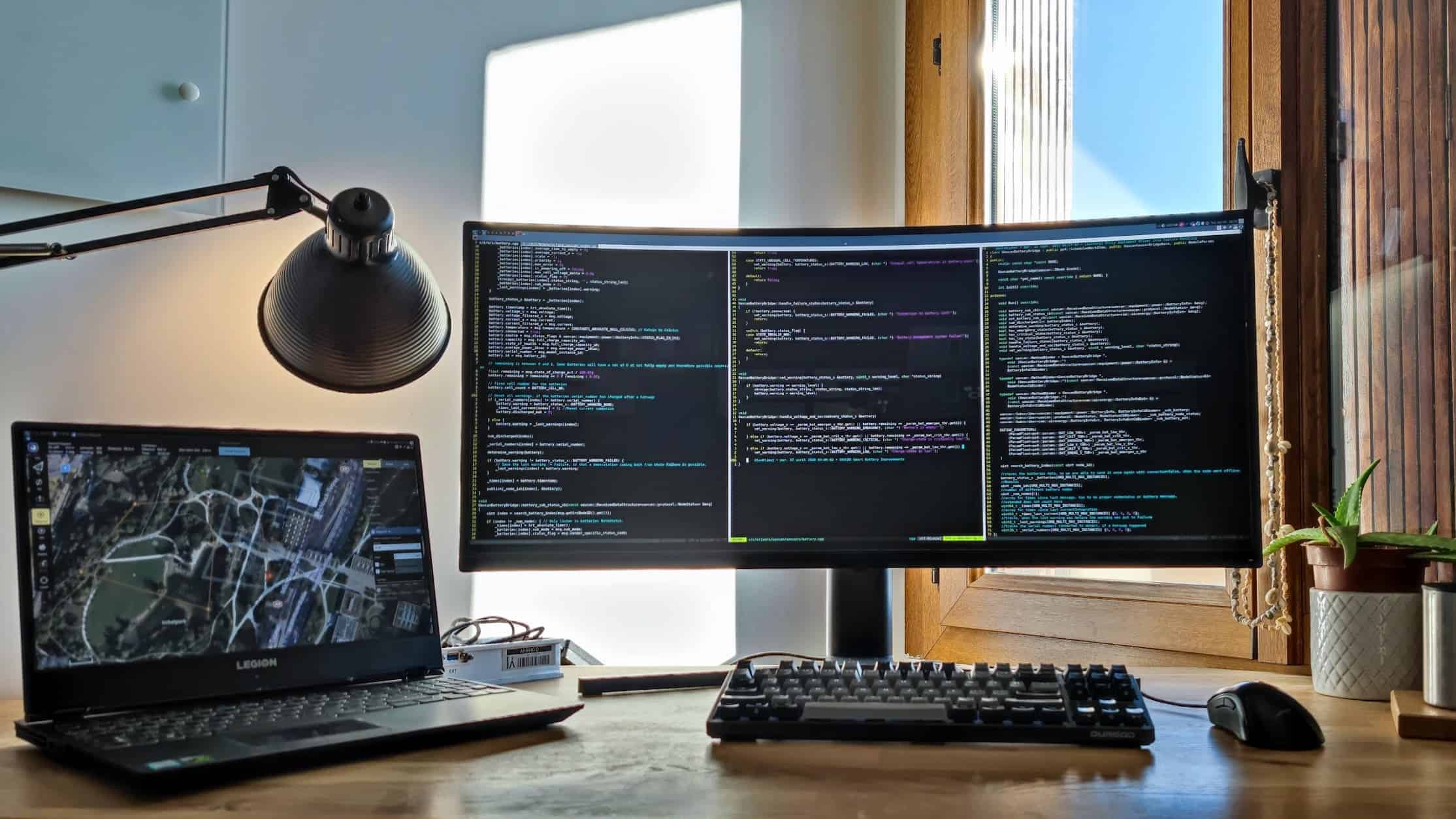




Tilak.io develops simulation environments for evaluating how defense robotics and unmanned aerial systems behave when navigation signals are disrupted, threat systems are present, or unusual operational conditions emerge.
Testing under these realistic, controlled, and repeatable conditions can provide an understanding of system behavior beyond nominal operation before field deployment.
Testing Beyond Nominal System Performance
Validation of defense-grade unmanned systems extends beyond confirming that individual functions operate as intended. Systems must also be assessed under adverse conditions, including signal disruption, contested environments, and unusual operational scenarios.
Tilak.io designs and develops simulation software for each application, structuring the resulting test environment around the specific system, mission, and associated risks. These environments allow system behavior to be observed, measured, and refined under conditions that may be difficult, costly, or unsafe to reproduce through real-world testing.
Examining critical failure modes before operational deployment can help teams understand system limitations, improve responses to adverse conditions, and reduce risk during subsequent field testing.
Simulating Radar and GNSS Threats
Threat-environment modeling has formed part of Tilak.io’s previous simulation work for a customer. This included modeling radar detection systems using parameters such as coverage geometry, heading dependence, and detection probability relative to distance.
The work also involved simulating GNSS disruption scenarios directly at the estimator level. Jamming, signal loss, and spoofing conditions were modeled to replicate their impact on the Kalman filter, exposing the navigation system to failure signatures associated with electronic warfare environments.
By incorporating these effects into the estimation process, the simulations allowed system responses to be evaluated under conditions closely reflecting operational realities.
Replaying Flight Data Through Modified Estimation Pipelines
Log-based Kalman replay provides another method for investigating system behavior. Tilak.io uses the technique to replay real flight data through modified estimation pipelines while introducing signal degradation or GNSS denial scenarios.
The approach allows engineers to reproduce in-flight anomalies in a controlled environment, isolate issues, and examine how algorithmic modifications affect system behavior.
After modifications have been implemented, the same scenario can be run again to determine whether the system produces a stable and predictable outcome. Because Kalman replay uses the same raw sensor data at the same rate as the original flight, the state estimator processes the inputs as it would during a real flight. This provides a high degree of confidence in the replay results, allowing changes to the estimation pipeline to be evaluated under conditions equivalent to real flight from the state estimator’s perspective.
Automated Optimization of Estimator Parameters
The replay process can also be integrated with automated optimization algorithms. These systems adjust estimator parameters across multiple scenarios, including sensor weighting and inter-sensor correlation.
This provides a systematic method for tuning the position estimator. Automated optimization can achieve configurations that would be difficult to reach through manual iteration alone.
Building Reusable Regression Test Libraries
Simulation scenarios developed by Tilak.io are retained within a reusable test library. This creates a collection covering a range of operational conditions, including modeled threat environments and previously encountered edge cases.
As the underlying software evolves, these scenarios can be executed automatically, using libraries such as MAVSDK, to determine whether updates have reintroduced known issues. This non-regression testing approach supports continued system improvement while helping maintain stability across software iterations.
Supporting Certification and Accreditation
The structured and repeatable nature of the simulations can also support certification and accreditation processes for defense applications.
Documented results from controlled test conditions provide evidence of system behavior, contributing to the validation activities required for defense applications.
The ability to reproduce defined scenarios also provides a controlled environment for examining conditions that may be difficult, costly, or unsafe to recreate during real-world testing.
Understanding System Behavior Before Deployment
For defense robotics and UAS, validation involves examining how systems respond across a range of operational scenarios. Radar threats, GNSS jamming, signal loss, spoofing, estimator behavior, and previously encountered edge cases can all form part of that assessment.
Tilak.io combines threat modeling, estimator-level simulation, log-based Kalman replay, automated optimization, and reusable regression scenarios within a structured framework for testing and validation.
By examining critical failure modes before operational deployment, this approach can provide military organizations with a clearer understanding of system limitations and responses to adverse conditions. It also supports the development of more resilient and reliable robotic and UAV platforms while helping ensure that system behavior is well understood across a wide range of operational scenarios.