


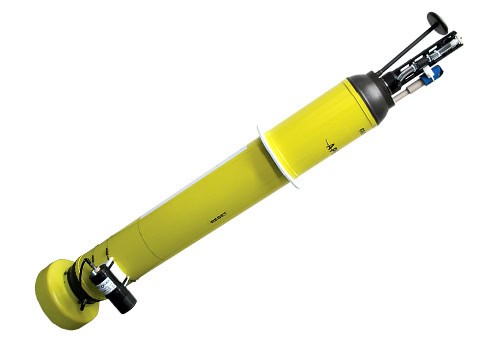
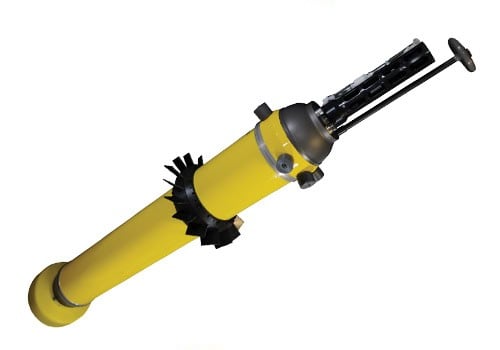
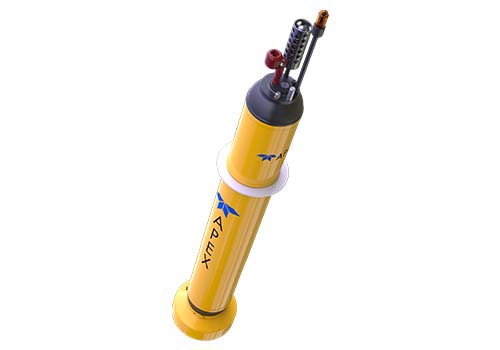
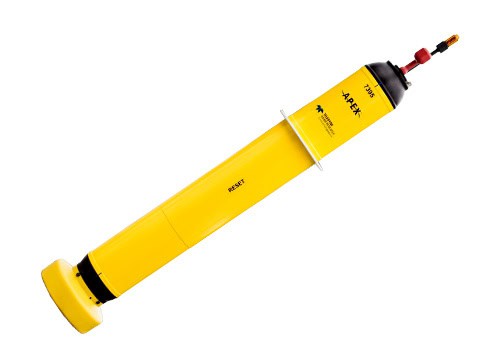
APEX Profiling Floats from Teledyne Webb Research are autonomous oceanographic instruments developed for sustained subsurface measurement without continuous vessel support, propellers, or onboard operators. The floats repeatedly alter their volume to control buoyancy, descending through the water column and later returning toward the surface while acquiring measurements such as temperature and salinity. A typical profiling cycle occurs approximately every 10 days. Developed from profiling-float technology pioneered by Teledyne Webb Research and Scripps Institution of Oceanography, APEX systems have been deployed extensively through the international Argo program, with Teledyne Webb Research supplying more than 10,000 floats for broad-scale ocean observation.
The APEX family provides several configurations for differing measurement requirements. APEX Standard is the general-purpose drifting profiler within the range, while APEX-BioGeoChem supports the company's most requested biogeochemical sensor configuration. The APEX PAM Float is intended for long-duration acoustic monitoring alongside environmental data collection, and the APEX Current Profiling Float extends observation capabilities to gather greater detail on movement within the water column. These configurations provide researchers with multiple routes for persistent, remotely operated ocean sensing, while Teledyne Webb Research also supports customized systems where project requirements differ from established configurations.
| Product: | Primary capability: |
| APEX Standard: | Versatile autonomous drifting profiler for recurring oceanographic measurements |
| APEX-BioGeoChem: | APEX configuration supporting Teledyne Webb Research's most requested biogeochemical sensor arrangement |
| APEX PAM Float: | Autonomous platform for extended ocean acoustic monitoring and environmental data acquisition |
| APEX Current Profiling Float: | Profiling float designed to collect greater detail on motion within the water column |






