




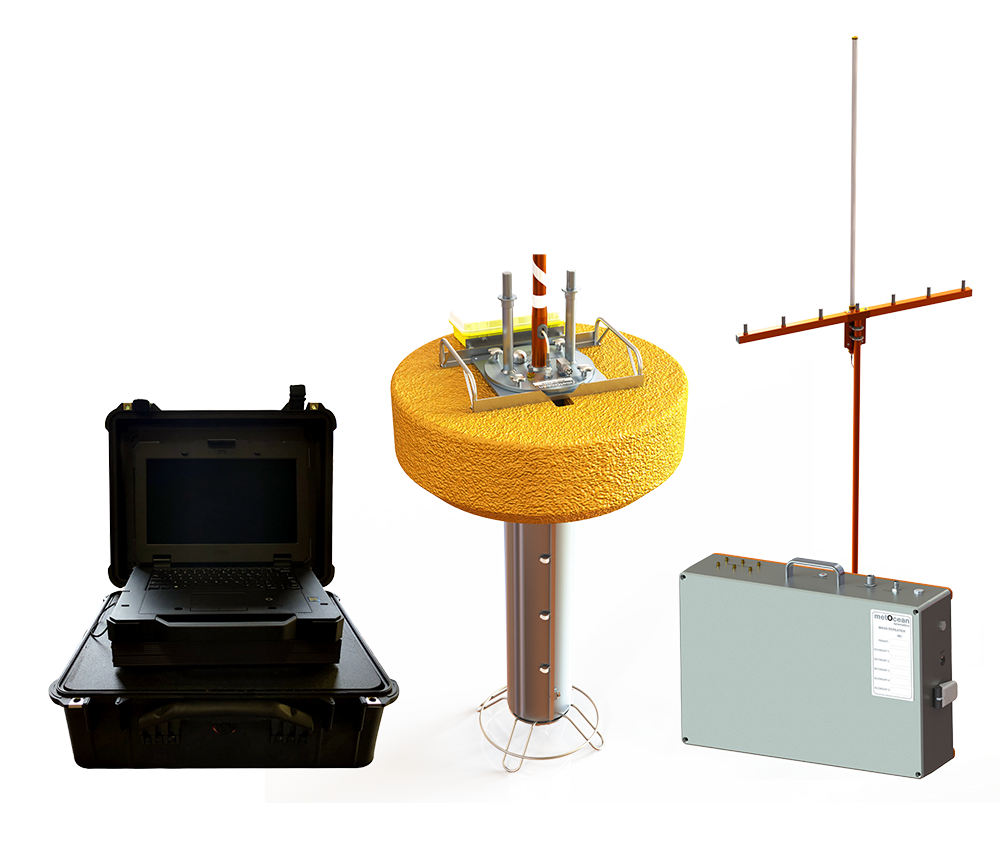
The Maritime Acoustic Scoring & Simulation (MASS) system enables warships to conduct naval gunfire support training while deployed at sea. Portable and ship-deployable, it provides a recoverable waterborne range for live-fire surface gunnery, air-to-ground weapons exercises and other test and evaluation activities.
MASS uses acoustic sensor buoys to detect the sound generated when a projectile strikes the water, enabling training with non-detonating shells. Acoustic measurements and GPS positioning determine the impact location, which is calculated and displayed by a controller on the supporting platform. Immediate scoring feedback allows firing teams to assess performance during an exercise.
A typical system comprises six buoys, a vessel-mounted base station and a radio repeater. Each buoy carries a GPS receiver, radio and hydrophone, together with a radar reflector and warning beacon. The deployable range reduces travel to fixed training facilities and the associated demands on time, fuel and personnel.
Specifications:
| Base Station Case Dimensions | 520 × 430 × 200 mm |
| Buoy Hull Dimensions | 150 mm diameter × 1,200 mm length |
| Repeater Weight | Approximately 17 kg |
| Base Station Supply | 110/220 V vessel power |
| RF Transmit Power | 1 W |
| Buoy Array | Typically 6 units |
| Radio Link | 900 MHz spread spectrum; up to 20 km line of sight, depending on conditions and repeater height |
| Impact Location Accuracy | Less than 1 m with a six-buoy field |
| Acoustic Detection Range | Up to 5 km, depending on conditions |
| Acoustic Projector Range | Up to 2 km, depending on conditions |
| Active Operating Time | 72 hours with a fully charged battery pack |
| Acoustic Arrival-Time Accuracy | 150 µs; equivalent spatial resolution of 23 cm |